) All 50 states plus 18 countries have participated in protests against police brutality in defense of Black Lives as of June 3\. [More than 450 protests have been organized](https://www.nbcnews.com/news/us-news/map-protests-rallies-george-floyd-spread-across-country-n1220976?ref=terraincognitamedia.com). The demand is simple: [Defund the police](https://www.motherjones.com/politics/2020/06/heres-where-the-movement-to-defund-police-is-gaining-momentum/?ref=terraincognitamedia.com). Check out Vienna Rye who creates art that exposes why “All Cops Are Bastards” and what we mean when we say [there are no good cops](https://www.instagram.com/p/CAq5ILsgZG8/?ref=terraincognitamedia.com). Tear gas, flash-bang grenades, pepper spray, and rubber bullets are supposedly “non-lethal,” but these violent tools of war indeed are deadly. [Tear gas increases respiratory illnesses](https://www.nytimes.com/2020/06/03/us/tear-gas-risks-protests-coronavirus.html?ref=terraincognitamedia.com) and can have fatal consequences on those with [pre-existing conditions like asthma](https://www.instagram.com/p/CBEDn09njk4/?ref=terraincognitamedia.com). Although tear gas is explicitly [prohibited in warfare](https://ihl-databases.icrc.org/customary-ihl/eng/docs/v2%5Frul%5Frule75?ref=terraincognitamedia.com), police are using it excessively to quell and silence the valid outcry of people who are fed up with a punitive system and police force that [disproportionately targets and kills Black people](https://www.nytimes.com/interactive/2020/06/03/us/minneapolis-police-use-of-force.html?ref=terraincognitamedia.com). Bootlickers will defend the use of tear gas and other brutal acts of police violence against protestors in the streets. They’ll say that if protestors simply remained peaceful and didn’t get violent then there wouldn’t be any problems. But that’s just not true. [Any challenge to the police state is considered violent](https://wearyourvoicemag.com/white-people-torch-wielding-mob/?ref=terraincognitamedia.com). Police ultimately have the power to decide what is and what isn’t violent. Throwing water bottles can be deemed violent. It doesn’t matter if you take a knee like Colin Kaepernick, you march with a sign in the streets, or you ransack Target. It’s “violent” to those who want to maintain the status quo. It is absolutely absurd in the context of the United States government, which pushes forward the agenda of settler colonialism in the form of [redlining](https://www.youtube.com/watch?v=2o-yD0wGxAc&ref=terraincognitamedia.com), [gentrification](https://www.theatlantic.com/politics/archive/2017/12/the-criminalization-of-gentrifying-neighborhoods/548837/?ref=terraincognitamedia.com), and [white saviorism](https://www.instagram.com/p/CBGkKG0B2ZC/?ref=terraincognitamedia.com), to argue about what constitutes violence and what doesn’t. No one speaks to this better than Angela Davis. In 1972 Angela Davis was being detained in a California State Prison because the government was fearful of [her leadership](https://www.youtube.com/watch?v=x3q%5FqV5mHg0&ref=terraincognitamedia.com) in the Black Panther Party. [In this interview](https://www.filmsforaction.org/watch/angela-davis-on-violence/?ref=terraincognitamedia.com) Davis says, > “When you talk about revolution most people think violence without realizing that the real content of any revolutionary thrust lies in the principles and the goals that you’re striving for, not in the ways you reach them. On the other hand, because of the way this society is organized, because of the violence that exists on the surface everywhere, you have to expect that there are going to be such explosions. You have to expect things like that as reactions. If you are a Black person and live in the Black community all your life, and walk out on the street everyday seeing white policemen surrounding you...I was constantly stopped. The police didn’t know who I was, but I was a Black woman...and when you live in a situation like that constantly, and then you ask me whether I approve of violence, I mean, that just doesn’t make any sense at all.” As Ericka Hart points out, “People are not connecting everyday incidences of racial violence to Black genocide in the US.” Our definition of “violence” cannot be diminished to Webster's Dictionary definition. [Here’s a helpful resource](https://www.racialequitytools.org/fundamentals/core-concepts/racism?ref=terraincognitamedia.com) for understanding how racism works and shows up. Anti-Blackness manifests in ways that white people have normalized. Hart continues, “The all white staff, production crew, neighborhood, etc contributes to our death.” Kneeling is the most peaceful thing you could literally ever do, yet [Kaepernick lost his job and received intense, anti-Black backlash](https://www.theroot.com/tag/colin-kaepernick-blackballed?ref=terraincognitamedia.com). There are always consequences for challenging the white supremacist foundations of the U.S if you’re Black. But when you’re white and heavily armed, suddenly it’s “patriotism.” In April 30, 2020, [white men and women were not stopped, tear gassed, pepper-sprayed, or beaten for heavily arming themselves](https://www.vox.com/policy-and-politics/2020/4/30/21243462/armed-protesters-michigan-capitol-rally-stay-at-home-order?ref=terraincognitamedia.com), and demanding to be let inside Michigan’s state Capitol for what they called an “American Patriot Rally” in order to express their disdain for the shelter-at-home orders. These orders were in place to mitigate the spread of the novel coronavirus. And although the country is slowly lifting these orders and “opening back up,” it’s still in everyone’s best interest to continue to shelter-at-home if you have the privilege to do so, continue wearing masks, remain at least six feet distance from people, and only interact with the people in your household. At the same time, if you’re able, it’s a crucial time to get out in the streets and protest. We recommend checking out [Rae Tilly’s “The Protestor’s Handbook,” for Yeoja Magazine](http://yeoja-mag.com/protestors-handbook/?ref=terraincognitamedia.com). There are plenty of measures we encourage you to take to ensure your safety as much as possible, but ultimately protesting can be extremely dangerous. Don’t go to a protest and treat it like an opportunity to get some new photos for Instagram. We encourage our community to continue to self-educate on the history of protesting, and inform your family, friends, and co-workers about the unethical use of tear gas and rubber bullets. Don’t let the cops dancing to the “Macarena” with protestors trick you into thinking everything is fine, and that *some* cops are friendly. Cops can be friendly and brutalize people at the same time, as we saw with the elderly man who was pushed down by a brigade of riot cops of the Buffalo Police Department who, just the day prior, were photographed taking a knee. Cops are domestic terrorists. It’s also important to be weary of the mainstream media. The mainstream media can’t be trusted no matter what political party they affiliate with because they consistently report in a way that skews what’s actually happening on the ground. Media literacy is crucial in this age of social media where false information can spread like wildfire. @PossumKratom69 created [this guide](https://www.instagram.com/p/CBHPFlJD054/?ref=terraincognitamedia.com) for vetting information. They also provide these tips for attending protests: Palika Makum, a media activist, provides these pointers for recording footage at protests (white people we should always be recording interactions with Black people and cops, and ensuring we interject at all cost): Follow alternative sources like [Unicorn Riot](https://unicornriot.ninja/?ref=terraincognitamedia.com), as well as activists on the frontlines in your area. We love Erick of [@NYC4Revolution\_](https://www.instagram.com/nyc4revolution%5F/?ref=terraincognitamedia.com) , [Portland’s Resistance](https://www.instagram.com/portlandsresistance/?ref=terraincognitamedia.com), [Ohun Ashe](https://www.instagram.com/ohun.ashe/?ref=terraincognitamedia.com), [Nupol Kiazolu](https://www.instagram.com/nupol%5Fjustice/?ref=terraincognitamedia.com), and [StlActivist](https://www.instagram.com/stlactivist/?ref=terraincognitamedia.com) to name only a few, but ultimately Black Lives Matter, which was founded in 2013 by three Black women, Opal Tometi, Patrisse Cullors, and Alicia Garza, is a decentralized movement with no formal hierarchy, [which is intentional](https://www.newyorker.com/news/q-and-a/a-black-lives-matter-co-founder-explains-why-this-time-is-different?ref=terraincognitamedia.com). ### Relevant: Did you know that Black Diamond has connections with Safariland, a U.S. based manufacturer that sells equipment to the law enforcement industry, including tear gas? If you’d like to help take action against the excessive use of tear gas and demand that Black Diamond takes action too [here’s what you need to know](https://www.terraincognitamedia.com/boycottblackdiamond-everything-you-need-to-know-and-how-you-can-help2020/). ### This is All We Can Think About: The Deaths of Ahmaud Arbery and Nina Pop, the False Binary of Covert/Overt White Supremacy, and Where to Redistribute That Stimulus Check URL: https://www.terraincognitamedia.com/all-we-can-think-about-ahmaud-arbery-nina-pop/ Last updated: 2026-08-22T19:38:40.000Z ### Ahmaud Arbery’s murder was not an anomaly. His death is one of countless egregious and horrifying modern-day lynchings at the hands of a couple of self-appointed “citizen patrollers” [*enacting whiteness*](http://www.nellpainter.com/assests/pdfs/NYT-opinion-102619.pdf?ref=terraincognitamedia.com) as Nell Irvin Painter describes. This is the manifestation of centuries of violence stemming back to slave patrols, which have now morphed and evolved into the prison industrial complex and [The New Jim Crow](https://www.vanderbilt.edu/ctp/The%5FNew%5FJim%5FCrow.pdf?ref=terraincognitamedia.com) that Michele Alexander wrote about. This is genocide made possible by cronyism -- made possible by capitalism. Something that Ericka Hart talks about frequently is how white supremacy is too often viewed in a binary of [“covert” and “overt” manifestations](https://stuartcenter.org/resource/white-supremacy-overt-covert?ref=terraincognitamedia.com). But this false binary sorely discredits the violence of ALL forms of white supremacy, even the ones that are considered “covert.” Hart explains that this framing is really only serving white people who have a harder time understanding that all forms of white supremacist violence are “overt” when it comes to the experience of those who are the targets of that violence. [As Hart describes in a recent tweet posted to Instagram](https://www.instagram.com/p/B%5F6gCH9g7R2/?ref=terraincognitamedia.com), > “People are not connecting everyday incidences of racial violence to Black genocide in the US. The racism complaint ignored by HR contributes to our death. The celebrities doing Black face and making money off of Black features contributes to our death. The white kids stealing tik tok dances from Black kids contributes to our death. The racist president who doesn’t get impeached for being racist contributes to our death. The all white staff, production crew, neighborhood, etc. contributes to our death. We deserve more when we are alive.” Overt white supremacy and anti-Blackness can show up in any sphere of our society even the ones that are trying to be anti-racist and anti-oppressive. With heaviness, we admit that our platform is no exception. We recently received some feedback at *Terra Incognita Media* following one of our “Toxic Masculinity in the Outdoor Industry” workshops that we need to provide more resources for Black women and femmes, and women and femmes of color who are most targeted when it comes to toxic masculine violence. We are tremendously grateful for this feedback, and we are currently working to implement this insight in order to improve our offering. We hope our transparency about this encourages others to act on their spoken values too. Anti-racist action must be taken all year round, seven days a week, 24 hours a day. Not just when someone’s life has been taken through racist rage. Not just when it fits into our schedule. Because in order to prevent people from being murdered like Ahmaud Arbery who will now miss his 26th birthday today, May 8th, 2020, and [Nina Pop, a 28-year-old, Black trans woman who was found murdered](https://blavity.com/nina-pop-stabbed-in-her-home-believed-to-be-10th-trans-person-killed-in-2020?category1=news&subCat=LGBT&ref=terraincognitamedia.com) in Sikeston, Missouri on May 3, 2020, we must challenge the status quo of white supremacy in every facet of our lives whether that’s in our homes, on the phone with Grandma, at work, or in our personal relationships. Whiteness programs us to see the upward mobility and freedom of movement of anyone who is non-white as a threat. Whiteness connives us into being possessed by individualism at whatever cost to others. Hoarding frozen chicken breasts and toilet paper is one result. [Sending body bags to Seattle Indian Health Board instead of COVID-19 testing kits is another](https://www.nbcnews.com/news/us-news/native-american-health-center-asked-covid-19-supplies-they-got-n1200246?ref=terraincognitamedia.com). We are programmed to believe that there is never enough (scarcity). White supremacist conditioning warps the way we perceive situations and events, like a Black man out for a jog, so that we operate on impulses to exert our power and control. In this time of global crisis, we can give in to the fear of scarcity and we can succumb to our centuries of conditioning, or instead, we can get to know it, acknowledge it, see it for what it is, and most importantly, choose differently. We can choose community over isolation, even if right now we are physically isolated. We can choose giving over keeping, especially when it comes to giving UP our power, over keeping it. Because we know that giving up power leads to communal wellbeing. We can choose to share. Because in the end, we know that giving and sharing what we have creates abundance for us and everyone. ### We can act on our values, and bring our visions for an equitable future to life. Our friend Brian Frank shares this anti-capitalist message and [created a great resource](https://www.terraincognitamedia.com/where-to-donate-that-stimulus-check2020/) if you want to find out where it’s best to redistribute your stimulus check. ([You can also redistribute it here](https://www.instagram.com/p/B%5FgTg7%5FBNnH/?ref=terraincognitamedia.com)): > “People like me who are class privileged can sometimes think we are experiencing scarcity because we had to dip into our savings, or stop eating out at restaurants and buying new clothes, or might not get a nice vacation trip this year. This is capitalism tricking us. Real scarcity is not having enough $ for food or rent, swimming in debt, no family/parental safety net, no access to federal or state benefits. I invite my owning class friends to join me in rethinking scarcity, and give bigger. Together we can take care of each other. Fuck capitalism, smash the state, community care for the win!” — [Brian Frank](http://brianfrankpdx.com/?ref=terraincognitamedia.com), Bookkeeper, Consultant, and Fiscal Trainer Giving up our power, in whatever ways we can, will ensure that oppressive hierarchies won’t stand a chance. ### Relevant Reading: [*How We Think About Enslavement Matters*](https://www.theguardian.com/us-news/2019/aug/14/slavery-in-america-1619-first-ships-jamestown?CMP=share%5Fbtn%5Ffb&fbclid=IwAR0iH74MhyqwyEWLcFwsRXTvAW2uylHSFbJbRe4czV4ypy3aoqFHMlD7f9g&ref=terraincognitamedia.com) by Nell Irvin Painter ### Relevant Listening: Big Think Interview with Nell Irvin Painter about the [“Blue Period”](https://www.theatlantic.com/personal/archive/2014/04/the-blue-period-an-origin-story/359968/?ref=terraincognitamedia.com) [A Podcast Interview with Nell Irvin Painter About Her Book A History of Whiteness](https://soundcloud.com/metrofocus/a-history-of-white-people?ref=terraincognitamedia.com) Hoodrat to Headwrap Podcast by Ericka Hart and Ebony Donnley: [30 Days A Slav--Essential: Disposable Tomorrow. Stop Killing Black People.](https://podcasts.apple.com/us/podcast/30-days-slav-essential-disposable-tomorrow-stop-killing/id1279429651?i=1000471839151&ref=terraincognitamedia.com) ### Where to Donate That Stimulus Check URL: https://www.terraincognitamedia.com/where-to-donate-that-stimulus-check2020/ Last updated: 2026-08-22T19:38:41.000Z [*Photography contributed by Brittney Okabe*](https://www.instagram.com/b.okabe/?ref=terraincognitamedia.com) # **But why?** Some of us really need that money to cover our immediate needs, some of us can leave it in the bank because maybe, you can cover your expenses this month but next month is not certain. Some of us still have paying jobs and that check is like a bonus right now, or maybe, you have savings or a family support network and you don’t need that money now or in the next months. The word “need” is important here because Capitalism has taught us to hoard and look out for just ourselves. Well, it’s time to consider and act from a more collective place. Maybe, first consider who in your close circle needs support and give there, if everyone you know is covered, then here is a list of places you can share your blessings with or do both. People like me who are class privileged can sometimes think we are experiencing scarcity because we had to dip into our savings, or stop eating out at restaurants and buying new clothes, or might not get a nice vacation trip this year. This is capitalism tricking us. Real scarcity is not having enough $ for food or rent, swimming in debt, no family/parental safety net, no access to federal or state benefits. I invite my owning class friends to join me in rethinking scarcity and give bigger. Together we can take care of each other. Fuck capitalism, smash the state, community care for the win! # **Ok, where?** Here is a list of places you can donate to, feel free to add to this list but make sure you vet your sources before you post! - [PCUN farmworker COVID emergency fund](https://secure.everyaction.com/xCeIiLfjL0aQJ207a68HNQ2?fbclid=IwAR1%5FvnnAf6x5iu1mCzQUwymMdZOQXzImBSd1CtxmLAhXx4qfQXtZ7fHMeU0&ref=terraincognitamedia.com) - [Emergency Solidarity Fund for Day Laborer Workers!](https://www.gofundme.com/f/support-for-worker-during-covid19?ref=terraincognitamedia.com) Organized by Ira Cuello-Martinez - [PDX Sex Worker Solidarity Fund](https://www.gofundme.com/f/rfh6b?ref=terraincognitamedia.com) - [Navajo and Hopi Families Relief Fund](https://www.gofundme.com/f/NHFC19Relief?ref=terraincognitamedia.com) - [UndocuBlack Network Fund](https://undocublack.org/donate?fbclid=IwAR3I-pDyegVrvWa%5FTSAgCB2lGNlCsvp7HXiGfDJutXyrohVVjxh3X-2anUg&ref=terraincognitamedia.com) - [MRG Community Response Fund](https://www.mrgfoundation.org/civicrm/?fbclid=IwAR1Ny8kJEJf3b-zhMO%5FWX0vE5xZGp7UJCt25ic1Xc6yM4ks0MvmenQW-vW0&id=32&page=CiviCRM&q=civicrm%2Fco%20seentribute%2Ftransact&reset=1&ref=terraincognitamedia.com) - [Oregon Workers Relief Fund](https://secure.everyaction.com/7XfDU3DVc0CUSS9Cbn8yTg2?fbclid=IwAR0zo89EjXqs%5F1KkBv4V0V2fSEDgMiQnpEHSOq28drACK0hohfRbFqPqYM8&ref=terraincognitamedia.com) - [Indigenous Women Hike](https://www.instagram.com/indigenouswomenhike/?ref=terraincognitamedia.com) Providing direct mutual aid to the Indigenous peoples of Payahüünadü, so-called Bishop, California. Jolie Varela is on the ground delivering essentials like baby wipes, food, books, and cleaning supplies to families in need as grocery stores are frequently wiped out. In such a remote area trucks are not quick to restock shelves. Venmo @Jolie-Varela - [Brown Girl Rise](https://www.facebook.com/BrownGirlRise/) giving $ directly to families in need and creating online curriculum to support youth during COVID. There is a tax-deductible link (Link goes to fiscal sponsor, specify BGR when you donate!) If you don't need to account for this donation in your taxes, consider becoming [a monthly patreon!](https://www.patreon.com/user?u=22508777&ref=terraincognitamedia.com) - [Northwest Abortion Access Fund](https://nwaafund.org/donate?ref=terraincognitamedia.com) - [Jade District Relief Fund](http://jadedistrict.org/jade-district-covid-relief-fund/?ref=terraincognitamedia.com) - [ABC: Andando en Bicicletas y CaminandoImmigrant](https://secure.givelively.org/donate/community-cycling-center/andando-en-bicicletas-y-caminando?ref=terraincognitamedia.com) families, community activists, volunteer bicycle mechanics, many in need of a little extra help. - [Street Roots](https://streetroots.org/vendorasistancefund?ref=terraincognitamedia.com) A non-profit newspaper organization assisting and advocating for the most vulnerable communities i.e the unhoused and poverty-stricken demographics. - [Borderland for Equity ](https://www.facebook.com/Borderlands-for-Equity)The only pro bono, civil rights organization founded by Women of Color serving the greater San Diego community. - [Q Center](https://secure.givelively.org/donate/qcenter?ref=terraincognitamedia.com) Non-profit building community and empowering the LGBTQ2SIA+ community in the PNW - [Centro Cultural’s Esperanza Relief Fund](https://www.flipcause.com/secure/cause%5Fpdetails/ODAwMDc=?ref=terraincognitamedia.com) 100% of funds will go directly to migrant families in Washington County, especially those who are excluded from government assistance during this emergency. - [**Rohingya Refugee Relief Fund**](http://www.launchgood.com/rohingyacovidsupport?ref=terraincognitamedia.com)Donations will go to the \~60 families — 6 of which are undocumented — in the Chicago Rohingya refugee community that face urgent crises as a result of unemployment (evictions, medical costs, utilities, etc.) - [**Gender Reveal Trans Survival Fund**](https://docs.google.com/forms/d/e/1FAIpQLSdXwMkNrXxCp369yxpNBZ18YMVPdaYN0BOqGKrVa%5FBz3UgG9g/closedform?ref=terraincognitamedia.com)Mutual aid fund to give directly to trans folks who for food and housing, prioritizing BIPOC, disabled, and otherwise vulnerable people. More [info](https://twitter.com/mollywoodstock/status/1250802179629178880?ref=terraincognitamedia.com) and [ways](https://twitter.com/gendereveal/status/1250946151236263936?ref=terraincognitamedia.com) to donate on Twitter. - [**Communities of Color United’s Racial & Economic Solidarity Fund**](https://www.facebook.com/events/899068197212640/)AUSTIN TX local Mutual Aid fund organized by coalition of POC-led organizations including [Mama Sana Vibrant Woman](https://www.msvwatx.org/?ref=terraincognitamedia.com), [allgo](https://allgo.org/?ref=terraincognitamedia.com), & [ICE Out of Austin](https://grassrootsleadership.org/tags/ice-out-austin?ref=terraincognitamedia.com). Money is going DIRECTLY to community members most in need, without being filtered through non-profit webs. This mutual aid fund is also being promoted by [Undoing White Supremacy Austin ](https://undoingwhitesupremacy.org/?ref=terraincognitamedia.com)(local SURJ chapter), & Austin Resource Generation. - [Sexual Assault Resource Center](http://www.sarcoregon.org/get-involved/donate/?ref=terraincognitamedia.com), Portland metro area, Oregon. 24 hour help line/resource line for survivors. Case management for children who are being commercially sexually exploited. Free counseling for survivors of sexual assault, domestic violence, and sex trafficking. Sexual assault prevention/education programs in local schools. Crisis response to hospitals-sends trained advocates to come as a support person when sexual assault/domestic violence survivors check in at the ER - [William Temple House - Food Pantry](https://www.williamtemple.org/our-services/?ref=terraincognitamedia.com) - [Northeast Emergency Food Program ](https://emoregon.org/nefp/?ref=terraincognitamedia.com) - [Preston’s Pantry - LIFT UP](https://www.lifturbanportland.org/prestons-pantry-update.html?ref=terraincognitamedia.com) - [IIYC](https://indigenousyouth.org/?ref=terraincognitamedia.com) Distributing directly to individuals and families impacted with the intent to support the purchase of groceries, essential goods, childcare products, hygiene products, and medicine. - [Pueblo Action Alliance](https://puebloactionalliance.org/about/?ref=terraincognitamedia.com) bringing masks, funds, Indigenous authored novels & children’s books & essential care items and PPE to the Navajo Nation, Jicarilla Apache Nation, Zia, Zuni, and San Felipe Pueblos of NM ### Stay the Fuck Home: White Entitlement, Anti-Blackness, and COVID-19 URL: https://www.terraincognitamedia.com/stay-the-fuck-home-covid19/ Last updated: 2026-08-22T19:38:44.000Z I am in the Facebook group called, “Women on the Road” which is facilitated by She Explores. A question was asked in the public discussion: “What are your thoughts on slowly getting back out there? I have not been driving more than 5 miles from my house, rarely even going to the preserves super close by. Is it acceptable to start taking smaller trips, less than two hours away and getting gas/ supplies at home? Hope everyone is navigating this temporary reality okay and staying safe and healthy!!!” First of all, this reality is not temporary. This reality is cisheteropatriarchal, white supremacist, capitalism and it’s not going anywhere anytime soon because white men, and white people in general, have this heinous track record of not giving up our power. This is not a “temporary reality,” but an ongoing reality that has been long in the making since the first colonizer set foot on Turtle Island (so-called North America). The reality we are currently living in is a consequence of ongoing colonization and capitalism. According to an article published by YES! Magazine, [“Don’t Blame Bats or Pangolins. Human Actions Caused the Coronavirus,”](https://www.yesmagazine.org/environment/2020/04/02/coronavirus-destruction-environment-bats/?ref=terraincognitamedia.com) John Vidal writes: > …a number of researchers today think that it is actually humanity’s destruction of biodiversity that creates the conditions for new viruses and diseases such as COVID-19, the viral disease that emerged in China in December 2019, to arise—with profound health and economic impacts in rich and poor countries alike. In fact, a new discipline, planetary health, is emerging that focuses on the increasingly visible connections among the well-being of humans, other living things, and entire ecosystems. > > Is it possible, then, that it was human activity, such as road building, mining, hunting, and logging, that triggered the Ebola epidemics in Mayibout 2 and elsewhere in the 1990s and that is unleashing new terrors today? It is not anything new to those who have been bearing the brunt of environmental racism for centuries that human health and environmental health are inextricably linked. Winona LaDuke, bell hooks, Rigoberta Menchú, Rose Brewer, Wangari Maathai, Vandana Shiva, Alice Walker, Arundati Roy, and so many more have written about how the oppression of the land is a reflection of the oppression of the people, particularly, women, femmes, non-binary, two-spirit, and trans folks. [In this interview,](https://americanlibrariesmagazine.org/2013/05/08/a-conversation-with-alice-walker/?ref=terraincognitamedia.com) Alice Walker discusses the effort to restore the soil in Kenya, and the violence of colonization/imperialism: > The colonial powers cut down all the trees, and that’s why \[the late Nobel Peace Prize–winning environmental activist\] Wangari Maathai planted millions of trees to try to save the soil. But when I was there as a teenager, really, what struck me was how the corporations, even then, had taken the land to grow things like pineapples. So there we were, trying to build a school out of the only thing we had, which were sisal stalks, and there were hundreds of acres of pineapples that the indigenous people were not allowed to eat. And they had been forced into the corners, living in little shacks with thatched roofs, which looked like our shacks in Georgia, though ours had tin roofs. > > So I really got it, that the African people were horribly exploited, as laborers, as producers of food for Europe, and unfortunately that is still happening an awful lot as Europe buys up more and more African land. China is doing the same thing. It is dizzy-making to contemplate, and it’s frustrating. What can you do about it? Part of doing something is to know that it’s happening. This new discipline of “planetary health” that Vidal talks about in YES! Magazine is completely absurd since Black and Brown people, particularly women and femmes, have been speaking about this connection since the beginning of colonization. Also, it’s important to make a distinction about who Vidal is bringing to account for the new coronavirus. Don’t blame humans in general on COVID-19\. Because it is white, upper class, wealthy, cis men who hoard power and resources who are directly responsible for the spread of the coronavirus and we need to take care and be specific about addressing white supremacy, capitalism, and patriarchy as the fueling forces behind this virus and the spread of any disease. White supremacy is the disease. Greedy billionaires are the disease. White men abusing their power is the disease. As many indigenous educators, like Allen Salway remind us, for time immemorial indigenous communities have lived in mutual relationship with the earth and all sentient beings. Colonialism is to blame. Not humans. I come from a long line of entitled mediocre white men, and I’m currently living with some right now. They are acting so relaxed about this whole situation and it’s because they know their lives are going to be prioritized if they get hospitalized. They know because their whole, entire lives have been an insulated little bubble of comfort and ease, and the only stressor ever to come their way is a raging feminist like me to call them on their bullshit and their trash behavior. So, I know that the people who are fucking up the world right now — the people who are most responsible for this virus — are entitled mediocre white men who run our country. And it’s also the entitled, mediocre white men who are doing three trips to the grocery store a week, and going camping, and going shooting, and going to the golf course. I don’t need to visit a golf course to know that there are white men out there practicing their range. We can’t rely on the messages the government is telling us because when has trusting a bunch of old, mediocre white men ever gone well for us? ### When has a white man in a position of power and authority ever been a good thing for anyone who’s not a cis white man? So let’s stop listening to the cis white men on the news and start thinking with some anti-oppressive sense. In response to the question that was posed in the Facebook group, I want to point out that it's mostly white people who are being extremely lenient, liberal, and lackadaisical about this whole situation. Just because the government says it’s okay to go outside and frolic in a public park, just because the parks or specific outdoor sites are not closed, doesn't mean we should go out there. It doesn’t mean it’s truly safe for everyone to do this. It’s not. The need to travel to support family members or get to a job is real and understandable. But going out of your town/city limits for the pleasure of escaping to "get away from it all" right now is an entirely selfish idea. Stay close to home. If anything were to happen to you that would require a trip to a hospital it would put an unnecessary strain on the already incredibly strained and stressed hospital staff of whatever area you are visiting. Our white entitlement is out in full force right now. People are traveling to tourist "destinations" like so-called Moab, Utah, and Payahuunadu, so-called Bishop, CA to continue with their spring vacations. [Jolie Varela](https://www.instagram.com/jolievarela/?ref=terraincognitamedia.com) has spoken out about this frequently on her Instagram sharing a Tweet with the image of a white person canoeing on a river surrounded by forest. The tweet reads, ### “White people are finally getting a taste of what it’s like to have their access to land be denied. At least y’all aren’t being murdered and relocated to reservations for it.” 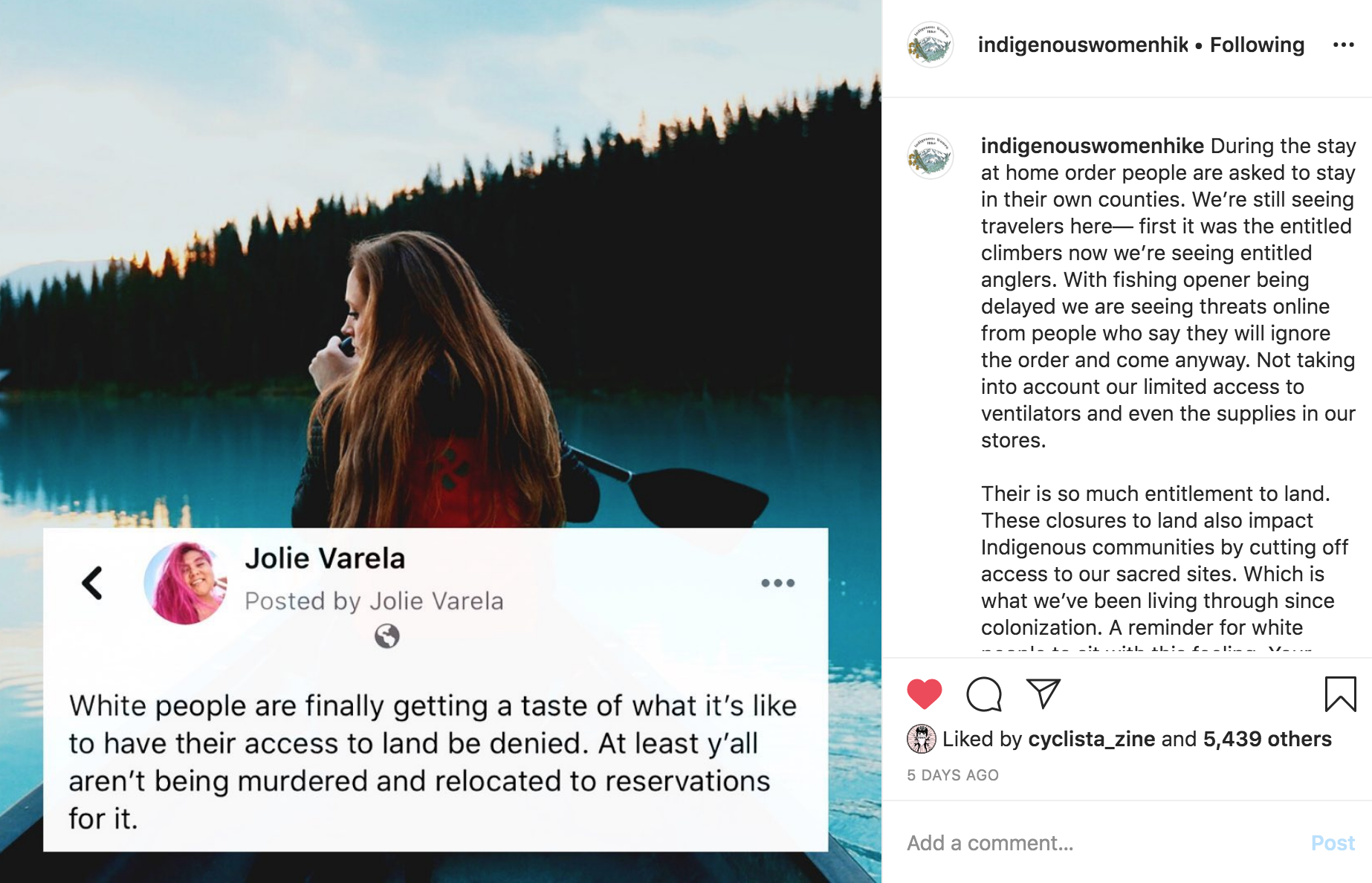 In the caption, Varela writes, > “During the stay at home order people are asked to stay in their own counties. We’re still seeing travelers here— first it was the entitled climbers now we’re seeing entitled anglers. With fishing opener being delayed we are seeing threats online from people who say they will ignore the order and come anyway. Not taking into account our limited access to ventilators and even the supplies in our stores. > > There is so much entitlement to land. These closures to land also impact Indigenous communities by cutting off access to our sacred sites. Which is what we’ve been living through since colonization. A reminder for white people to sit with this feeling. Your climbing, fishing, recreation may be delayed to protect everyone during this time but it does not compare to the hundreds of years that Indigenous folx were murdered and removed from the lands to designate them as public lands. > > Your access is a privilege that Indigenous people are still feeling the impacts of.” A global pandemic is not permission to "escape from it all." And we need to think about the privilege, power and entitlement that comes with this idea/narrative. Black and Brown people are dying at the highest rates right now and white people are treating this like it's all going to “blow over.” This makes sense though because police officers — the right hands of white supremacy — are arresting Black folks for being outside, but letting white people take over public parks in the masses. [Tamika D. Mallory](https://www.instagram.com/tamikadmallory/?ref=terraincognitamedia.com) posted about this on her Instagram recently writing, “Wow... so let me get this straight...@NYPD is out here distributing masks to white people, while literally beating black folks over the head. Nah! [@nycmayor](https://www.instagram.com/nycmayor/?ref=terraincognitamedia.com) we will not allow this shit to continue. Something MUST be done. You just might have to lock some of us up as well. 😡 We will not sit back and take this. 📷: [@welcome2thebronx](https://www.instagram.com/welcome2thebronx/?ref=terraincognitamedia.com) 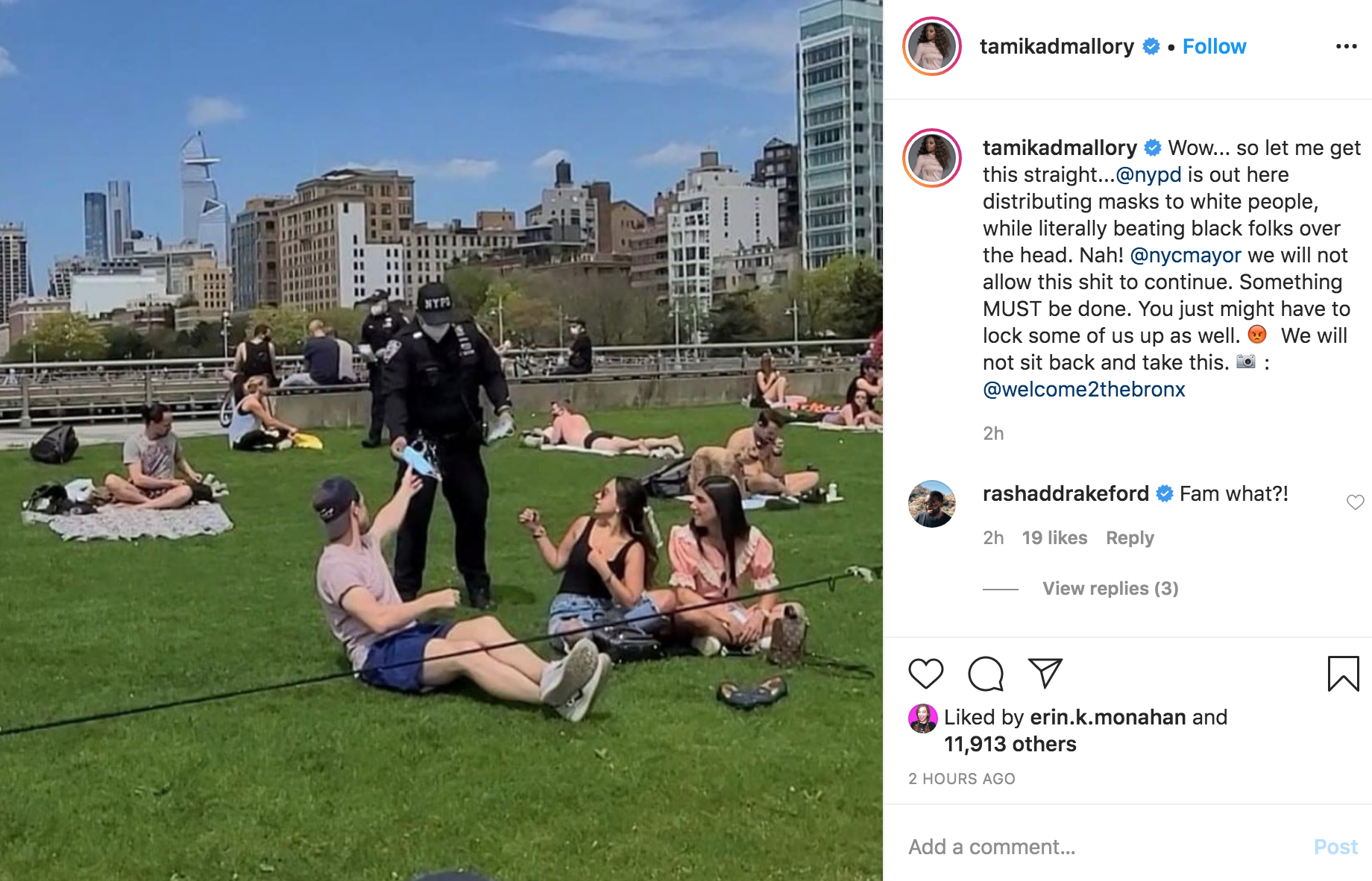 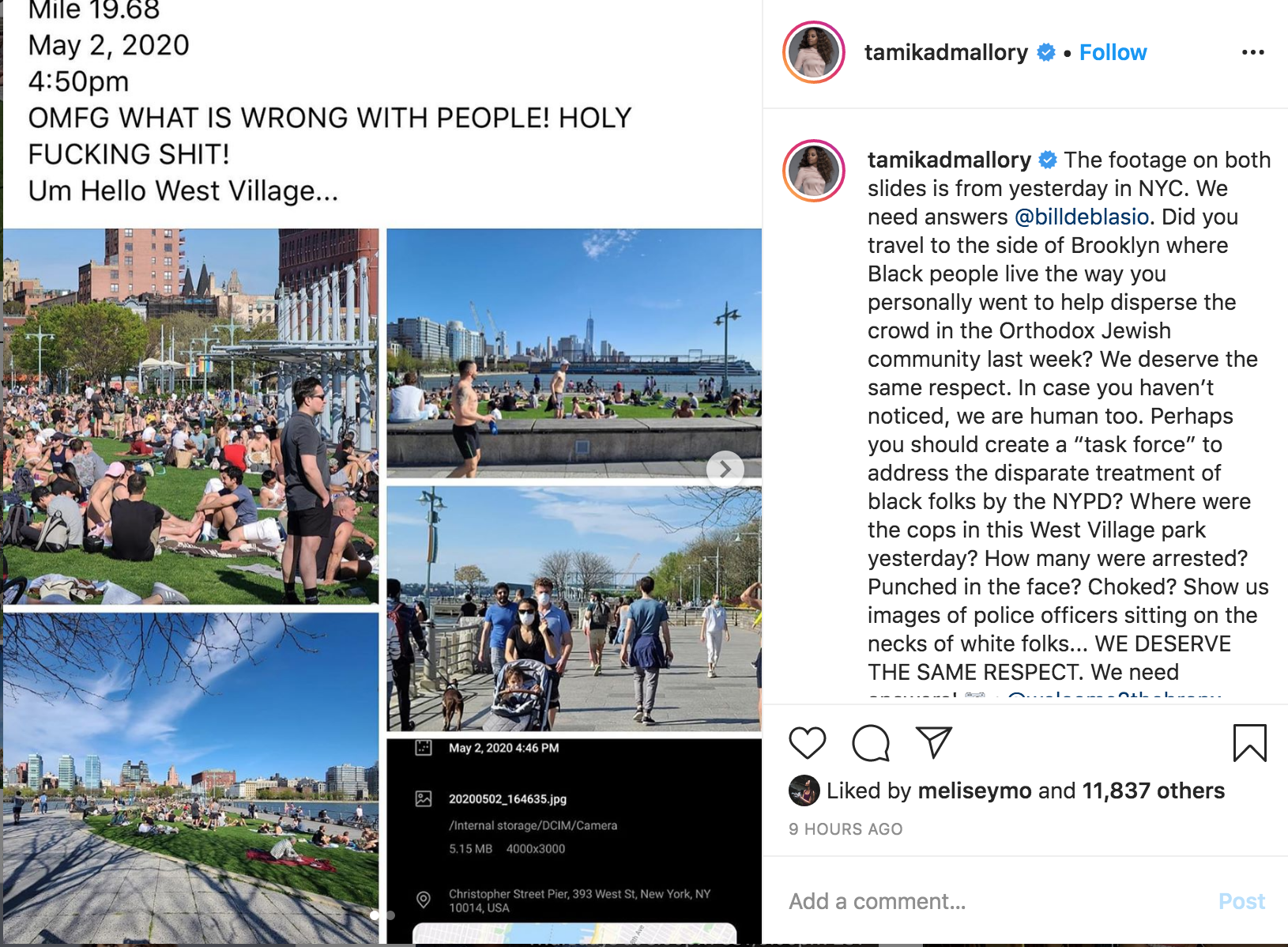 Capitalism and white supremacy are the true cause of this virus and we are only ramping it up by traveling outside and not staying put if we have the privilege to do so. Being white right now means that the hospital staff will prioritize our lives over Black and Brown lives because anti-Blackness and racism are alive and well in emergency rooms, and the medical-industrial complex at large. If we have the choice and ability, stay the fuck home. This is not a fucking joke. This is not something to take lightly. ### Some Tips: 1. Try your best to only go to the grocery store every two weeks if you can. 2. Wear a mask at all times when in public spaces. 3. Wash your hands a shit ton. 4. Give more than six feet to people you pass as much as you can because the CDC and the government are making arbitrary standards about a deadly as fuck virus that they don't even fully understand yet. 5. Stop shopping at Whole Foods, Amazon, Target, Wal-Mart, and any corporation that is not supporting their workers, that are not giving them proper protective equipment, health benefits, and increased hourly pay right now. 6. Stop ordering non-essential items online to be in solidarity with FedEx and UPS workers. 7. Give appreciation to your postal service workers right now who are mostly Black femmes doing the work. 8. [Listen to Hoodrat to Headwrap.](https://open.spotify.com/show/0QuoMdZrq07nwX4GftLNjz?ref=terraincognitamedia.com) Ebony Donnley and Ericka Hart just put out a searing and informative podcast episode that gives a thorough analysis of how anti-Blackness and COVID 19 go hand in hand. You're not staying home just for your own safety, more importantly, you're staying home to not be a burden on an already burdened medical system that was designed to kill Black and Brown folks. The **LEAST** we can do as white people is stay the fuck home if we can. ### Hey, It’s John Muir’s Birthday, So Here’s a Reminder of His Racist Legacy URL: https://www.terraincognitamedia.com/hey-its-john-muirs-birthday-so-heres-a-reminder-of-his-racist-legacy2020/ Last updated: 2026-08-22T19:38:46.000Z In response to [Adventure Journal’s recent piece today glorifying John Muir](https://www.adventure-journal.com/2020/04/the-aj-list-20-inspiring-quotes-from-john-muir/?mc%5Fcid=0e538f0713&mc%5Feid=8c78f69e91&utm%5Fcampaign=0e538f0713-RSS%5FEMAIL%5FCAMPAIGN&utm%5Fmedium=email&utm%5Fsource=AJ%27s%20Daily%20Digest&utm%5Fterm=0%5Fa7cb93cd43-0e538f0713-390409237) we decided to offer up our feminist analysis of the racist asshat. We want to acknowledge and **give deep gratitude to Jolie Varela of Indigenous Women Hike (IWH)** who catalyzed conversations throughout the outdoor industry about the truth of John Muir’s racist legacy, and who continues to teach us so much about what we have intentionally not been taught about the history of this white supremacist country. Give thanks, support (financial or otherwise), and praise to Varela and IWH as often as you can! In mainstream media, John Muir is called “The Father of Our National Parks,” a “Wilderness Prophet,” and there are too many -- one is too many -- places and buildings named after him, even a minor planet, as fucking ridiculous and absurd as that is. **His writing and actions are sorely miscredited as the work of an “environmental hero” instead of the work of a toxic masculine, egocentric, eco-jock.** Let’s make this truth go viral, shall we? 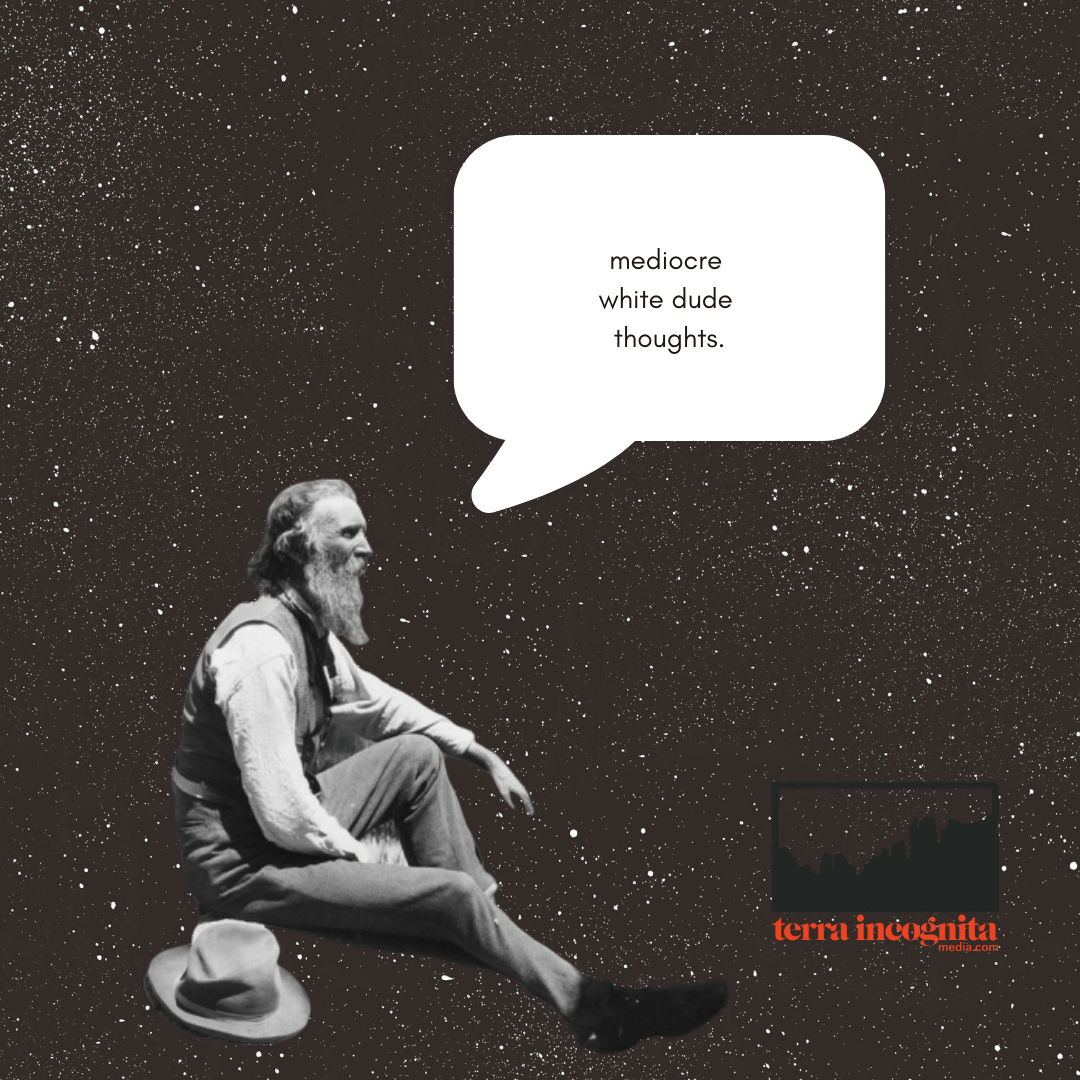 ### **An Incomplete List of Examples of John Muir’s Heinous and Inexcusable Racism** 1. John Muir described the indigenous people he encountered on his visits to Ahwahneechee, so-called Yosemite, [“most ugly, and some of them altogether hideous.”](https://vault.sierraclub.org/john%5Fmuir%5Fexhibit/writings/my%5Ffirst%5Fsummer%5Fin%5Fthe%5Fsierra/?ref=terraincognitamedia.com) 2. In another racist reference to indigenous peoples Muir says, “...they seemed to have no right place in the landscape, and I was glad to see them fading out of sight down the pass.” 3. He described the Cherokee homes he found as, [“the uncouth transitionist …wigwams of savages.” He described the homes of the very settlers who may well have drove them out as, “decked with flowers and vines, clean within and without, and stamped with the comforts of culture and refinement.”](http://www.virginialiving.com/culture/1619-when-america-became-america/?ref=terraincognitamedia.com) 4. “A strangely dirty and irregular life these dark-eyed, dark-haired, half-happy savages lead in this clean wilderness.” [Check out Indigenous Women Hike for more on this quote.](https://www.instagram.com/p/Bsuwa%5FtF5oA/?ref=terraincognitamedia.com) 5. [“As to Indians, most of them are dead or civilized into useless innocence.”](https://books.google.com/books/about/Our%5FNational%5FParks.html?id=XF9RI-CoZq0C&ref=terraincognitamedia.com) 6. In September of 1867 at 29 years old Muir went on a 1,000 mile walk from the Indiana/Kentucky border to the Gulf of Mexico and[ he reported the laziness of “Sambos.”](https://www.newyorker.com/news/news-desk/environmentalisms-racist-history?ref=terraincognitamedia.com) 7. “[Muir was worried about ‘idle negroes..prowling about everywhere’”](https://samirchopra.com/2017/04/14/john-muir-on-the-negroes-of-the-american-south/?ref=terraincognitamedia.com) \-- Samir Chopra writes in the piece, *John Muir On the ‘Negroes’ of the American South* Let it be known and etched into our brains that John Muir should not be heralded as a fatherly figure of the natural world -- a patriarchal/white supremacist figure, yes -- but not fatherly. **To be fatherly would mean he was affectionate and protective, but his actions have only ever been self-serving as he sought to manufacture a landscape free of those whom he hypocritically deemed “dirty.”** [It’s pretty dirty to actively have a hand in the forced removal and genocide of multiple communities of people.](https://www.newyorker.com/news/news-desk/environmentalisms-racist-history?ref=terraincognitamedia.com) He didn’t care about the harm he was causing to the original stewards who have lived on Turtle Island for time immemorial. ### Muir’s legacy is one of unearned glorification as is the case with any mediocre white man. Same story, different century today in 2020 with average white men like [Yvon Choiunard, Jeff Bezos, and Leonardo DiCaprio](https://www.theguardian.com/commentisfree/2019/jun/10/billionaires-climate-change-michael-bloomberg?ref=terraincognitamedia.com) who get touted as “environmental heroes” [“working on climate change.”](https://grist.org/article/what-has-leonardo-dicaprio-done-for-climate-change-grist-investigates/?ref=terraincognitamedia.com) \[caption id="" align="alignnone" width="1600"\] 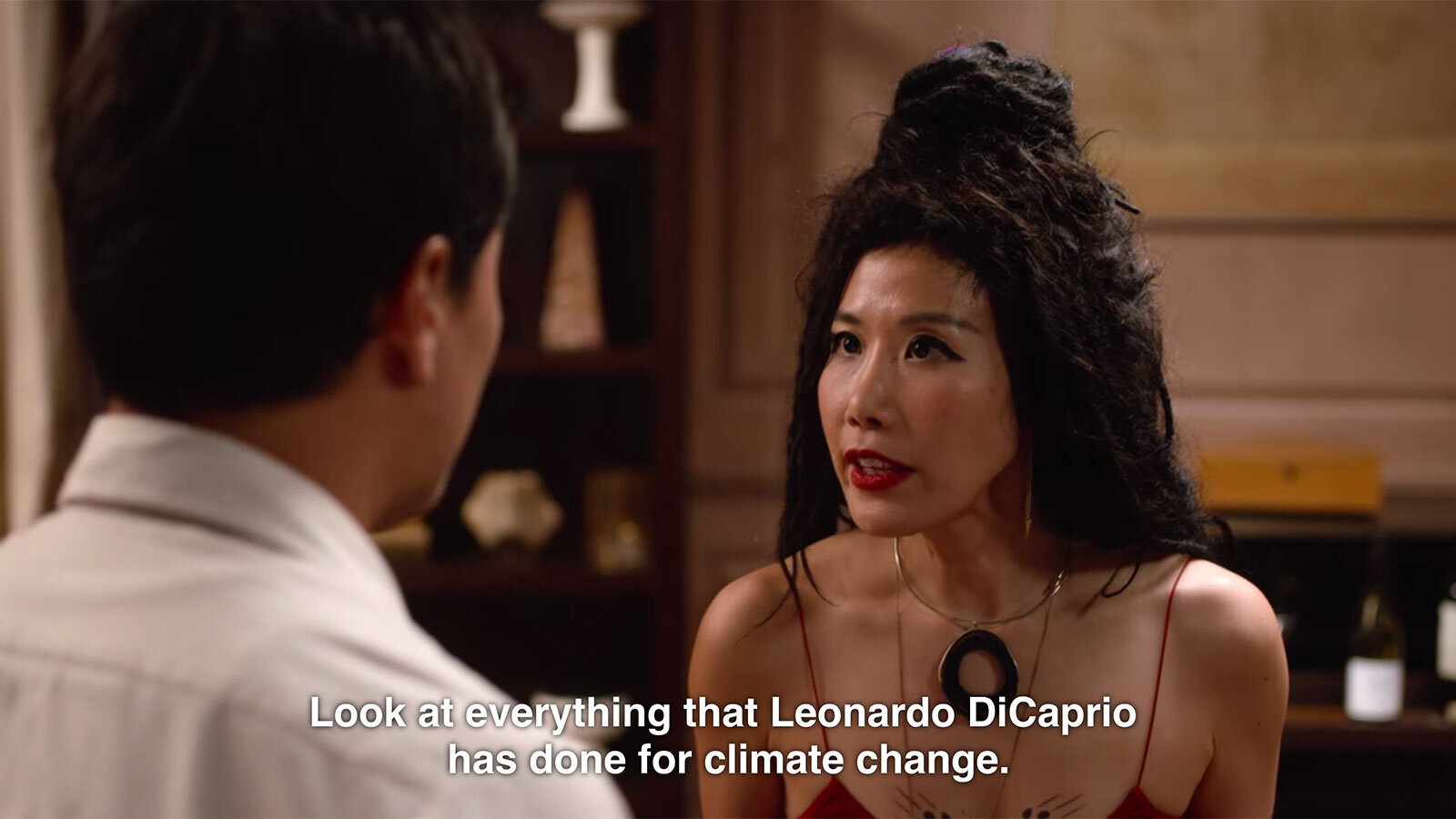 Image via Grist of a still shot from a scene in Always Be My Maybe \[/caption\] So, let’s give a warm and fuzzy “Fuck you, John Muir” to John Muir on his birthday. If you want to celebrate with us post a photo of you outside and caption it with the true history of John Muir’s legacy. Don’t forget to tag us and add these hashtags: #StopGlorifyingJohnMuir #FuckYouJohnMuir We’ll share it with the *Terra* community! P.S. We highly recommend a book that [Jolie Varela put on our radar](https://www.instagram.com/p/Bs55Z0wlTQD/?ref=terraincognitamedia.com) called Dispossessing the Wilderness by David Spence. A devastating and in-depth read that will give you a more comprehensive understanding of how the national parks came to be. ### Not Your Playground: Amid COVID-19 Pandemic Flash Foxy Cancels Women’s Climbing Festival in Payahüünadü, and Here’s Why You Should Cancel Your Plans Altogether URL: https://www.terraincognitamedia.com/collective-care-and-solidarity-during-covid-19-the-womens-flash-foxy-climbing-festival-was-cancelled-and-why-you-must-cancel-your-plans-altogether2020/ Last updated: 2026-08-22T19:38:47.000Z *Photo by* [*Tommy Lisbin*](https://unsplash.com/@tlisbin?utm%5Fsource=unsplash&utm%5Fmedium=referral&utm%5Fcontent=creditCopyText) Among the cancellations of major events like South by Southwest, Coachella, and various summits, conferences, and concerts, Flash Foxy followed suit by cancelling their massively popular and sold-out Women’s Climbing Festival (WCF) that takes place every March in Payahüünadü (the Nümüü word for “place of flowing water,” something we learned from Jolie Varela of Indigenous Women Hike). This is a commendable action at this time considering how easily the new coronavirus can spread and how many people are infected without knowing it. Payahüünadü is home to indigenous communities who are most vulnerable to epidemics because of the intentional design of white settler colonialism and the way white colonizers have been hoarding wealth and resources since invasion day. ## Our Society Under White Settler Colonialism is Designed to Insulate the Wealthy Elite and Deprive Everyone Else As Vienna Rye writes, “People do not simply ‘lack resources,’ we are intentionally deprived of them. Inequality is structurally designed \[to be\] racist, ableist, gendered, class violence, not an individual character flaw. To maintain its oppressive status quo, neoliberalism strips structural critiques down to individual \[critiques\]. We vote for individuals who ‘perform democracy’ best, while ignoring that democracy has never existed on a structural level.” Rye also points out that the government has every ability to provide people with the resources they need as evident in how Wall Street received a cool $1.5 trillion from the Federal Reserve Bank of New York in short-term loans. Resources in remote Payahüünadü are already hard to come by outside of a national crisis. If climbers descend upon Payahüünadü in the same manner they do every year, most of whom will be wealthy, white people -- the demographic who can largely afford to attend the WCF -- the community could experience an even more difficult time getting the things they need to be as prepared as possible for social distancing, and in some cases, self-quarantine. If WCF attendees, and recreationists of any kind, continue with their plans to visit Payahüünadü, or any sacred land that has compromised access to resources, that goes for places outside of Turtle Island as well, they are consequently putting an undue burden on those most at-risk for infection: the indigenous peoples. ## Jolie Varela Encourages Everyone to Consider Our Elders and Those Who Are Immunocompromised \[caption id="" align="alignnone" width="720"\] 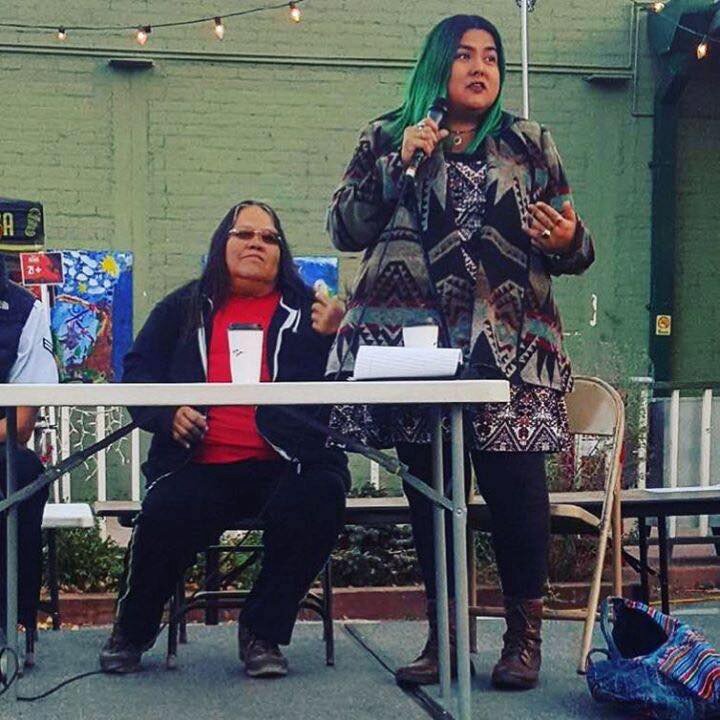 Jolie Varela facilitating a panel discussion about Indigenous history, activism, and resilience in Payahuunadu. \[/caption\] Food, supplies, and basic necessities are already being wiped out, and restocking the shelves in a timely manner is difficult for trucks that come from larger cities. Jolie Varela of Indigenous Women Hike shared this message yesterday on Instagram: > “Please don’t think of this as vacation time. Please don’t come to Payahuunadü (Owens Valley) and expose our vulnerable communities when we have limited resources and limited access to hospital services. Mammoth Mountain ski resort has closed but people are still coming to recreate. I’ve also gotten word that even though the women’s climbing festival was postponed that a lot of people will still be coming to climb in Payahuunadü. CHECK YOUR PRIVILEGE. I encourage people to stay home. I do not want to induce panic but I am thinking of the well-being of my community—our elders and those who are immunocompromised. > > We also have very few stores here. Consider that when you come here and head to the store you can be taking food and supplies out of the homes of us who live here. ALL of the stores we have here are out of TP and cleaning supplies. > > Our homelands are not your playgrounds or places for you to escape during this crisis. Understand that this privileged way of thinking can put our elders and vulnerable loved ones at risk. As an aunty of babies who are vulnerable and as someone who is deeply concerned for the health of our culture bearers(our elders) I urge you to think of the health of our community.” ## Flatten the Curve When you have more individuals in an area, you increase the likelihood of an infection spreading, which is why [social distancing, along with other proactive and precautionary measures](https://www.vox.com/future-perfect/2020/2/28/21156128/coronavirus-prepare-outbreak-covid19-health?ref=terraincognitamedia.com), is so important right now. Unbeknownst to you, you could be a vessel for the virus to spread. It’s clear that we cannot stop this infection without a vaccine, but we can [flatten the curve](https://medium.com/@tomaspueyo/coronavirus-act-today-or-people-will-die-f4d3d9cd99ca?ref=terraincognitamedia.com). Flattening the curve is the most beneficial outcome we could hope for in order to avoid the tragic reality of [what is happening in Italy right now](https://twitter.com/jasonvanschoor/status/1237142891077697538?ref=terraincognitamedia.com). ## Self-Care is Community Care As always, self-care is community care. To be in solidarity with each other at this time means staying home if you can, finding connection from a distance, and adapting to a new way of life, at this moment, for the betterment of all. [**DONATE MONEY AND RESOURCES TO THE BISHOP PAIUTE TRIBE TO HELP ELDERS IN NEED**](https://www.facebook.com/223291787855770/posts/1437205043131099/?d=n) ### Related: [COVID-19 is Our Chance to Radicalize the Times](https://www.terraincognitamedia.com/covid-19-is-our-chance-to-radicalize-the-times2020/) ### This is our Chance to Radicalize the Times URL: https://www.terraincognitamedia.com/covid-19-is-our-chance-to-radicalize-the-times2020/ Last updated: 2026-08-22T19:38:47.000Z [*Feature photo by Jessica Felicio*](https://unsplash.com/@jeka%5Ffe?ref=terraincognitamedia.com) The Coronavirus pandemic seems to be having the same effect on the mainstream consciousness as did Trump rising to power. When Trump got elected, many folks -- as in mostly white people -- “woke up” in shock to the fact that our country is \*this\* racist and rooted in white supremacy. Now with the new coronavirus, we are seeing (an eye-roll-inducing) delayed realization among those with power that when the most vulnerable in our society do not receive proper resources and healthcare we are *all* vulnerable. Still, this country is designed to insulate the able-bodied, white and wealthy elite while everyone else, especially those who are elderly, immunocompromised, disabled, undocumented, Black, Indigenous, and people of color, are treated as disposable. JD Davids of [Cranky Queer](https://crankyqueer.org/?ref=terraincognitamedia.com) speaks to this in Healing Justice’s new podcast episode, [“Coronavirus: Wisdom from a Social Justice Lens,”](https://irresistible.org/podcast/corona?ref=terraincognitamedia.com) in which they explain, “The people who have been living with a pandemic of marginalization, disregard, or neglect for much of their lives, or their whole lives, are the people who have the expertise we need today, and that could help the rest of the world, yet continue to be disregarded.” This disregard manifests in how white, young, and able-bodied people are viewing the pandemic as an opportunity to go on discounted vacations, a reason to throw a block party, continue on with their plans to ski in Colorado, or take up unnecessary and unwelcome space in Payahüünadü. It is important to take seriously the words of Atlantic journalist, Yascha Mounk, and [“cancel everything](https://www.theatlantic.com/ideas/archive/2020/03/coronavirus-cancel-everything/607675/?ref=terraincognitamedia.com).” The widespread and unpredictable nature of COVID-19 has possibly brought out our worst cases of anxiety, and understandably so. These recent events have also brought out some of our most bizarre and absurd behaviors like the impulse to hoard toilet paper and pounds of frozen chicken (??). For those of us who are accustomed to a more predictable and stable reality when it comes to our health, access to resources, and general wellbeing, we are coming to terms with what many have already known all along: “[America is a Sham](https://slate.com/news-and-politics/2020/03/coronavirus-tsa-liquid-purell-paid-leave-rules.html?ref=terraincognitamedia.com).” Hopefully, this will be the dawning of a more radicalized future, one in which we are more attentive to the needs of the most oppressed going forward, a reality we have been morally obligated to fight for all along. A world in which healthcare is not a luxury afforded to those in power, but a human right. A world where billionaires, who’s wealth could ensure that no one needs to go to work, simply do not exist. And hopefully, this will also be the dawning of increased, collective cleanliness -- you know, not just washing our hands *after* we use the toilet, but *before* too, and dare I say we utilize washcloths and actually wash our butts…?! What a world we could create in this upheaval, this ripening, this time of rebirth, of spring and shift. ## Resources for the new Coronavirus: [Follow Vienna Rye (@Vrye) and Check Out Their Highlight](https://www.instagram.com/vrye/?ref=terraincognitamedia.com) About Mutual Aid Resources Across the Nation [Cancel Everything](https://www.theatlantic.com/ideas/archive/2020/03/coronavirus-cancel-everything/607675/?ref=terraincognitamedia.com) by Yascha Mounk [Why You Must Act Now](https://medium.com/@tomaspueyo/coronavirus-act-today-or-people-will-die-f4d3d9cd99ca?ref=terraincognitamedia.com) by Tomas Pueyo [It’s Not Overeacting to Prepare for Coronavirus. Here’s How.](https://www.vox.com/future-perfect/2020/2/28/21156128/coronavirus-prepare-outbreak-covid19-health?ref=terraincognitamedia.com) by Kelsey Piper [The Do’s and Dont’s of Social Distancing](https://www.theatlantic.com/family/archive/2020/03/coronavirus-what-does-social-distancing-mean/607927/?ref=terraincognitamedia.com) by Kaitlyn Tiffany [Responding to Coronavirus With National Paid Sick Leave](https://tcf.org/content/commentary/responding-coronavirus-national-paid-sick-leave/?session=1&ref=terraincognitamedia.com) by Jamila Taylor and Julie Kashen ## Self-Care Related Resources: [The Nap Ministry](https://www.instagram.com/p/B9tslhpJ3C0/?ref=terraincognitamedia.com), which promotes “anti-grind culture, anti-hustle, anti-burnout culture.” [Find their blog here](https://thenapministry.wordpress.com/?ref=terraincognitamedia.com). Find their [Patreon here](https://www.patreon.com/napministry?utm%5Fmedium=social&utm%5Fsource=facebook&utm%5Fcampaign=creatorshare2). [Sonya Renee Taylor’s Instagram Videos](https://www.instagram.com/sonyareneetaylor/?ref=terraincognitamedia.com) Are Always Uplifting [Tearfully Accurate Horoscopes](https://chaninicholas.com/horoscopes-for-the-full-moon-in-virgo-march-2020/?ref=terraincognitamedia.com) from our Astrological Mother Chani Nicholas [Are You Unsatisfiable? Hurry Slowly Podcast With adrienne marie brown ](https://www.stitcher.com/podcast/hurry-slowly/e/66273868?autoplay=true&ref=terraincognitamedia.com) [This World is Ours to Build: How We Build a Cooperative and Holistic Future](https://www.endoftheworldshow.org/blog/2019/10/3/this-world-is-ours-to-build?ref=terraincognitamedia.com) from How to Survive the End of the World Podcast ## Digital Events: [Slo ‘Mo from Homo](https://www.instagram.com/p/B9xCC7-BOGZ/?ref=terraincognitamedia.com): A Digital Dance Party for Queer Community Connection ### An Online Workshop on Toxic Masculinity in the Outdoor Industry URL: https://www.terraincognitamedia.com/an-online-workshop-on-toxic-masculinity-in-the-outdoor-industry2020/ Last updated: 2020-01-16T16:27:31.000Z ## [***Learn more and save your spot here!***](https://terracollective.podia.com/toxic-masculinity-in-the-outdoor-industry-spring-2023?ref=terraincognitamedia.com) This workshop will be based on the essay, [“Ambient Dominion: How Free Solo Points to an Epidemic of Toxic Masculinity.”](https://www.terraincognitamedia.com/ambient-dominion-how-free-solo-points-to-an-epidemic-of-toxic-masculinity2018/) **Have you ever been at a loss for what to say when you witness and/or experience toxic masculinity?** **Have you ever had that gut feeling that something is off or wrong, but you held back or hesitated to say something because you didn't want to make any "waves," disturb the "peace," or upset your friends, co-workers, boss, etc.?** **Have you ever wanted to interrupt bullshit, toxic behavior in your friend group or workplace, but you're afraid if it's not the "right time or place"?** **Have you ever been gaslit, tone-policed, or silenced within an intimate, group, or work setting when you've tried to speak out about toxic, harmful, or violent behavior or language, and now you're second-guessing yourself and wondering if you're the problem?** ## We're here to stress that you're not the problem and you're not alone. In this workshop participants will gain in-depth knowledge about how toxic masculinity manifests in the outdoor industry, receive actionable advice about how to interrupt/disrupt toxic masculinity, develop tools for self-compassion and nervous system regulation, and leave with a grounded sense of confidence to catalyze anti-oppressive change towards gender and racial justice wherever you are within the outdoor industry, as well as your personal and professional sphere of influence. [**REGISTER HERE!**](https://terracollective.podia.com/toxic-masculinity-in-the-outdoor-industry-spring-2023?ref=terraincognitamedia.com) ### Say NoThanks to #Thankstaking URL: https://www.terraincognitamedia.com/say-nothanks-to-thankstaking2019/ Last updated: 2026-08-22T19:38:48.000Z > “To learn and know this history is both a necessity and a responsibility to the ancestors and descendants of all parties.” \-- Roxane Dunbar-Ortiz on the true history of what has happened to the great civilizations of the Western Hemisphere in her book *An Indigenous Peoples’ History of the United States of America* Tomorrow many families across the United States will sit down at a table to celebrate a holiday rooted in colonization and genocide. The history of the ongoing struggle for indigenous rights and self-determination has been co-opted and re-written by colonizers to make forced removal seem amicable. But the fable that is “Thanksgiving,” what many Indigenous leaders and activists call “Thankstaking,” was anything but friendly and good-natured. In reality, indigenous liberation struggles in North America have been ongoing ever since the first colonizers set foot on what is now called the United States of America -- occupied Turtle Island. [Indigenous women](https://www.terraincognitamedia.com/jolie-varela-on-payanad-the-place-of-flowing-water2017/), in particular, have always been on the front lines of resisting European colonization, often sacrificing their physical bodies as a barrier to protect their land and resources, as we saw with Standing Rock and [Mauna a Wākea](https://www.terraincognitamedia.com/mauna-a-wkea2019/). Even when federal authorities come in with machine guns, tear gas, and water cannons, indigenous women are leading examples of principled nonviolence in honor of continuing the struggle for decolonization. “It is well documented that reducing the status of Indian women within their pre-Columbian nations was a top priority for European colonizers eager to weaken and destabilize indigenous societies,” writes Marie Anna Jaimes Guerrero in her essay, [“Civil Rights vs. Sovereignty: Native American Women in Life and Land Struggles,”](https://books.google.com/books?dq=Marie%20Anna%20Jaimes%20Guerrero%20civil%20rights%20vs%20sovereignty&hl=en&id=uodPtO2WpawC&lpg=PT173&ots=TMw7AODpK8&pg=PT173&ppis=%5Fe&sa=X&sig=ACfU3U0IQ7AWUOoayp02ll0PC3u-y97c-g&source=bl&ved=2ahUKEwj1n-ip%5FormAhWtTt8KHWREAR8Q6AEwAXoECAkQAQ#v=onepage&q=Marie%20Anna%20Jaimes%20Guerrero%20civil%20rights%20vs%20sovereignty&f=false) which is featured in the book Feminist Genealogies, Colonial Legacies, Democratic Futures edited by M. Jacqui Alexander and Chandra Talpade Mohanty. [Systems of oppression, ongoing colonization, and gender-based violence are inextricably interrelated. ](https://www.youtube.com/watch?index=23&list=PLSzV7C3Xb3YGVRUyUdaUIgtOXLleorkhc&v=dHmdJrQa4Io&ref=terraincognitamedia.com)These are the phenomena that provide the foundations of manifest destiny -- the idea that justified European invasion on Turtle Island, pushing out Indigenous communities, and bringing enslaved people from Africa to develop what John L. O’Sullivan, a New York journalist called, “an experiment of liberty and federated self-government.” Despite what our mainstream history books say, indigenous people have never been passive about ongoing colonization. They have always fought for self-determination, especially Indigenous women who continue to be prominent figures in grassroots movements for reclamation, preservation, and restoration. [Marie Lego](https://www.nytimes.com/1970/06/21/archives/arrest-attempt-by-indians-fails-seizure-of-utilities-head-is-sought.html?ref=terraincognitamedia.com), an elder of the Achumawi in Northern California, protested Peabody Coal in the 1970s to protect her peoples’ sacred lands. [Janet McCloud (Tulalip) and Ramona Bennett (Puyallup)](https://depts.washington.edu/civilr/fish-ins.htm?ref=terraincognitamedia.com) led “fish in” demonstrations of the 1960s. [Ellen Moves Camp and Gladys Bissonette, elder Oglala Lakota women](https://www.workers.org/2008/us/ellen%5Fmoves%5Fcamp%5F0612/?ref=terraincognitamedia.com), started the Oglala Sioux Civil Rights Organization, OSCR on the Pine Ridge Reservation in South Dakota. They both played key roles before, during and after the 1973 occupation of Wounded Knee. In the 1990s, [Pauline Whitesinger, Roberta Blackgoat, and Katherine Smith](https://vimeo.com/46394720?ref=terraincognitamedia.com), along with ten thousand other Dine (Navajo), were threatened by the federal government to leave their homes at Big Mountain in order to make way for US corporations to mine the land. They resisted, which meant enduring intimidation and violence at the hands of the police. [Lorelei Means, Minneconju Lakota, Madonna Thunderhawk, and Phyllis Young, both Hunkpapa Lakotas](https://books.google.com/books?dq=lorelei%20means%20and%20madonna%20thunderhawk&hl=en&id=DreCFo6MrR8C&lpg=PA51&ots=PMiBHrFQUC&pg=PA51&ppis=%5Fe&sa=X&sig=ACfU3U0imFwGDPegkvgcOqqbdEGoEgQvGA&source=bl&ved=2ahUKEwiLqLKniYvmAhVPKa0KHQHqBA4Q6AEwCXoECAoQAQ#v=onepage&q=lorelei%20means%20and%20madonna%20thunderhawk&f=false), organized for indigenous rights to health, water, and the environment. Together they formed Women of All Red Nations (WARN), which fought against the US government’s paternalist, colonialist handling of indigenous affairs. [Winona LaDuke](https://www.speakoutnow.org/speaker/laduke-winona?ref=terraincognitamedia.com) (Anishinabe) is a well-known activist for environmental and indigenous justice at the forefront of the White Earth land struggle.[ LaDuke is the program director for Honor the Earth](http://www.honorearth.org/meet%5Fthe%5Fteam?ref=terraincognitamedia.com). In 2007, LaDuke was inducted into the National Women’s Hall of Fame, recognizing her leadership and community commitment. In 1994, LaDuke was nominated by Time magazine as one of America’s fifty most promising leaders under forty years of age. She has been awarded the Thomas Merton Award in 1996, Ms.Woman of the Year ( with the Indigo Girls in l997) , and the Reebok Human Rights Award, with which in part she began the White Earth Land Recovery Project. [Jolie Varela, a citizen of the Tule River Yokut and Paiute Nations](https://www.terraincognitamedia.com/reclaiming-the-nm-poyo2018/), of Indigenous Women Hike is a rising and influential indigenous leader based in Payahüünadü, so-called Bishop, California. It was just two years ago that Varela started IWH, an incredible vision to bring healing to her community. She works tirelessly to advocate for indigenous rights, access, and the sacred spaces her people have between stewards of for time immemorial. This is to stress that indigenous resistance is very much present in 2019 and it is time that we say “no thanks” to a colonizer holiday that romanticizes the U.S.’s bloody and violent agenda. “Indigenism is thriving as a liberation movement,” writes Guerrero, “...Native American women in North America will likely become even more visible in the fight for our people’s rights and for the rights of indigenous women.” In her indispensable novel, An Indigenous Peoples’ History of the United States, Roxanne Dunbar-Ortiz details the multitudinous and sophisticated networks of Indigenous nations of North America in 1492, dispelling the settler-colonial myth that this land was populated by antiquated, primitive cavemen. It’s never been a “virgin wilderness” and there has never been such a thing as “terra incognita” despite what you may read by John Wesley Powell. Dunbar-Ortiz writes in her author’s note at the beginning of the book that she wanted to make clear that colonization, dispossession, settler colonialism, and genocide “drill to the core of US history, to the very source of the country’s existence.” She stresses that genocide is too often associated with disappearance. This association is exacerbated by the erasure of Indigenous people and history in schools. It is rare to find a child who grows up in the U.S. who has not experienced a kindergarten thanksgiving “celebration” complete with an “Indians and pioneers” theme where the kids create “Indian” costumes by cutting feathers out of paper and wearing them on their heads. Indigenous peoples’ -- hundreds of varied nations, not one homogenous group -- are still here and thriving. “Indigenous survival as peoples is due to centuries of resistance and storytelling passed through the generations, and I sought to demonstrate that this survival is dynamic, not passive. Surviving genocide, by whatever means, is resistance: non-Indians must know this in order to more accurately understand the history of the United States,” writes Dunbar-Ortiz. Thanksgiving is a violent holiday and we encourage families across the United States to educate themselves about the true history of colonization, and the ongoing indigenous resistance happening in the present day. November is Native American Heritage month. If you are gathering around a table tomorrow, do some research and put some effort into learning about who’s stolen land you are on. Let’s stop romanticizing genocide and advocate for the truth to be reflected in our children’s schools, in the books at the public library, and within the narratives, we operate at our places of work, social spaces... everywhere. You can be an advocate in your own sphere of influence. Here’s what we suggest: 1. Do a land acknowledgment: research the land you occupy, the people who were forcibly removed from that land, and the history of gentrification and redlining, as well. It’s all central to ongoing colonization and we need to educate ourselves about the true history of the spaces we take up. [This website can help you](https://native-land.ca/?ref=terraincognitamedia.com). But you may need to do some digging to find out more detailed information. Take this opportunity to share with your family and friends what you have learned. 2. Say NoThanks. [Otaes](https://www.patreon.com/Otaes?ref=terraincognitamedia.com), an indigenous educator, teamed up with [Queer Appalachia](https://www.instagram.com/queerappalachia/?ref=terraincognitamedia.com), a platform that advocates for Queer voices and identities in Appalachia, to create a series of public art pieces that discuss the trauma in indigenous communities in connection to food scarcity. NoThanks is a demand to end the celebration of resource extraction and death. NoThanks is a call to donate to Native American Indigenous Food Systems ([@natifs\_org](https://www.instagram.com/natifs%5Forg/?ref=terraincognitamedia.com)) and R.I.S.E. ([@riseindigenous](https://www.instagram.com/riseindigenous/?ref=terraincognitamedia.com)). Instead of spending $100+ on a Thanksgiving feast donate it to one of these organizations. 3. Donate and spread the word about [Indigenous Women Hike](https://www.instagram.com/indigenouswomenhike/?ref=terraincognitamedia.com), a platform that advocates for true inclusion and equity in the outdoor industry, and healing for indigenous communities. [Buy one of their gorgeous shirts here](https://www.bonfire.com/indigenous-women-hike-1/?ref=terraincognitamedia.com)! 4. Read this great [Thanksgiving Toolbox](https://www.threetokenbrowngirls.com/blog/2018/11/19/3tbg-thanksgiving-tool-box?ref=terraincognitamedia.com) resource that the platform Three Token Brown Girls made. And [listen to Three Token Brown Girls podcast episode, “Decolonizing Thanksgiving (Thankskilling),”](https://player.fm/series/three-token-brown-girls/decolonizing-thanksgiving-thankskilling?ref=terraincognitamedia.com) you can also find it on Spotify. 5. [Celebrate Indigenous People, Not Columbus](https://www.allmyrelationspodcast.com/podcast/episode/4ac24f5c/bonus-episode-celebrate-indigenous-peoples-day-not-columbus?ref=terraincognitamedia.com). Listen to these myths about Christopher Columbus provided by one of our favorite podcasts [All My Relations](https://www.allmyrelationspodcast.com/?ref=terraincognitamedia.com). 6. [Listen to this episode of Seeing White](https://www.sceneonradio.org/episode-35-little-war-on-the-prairie-seeing-white-part-5/?ref=terraincognitamedia.com) in which host John Biewan learns about why and how 38 Dakota men died in the largest mass execution in U.S. history that took place in Mankato, Minnesota. 7. [We invite you to think beyond the gender binary](https://www.them.us/story/inqueery-two-spirit?ref=terraincognitamedia.com). Learn about how [gender is a construct](http://www.sceneonradio.org/episode-56-the-juggernaut-men-part-10/?ref=terraincognitamedia.com), and how the gender binary of woman/man was created and enforced through colonization, a binary that indigenous communities do not maintain.The biggest lie that we need to dispel ourselves of is that colonization happened hundreds of years ago. It’s still happening today, right now, and if you are in a position of power and privilege you need to educate yourself on the truth and be an advocate in your own sphere of influence for indigenous rights and self-determination. You can help stop the erasure of the original stewards of this land. As Three Token Brown Girls says, “Politicize the fuck out of your Thanksgiving.” ### Anti-Blackness and Colonization: There is No Decolonization Without Uplifting Black Lives URL: https://www.terraincognitamedia.com/antiblackness-and-colonization2019/ Last updated: 2026-08-22T19:38:51.000Z *Cover art by Whitney Sparks* As a black woman of Turtle Island I am asking EVERYONE to STOP speaking of “Decolonization” without explicitly naming and confronting *Anti-blackness*. **Anti-blackness is deeply, unshakably inherent to colonization** — as much as land theft, rape, genocide, white supremacy, hierarchy. > “In a racist society it is not enough to be non-racist — we must be antiracist.” — Angela Davis ## **What Does it Mean to be Anti-racist?** \[caption id="" align="alignnone" width="689"\] 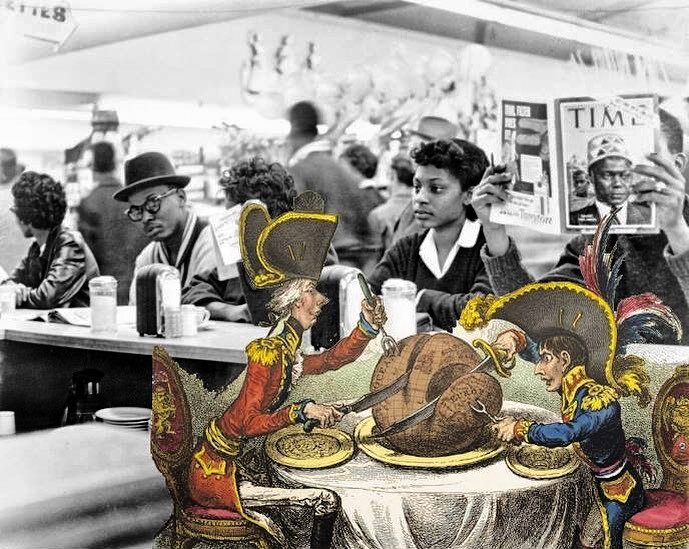 Collage by Whitney Sparks \[/caption\] It means taking the following actions: **1\. DECOLONIZING ONE’S PERSONAL & HOME LIFE** **2\. RECOGNIZING ONE’S OWN PRIVILEGE** **3\. DISRUPTING ANTI-BLACKNESS EVERYWHERE** In action, the praxis of being anti-racist is a ***lifelong*** process and unending series of practices, experiments upon oneself, developmental exercises, personal risks, education, labor, exchanges, pauses, etc. The actual steps are as diverse as they are multitudinous. For example, I’d be remiss if I didn’t mention: **4\. UNLEARNING THE GENDER BINARY** and **5\. RESPECTING ( SUPPORTING, LISTENING TO) WOMXN+** / femmes, feminine energies, beings, bodies, words, spaces, practices, and actions. \[caption id="" align="alignnone" width="628"\] 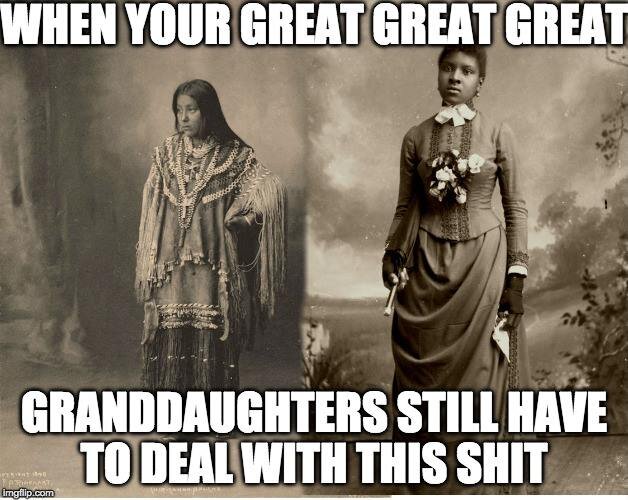 Meme created by Whitney Sparks \[/caption\] Anti-racism in the United States and/or on Turtle Island necessarily, critically, *crucially* involves the above acts (I’d argue that they are in fact globally required), in addition to explicitly carrying out the following: **1\. Acknowledgment of Native Indigenous land sovereignty** and our presence on un-ceded territories, inheritors of settler colonialism. This involves learning and self-education on the Indigenous people native to the land where you reside — locally and continentally. Find out their names, to begin. Listen to, defer to, respect and pay Indigenous people. This is a lesson applicable worldwide. **2\. Acknowledgment of the enslavement of Black ancestors** and everything that has entailed and enabled against people of the African Diaspora and their descendants in the Americas/ Turtle Island, and Black people worldwide. The peculiarly cruel racism experienced by Black people, especially in the US, but also globally is among the worst and most noxious forms of violent white supremacy that ever existed. This cannot be said or emphasized enough. \[caption id="" align="alignnone" width="1440"\] 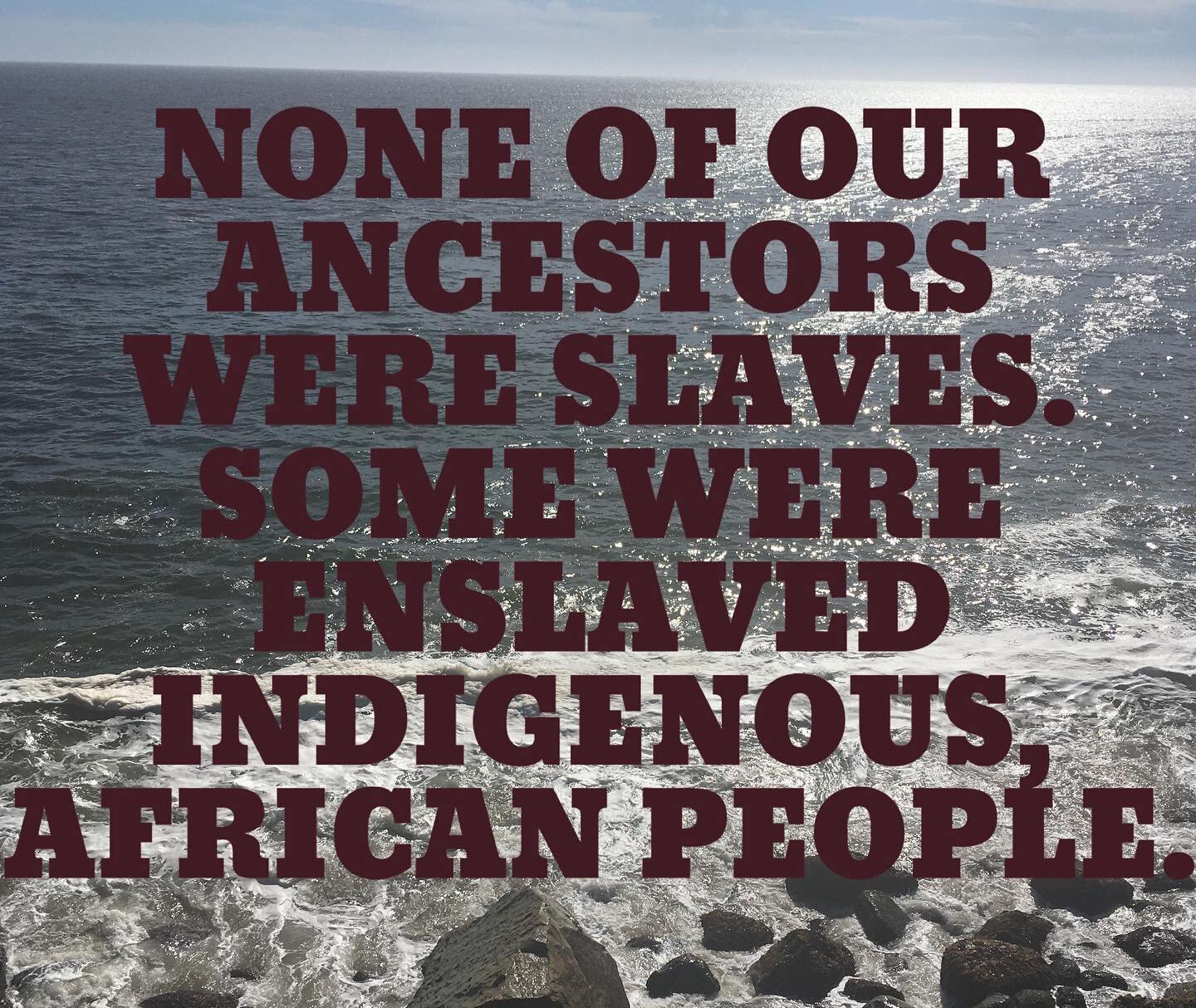 Artwork by Whitney Sparks \[/caption\] Along with the genocide of, and land theft from, Native Americans, this vicious, violent, anti-Black, white supremacy is both the origin and the basis of the hegemonic, hyper-capitalist white supremacy that is destroying our planet (from the ground up) and deliberately destabilizing communities and cultures of color around the world. The US war power that so many decry, lament, and protest, righteously and passionately — was and still is developed, tested, strengthened, and emboldened by oppressing, enslaving, and dehumanizing Black people, of African descent, over and over and over again (worldwide). Your job as an aspiring anti-racist accomplice (whether white or non-black people of color, but especially if you are white presenting) to begin is to educate yourself on Black history, via the voices of black people living and dead, of all genders and walks of life, and very importantly to **pay reparations to black people*.* \[caption id="" align="alignnone" width="982"\] 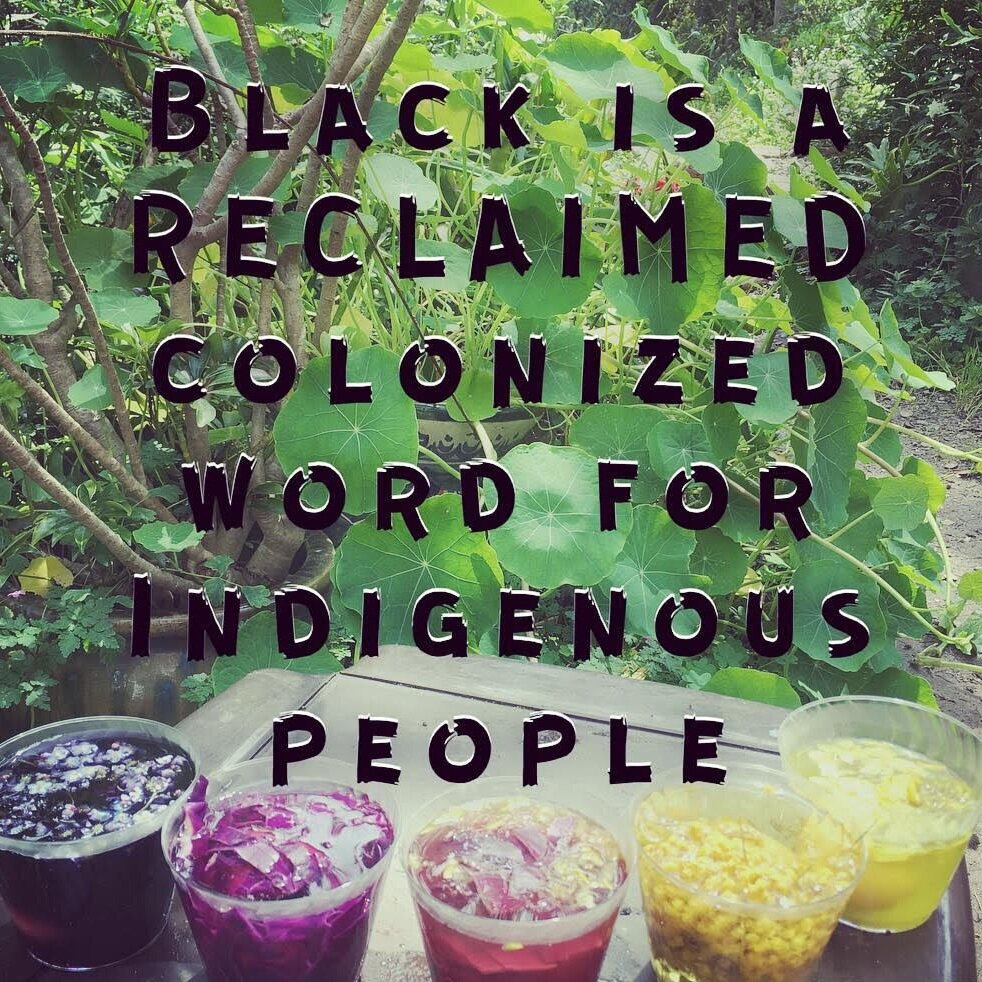 Artwork by Whitney Sparks \[/caption\] You can start by paying the black people and organizations who educate you about our history. You may also pay reparations directly to any Black American who accepts. I recommend setting aside a regular recurring amount of money in your budget for this purpose. If you feel lost on where to start giving I cannot recommend the [FB group “Reparations: Requests & Offerings”](https://www.facebook.com/groups/reparations.me/) highly enough. ### ***Resources Referenced:*** [Why We Need to Stop Excluding Black Populations From Ideas of Who is “Indigenous”](http://blackyouthproject.com/need-stop-excluding-black-populations-ideas-indigenous/?source=post%5Fpage-----9b8c7c34fa7----------------------) [White People Have No Culture](https://www.terraincognitamedia.com/white-people-have-no-culture2018/) [4 Uncomfortable Thoughts You May Have When Facing Your Privilege](https://everydayfeminism.com/2015/01/uncomfortable-thoughts-privilege/?source=post%5Fpage-----9b8c7c34fa7----------------------) [Reparations](https://www.reparations.me/press?source=post%5Fpage-----9b8c7c34fa7----------------------) [Reparations: Requests and Offerings](https://www.facebook.com/groups/reparations.me/?source=post%5Fpage-----9b8c7c34fa7----------------------) ### *Learn a Whole Lot More About Decolonization:* [Whitney’s “Reflection Pool” Books on Goodreads](https://www.goodreads.com/review/list/1353116-whitney?shelf=reflection-pool&source=post%5Fpage-----9b8c7c34fa7----------------------) [Continue the Fight Against Anti-Blackness And Keep The Conversation Going With Me Via **FUCK YEAH WOMXN OF COLOR!** on Facebook](https://www.facebook.com/FYWOC/?source=post%5Fpage-----9b8c7c34fa7----------------------) \[caption id="" align="alignnone" width="720"\] 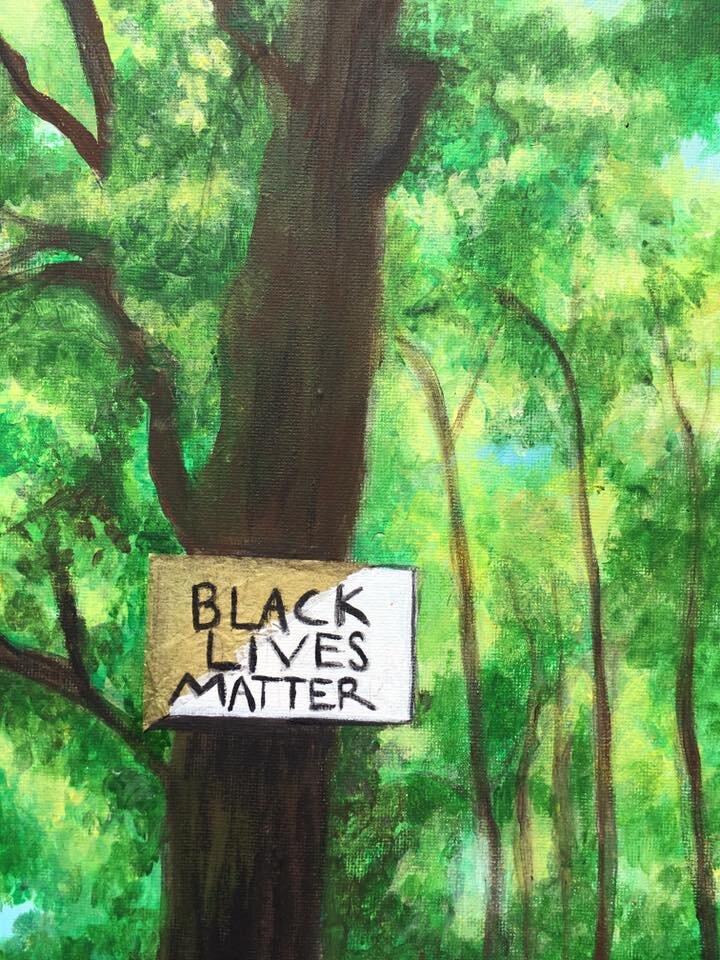 Artwork by Whitney Sparks \[/caption\] [This piece was originally published on Medium where you can find more of Whitney Sparks’ work. ](https://medium.com/@Treespire/antiblackness-colonization-9b8c7c34fa7?ref=terraincognitamedia.com) ### “Pretty Good”: The American Alpine Club’s Continued Exclusion, Exploitation, and Tokenization of Black and Indigenous Communities and How White People Rationalize It Away URL: https://www.terraincognitamedia.com/pretty-good-aac-racism-2019/ Last updated: 2026-08-22T19:38:55.000Z ***The American Alpine Club’s Craggin’ Classics Have a History of Being Exclusive, Exploitative, and Tokenizing of Black and Indigenous Organizations, but Chris Schulte Reports Back That They Are Doing “Pretty Good.”*** White people have historically anointed themselves as the “keepers of nature” from John Muir to Theodore Roosevelt to Madison Grant – all of these men declared protection for sacred lands without consent or engagement with Indigenous peoples and then used enslaved, Black people to work the land and build the society we see today. In the name of “conservation,” we have reservations, ghettos, redlining, poverty, and food deserts. Now, we see outdoor companies and organizations rallying around protecting “public lands” and protesting Trump and climate change deniers, yet there is a severe lack of acknowledgment and accountability for the continued genocide and erasure of the original stewards of the land,[ the Indigenous communities who are directly impacted by recreation, tourism,](https://www.bitchmedia.org/article/bucket-lists-colonization-mount-everest?ref=terraincognitamedia.com) and specifically, the influx of the climbers in places like Payahüünadü, so-called Bishop, CA. Today, those who anoint themselves as the keepers of nature hide their entitlement behind working with nonprofits for underserved youth, yet completely disrespect or ignore the Indigenous leaders of that same community in which they say they are helping to “restore” and “revive.” For example, Katie Lambert a climber, writer, and guide based in Payahüünadü wrote this caption on her Instagram: 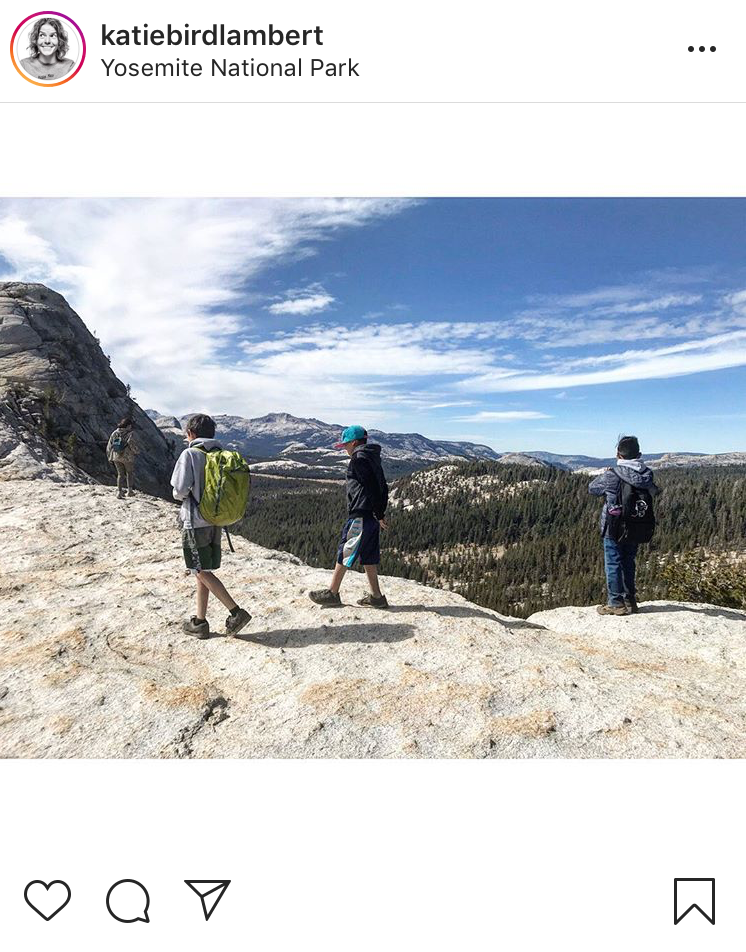 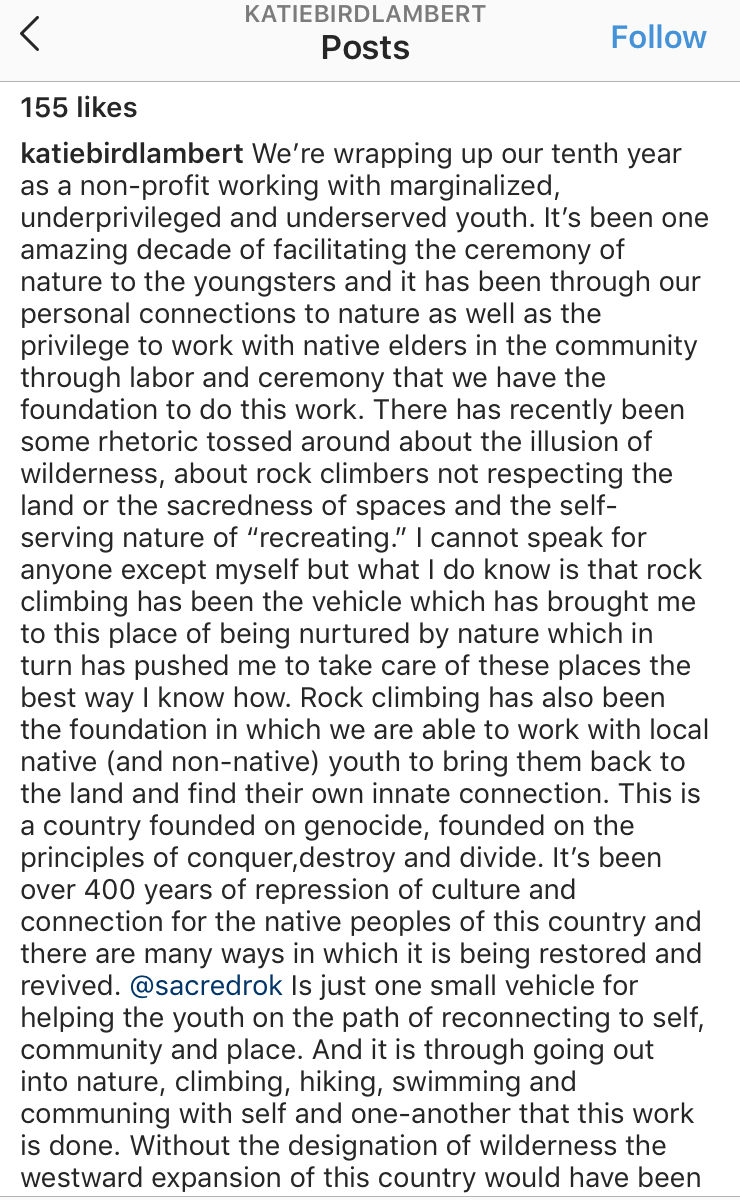 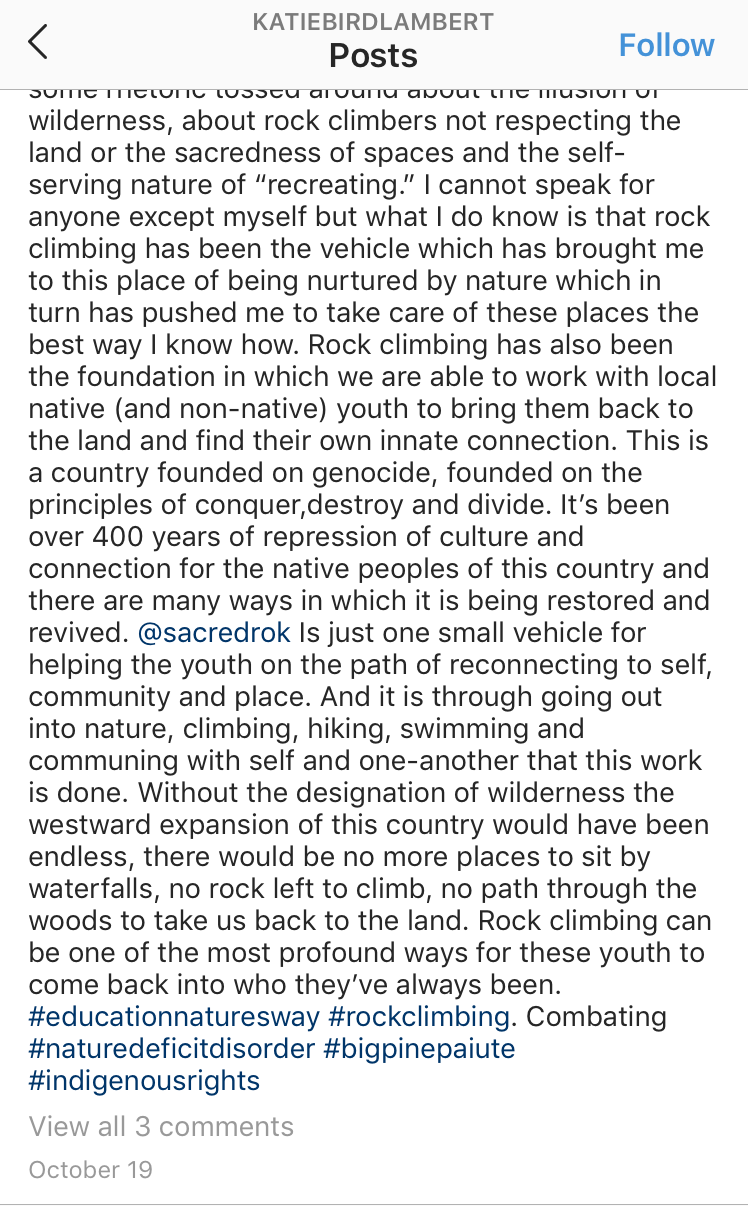 At face-value, this post could read as humble, sweet, and heartwarming. But let’s look deeper. The problem is that Lambert is at once denying the invasive and destructive impact that rock climbers have on stolen land, and then goes on to describe how this country was founded on genocide. White climbers and institutions tend to interpret reality in very ahistorical terms. When I first got into climbing you could say I had rose-colored glasses on, but as I grew older I realized “rose-colored glasses” is just code for white privilege. It’s hard to look at something critically when you directly benefit from it. We are fish in the water of white supremacy. You have to be willing to grapple with the cognitive dissonance that occurs when you realize that what you love is a product of an oppressive plan. Climbing is at once a product of ongoing oppression, as well as a tool for various people of various backgrounds to heal and connect with the outer and natural world. But as white people we have to watch what we call “healing” when we actively contribute to oppressive circumstances through buying land, participating in gentrification, cultural appropriation, and more. We are complicit in so much ongoing intergenerational trauma. We have to be accountable for our positions in society that impact our relationship to climbing, and we need to take seriously how we have access to land that is not ours. We need to adopt a heightened sense of responsibility, one that requires an examination of our access, our privilege, and our role in ongoing colonization. ### [ We need to examine and account for how we ourselves are products of white supremacy and how we benefit because of this. ](https://medium.com/@ekmonahan/unintentionally-i-was-still-raised-to-be-racist-constructed-fear-white-fragility-and-how-i-9c20437668e0?ref=terraincognitamedia.com) Lambert, as a climber and white woman, in the same paragraph denies her position and active role in these oppressive structures and yet goes on to acknowledge genocide that she benefits from. It’s a paradox that is only possible through white saviorism. And this is exactly the kind of thing white people in positions of power and leadership need to be working on within ourselves. Racism is not always explicit or overt. We are all conditioned to be racist in ways we don’t recognize. As white people we are indoctrinated into this white supremacist country and are conditioned to believe that we have the answers and that we are the best people to help no matter the situation. We need to pause and think,[ “Maybe we are the problem?”](https://medium.com/@ekmonahan/abuses-of-power-how-christian-beckwith-and-i-have-similar-work-to-do-f0220b5ead0e?ref=terraincognitamedia.com) Lambert goes on to say, “Without the designation of wilderness the westward expansion of this country would have been endless, there would be no more places to sit by waterfalls, no rock left to climb, no path through the woods to take us back to the land.” This is false. The national parks and “wilderness” were born out of genocide, and the removal of indigenous peoples from their homelands. The creation of the national parks and “wilderness” are a manifestation of westward expansion and “manifest destiny.” These “wild spaces,” or “public lands,” are part of the fabric that makes up white supremacy. Lambert applauds the construction of wilderness, a figment of the colonizer’s imagination that tangibly bars indigenous peoples from their life source, and gives us, white people, exclusive access to what we call our “playgrounds.”  ### National parks and public lands only exist due to the historical violations and abuses of Indigenous peoples’ rights. Good, well-meaning, white, liberals who are at the forefront of organizations like The American Alpine Club, The Outdoor Alliance, The Access Fund, The Sierra Club, etc. are all too often erasing, dismissing, and foregoing acknowledgment of the dispossession and resettlement of Indigenous communities. There are countless examples of these organizations inviting Black and Indigenous folx to their events and exploiting their presence and knowledge just so they can appear “diverse,” and “inclusive.” But as Rachel Cargle, a public academic, writer, and lecturer wrote, “Unless the racism is addressed and eradicated in the places you are looking to make ‘diverse’ you are simply bringing people of color into violent and unsafe spaces.” White-dominated climbing organizations have a god complex -- “an unshakable belief characterized by consistently inflated feelings of personal ability, privilege, or infallibility.” Groups like The American Alpine Club and the Access Fund feel entitled to outdoor spaces, as well as their comfort. They have a track record of going quiet whenever they are confronted about the harm that they have caused. When they are called to account for harmful behavior or language they sweep it under the rug, wait for things to die down, and never acknowledge what the impacted groups are saying. They position themselves as gatekeepers and perpetuate a culture of exclusion. ### Even when they make attempts to be “inclusive” and “diverse,” they end up causing harm because they are not looking at themselves, the culture, and how they operate. At the most recent Craggin’ Classic in Payahüünadü (so-called Bishop, CA),[ Indigenous Women Hike](https://www.indigenouswomenhike.com/?ref=terraincognitamedia.com), Legendary Skies Enterprises, and[ Climb the Gap](http://climbthegap.com/?ref=terraincognitamedia.com) were invited to the yearly event by The American Alpine Club with the expectation that each organization would be participating in some kind of panel discussion to speak about their org’s work and mission. But in the days following the event, Climb the Gap and Indigenous Women Hike reported on their Instagram stories that they felt disrespected, exploited, and tokenized. Jolie Varela, a citizen of the Nüümü and Yokut nations, started Indigenous Women Hike after spending three months at Oceti Sakowin standing with her relatives against the Dakota Access Pipeline. Each water protector who went to Standing Rock was encouraged to keep the sacred fire burning in their own communities. IWH is Varela’s manifestation of just that. The last two summers Varela facilitated a group of Indigenous women on a journey to reclaim the Nüümü Poyo, The People’s Trail, which many know as the John Muir Trail. Varela has been an active voice in Payahüünadü advocating for indigenous rights and healing. She has started a movement that has brought to light John Muir’s racism and anti-indigenous legacy, as well as created a gear library in her community to provide equipment and education to low-income families. Recently, Varela was able to garner support from her Instagram followers to provide warm clothing and firewood for Indigenous families in her area.  When Varela read Chris Schulte’s review of this year’s Craggin’ Classic on Black Diamond’s Instagram account, in which he says they did, “pretty good,” and that they, as in climbers, are “keeping up with growth, and bringing more people into climbing than ever, and with a set of goals, values, and ethics key to the upkeep, expansion, and diverse growth of our climbing culture and history,” she reported that she couldn’t keep quiet any longer. Schulte’s summary is very self-congratulatory — a weak attempt at humility. In response, Jolie Varela wrote, > “...as far as I know myself and my crew were the only Natives from here that attended. So who did they \[Schulte\] reach out to and learn from? Because we had a group of about 20 in our group and he wasn’t one of them. The AAC is not doing ‘pretty good.’ They’re actually doing worse than previous years and his post is glorifying the atrocious job they did. Our voices were erased and our time was wasted on Friday night. I’ve been asking this org to do better for three Craggin’ Classic events now, and they cannot get it together. You cannot use us as props to make it seem like you care about Indigenous presence and community being involved when you don’t show up or give us the platform to speak.” Jolie Varela and[ Kris Hohag](https://www.instagram.com/kwa.z/?ref=terraincognitamedia.com), Nüümü, a recording artist, entrepreneur, and educator of[ Legendary Skies Enterprises](http://www.legendaryskiesenterprises.com/about/?ref=terraincognitamedia.com) — which provides jobs through local indigenous cultural eco-tourism, as well as land and water restoration work, while offering specialized trainings and career development opportunities to staff and partners — hosted a cultural walk on Sunday, the last day of the Craggin’ Classic. No one from the AAC showed up. On the Monday following the Craggin’ Classic,[ Climb the Gap](https://www.instagram.com/climbthegap/?ref=terraincognitamedia.com) —[ a collective that supports current and future climbers of color, based in Los Angeles/land of the Tongva people](https://www.climbthegap.com/?ref=terraincognitamedia.com) — informed their community about what happened during their trip to Payahüünadü by writing this message on their Instagram story: > *“Disappointed in @americanalpine for inviting us to travel to Payahuunadu/Bishop for the Craggin’ Classic, only to have our time disrespected, not given a platform to speak about what we do, and be tokenized as a way to fulfill a DEI objective.* > > *Also, frustrated to witness the same happen to @indigenouswomenhike @payhuunadu and to know that this event is just a drop in the bucket of injustice and erasure.* > > *This was a missed opportunity to educate hundreds of climbers and outdoor industry reps on what climbers need to do to respect and care for the land and the people that inhabit it, as well as uplift the voices of those that are not so privileged to seek access to the outdoors.* > > *Also fitting that we, as four BIPOCs, would experience major side-eye and unwelcoming looks out at the crags and in town. If @AmericanAlpine is truly committed to diversity, equity, and inclusion, it needs to do better.”* ### In order for the outdoor industry to stop making the same mistakes of the past, white-dominated organizations and white individuals who participate in them must hold themselves accountable for this egregious behavior and harm. Whiteness continues to be centered and upheld over and over again, and we white people need to take a look in the mirror and start uprooting our internalized white supremacy. We are all born into a white supremacist society, which means we are conditioned to believe in the foundational lies that are incubated by our society. A huge barrier for white people accounting for the harm we cause is due to our investment in the belief that we are inherently “good.” We believe that as individuals and as a society we are all[ inherently benevolent](https://medium.com/@ekmonahan/exceptional-benevolence-how-our-justice-system-has-always-functioned-to-protect-killer-cops-and-6622fc5c82a6?ref=terraincognitamedia.com) and innocent, but this is the biggest lie of all.[ Professor Eddie Glaude breaks down this myth eloquently in this three-minute clip](https://www.huffpost.com/entry/eddie-glaude-jr-racism-msnbc-donald-trump-el-paso%5Fn%5F5d498ec3e4b0244052e19062?ref=terraincognitamedia.com): He says, “America’s not unique in its sins. As a country, we’re not unique in our evils. I think where we may be singular is our refusal to acknowledge them. And the legends and myths we tell about our inherent goodness, to hide and cover and conceal so that we can maintain a kind of willful ignorance that protects our innocence.” All white people need to make conscious efforts to unlearn our internalized white supremacy, rather than believing ourselves to be exempt just because we are liberal, progressive, “outdoorsy,” and work for nonprofits. Racism has historically been embedded in the psyche of the outdoor industry. By excluding Indigenous experiences and foregoing acknowledgment of who the land truly belongs to, environmental institutions have successfully, whether they realize it or not, invisibilized Indigenous communities in the outdoor industry and any space that dictates how we come to understand the environment in the United States.  Racialized constructions of Indigenous communities as people of the past have always shaped the way the outdoor industry, recreationists, and environmentalists approach natural spaces. The exclusion of their experiences to this day means that we now have an industry flooded with colonial-settler narratives voiced by white, Western Europeans. Chris Schulte’s post in which he uses words like “growth,” “expansion,” and “occupy,”[ as well as his bio where he implies that he goes on “vision quests,”](https://www.instagram.com/chris%5Fschulte/?ref=terraincognitamedia.com) are prime examples of this. These narratives promote appropriation, exploration, and discovery, which are attitudes that have led to the mass murder and rape of countless Indigenous women. Dominant mainstream culture has played a significant role in the myth-making of “public lands.” There is the false belief that this country’s soil is rightfully and *publically* of the people. But “the people” that the constitution and forefathers were considering at the time were not Black or Brown. Julie Cruikshank in her book, *The Social Life of Stories: Narrative and Knowledge in the Yukon Territory*, has noted that the stories we tell about ourselves, others, and the places we live manifest through social, historical, and political processes. It is time to complexify the narratives and it is time to actively de-center whiteness in the outdoors. The disturbing “side-eye” that Climb the Gap experienced when out at the crag while visiting Payahüünadü, and the recurring erasure that Varela endures at the hands of the outdoor industry,[ is not a singular experience](https://www.terraincognitamedia.com/the-white-problem-of-chocolate-chipping-in-diversity-equity-and-inclusion-efforts2019/). It is the duty of all white people, especially white-dominated organizations like The American Alpine Club, to amplify and highlight Black and Brown communities who are doing the real work of creating inclusive and equitable spaces, and not only that, but pay them for their efforts, emotionally, physically, spiritually, and intellectually. The AAC and it’s advocates, like Chris Schulte and Katie Lambert -- highly influential people in the outdoor industry -- need to address the harm they cause and co-sign — the harm that all white people,[ myself included](https://www.terraincognitamedia.com/how-whiteness-as-a-societal-construct-has-ensured-my-isolation-as-a-racist2018/), perpetuate if we are not actively practicing anti-racism and[ detaching from our commitment to whiteness](https://www.terraincognitamedia.com/detaching-from-whiteness-action-items2018/). It’s a choice to actively work against systems of oppression, as well as incorporate anti-racism into the inner workings of our lives and organizations that we participate in. The AAC needs to stop their programming and address their[ white supremacist culture](http://www.dismantlingracism.org/uploads/4/3/5/7/43579015/whitesupcul13.pdf?ref=terraincognitamedia.com), or they will only continue their cycle of abuse.  # **Recommended Resources:** ## ***Organizations:*** [AORTA: ](http://aorta.coop/?ref=terraincognitamedia.com)Anti-Oppression Resource and Training Alliance [Indigenous Women Hike](https://www.indigenouswomenhike.com/?ref=terraincognitamedia.com) [Climb the Gap](https://climbthegap.com/?ref=terraincognitamedia.com) [Legendary Skies Enterprises](http://www.legendaryskiesenterprises.com/about/?ref=terraincognitamedia.com) [Honor the Earth ](http://www.honorearth.org/?ref=terraincognitamedia.com) ## ***Books:*** [An Indigenous Peoples’ History of the United States](http://www.beacon.org/An-Indigenous-Peoples-History-of-the-United-States-P1164.aspx?ref=terraincognitamedia.com) of America by Roxanne Dunbar-Ortiz [Dispossessing the Wilderness by Mark David Spence](https://www.amazon.com/Dispossessing-Wilderness-Indian-Removal-National/dp/0195142438?ref=terraincognitamedia.com) [Black Faces, White Spaces](https://uncpress.org/book/9781469614489/black-faces-white-spaces/?ref=terraincognitamedia.com) by Carolyn Finney [The Fire Next Time](https://www.amazon.com/Fire-Next-Time-James-Baldwin/dp/067974472X?ref=terraincognitamedia.com) by James Baldwin [Women, Race, and Class](https://www.amazon.com/Women-Race-Class-Angela-Davis/dp/0394713516?ref=terraincognitamedia.com) by Angela Davis [The History of White People](https://www.amazon.com/History-White-People-Irvin-Painter/dp/0393339742?ref=terraincognitamedia.com) by Nell Irvin Painter [Between the World and Me](https://www.amazon.com/Between-World-Me-Ta-Nehisi-Coates/dp/0451482212?ref=terraincognitamedia.com) by Ta-Nehisi Coates ## ***Articles:*** [The Case for Reparations ](https://www.theatlantic.com/magazine/archive/2014/06/the-case-for-reparations/361631/?ref=terraincognitamedia.com)by Ta-Nehisi Coates [Climbing Everest Isn’t a Bucket List Dream](https://www.bitchmedia.org/article/bucket-lists-colonization-mount-everest?ref=terraincognitamedia.com) — It’s a Crisis of Overtourism by Bani Amor [Check Yourself Before You Wreck Someplace Else:](https://www.bitchmedia.org/article/check-yourself-you-wreck-someplace-else-checklist-responsible-summer-travel?ref=terraincognitamedia.com)[A Guide to Responsible Summer Travel ](https://www.bitchmedia.org/article/check-yourself-you-wreck-someplace-else-checklist-responsible-summer-travel?ref=terraincognitamedia.com)by Bani Amor [Connecting Appalachia to the World Beyond](http://www.bellhooksinstitute.com/blog?ref=terraincognitamedia.com) by bell hooks [How to Deal with Racism in the Outdoors](https://www.melaninbasecamp.com/around-the-bonfire/2018/6/23/how-to-deal-with-racism-in-the-outdoors?ref=terraincognitamedia.com) by Leah Keinama Hasse [How the Unintentional Racism of the Outdoor Industry is Getting in the Way of Creating Authentic Community](https://www.terraincognitamedia.com/how-the-unintentional-racism-of-the-outdoor-industry-is-getting-in-the-way-of-creating-authentic-community2018/) [White Supremacy Culture](http://www.dismantlingracism.org/uploads/4/3/5/7/43579015/whitesupcul13.pdf?ref=terraincognitamedia.com) by Tema Okun ## ***Podcasts:*** [This Land ](https://crooked.com/podcast-series/this-land/?ref=terraincognitamedia.com)by Crooked Media [All My Relations](https://www.allmyrelationspodcast.com/?ref=terraincognitamedia.com) by Matika Wilbur and Adrienne Keene [1619 ](https://www.nytimes.com/2019/08/23/podcasts/1619-slavery-anniversary.html?ref=terraincognitamedia.com)by the New York Times [Seeing White](https://www.sceneonradio.org/seeing-white/?ref=terraincognitamedia.com) by Scene on Radio [Men](http://www.sceneonradio.org/men/?ref=terraincognitamedia.com) by Scene on Radio ### Building Terra Incognita Media: Confronting Failure, Self-Sabotage, and Imposter Syndrome URL: https://www.terraincognitamedia.com/building-terra-incognita-media-confronting-mistakes-failure-self-sabotage-and-imposter-syndrome2019/ Last updated: 2026-08-22T19:38:57.000Z Since starting *Terra Incognita Media* my life has been a [Chumbawamba song](https://www.youtube.com/watch?v=2H5uWRjFsGc&ref=terraincognitamedia.com). It’s been a journey of killing my ego over and over again, making public and private mistakes, and learning major lessons. Sometimes the lessons required an easy pivot, but more often than not the lessons I have learned have been brutally life-altering, perspective-bursting, and humbling as fuck. I have lost friendships and gained new ones. I have had countless conversations with various people in the outdoor industry, the publishing, marketing, podcasting, branding industry, etc. I have gone to trainings that have been crucial to my learning, and some that I regret, like the one that put me in the most debt I have ever acquired in my life. It’s not to say I didn’t learn anything because I surely did. I learned where I don’t want to invest my money. I learned that I need to listen to the deepest gut feelings I have about things. I used to be too easily influenced by what other people thought I should be doing. I was too wrapped up in external validation and what everyone else thought about me. I believed that if I just talked to the right people I could deduce the end-all, be-all answers to my pressing questions about how I should do the work I am here on this Earth to do. Taking the temperature of the landscape, gathering information, and hearing how other people got to where they are is a necessary aspect of being an entrepreneur. But putting other people’s ideas and opinions on a pedestal, failing to develop and listen to your intuition, and doing things just because everyone else thinks you should, is a sure-fire way to end up in a place that is not meant for you. You will look around and find yourself in debt that took you so far from your truth and you’ll feel overwhelmed and swimming in despair because you don’t know who you are or what you’re doing with your life. The reason why you started your business, company, organization, or project will be buried and you will have gotten yourself lost. That’s exactly what happened to me. I have gone through seasons of feeling deflated, incapable, and hopeless. No one tells you about [the psychological cost of entrepreneurship](https://www.inc.com/magazine/201309/jessica-bruder/psychological-price-of-entrepreneurship.html?ref=terraincognitamedia.com), the emotional gutting you’ll inevitably experience. I thought I could get along faking it until I made it. But the more honest and transparent we are about our feelings, our process, and our struggle, the more resilient we can be. Hiding behind a facade of confidence just so we can appear to have it all together only keeps us isolated and out of touch. There are countless setbacks, ups and downs, and uncertainties when it comes to bringing your vision to life. My mental health took a hit and I wasn’t expecting it at all. Add to this that you’re ultimately the only one who sees what you are seeing. You can describe it the best way you can, but when you are creating something out of nothing, for a while, you’re the only one driving everything forward because you’re the only one who can see it. Your friends and family don’t quite know how to support you other than to say, “That’s cool! Keep going!” Or, “Are you still applying to grad school?” And then after a few months go by, “How’s that blog going that you’re working on?” *Terra* has seen many past contributors who, at the time, were going to be long-term business partners or team members. When I first started *Terra*, I sent out a mass email to everyone I knew who might be interested in helping me start a magazine. I rallied all of my friends to meet me at a brewery and everyone who showed up got a title! We’re talking fancy titles like “Editor-in-Chief,” and “Marketing Director.” There were about ten people. I was ecstatic that I could bring together that many people for a cause. But over time, as is true for any business venture, people dropped off slowly. Some realized they couldn’t commit as much as they originally thought. This happens all the time in business and start-ups, but this was my first memorable lesson about starting something. Not everyone who is with you, in the beginning, is going to be with you in the end. And that’s okay. Starting something can be so exciting and everyone wants to be involved, but the reality is that it’s a lot of grueling, non-glamorous, unpaid labor for a very, very, VERY, long time. Some of the original people who answered my call for support ended up leaving because my vision changed. It went from a feminist/political climbing journal, as embarrassing as that is to admit, to the feminist response to the outdoor industry that is today. It’s nothing like it was at the beginning because the platform has evolved as I have evolved. I hope in ten years it’s nothing like it is today. \[caption id="" align="alignnone" width="800"\]  One of the first promotional flyers. \*FACEPALM\* emoji. \[/caption\] When I started *Terra Incognita Media*, I was deeply mired in white feminism, but as I grew as a person, and listened to the people who were calling the platform out for being white-centering, I learned, I shifted, I expanded my thinking. As I have grown into a completely different person than I was four years ago, so has *Terra Incognita Media* as a company. \[caption id="" align="alignnone" width="1080"\]  Nursing a sprained ankle on the traditional territories of the Pueblos and Ute peoples. \[/caption\] I remember the naive thrill I felt when I was on a climbing trip having conversations about feminism around the campfire with people I had no business exerting my energy on. I remember sitting outside the Dragonfly Coffee House in Portland, Oregon and committing to my first blog post on the website I just created called “Terra Incognita.” The platform has gone through many iterations, changes, and passed through so many generous, creative hands. It wouldn’t be what it is today without each person who has contributed to the momentum. This last year I dedicated my time and energy toward building a stable, solid team. *Terra* has always been about a collective of voices that bring varying perspectives from across race, class, gender, ability, etc. This is the heart and root of the platform. I thought that a collective team would allow us to go full-force into fundraising, securing non-profit status and that this would be the magic key to sustainable income, so we could all get paid and live happily ever after. But it’s proven to be more challenging than this and a little less straightforward. Without defined roles, without developed systems and processes, and without a crystal clear vision where everyone is on the same page, we had a group of badass, inspiring, creative people wondering what we are doing and what steps we all need to take next. I thought gathering more hands on deck would mean expansion, more momentum, and input, and that it would skyrocket the platform to success. But it was a move that came too soon. As the leader and founder of *Terra*, I had to admit that even though I was thrilled to work with such incredible individuals, the platform just isn’t ready or in a position to bring on a team. Another important bottom line for me is that through this process I realized *Terra* is still in an incubating phase. And since that is the case, I couldn’t in good conscious have people commit energy without getting paid. It became clear that sustainable money to pay four team members was not coming anytime soon, so it makes the most sense for us to step back. This has been the most difficult choice in my time with *Terra* because gathering a team felt like the ultimate accomplishment. But without a structure in place for that team, it ends up being a milestone without any backbone. I came to this conclusion with the help of my mindset and strategy coach that I recently started working with. No one tells you how to be an entrepreneur when you start your own company, especially someone like me who is a writer starting a creative platform who had never taken a business class in her life until a year into building *Terra*. Someone like me who despised math class, and would rather think about anything else over finances. Working with my coach has allowed a lot of my internal struggles to come to the surface. As a leader and founder, I have realized that I have not been as clear and confident within myself as I have needed to be to play my role as effectively as possible. Self-sabotage and imposter syndrome have been running amok. These are things I didn’t realize I was harboring but nevertheless have been showing up in my work, which naturally will impact a team. There’s a difference between what you think you’re clear on, and what’s going on underneath. Eventually, it comes creeping up and into what you’re creating without you even realizing it. While it may seem like these choices are taking me backward, or that *Terra* will now lose steam, stepping back will allow the platform to grow. It feels right, grounding, centering, and necessary. This shift will allow me and the platform to be what it is when for so long I have been striving to get it to bigger stages that it’s just not ready to grow into yet. I’m consciously making a return to my initial spark — the feelings and motivations that drove me to create *Terra Incognita Media* in the first place — because this pressure to be “successful” had me losing the vision for a little bit. I’m also going to temper this with intentional, responsible moves that will serve the larger mission. I am excited to shift and develop as a leader, to show up in my truth, because I know this will allow me to better serve the *Terra* community. \[caption id="" align="alignnone" width="2500"\]  In this picture I am visiting the traditional territories of the Northern Paiute, Eastern Mono, Western Mono, Southern Sierra Miwok, and Central Sierra Miwok peoples. \[/caption\] ### Happy Indigenous Peoples’ Day! URL: https://www.terraincognitamedia.com/ltpv7qu9nw5h14vw3lek1dejw5yc9y2019/ Last updated: 2026-08-22T19:38:58.000Z > *“Origin narratives form the vital core of a people’s unifying identity and of the values that guide them. In the United States, the founding and development of the Anglo-American settler-state involves a narrative about Puritan settlers who had a covenant with God to take the land. That part of the origin story is supported and reinforced by the Columbus myth and the ‘Doctrine of Discovery.’”* *\-- Roxanne Dunbar-Ortiz from *An Indigenous Peoples’ History of the United States** Manifest Destiny is ingrained in the minds of nearly everyone in the US and around the world. Manifest Destiny is the idea that European colonization and establishing settlements was inevitable as God’s grand plan. It is spread throughout this nation’s national consciousness that European invasion was, and still is, completely justified -- to arrive on the shores of Turtle Island to take “free” land in order to signify independence. This idea implies that there were no people already inhabiting Turtle Island for thousands of years. Despite Columbus never having set foot on the land known as the “United States,” songs, universities, cities, streets, and of course, this day, the second Monday in October, is dedicated to him.  [Fuck Columbus. ](https://www.youtube.com/watch?v=ROvy%5FB5iDzA&ref=terraincognitamedia.com) # **This day is Indigenous Peoples’ Day.** Our platform is dedicated to speaking the truth of this land’s history, not perpetuating the vile origin myth of “this land is your land, this land is my land.” The US resides on stolen land. We are unwavering in our solidarity with Indigenous peoples in the struggle for sovereignty. We are not here for platitudes like “there are good and bad people on both sides.” This mindset bypasses necessary accountability on the part of white people for the present-day impact of the ongoing project of settler-colonialism based in the ideology of white supremacy. As Roxanne Dunbar-Ortiz says, “This approach to history allows one to safely put aside present responsibility for continued harm done by that past and the questions of reparations, restitution, and reordering society.” ### **How Can You Honor Indigenous Peoples’ Day?** 1. **Gather friends and/or family for dinner.** Include a land acknowledgment and facilitate a discussion about the true history of Turtle Island, and the ongoing issues we face today surrounding colonization. 2. **Start a conversation with the spaces, organizations, schools, groups, you are a part of and encourage them to drop “Columbus Day.** [Take part in the change happening around the nation to officially call this day “Indigenous Peoples Day.”](https://www.nytimes.com/2019/10/13/us/indigenous-peoples-day-columbus-day.html?ref=terraincognitamedia.com) 3. **Check out a copy of *An Indigenous Peoples’ History* of the United States by Roxanne Dunbar-Ortiz** at your local library or buy the book! [Try not to buy it through Amazon…](http://www.beacon.org/An-Indigenous-Peoples-History-of-the-United-States-P1164.aspx?ref=terraincognitamedia.com) 4. **Host a movie screening followed by discussion.** We recommend[Columbus Day Legacy](https://www.shopvisionmaker.org//product.asp?dept%5Fid=23428&pf%5Fid=CODL-11-E&s=visionmaker&ref=terraincognitamedia.com), or visit [VisionMaker Video](http://visionmaker.semkhor.com/dept.asp?dept%5Fid=23427&s=visionmaker&ref=terraincognitamedia.com), a video catalog by Native American Public Telecommunications of films by and about Native folks. 5. [**Study the Doctrine of Discovery.**](https://upstanderproject.org/firstlight/doctrine?ref=terraincognitamedia.com) Work to eliminate its ongoing impact. 6. [**Learn about missing and murdered indigenous women** ](https://www.yesmagazine.org/planet/native-fossil-fuel-missing-murdered-indigenous-women-mmiwg-20191004?ref=terraincognitamedia.com)and get involved to stop the epidemic. 7. [**Support this Indigenous Peoples’ Day Raffle Campaign.**](https://go.rallyup.com/indigenous-peoples-day-raffle-campaign-2019?ref=terraincognitamedia.com) Allen Salway and [DigDeep](https://digdeep.org/?ref=terraincognitamedia.com) are partnering with St. Bonaventure Indian Missions & School to help bring clean running water & light to the reservation. ### **Indigenous Artists/Activists/Leaders/Groups We Love:** [Jolie Varela](https://www.instagram.com/jolievarela/?ref=terraincognitamedia.com) of [Indigenous Women Hike](https://www.instagram.com/indigenouswomenhike/?ref=terraincognitamedia.com) [Autumn Peltier](https://www.youtube.com/watch?v=OusN4mWmDKQ&ref=terraincognitamedia.com) [Allen Salway](https://www.instagram.com/lilnativeboy/?ref=terraincognitamedia.com) [Indigenous Goddess Gang](https://www.indigenousgoddessgang.com/?ref=terraincognitamedia.com) [Black Belt Eagle Scout](https://www.blackbelteaglescout.com/?ref=terraincognitamedia.com) [Nina Gualinga](http://amazonwatch.org/assets/files/bios/nina-gualinga.pdf?ref=terraincognitamedia.com) [Kathy Bancroft](https://www.metabolicstudio.org/posts/pdf/89%5Fthe-sacred-owens-valley-an-interview-with-kathy-jefferson-bancroft.pdf?ref=terraincognitamedia.com) [Wilma Mankiller](https://www.womenshistory.org/education-resources/biographies/wilma-mankiller?ref=terraincognitamedia.com) [Winona LaDuke](http://www.honorearth.org/speaking%5Fengagements?ref=terraincognitamedia.com) ### **Resources for Teachers or Anyone Who Wants to Learn Accurate History!** [Teaching for Change](https://www.teachingforchange.org/?ref=terraincognitamedia.com) [Native Knowledge 360](https://americanindian.si.edu/nk360?ref=terraincognitamedia.com) [Honor the Earth](http://www.honorearth.org/?ref=terraincognitamedia.com) [This website offers crucial analysis for vetting children’s literature for accurate and appropriate representations of Indigenous peoples](https://americanindiansinchildrensliterature.blogspot.com/?ref=terraincognitamedia.com) ### The Privilege to Perform Queerness: When Straight People Step Outside of Cisheteronormativity They Gain Social Capital, But at What Cost? URL: https://www.terraincognitamedia.com/the-privilege-to-perform-queerness/ Last updated: 2026-08-22T19:39:00.000Z *Meme created by* [Brittney Okabe](https://www.instagram.com/b.okabe/?ref=terraincognitamedia.com) *and* [Abolition Memes](https://www.instagram.com/abolition.memes/?ref=terraincognitamedia.com) On September 29, 2019 Pattie Gonia posted a video and photo of both herself and Alex Honnold donning a matching pair of Pattie’s signature patent-leather, six-inch heeled boots. Honnold and Pattie are seen striking dramatic poses and laughing surrounded by big pine trees on a sunny day. In the image captured by Stephanie Wright, Honnold is squatting in his black pair of boots posing in a stereotypically feminine way while Pattie blows him a kiss. This image and caption of Alex Honnold and Pattie Gonia posing together brings forward some questions: ### Who gets the privilege to perform queerness without consequence? When did the word “ally” become an identity or label? Has “allyship” lost it’s meaning? Is it no longer a verb that requires action? In an article published in Vice, [“Can Straight People Be Queer?”](https://www.vice.com/en%5Fus/article/avy9vz/can-straight-people-be-queer-435?ref=terraincognitamedia.com) Author Dora Mortimer writes, “...does initiating straight people into queer culture dilute it? Should we lobby for a vetting system? Something like, you can only be queer if you have more than one album and a ‘strong female characters’ recommendation on Netflix?” The article implies that there is a tension here. Because the goal, of course, is not to gate-keep who is “truly” queer or not. There is no list of requirements for being *really* queer because that would be dehumanizing and ridiculous. But currently, there exists a dire need to acknowledge that [there is a recent trend of individuals and organizations co-opting LGBTQIA+ and two-spirit culture right now](https://medium.com/@ekmonahan/keep-calm-and-grow-up-2ecba1487111?ref=terraincognitamedia.com). For Honnold to don a pair of heeled boots in this comedic, SNL-like way does not feel genuine and that’s because it’s not meant to be. It’s meant to be a joke. Honnold is not making a grand gesture of allyship towards the LGBTQIA+ and two-spirit communities. Unintentionally or not, he is making a mockery of the dynamism that is queer culture. The implication of his foray into drag is that it is temporary, it is one-off, it’s just for show, and it is only for shits and giggles and nothing else. There is no inkling that he is taking seriously his position of power as a white cis person. ### Honnold’s lack of self-awareness is more of a testament to his comfort and ease in a society that allows cis people — particularly white cis people — access to anything and everything. This has everything to do with his gender, sexuality, and whiteness, and how he benefits from his dominant identities — identities that he makes no conscious effort of discussing, acknowledging, deconstructing, or examining, despite his vast influence and major platforms. To be an “ally” is a verb, and unless we missed something, we don’t see any of Honnold’s actions as a rock climber, turned public figure, turned mini celebrity, as tackling the pervasive toxic masculinity, homophobia, transphobia, and anti-Blackness within the climbing community, and the various other spaces he takes up. [In fact, we only see glaring examples of how he flippantly maintains these structures of oppression](https://www.terraincognitamedia.com/ambient-dominion-how-free-solo-points-to-an-epidemic-of-toxic-masculinity2018/), made evident in his debut documentary “Free Solo.” As well as in the written accounts of his homophobic comments made at a public event, which are detailed in the comments of Pattie’s Instagram post, which you can view below.      This is not about gatekeeping who gets to wear certain items of clothing and who doesn’t, and this is not an attack on Pattie. But this is to acknowledge that for someone like Alex Honnold with immense privilege to wear heels and flaunt it in this inauthentic, jester-like way is an insult to those who wear heels as an act of true self-expression, or even more so, those who may not have that choice because it would literally be life-threatening. Honnold as a cis, white man will face no fatal consequences for his choice to wear something that goes against the rules of cisheteronormativity, if anything he will gain. He gains followers, attention, applause, praise, laughs, affirmations, kudos, and pats on the back. He literally earns himself the label of “ally” with no need to actually act or put any effort behind it. [But for queer people, especially Queer and Trans people of color, Black trans womxn, and Black, queer femmes, the ability to self-express often comes at a high, deadly cost. ](https://www.nytimes.com/2019/06/19/us/barbara-smith-black-queer-rights.html?ref=terraincognitamedia.com) As Ebony Donnelly says, “Y’all wanna be queer until it’s time to queer y’all politic. Y’all wanna be intersectional until a Black person asserts that same queer politic to call out individuals and organizations profiting from queerness in an otherwise cisheteronormative world.” ( [You can find this quote in Ericka Hart’s story “Queer Feels” on Instagram](https://www.instagram.com/ihartericka/?ref=terraincognitamedia.com)). \[caption id="" align="alignnone" width="1080"\]  From Ericka Hart’s Instagram, of which Ebony Donnelly frequently makes appearances with critical and nuanced political and social commentary. \[/caption\] In the history of cis, white maleness none of this is surprising. Until, Alex Honnold starts making some significant effort to account for his egregious behavior in “Free Solo,” and starts using his massive influence to garner support for reparations for Black and Indigenous people, and Indigenous sovereignty, he will remain in the Hall of Fame of Mediocre White Men™. ### The Binary is A White, Colonialist Fiction and It's Up to White Cishet Folks to Disrupt It URL: https://www.terraincognitamedia.com/the-binary-is-a-white-colonialist-fiction-and-its-up-to-white-cishet-folks-to-disrupt-it2019/ Last updated: 2026-08-22T19:39:00.000Z *\[The image on the right depicts an angry, screaming King Kong clutching a feinting white woman in a barely-there dress. The image on the right depicts a muscular and strong Lebron James screaming and taking a forward-facing stance while wrapping an arm around Giselle Bundchen who is posed more passively and loose as if she is skipping through a meadow, hair flowing, satin dress clinging to her frail frame. She’s smiling and seemingly carefree. This juxtaposition illustrates the white supremacist socially constructed tropes that contain Black men’s sexuality and White women’s sexuality. These tropes exist in tandem and both project harmful and inaccurate stereotypes.* ## Our society is propelled and propped up by white supremacist fictions like the belief that genitals determine gender, that the only form of valid intimacy is between a cis man and a cis woman, and that marriage is the only time you are allowed to have sex. Unlearning these beliefs is crucial to mental, emotional, psychological, and spiritual health. As a cishet white woman my sexuality is affirmed everywhere I go, every space I enter, on every television show, every news channel. My health, livelihood, and human rights are not currently, and have never been, under attack due to my gender or skin color, which are inextricably linked. Unfortunately, us White women ( [\*cough\* Taylor Swift \*cough\*](https://medium.com/@ekmonahan/keep-calm-and-grow-up-2ecba1487111?ref=terraincognitamedia.com)) have often been huge barriers to healthcare and basic human rights for LGBTQIA+ and two-spirit communities -- particularly, for trans Black womxn and femmes. We too often support individuals and organizations that profit from Queerness, but have a history of anti-Blackness. We often can’t be bothered to think more critically and research more deeply, to reassess the people, places, and politics we support or shouldn’t support. We like inclusion and equity in theory, but we aren’t going to put our social standing on the line to call bullshit on the people and organizations that need to be accountable, or take the necessary time to explain to our family members or friends why their comment was transphobic and anti-Black. ## White women have historically been used as pawns to continue the violent and damaging cisheteronormative white fictions that instruct dominant society’s beliefs and behavior. “The United States has a storied history of white female sexuality being used as a justification for racist acts of violence,” reports Emma Gray for The Huffington Post in her piece, [“The History Of Using White Female Sexuality To Justify Racist Violence.”](https://www.huffpost.com/entry/white-female-sexuality-and-racist-violence-a-history%5Fn%5F7613048?ref=terraincognitamedia.com) We have even offered ourselves up as puppets to white male supremacy — playing into a performance of the helpless damsel in distress — as in the case of Carolyn Bryant who falsely accused a 14-year-old young boy named Emmett Till of harassing her. This boy was kidnapped, brutalized, dragged behind a car, and shot by two white men, one was Bryant’s husband. This is the power of our white women’s tears. We can cry wolf and get innocent people — children — murdered. ## Dr. Lisa Lindquist-Dorr explained to the Huffington Post that the trope of innocent, pure white women and scary, sex-crazed Black men has been used, “...as a racial red herring that would be brought up to justify violence or legal tactics to oppress African Americans,” she said. “One that wasn’t based in reality. It’s a trope that’s trotted out to justify oppression.” Systems of oppression, racism, sexism, cisheterosexism, ableism, classism, nationalism, all feed into each other in order to establish and maintain dominance -- the “appropriate social order.” It’s not just those at the “top” who keep injustice churning as we saw with Carolyn Bryant. How are we as white women enacting the violence of white supremacist, cisheteronormativity? Are we instilling the lessons of white supremacy and patriarchy into our children? As cishet people how are we making a conscious effort to oppose cooperation with these systems of oppression? Because we inadvertently benefit from the way our sexuality is used to justify racist violence, cishet white women are most responsible for rejecting and deconstructing the white, colonizer fiction that is the gender binary. During Pride month, [Ericka Hart, a sex educator, writer, and social/racial/gender justice disruptor,](https://www.instagram.com/ihartericka/?ref=terraincognitamedia.com) gave a guided tour and discussion at The Metropolitan Museum of Art, which was holding an exhibition on ***Camp: Notes on Fashion***, between May 9 and September 8, 2019\. The intention of the exhibit was to explore the origins of the camp aesthetic and how it has evolved from a place of marginality to become an important influence on mainstream culture. However, what Hart points out along the way of her tour, is how The Met in and of itself as a structure, represents the oppressive barriers that were the catalyst for Black femmes to invent Camp in the first place. Camp exemplifies the protest of established norms and high fashion by enlisting the subversive power of pastiche, parody, and hyperbole. The multiplicity, dynamism, and layered meanings behind Camp seems squelched and co-opted when turned into a theme for The Met gala, an invite-only party for rich celebrities. It is another reminder of how mainstream cisheteronormative, white modes of operation will always find a way to appropriate, and rip from context, the movements that function to create a safe space for marginalized groups to freely express themselves. At the beginning of her tour, which you can view on her Instagram stories, Hart stood in front of a plaque that states a land acknowledgement for the stolen land upon which The Met is erected. She points out that it took them way too long to locate that Land Acknowledgement and encourages the group to think about why it’s not front and center in a main room, but pushed off to the side, nearly hidden. Hart goes on to explain to her tour group that colonization has a lot to do with how we understand gender. “Are folks familiar with what the binary is?” She asks. “Male/Female and that’s it. Man/Woman. That is what the gender binary means. Bi is two. So it just means there is two and there is nothing else. But when colonizers came they erased indigenous folks, not completely, but inside of murdering folks you don’t just kill the person you also kill the culture, you kill identity, you also kill how people identify.” The tour continues on to a room that features Picasso. “He agreed that his genitals matched his gender, so he identified as a man.” Hart says. “He lived his life that way, and navigated the world that way. \[This is probably how\] he became a household name. A lot of white cis men we know their names, don’t we? But if I told you about a lot of Black femmes you probably wouldn’t know who they were. But white cisgender men you know who they are. Bill Clinton. Trump. Joe Biden. Justin Bieber. You know all of them. And it’s because of their privilege, so Picasso was also privileged in this way as well.” ## It’s incredibly important to deconstruct the figures, structures, and traditions that our society holds dear and in high esteem. Questioning that which is handed down to us as a given, our assumed truths, is crucial in creating a more just world. Hart describes how, “[Picasso in the 1900s viewed women as goddesses or doormats.](https://www.facebook.com/NetflixIsAJoke/videos/437578340048440/?v=437578340048440) And bell hooks pointed out that Black femmes are related to as [strong, mystical, powerful creatures](https://racism.org/index.php?option=com%5Fcontent&view=article&id=1277:aawomen01a&catid=72&Itemid=215&ref=terraincognitamedia.com), so white femmes can remain victims. So, it’s not always a good thing to remain strong, [but sometimes you’re never able to be soft.](https://www.bustle.com/p/black-women-in-our-society-arent-allowed-to-be-angry-44219?ref=terraincognitamedia.com) You’re never able to rest.” Throughout her talk, Hart effectively disrupts the misogynistic and colonialist undertones (and overtones) that are ingrained in not only The Met’s actual structure, but the art that hangs on display within the walls of the building. She encourages us to look at how this globally acclaimed institution perpetuates the erasure of Black people, Black culture, and the connections that exist inextricably between colonization and gender-expression. Hart concludes her tour by explaining why she focused her talk on cisgender people. > “I intentionally didn’t talk about trans and non-binary folks people in this talk, although I am non binary, because every time someone does a gender workshop they always talk about trans and non binary people.” - Ericka Hart Hart is encouraging cisgender folks to interrogate, investigate, evaluate, and dissect our identities. How do we participate in the same cycle of erasure that The Met does? “It’s important that cisgender folks evaluate who they are and how they perpetuate their privilege. And how that oftentimes bulldozes the folks who have given cisgender people the tools to move through their gender with exploration and freedom: trans and non binary people.” ## In honor of National Coming Out Day here is a list of small things you can do to work towards a safer world for everyone: 1. Make it a practice to introduce yourself with your pronouns, and ask for other people’s pronouns. Make a conscious effort to remember them! 2. Refer to people as “they” when speaking to or about them until you know their pronouns. 3. Research about Black, trans womxn who have always been on the frontlines of Queer Liberation movements. [Research the epidemic that is the murders of Black, trans women. When we fight for the protection of Black trans womxn, we fight for all.](https://www.terraincognitamedia.com/ru2epdc4hogyambaa17ay2ty1sjoay2019/) 4. Push back on the white fiction that everyone is cisgender and that we are automatically born from the womb as cis. 5. [Stop throwing gender reveal parties. They are violent. ](https://www.bitchmedia.org/article/gender-reveal-parties-phenomenon?ref=terraincognitamedia.com) ### The Ongoing Project of Settler Colonialism Ushered into the Future by Ellen Degeneres and White Feminism URL: https://www.terraincognitamedia.com/the-ongoing-project-of-settler-colonialism-ushered-into-the-future-by-ellen-degeneres-and-white-feminism2019/ Last updated: 2026-08-22T19:39:01.000Z *Collage created by images from UX Gun, Duncan Kidd, and Cooper Neill/AP, Ron Jenkins/AP* > [“White feminism does not look at itself, does not aim to de-center itself, and is only concerned about its own social and economic capital.”](https://www.terraincognitamedia.com/what-is-white-feminism2018/) Ellen Degeneres spoke out about her experience of sitting next to George W. Bush at a Dallas Cowboy's game this last weekend. While it was unplanned that she was going to sit next to him, valid anger ensued after a picture circulated of the two of them laughing together side by side. Her explanation on the Ellen Show Tuesday was insubstantial, disappointing, but expected. Ellen has always been lukewarm in her politics. She has always played it pretty safe, so she can keep being that likeable character who we could see ourselves sitting next to at the neighborhood block party or chatting happily in line at the grocery store. But her response to the upset about this image was brought to us by white feminism. One tweet said, "Ellen and George Bush together makes me have faith in America." No. This is what is absolutely wrong with America -- the fact that white celebrities with huge platforms choose not to speak out against the violence of presidents past and present. We can't be lukewarm, especially at this time of dire climate crisis. It’s this kind of lukewarmness that keeps structures of oppression intact. Instead of playing it safe we need leaders who are going to speak the truth without hesitation because they know America was never something to have "faith in." America has never been great. It has always been an ongoing settler-colonial project to this day. This image and Ellen's words do not lend faith, but lack of accountability, action, and reek of centering whiteness and the status quo. This is not a matter of differing opinions. It's life or death. We live in a world where people have died due to the heinous abuses of power at the will of men like George W. Bush. Ellen said, "It's okay that we are all different." George W. Bush does not celebrate differences. [As Mehdi Hasan wrote for The Intercept in his piece called, "Dear Ellen: The Problem With George W. Bush Isn't His Beliefs -- It's His War Crimes,"](https://theintercept.com/2019/10/09/ellen-degeneres-george-bush/?ref=terraincognitamedia.com) Bush's presidency and actions have caused the deaths of thousands of innocent people. His so-called "War on Terror" campaign led to the death of 250,000 civilians in Iraq, Afghanistan, and Pakistan. His actions have fueled anti-immigrant, anti-Black, and xenophobic attacks. He also lobbied Republican senators to approve Brett Kavanaugh. He's absolute filth. To echo Hasan, he's a monster and he hasn't changed at all since his presidency. His monstrous and violent behavior continues. It's no wonder how abusive, toxic white men find themselves in the top-most, powerful positions in our government and boardrooms across the country. [It's because white women like Ellen Degeneres play it safe as the "white moderate" that Martin Luther King Jr. warned us about](https://www.bustle.com/p/this-martin-luther-king-jr-quote-on-white-moderates-is-seriously-striking-a-chord-7913411?ref=terraincognitamedia.com). White women are publicly, as well as silently, supporting, accommodating, and allowing their gruesome and unacceptable behavior to continue with zero accountability, interruption, or pressure to stop. White women are the biggest threats to social, racial, and environmental justice. Let's gather ourselves before it's too late. We’ll end with this incredibly on-point tweet from Saira Rao. And this edited video from Rafael Shimunoz who Twitter and Ellen have actively tried to censor. ### Action Items For the Start of Autumn URL: https://www.terraincognitamedia.com/action-items2019/ Last updated: 2026-08-22T19:39:04.000Z We recently asked our followers on Instagram: *"What would you like to see more of, or learn about?"* We got ONE response! Please send us feedback if you have it! We love to hear from our community. You can reply directly to this email: **helloterraincognita@gmail.com** (whether love letters or constructive criticism, we welcome it all!) ### Here’s what we recommend: **Drink water** **Sleep** **Breathe** **Heal** \[caption id="" align="alignnone" width="2500"\]  Image via Kate Stone Matheson \[/caption\] Therapy if that feels right to you. Stop comparing yourself to other people on instagram and irl. \[caption id="" align="alignnone" width="2500"\]  Image via Prateek Katyal \[/caption\] Balance your drive for change with taking care of your internal world: we can’t heal or help without healing and helping ourselves at the same time - it’s a never ending dynamic process but they must happen simultaneously otherwise nothing will get done. Invest in non toxic relationships. If you are white talk compassionately with family and friends about whiteness and racism. Be compassionate to heal ancestral cycles of abuse. \[caption id="" align="alignnone" width="2500"\]  Image via Joshua Ness \[/caption\] Reject white supremacy culture as you’re working to expose it and heal from it. Try not to recreate it as you work. Never forget that you are not alone. We got this and we can build the world we want to see.  When anxiety overwhelms you about the terrifying state of the world look to the groups and people who are still fighting, still loving, still going, still living, still exuding life and vitality. We are in unprecedented times and it’s okay to not feel strong sometimes. It’s okay to feel scared. We are in this together. We are here for each other. When you feel alone remember this. And remember the first action items and take them seriously. Rinse and repeat.  ### Kick Kurbo and Fatphobia to the Curb URL: https://www.terraincognitamedia.com/kick-kurbo-and-fatphobia-to-the-curb-2019/ Last updated: 2026-08-22T19:39:05.000Z Photo courtesy of [Annie Shelmerdine](https://unsplash.com/@anneshel24?ref=terraincognitamedia.com) Kurbo, an app launched by WW (Weight Watchers) this past August, targets kids and teens and claims to help them develop healthy eating and exercise habits. [Over 87,000 people have signed a petition to demand that WW remove the app](https://www.usatoday.com/story/life/parenting/2019/08/23/weight-watchers-kids-app-kurbo-slammed-makers-defend-proven-weight-loss-system-childhood-obesity/2084580001/?ref=terraincognitamedia.com) because it has the potential to promote eating disorders, as well as physical and psychological harm. WW has always been advertised as a company that helps people lose weight and eat "healthy." WW sells supplement bars and pre-packaged meals, and is a well-known leader in Diet Culture. The app asks you to track everything that you eat, but there is nothing healthy about encouraging kids to be so obsessed with every, single thing they consume. This puts the focus of health on weight and size rather than health in holistic terms, which means taking into account not just physical well-being, but also emotional, mental, and social factors. WW is a company built off fear-mongering and paranoia around weight-gain under the guise of “healthy eating and exercise,” but gaining weight or losing weight means nothing about the health of a body. [The underlying message of WW is that your body is not okay *as it is*, which is the premise of white supremacy, our deadly culture that thrives off capitalism where we are all encouraged to invest in products in order to achieve impossible beauty standards, specifically European beauty standards — Gloria Oladipo writes succinctly about this for Bitch Magazine.](https://www.bitchmedia.org/article/weight-watchers-kurbo-app-targets-children?ref=terraincognitamedia.com) On Instagram, Sonalee Rashatwar, also known as [The Fat Sex Therapist](https://www.instagram.com/p/B2eQDaVgoWC/?ref=terraincognitamedia.com), says that "...placing kids on non-consensual diets can be traumatic bc it can feel like a form of intentional food scarcity. when kids can’t rely on caregivers for basic needs like abundant nourishing food, this can cause a disruption in the attachment relationship." What WW is encouraging is not healthy eating, but fatphobia and body-shaming. [Dahlia Balcazar and Amy Lam of Bitch Media's podcast, Backtalk, discuss Kurbo and the toxicity of Diet Culture](https://www.bitchmedia.org/article/backtalk-kurbo-toxiet-diet-culture?ref=terraincognitamedia.com) in their most recent episode. Balcazar describes the app and says, "...you put in what you've eaten and it gives you a green, yellow, or red icon saying green is like 'eat as much as you want,' yellow is like, 'oh, you should eat less of this,' and red is 'don't eat this.'" Balcazar signed up as a fake user and gave the app a whirl. She told the app that she ate avocado and eggs for breakfast and chicken teriyaki and rice for lunch. (This sounds absolutely delicious). "It told me both of those things were yellow and red." Balcazar reports, "So, it told me you should not be eating avocado and eggs." From Balcazar's short experience she has gleaned that WW becomes this stamp of approval and end-all-be-all of what is "healthy" and what isn't for someone's body, when all bodies are not created equal. We all have different needs and they change over time. Children (and adults too!) need to feel empowered to decide for themselves what their version of healthy looks like. Achieving whiteness and thinness — two constructs created out of white supremacy and colonization — are our societal markers of what it means to be successful, wealthy and beautiful. Recently, with the co-optation of “wellness” and “body-positivity,” celebrities like Gywneth Paltrow are now the spokespeople for what it means to be well. [Apparently “being well” means spending a shit ton of money on a jade egg and shoving it up your vagina.](https://stylecaster.com/gwyneth-paltrow-controversial-wellness-advice/?ref=terraincognitamedia.com) [“She’s among a group of white well-to-do women (like \[Marianne\] Williamson) who have made self-help and ‘wellness,’ arguably the newest euphemism for ‘skinny,’](http://rumyaputcha.com/insta-influencers-and-the-cult-of-white-woman-wellness/?ref=terraincognitamedia.com) into a highly individualistic and often unethical billion dollar industry of aspiration,” writes Rumya Putcha on her research blog *Namaste Nation*. Wellness is not aesthetics. Paltrow and Williamson fail to talk about all of the ways race and class impact health outcomes, particularly for Black and Indigenous womxn. Balcazar goes on to say that although Kurbo is "free," one of the most disturbing features of the app is an "alarmingly easy to sign up for" paid service in which for "...$69 per month you get a consultation with a digital coach for fifteen minutes." What child has $69 a month to pay for this?! And what can you really get out of 15 minutes?! While there is a huge emphasis on this app being based in "scientifically-proven" research, [Huff Post reports that this app could encourage kids to be even more hyper-focused on their bodies and food-intake](https://www.huffpost.com/entry/depressing-study-finds-even-3-year-olds-have-body-image-issues%5Fn%5F57c71d23e4b078581f10be6a?ref=terraincognitamedia.com) than they are already encouraged to be in our weight-obsessed culture. Kathryn Argento, a registered dietician with The Renfrew Center, a national network of eating disorder treatment centers for women and girls, told Huff Post that, “Targeting kids as young as 8 years old to focus on ... their bodies can lead to an intense preoccupation with food, size, shape and weight.” An app like this is just another tool of white supremacy culture in an effort to police and control bodies, especially fat, Black bodies. In her essay, ["White Supremacy, Colonialism, and Fatphobia Are Inherently Tied to Each Other,"](https://wearyourvoicemag.com/body-politics/white-supremacy-colonialism-fatphobia?ref=terraincognitamedia.com) Sherronda J. Brown writes that fatphobia, > “...functions as a distraction for people to take the attention off the real issues of our society. The problem does not lie in our bodies, our sizes, weights, or shapes - but the problem lies in the social, economic, and environmental injustices that are happening daily.” Be diligent and weary. Protect yourself from the insidious wellness-industrial-complex. For related reading check this out: [How the Body-Positive and Self-Love Movement Hinges on Anti-Blackness and How We Can Stop It](https://www.terraincognitamedia.com/content/files/2026/08/how-the-white-body-positive-and-self-love-movement-hinges-on-anti-blackness-and-how-we-can-stop-it2019.html) [We also recommend this read for learning how to empower yourself at the doctor’s office and advocate for yourself and you body!](https://www.bitchmedia.org/article/jen-gunter-the-vagina-bible-interview?ref=terraincognitamedia.com) ### When Natural Disasters Strike, What Happens to People in Prisons? URL: https://www.terraincognitamedia.com/what-happens-to-people-in-prisons-when-natural-disasters-strike2019/ Last updated: 2019-09-04T01:36:24.000Z *Photo Collage composed of photographs from Heidi Benyounes, Bizarre Mooder, and Vidar Nordli-Mathisen* As Hurricane Dorian looms slowly closer to the shores of South Carolina evacuations have been ordered for certain coastal communities. Despite these calls, Ridgeland Correctional Institute, in Jasper County, an area that makes up the very southeast coastal tip of South Carolina, is refusing to evacuate their inmates. [Their reasoning is that the prison is the “safest place” for inmates and staff. ](https://www.thestate.com/news/weather-news/article234654532.html?ref=terraincognitamedia.com)They have apparently stocked the building with enough food, water, and supplies to last folx who will be trapped inside for weeks. The confidence put into this institute is unsettling considering the same non-actions occurred just last year with Hurricane Florence. [Though Governor McMaster announced publicly that they were “...not going to gamble with the lives of the people of South Carolina.](https://www.motherjones.com/crime-justice/2018/09/thousands-of-prisoners-are-being-forced-to-stay-during-hurricane-florence/?ref=terraincognitamedia.com) Not a one,” [he did not ensure that the jail was evacuated.](https://www.newyorker.com/news/news-desk/south-carolina-did-not-evacuate-its-prisons-for-hurricane-florence-and-inmates-are-bracing-for-the-worst?ref=terraincognitamedia.com) It seems that the same non-action is being taken this time with Dorian, despite this storm’s equally threatening ferocity and power. From Hurricane Harvey, to Hurricane Florence, and now with Hurricane Dorian, it is clear our government does care about incarcerated people, [an already vulnerable population, made even more vulnerable in these times of natural crises](https://www.bitchmedia.org/article/environmental-disasters-prison?ref=terraincognitamedia.com). [The dehumanizing conditions inside prisons are exacerbated when natural disasters strike](https://www.motherjones.com/crime-justice/2017/11/we-didnt-have-to-suffer-like-that-inside-a-texas-prison-during-hurricane-harvey/?ref=terraincognitamedia.com), like hurricanes, heatwaves, or the recent [polar vortex](https://www.huffpost.com/entry/mdc-brooklyn-conditions%5Fn%5F5c59bb62e4b00187b5556cdf?ref=terraincognitamedia.com). Repeatedly in history and to this day, those who are in charge of prison operations have a pattern of leaving inmates to die. When natural disasters descended upon New Orleans (devastated by Hurricane Katrina in 2005), Texas (Hurricane Harvey in 2017), North Carolina (Hurricane Florence in 2018), [St. Louis](https://fox2now.com/2017/07/19/without-ac-inmates-at-st-louis-jail-scream-for-help-during-heat-wave/?ref=terraincognitamedia.com) and Arizona (which have experienced heat waves), people serving time were left with no options but to remain locked down in their cells. In some cases, hundreds of people died, and in all cases folx were left without proper food and water, suffering for days, as Mother Jones reported, with no running water, causing toilets to build up with urine and feces. In this society based in white supremacy and capitalism, it is by design that only the white and wealthy are set up to survive. [As Bani Amor writes for Bitch Magazine, ](https://www.bitchmedia.org/article/least-convenient-truth/climate-change-and-white-supremacy?ref=terraincognitamedia.com) “Incidentally, the people who live in disaster-prone zones are people of color, and the mostly white, Western environmental and conservation movements don’t seem to want to confront this reality. This reveals how much these movements rely on the settler colonialist framework that placed the earth and its people in danger in the first place…If we’re going to protect the sacred and prepare for the worst, we must look at the environmental effects of white supremacy.” The unconscionable conditions that come out of natural disasters for the most marginalized, as well as the conditions inside jails are connected, absolutely unjustified, and outright genocidal. It doesn’t have to be this way. Many human rights advocates have been fighting against [the prison industrial complex](http://criticalresistance.org/about/not-so-common-language/?ref=terraincognitamedia.com) and the systems that generate [environmental racism](https://www.stitcher.com/podcast/earwolf/politically-reactive-with-w-kamau-bell-hari-kondabolu/e/51397622?ref=terraincognitamedia.com) for decades. We’ve mentioned her before here at *Terra Incognita*, and we’ll never stop: [Angela Davis is one of the most prominent and dedicated prison abolitionists.](https://www.youtube.com/watch?v=R2BIZy0HScM&ref=terraincognitamedia.com) Davis, a social justice activist, scholar, writer, and professor, who spent 18 months in jail in 1970 under false accusations (upon which she was later cleared of all charges), inspired the songs, “Sweet Black Angel,” by the Rolling Stones, and “Angela,” by John Lennon and Yoko Ono, and sparked the “Free Angela Davis” movement. Before Davis was jailed she was on the FBI’s most wanted list at 28 years old. Davis has always been a fighter with her roots in the Black Panther Party and an all-Black branch of the Communist Party. Davis has written monumental books about white supremacy, power structures, and oppression, and wrote about the prison industrial complex in her eye-opening book, [“Are Prisons Obsolete?”](https://www.feministes-radicales.org/wp-content/uploads/2010/11/Angela-Davis-Are%5FPrisons%5FObsolete.pdf?ref=terraincognitamedia.com) published in 2003\. In this book, Davis reflects on how so many people respond to the suggestion of abolishing prisons and police with taunts about the impracticality of living in this ridiculous “utopia.” People are so shocked and taken aback by the idea of a world without prisons and police that they think it’s a preposterous daydream. To some, this suggestion is akin to a Lisa Frank illustration -- a world without prisons is a world full of rainbows and butterflies, a naive impossibility. But those who have been fighting to abolish prisons and police, like Angela Davis and [Ruth Wilson Gilmore](https://www.nytimes.com/2019/04/17/magazine/prison-abolition-ruth-wilson-gilmore.html?ref=terraincognitamedia.com), are not talking about rainbows and butterflies. Prison abolition work is about alleviating our society of one of the most inhumane and cruel institutions where power is abused on the daily. Prisons do not enhance our society, they wreak havoc on our communities, particularly for Black, Latino, and Native American communities. As Angela Davis states, [“We should be able to find ways of addressing the problems that jails and prisons purport to solve that are less damaging to our communities... ](https://www.youtube.com/watch?v=utKcnPqcTn4&ref=terraincognitamedia.com)When we reflect seriously on mass incarceration, or over-incarceration we should begin with the insight that prisons have not always been among us, and that they can, in fact, be abolished in the future. And likewise, there have not always been armed forces patrolling and policing human communities. We can discover new and more effective solutions to the problem of security than armed human beings.” Especially in the face of natural disasters, no one should be left without options or aid. While we need to continue to fight for the rights of our fellow humans who are prisoners inside jails, we should also fiercely work towards the greater goal of abolishing prisons completely. ### What Keeps Black Womxn from Getting the Money They Deserve? Institutional Racism and Sexism, and... Excuses. URL: https://www.terraincognitamedia.com/what-keeps-black-womxn-from-getting-the-money-they-deserve-institutional-racism-and-sexism-and-excuses2019/ Last updated: 2026-08-22T19:39:06.000Z [According to the April 2019 report by the National Partnership for Women and Families,](http://www.nationalpartnership.org/our-work/resources/workplace/fair-pay/african-american-women-wage-gap.pdf?ref=terraincognitamedia.com) “Black women in the United States who work full-time, year-round are typically paid 61 cents for every dollar paid to white, non-Hispanic men,” a fact pulled from the U.S. Census Bureau 2018\. Race, gender, class, and ability, are just a few major factors that impact Black womxn’s ability to get paid what they deserve. It’s not just a matter of learning how to negotiate a pay raise. Black womxn experience workplace harassment and discrimination. This of course, compromises Black womxn’s safety, and it makes their ability to work incredibly challenging since harassment and discrimination can cause phsyical, emotional, spiritual, and psychological harm. [The Well reports](https://twitter.com/TheWell%5F%5FSpace/status/1164543806806601734?s=20&ref=terraincognitamedia.com), Black womxn don’t earn less because they are less qualified. In fact, Black womxn are among the most educated in the U.S. They express greater desire to advance in the workplace, and they start their own businesses while working. Institutionalized racism and sexism keeps Black womxn from earning their share. **What Keeps Black Womxn From Getting Paid? Excuses.** Elaine Welteroth, a journalist, New York Times bestselling author, judge on Bravo’s “Project Runway,” and former editor-in-chief of *Teen Vogue,* where she made history as the youngest and second African-American editor-in-chief in Condé Nast history*,* [says that the “outdated notion of hiring for a ‘culture fit’” hinders Black womxn from getting the pay they deserve.](https://www.cnbc.com/2019/08/22/5-black-women-discuss-solutions-for-closing-the-pay-gap.html?%5F%5Fsource=sharebar%7Ctwitter&par=sharebar&ref=terraincognitamedia.com) Usually, “culture fit,” is an excuse for a lack of complete assimilation into white supremacy culture -- the culture that infiltrates most workplaces since our workplaces are just microcosms of our larger society and systems. What are you doing to interrupt white supremacy culture in your workplace? [Look for these characteristics and ask your boss or team how you can make some changes and improvements for a healthier workplace.](http://www.cwsworkshop.org/pdfs/CARC/Overview/3%5FWhite%5FSup%5FCulture.PDF?ref=terraincognitamedia.com) **Speak UP!** If we live in a white supremacist culture (which we do), then of course, our workplaces will be influenced by this. If you are white, how are you advocating for a culture shift in your workplace instead of putting the onus on Black womxn? Especially if you are white and you hold a high position at your company, you need to interrupt this toxic and deadly pattern. Speak up. Use your voice. Don’t miss the opportunity to do the right thing. (Spike Lee pun intended). Talk with your co-workers about how much you make, especially if you are white! The taboo around money in our society only keeps whiteness in tact when it comes to staying hushed about how much we are making for the same work. **A Message to White Males In Particular:** Ensure first that there ARE Black womxn in your workplace (there’s a lot of deep work to be done if this is not the case). Secondly, ensure that they are getting paid what the work is actually worth, and/or that they are paid as much, if not MORE than you for doing the same work. **What Are We Doing at *Terra Incognita Media* About This?** We are working to constantly dismantle white supremacy culture in the ways we work as a team. We aim to uplift the work of Black womxn and the issues they face on our platform. We are dedicated to getting funding so that we can hire and sustain Black writers and artists and pay them what they are worth. Right now, we pay $50 per essay and art piece because that is all we can afford as we work to get *Terra* off the ground. We are ramping up our fundraising efforts, so paying folx what they are worth is our reality, especially for Black womxn. ### Mauna a Wākea URL: https://www.terraincognitamedia.com/mauna-a-wkea2019/ Last updated: 2026-08-22T19:39:06.000Z [*Stunning Artwork by Marika Marx*](https://www.instagram.com/marikamarx/?ref=terraincognitamedia.com) Aloha kākou, ʻO Ariel kouʻ inoa. Eia wau maʻaneʻi e kākau nei no koʻu lāhui i ka manaolana e mahalo i nā Kūpuna a me ke Kiaʻi o Mauna a Wākea. Hello everyone, My name is Ariel. I am here, writing to honor my lāhui, my kūpuna and my Kiaʻi of Mauna a Wākea. Back in 2009, the Thirty Meter Telescope International Observatory selected Mauna a Wākea as the preferred site to build and operate the TMT, Thirty Meter Telescope. Mauna a Wākea was chosen because measured from bottom of the sea-floor to summit, it is the tallest mountain, measuring 33,000 feet. Also, Mauna a Wākea was chosen for “[the preferable climate stable, dry, and cold; all of which are important characteristic for capturing the sharpest images and producing the best science.](http://maunakeaandtmt.org/?ref=terraincognitamedia.com)” The TMTIO believes that the atmosphere on Mauna a Wākea offers “[exceptional conditions for astronomical measurements with adaptive optics which will be equipped on TMT. As a result, TMT will likely revolutionize our understanding of the universe](http://www.maunakeaandtmt.org/?ref=terraincognitamedia.com)” But I really wonder if the TMTIO did their research, not only about the air quality conditions of the mountain that they were going to desecrate, but the history, the culture, the life that would also be destroyed with the building to that telescope. ## WAHI KAPU / THE SACRED PLACE The Kānaka Maoli do not consent to the building of the Thirty Meter Telescope on our sacred mauna, Mauna a Wākea, or Mauna Kea. In the Kānaka culture, natural things like plants, rivers, oceans, animals, and mountains are viewed as ancestors because it is said that when we die, we embody things in our ʻāina (land). Mauna a Wākea is sacred for this reason, it is said to be our Kūpuna, our ancestor. According to the Kumulipo, the Hawaiian Creation Chant, Mauna a Wākea is known to be the meeting place and first-born child of Papahānaumoku (Earth Mother) and Wākea (Sky Father). These two gods are known to be the creators of life and birthed the islands and all of itʻs people. Because of this, Mauna a Wākea is known as the sacred piko (umbilical cord) of all of the Hawaiian Islands. It is the connection between humans and Nā Akua, the gods. Like mentioned before, Mauna a Wākea is the tallest mountain in the world, when measured from oceanic base to summit. Because of this, Mauna a Wākea is known to reach into Wao Akua, the Realm of the Gods. In ancient times, Wao Akua was kapu (forbidden) to everyone but the highest aliʻi (chiefs). At the top of Mauna a Wākea, in Wao Akua, sits Lake Waiau. Given the name for the goddess that birthed and created the lake, Waiau was used as a place of knowledge and learning for the aliʻi. The top of Mauna a Wākea sits close to the heavens so the aliʻi would go up there to worship, pray, and learn. Using the reflection of the stars in the glassy water of Lake Waiau, the aliʻi would study the stars to be used to voyaging and navigation, the seasons for planting and harvesting. The water of Lake Waiau is also known to have healing properties. The wai (water) is collected and used to ceremonies and healing. Mauna a Wākea is home to many Akua, which give life to our sacred mountain and the complex hydrological and ecological ecosystems that live within in. Mauna a Wākea is known to be the dwelling place of Poliʻahu, the beautiful goddess of snow. Mauna a Wākea is also known to home to Lilinoe, the goddess of the mist that cascades down the slopes of the mountain and Waiau, the goddess of the underground reservoir of water that comes up from Mauna a Wākea. Not only is Mauna a Wākea home to Akua, but also Kūpuna. It is known that in the uppermost zones of Mauna a Wākea, one puʻu (cinder cone), Puʻu Mākanaka contains burials of our passed ancestors. The other four puʻu on the mauna are also considered to contain ʻiwi kūpuna (the bones of our ancestors). Also, according to the Mauna Kea Science Reserve, located on the mountain, there are known to be 263 historic properties, including 141 ancient shrines. To put the TMT on Mauna a Wākea would be to (further) destroy the dwelling places of gods and goddesses that call the mauna home. It would be to (further) destroy the sacred piko for the Hawaiian universe. To put the TMT on Mauna a Wākea would be to disturb the final resting place of my Kūpuna, and destroy the culture and history of a sacred place, an ancestor, and a home to many Kānaka. ## NĀ KIAʻI / THE PROTECTORS There have been protests in order to protect Mauna a Wākea since the construction of the first telescope on the sacred slopes since 1964\. There are now 13 telescopes on Mauna a Wākea. **In April of 2013,** the Hawai'i Board of Land and Natural Resources approved Mauna a Wākea as the site for the TMT. **In October 2014,** when the groundbreaking ceremony was set to take place, Kiaʻi, practicing the art of peaceful protest, stood ground at the base of Mauna a Wākea, in order to block the access road. **Fast forward to March 2015.** The construction of the TMT was set to begin. But filled with aloha for our ʻāina, the strength of our Kūpuna, and the spiritual connection to the mauna, Kiaʻi showed up again, blocking the access road to permit construction crews on the mountain. This temporarily halted the construction of the TMT. The construction was set to resume on **April 2, 2015**, but the powerful Kiaʻi were able to stop construction. And then again on **June 24, 2015**, when construction was set to resume yet another time. But, was halted again due to the aloha ʻāina warriors. While the Hawai'i Board of Land and Natural Resources approved the TMT project, the Supreme Court of Hawaiʻi later invalidated the permits in **December of 2015** saying that the TMT Development Board did not follow due process. **Fast forward a little bit more to October 30, 2018**. The Supreme Court of Hawai'i approved the resumption of construction of the TMT and the democratic governor of (the SETTLER-STATE) of Hawaiʻi, David Ice claimed that construction would start yet again the week of July 15, 2019\. So here we are now. In the present day. **The protection of Mauna a Wākea began on July 14, 2019**. Kūpuna and Kiaʻi from all over Hawaiʻi came to the Big Island of Hawaiʻi to protect our ancestor. Eight Kiaʻi chained themselves to a cattle gate at the base of the mauna for 11.5 hours in order to prevent trucks from entering the mauna. The frontline of the protectors was made up entirely of Kūpuna, our elders. Many of the elders live and breathe[ aloha ʻāina](http://kingdomofhawaii.info/wp-content/uploads/2015/01/kingdomofhawaii.info%5Fdocs%5Faloha%5Faina%5Fnarrative.pdf?ref=terraincognitamedia.com), a complex value of loving the land deeply and having an intimate relationship with it, and have perpetuated it since the first telescope was being built or when the United States Military used the sacred island of[ Kahoʻolawe for bombing practice](http://kahoolawe.hawaii.gov/history.shtml?ref=terraincognitamedia.com). **Tuesday, July 15, 2019.** State police show up. They face the protectors. A deal was created with the commanding officers of the police. The Kiaʻi and Puʻuhonua, which serves as a base-camp style shelter for the Kiaʻi, will be left unharmed and no violence will be carried out as long as the protectors clear the road. No one moved. The Kiaʻi stood strong, as did the police line. Later that day, a mobile command center that was being used by the Hawai'i Police Department broke down on the highway. The Kiaʻi helped push the mobile command center to itʻs destination, showing the truest form of aloha the entire time. **Wednesday, July 17, 2019\.** The heavily armed police force arrested 33 kūpuna, who practice and maintain in the sacred act of[ Kapu Aloha](https://www.civilbeat.org/2019/07/trisha-kehaulani-watson-kapu-aloha-is-holding-everyone-together/?ref=terraincognitamedia.com). Chanting fills the air. Kiaʻi spirit is still high, connected through a love of the ʻāina and the need to protect our sacred. Later that day, riot police arrive the base of Mauna a Wākea. Kiaʻi link arms to form a human barrier to prevent trucks and “law enforcement” from moving up the Mauna. Speeches are given, ʻoli are chanted, the mana is strong. Also very noteworthy and worth mentioning: On this day and for the days following, ***the entire front line of Kiaʻi is comprised of mana wāhine, women***—remaining strong and steadfast in the face of arrest. On this day, the Hawai'i Police Department made a speech to the Kiaʻi, informing them of what was happening or going to happen. This speech was given in English and ʻŌlelo Hawaiʻi. They (the opposition, the settler-state) used OUR OWN LANGUAGE against us. A language, that at the time of the illegal overthrow and annexation of the Kingdom of Hawaiʻi, was ILLEGAL to speak. Because of that, ʻŌlelo Hawaiʻi, like many other Indigenous languages, is thought of as an endangered language. Because of that, many Kānaka (myself included) are not even able to speak and understand ʻŌlelo. Also on this day, the governor of Hawai'i declared a state of emergency for the construction of the TMT. **The state of Hawai'i declared a state of emergency against itʻs own Indigenous people in their fight to protect their own sacred land. Land that was stolen from them and annexed into the settler-colonial creation of the United States.** The state of Hawaiʻi declared a state of emergency against the Kiaʻi that remain in peaceful protections and protest and practice Kapu Aloha. By doing so, the state of Hawaiʻi is now able to implement more militant measures to remove the Kiaʻi. Later that day, the Hawai'i National Guard showed up. From then on, rallies and protests have been created in cities all across the globe in support of the Kānaka Maoli in their opposition to the Thirty Meter Telescope being built on the sacred crown lands of Hawai’i. Politicians like Bernie Sanders (who later deleted his tweet in support of the Kiaʻi and Kānaka), Tulsi Gabbard (who is the representative for the district in which Mauna a Wākea sits), and[ Alexandria Ocasio-Cortez](https://twitter.com/AOC/status/1152352267309334528?ref=terraincognitamedia.com) have tweeted and voiced their support for the Kiaʻi and Kānaka. Since then, students at the University of Hawaiʻi and other universities across the US and Canada have voiced their support of the Kiaʻi and urged their administrations to divest from the TMT and renounce their support for the project. Since then, freeways on Oʻahu have been shut down in protest of the TMT and in support of the Kiaʻi. **Monday, July 21, 2019.** On the ninth day of protection of Mauna a Wākea, The University of Puʻuhuluhulu was created. This University teaches classes about Kānaka culture. Itʻs free. Classes are taught by Kiaʻi and attenders are Kiaʻi, Kānaka, and allies. Classes include ʻŌlelo Hawaiʻi, Papa Oli and Mele, history of our people, moʻolelo (storytelling), health, geography, non-binary spirituality, womenʻs health, classes in decolonization of land and women, politics, ecology, and so on. Since then, classes are still being taught at the University of Puʻuhuluhulu. Water and land protectors from the Standing Rock Sioux have came and joined the Kiaʻi on the Mauna, just as we stood with them in the #NODAPL protections. Tongans and Micronesians have shown up in support of the Kānaka. More rallies and protests continue to happen throughout the islands and continental “United States.” People like Dwayne “The Rock”Johnson and Jason Mamoa have shown up on the Mauna and stood with the Kiaʻi. Since then, social media has revolutionized the story, and mainstream media outlets have begun covering what is happening at Mauna a Wākea (even though the coverage is one-sided, biased, racist, or shitty). ## THIS IS NOT THE END The Kānaka Maoli are reclaiming our lands and learning our culture. We are striving for sovereignty while holding Kapu Aloha at the forefront. We are living Aloha ʻĀina. We are resisting settler-colonialism. We are holding space for our Kūpuna and honoring our ancestors every step of the way. We are creating a way of life that would bring tears to the eyes of our Kūpuna. We are rebuilding our Kingdom, the Kingdom of Hawaiʻi. A lot of supporters of the TMT and opponents of the Kiaʻi paint a gross picture that the Kānaka Maoli are against the TMT because we are against science. **AND THAT IS COMPLETELY WRONG.** The Kānaka Maoli, along with many other Indigenous people and cultures, **WERE (AND ARE) “SCIENTISTS” BEFORE THE WESTERN VERSION OF SCIENCE WAS EVEN A THING.** My ancestors lived and sailed by the stars; they used astronomy to find new islands and know to harvest their food. **We are not anti-science. We are anti-desecration of our sacred lands. We are anti-colonial.** Since the start of the protection of Mauna a Wākea, there have many other Indigenous uprisings against their oppressors. There was a recent victory in[ Puerto Rico](https://www.bloomberg.com/news/articles/2019-07-14/puerto-rico-governor-urged-to-resign-after-profanity-laced-chats?ref=terraincognitamedia.com) as the people ran out the governor. Our relatives in Aoetearoa (New Zealand) are fighting at[ Ihumātao](https://www.protectihumatao.com/?ref=terraincognitamedia.com) against colonial development. There is the[ Free West Papua Movement](https://www.freewestpapua.org/?ref=terraincognitamedia.com), which fights for the independence of West Papua from Indonesian occupation. There still exists the continual fight for[ Palestine](https://www.vox.com/2018/11/20/18079996/israel-palestine-conflict-guide-explainer?ref=terraincognitamedia.com) and[ Sudan](https://www.aljazeera.com/topics/country/sudan.html?ref=terraincognitamedia.com). And then, there is always the continual fight against colonialism and racism that Indigenous People all over the planet face. But this is not the end. In fact, ***it is just the beginning.*** The Thirty Meter Telescope being built on sacred Kānaka land is just one instance of oppressors not caring about the land, itʻs people, and their culture being traded for profit. **It is just one instance of Indigenous resistance. It is just one instance of the power of the people. And it will not be the last.** ## HOW TO KŌKUA (HELP) Stand with the Kānaka Maoli and be on the Pono (righteous) side of history! Do not let the colonizers win! Not again. [Sign the Petition to start the Immediate Halt of the Construction of the TMT](https://www.change.org/p/gordon-and-betty-moore-foundation-the-immediate-halt-to-the-construction-of-the-tmt-on-mauna-kea?ref=terraincognitamedia.com) [Donate to the Kānaka Bail Fund](https://hawaiicommunitybailfund.org/?ref=terraincognitamedia.com) [Donate to the Mauna Kea Legal Defense Fund](http://www.apple.com/?ref=terraincognitamedia.com) [Contact Gov. Ige and Tell him that You Oppose the TMT](https://governor.hawaii.gov/contact-us/contact-the-governor/?ref=terraincognitamedia.com) **Other ways to support the Kānaka Maoli** - Email the Partners of the TMT and tell them that you support the Kānaka and Kiaʻi in their protection of Mauna Kea - tmtj@nao.ac.jp - zshen@nao.cas.cn - inquiry@tmt.org - communications@moore.org - media@nrc-cnrc.gc.ca - NRC.Ethics-Ethiques.CNRC@nrc-cnrc.gc.ca - info@aura-astronomy.org - tap@nao.cas.cn - ypwang@bao.ac.cn - tcc@iiap.res.in - dbwTMT@tmt.org - voe@tmt.org - Call their Partners of the TMT and tell them that you support the Kānaka and Kiaʻi in their protection of Mauna Kea - Aura Astronomy, (202)-483-2101 - Gordon and Betty Moore Foundation, (650)-213-3000 - NAOJ, National Astronomical Observatory of Japan, +81-422-34-3600, +81-422-34-3524 - Canadian Space Academy, +1-450-926-4800 - When visiting Hawaiʻi be aware of the issues. Learn about the fucked up history that the Kingdom of Hawaiʻi has with the “United States” - There are a lot of fake advertisements going around for shirts, hats, etc., that supposedly supports the Kānaka. Do your research. Be an informed consumer. Only buy products where proceeds GO TO THE KIAʻI. - Look out for cultural appropriation. DO NOT wear those god-awful so-called “aloha” shirts. DO NOT use the shaka. DO NOT go to those tacky tourist-trap “luaus” \*(Lūʻau is the CORRECT spelling) - DO NOT support Dole or buy Dole Products. Sandford B. Dole played a pivotal role in the ILLEGAL ovethrow and annexation of the Kingdom of Hawaiʻi. - When visiting Hawaiʻi do your research. Try to support Kānaka businesses, hotels, shops, etc. It might be challenging, but do your research! Remember that by visiting Hawaiʻi and vacationing on the beaches, you are benefitting from colonialism and the illegal overthrow of the Kingdom of Hawaiʻi. - Share this! Use your voice! Let people know what is happening! Do not stay silent! About this, OR ANY OTHER INJUSTICE. - If you are privileged enough to be able to visit the Mauna and stand and support the Kiaʻi, look into your intentions. Why are you actually going? DO NOT assert yourself in front of the Kānaka, Kūpuna, or Lāhui. Be respectful. Check-in at Puʻuhuluhulu, check the regulations and rules. ALL PROTECTORS MUST OBEY THE RULES OF KAPU ALOHA. ## Further Reading: [Bani Amor’s piece, “The Link Between Tourism and Settler Colonialism in Hawai’i #Dispatch: Maile Arvin ](https://baniamor.com/2015/06/15/the-link-between-tourism-settler-colonialism-in-hawaii-dispatch-maile-arvin/?ref=terraincognitamedia.com) ### RACES, RAÍCES AND RACISM: Anti-Mexican Sentiment and Ultrarunning URL: https://www.terraincognitamedia.com/races-races-and-racism-anti-mexican-sentiment-and-ultrarunning2019/ Last updated: 2026-08-22T19:39:07.000Z Because I suffered through puberty among racists, I can recite a lot of anti-Mexican jokes. Many involve athletic skill. “Why doesn’t Mexico have an Olympic team?” a twelve-year-old white boy hissed at me during recess. I braced myself. “Because any Mexican that can run, jump, or swim is in the US!” These days, I hear such rhetoric from the Oval Office. President Trump rode a wave of anti-Mexican aggression into the White House, projecting his own criminality onto us, and as he continues to harass Mexico and Mexicans from his twitter pulpit, his administration doubles down on its policy of torturing Latinx migrants in concentration camps. Trump’s anti-Mexican rhetoric has emboldened California’s racists, and on June 8th, I encountered a small army of them at San Diego 100, an ultramarathon held near the Mexico-United States border. A one-hundred-mile race that cuts through Mount Laguna Recreational Area, the Pacific Crest, Noble Canyon, and Lake Cuyumaca Trails, the SD 100 operates under permit on the Cleveland National Forest. While the race’s website claims that the SD 100 is “an equal opportunity provider, employer and lender,” volunteers working for the event contradicted this mission. I’m a writer of Mexican indigenous ancestry, and this set of circumstances makes my encounter with anti-Mexican racism at an ultramarathon exquisitely ironic. The athletic traditions of the Rarámuri, a native Mexican tribe whose name translates to “the one with light feet,” sparked the current interest in and spread of ultrarunning within the United States. For the Rarámuri, however, the practice had little to do with recreation and everything to do with survival. According to scholars George Van Otten, and John A. Dutton, the Spanish who arrived on Rarámuri land soon discovered silver. They then raided the tribe’s villages and enslaved children, forcing them to work the mines. Many Rarámuri escaped to the Sierra Madre Occidental, taking refuge in oaken mountains. Rarámuri ultrarunning developed as a direct response to white supremacy in North America. In an absurd reversal of history, it became I who was chased out of the mountains by white people volunteering at the SD 100\. Geoff Cordner, a photographer and ultrarunner, invited me to travel with him to Cleveland National Forest to spectate and cheer for friends running the race. He planned this trip as a way to introduce me to the American ultrarunning community, but the experience immediately turned ugly. As we approached an SD 100 aid station staffed by volunteers, several of them sprang to attention, vigilantly policing a trail. Instead of greeting us with a hello, they snapped, “No crewing is allowed at this station!” Crewing happens when volunteers provide assistance to a runner and Cordner explained our purpose, replying, “We’re here as tourists, not crew.” The volunteers continued to stare at us with suspicion, keeping eyes on me as I proceeded to hike up the trail. We followed it for about twenty minutes and then left, heading to different parts of the park where we encountered white park staff. None of them treated us with hostility. Cordner suggested we return to the aid station because a friend, Andrea Feucht, was likely to be passing through it. Once the station volunteers noticed our approach, they again clustered on the trail, announcing that we were unwelcome. Cordner repeated that we were tourists and a middle-aged blonde woman scowled at me, turned to another white woman, and began whispering. When I approached Feucht to say hello, a heavily tattooed white man stepped in front of me, leaving less than two feet of space between us. “I’m not gonna ask you to leave,” he told me, “but they will.” He pointed at volunteers standing at a table covered in chip-filled bowls. The volunteers stared at me icily. “Where may I throw away my gum?” I asked. The man pointed at a trash bag knotted to the table. I sidestepped him, making my way to the bag, and as I held my wad of gum over it, a white woman snapped, “DON’T TOUCH THE FOOD! IT’S FOR RUNNERS ONLY!” She said this to nobody else who approached the table, reserving this order for the only Mexican-American present. I felt sick to my stomach. I felt as if these volunteers didn’t see me as a person. What they saw was an invader, a cockroach. I wanted to leave. I couldn’t defend myself against these people. They far outnumbered us and so we left. The Mexican criminal, the Mexican thief in particular, is a classic racist trope and my attempt to not litter triggered its invocation. Trump has heartily revived it too and the stereotype is so entrenched in American popular culture that the snack company Frito Lay once televised a mascot, a moustached Mexican in a sombrero who sang, “Ay, ay, ay! I am the Frito Bandito…I love Fritos corn chips: I’ll get them from you!” We left the station but I wanted to leave the park. Cordner suggested that we head to a different aid station, that perhaps we’d be better received there. I disagreed, predicting that we’d be treated the same way. We were. At the second station we visited, a white man marched over to stand directly in front of us, blocking our access to a path. He told us to stay off the trails. I witnessed another white volunteer repeat similar orders to other tourists of color. I felt disgusted, shunned, and disheartened. I didn’t feel surprised. White Americans have been drawing lines for me not to cross since I was a fetus. When my mother was pregnant with me, she and my father went to purchase a tract home in a de facto white neighborhood in Orcutt, California. While she and my father waited to meet with a realtor, they spoke to one another in Spanish. When they finally met with the realtor, my father gave him financial data. The realtor punched numbers into a machine and looked up. “Sir,” he announced, “you don’t qualify.” My father had overheard the white buyers in front of him. These other buyers earned an income either the same as or less than his, and San Diego shares a similar history of anti-Mexican racism. Scholars Carlos M. Larralde and Richard Griswold del Castillo have chronicled it, noting that in the 1920s, the city’s Ku Klux Klan chapter, Exalted Cyclops of San Diego No. 64, targeted Mexican immigrants for discrimination and violence. Mercedes Acasan Garcia, a female veteran of the Mexican Revolution, stated that in San Diego, “any Mexican worker who challenged authority or appeared suspicious of one thing or another would forfeit his life.” V. Wayne Kenaston Jr., whose father received the title “Klan Giant” for his leadership, recalled his mother sewing him a miniature Klan robe and hood. Kenaston Jr. also revealed that the Klan chiefly existed to “\[chase\] the wetbacks across the border.” Garcia, who worked as a maid for a white family, recalled seeing Mexicans dragged, lynched, whipped, and burned. As the century progressed, the San Diego Klan grew stronger. By the 1980s, members boasted of beheading Mexicans and dumping their bodies in the desert. Mexican-American activists described San Diego’s law enforcement as racially “selective,” citing that Mexicans primarily complained of police harassment and Klan beatings. Today, San Diego identifies as “America’s Finest City.” Trump, who refers to racists as “very fine people,” won 36% of the 2016 vote in San Diego County. Racists rarely wear white hoods anymore. The SD 100 volunteers who mistreated me wore ball caps, matching t-shirts, shorts, and often Hoka shoes, Hoka One One having been the race’s primary sponsor. Professor Claudia Rankine has written about the “scene of race,” a phrase which echoes the scene of the crime. She locates this scene in the imagination, suggesting that we check where “the boundaries of \[our\] imaginative sympathy line up…with the lines drawn by power.” If one opens the May/June 2019 issue of *Ultrarunning Magazine*, one will find ninety-one images of runners. Of these images, one represents a person of color. Its captioned, “A runner traverses one of the many water crossings on the course.” For the runner without a name, the lines have been drawn. ### How the White Body-Positive and Self-Love Movement Hinges on Anti-Blackness and How We Can Stop It URL: https://www.terraincognitamedia.com/how-the-white-body-positive-and-self-love-movement-hinges-on-anti-blackness-and-how-we-can-stop-it2019/ Last updated: 2026-08-22T19:39:08.000Z Cover Art by KT — [learn more about the artist here!](https://www.terraincognitamedia.com/content/files/2026/08/contributors.html) *This piece was originally published on* [*Medium*](https://medium.com/@ekmonahan/how-the-white-body-positive-and-self-love-movement-hinges-on-anti-blackness-and-how-we-can-stop-it-ec569ab4ee07?ref=terraincognitamedia.com) # **White Supremacy in the Body-Positive Movement** Growing up, I wasn’t taught to have a friendly, loving relationship with my body despite what my parents would have wanted. Our society feeds us toxic messages about what we should look like, and how we should aspire to be a certain weight. Like many of us, I was conditioned to hate my body. But as a cis, white woman with thin-privilege, I know society affirms and accepts me, and that my body is considered the “norm” or “default.” I see myself in ads and magazines. I see myself in TV shows. Our society plasters images of thin, cis, white women all around us from cereal boxes to billboards. This glorification of thin, cis, white womanhood is a centuries old campaign rooted in an anti-fat, anti-Black ethos. Now with the advent of body-positivity, as well as a cultural and trending focus on inclusion and diversity, we are seeing more people talk about their bodies and loving themselves at any weight, size, or shape. Of course, the only people getting amplified and centered, however, are white women. [As Sydney Greene points out in her essay, “There is No Liberation for All Bodies Without the Liberation of Fat Black Women and Femmes,”](https://wearyourvoicemag.com/body-politics/bopoincolor/body-positivity-white-supremacy-fatphobia?ref=terraincognitamedia.com) white supremacy has infiltrated the movement: > The body positivity movement originally carved out a space where acceptance and self-love — which are often reserved for white, thin, fit bodies — had every right to be reserved for marginalized bodies (fat, trans, queer, disabled, of color) as well. Many body-positivity “influencers” and “activists” — particularly those with privileged bodies — have centered themselves in the movement while failing to recognize the presence of fat folks, and more importantly, the work of fat Black women and femmes, who gave those white influencers the liberation to exist in their privilege. Too often as white women we fail to name our privilege and the people who fought for the access and benefits we have today. We cannot talk about body image without talking about anti-Blackness. Our whiteness is always present, always functioning, and the role it plays in any situation always needs to be brought to light. Otherwise, we are leaving out a key component as to how we got to where we are, and we are leaving out what it will take for all of us to achieve true liberation. We need to constantly acknowledge the labor of Black womxn and femmes who have done the work and continue to do the work of liberating all of us. As white women we have a tendency to make it seem like we came to these opportunities all on our own, in this sort-of “bootstrap” mentality. We tend to make it seem like we got to a place of self-love or self-acceptance without those who blazed the trail from the beginning, those who had to blaze this trail because we were stranding in their way: Black womxn and femmes. We need to plan for the long-term benefit of all, not the short-term benefit of a few. [As Angela Davis provides us an in-depth look into the history of the suffrage movement in her book *Women, Race, and Class*](https://www.amazon.com/Women-Race-Class-Angela-Davis-ebook/dp/B0054KKRKY?ref=terraincognitamedia.com), it is evident that white women have historically pushed aside and dismissed the need to center the most marginalized because our white minds are swayed by racism. Until we examine our racism and work to dismantle our internalized white supremacy, we will just be feeding into oppressive structures, and a true revolution will always be just out of reach. # **Is it Really Self-love if it’s Anti-Black?** Can we get to self-acceptance and self-love if we have been indoctrinated into an anti-fat and anti-Black mentality? Am I really “body-positive” if I am anti-fat and anti-Black? If I’m not working against these oppressive forces in my psyche then I am definitely not anywhere near “body-positive.” So, are your favorite white “body-positive” influencers talking about the fact that we have historically demonized and dehumanized fat Black womxn and femmes? Are they talking about the fact that we owned slaves, ourselves, as white women, and how we fought to protect our investment in slavery? Stephanie E. Jones-Rogers details in her newly published book, *They Were Her Property,* that our investment in slavery signified our white woman economic status. Economic status plays a huge role in self-worth in our white supremacist society. We are worthy and valuable to society depending on how much property, assets, and stuff we own. In the past, the amount of Black people we owned determined our economic status. This means that our self-worth has historically been tied to the ability to control and exploit Black bodies. Self-worth that is tied to economic status like this means that our self-worth is rooted in anti-Blackness and anti-fatness. We may not literally own slaves today, but our ancestors passed down a slavemaster mentality and we see this in the way we expect free physical, emotional, and intellectual labor from Black womxn and femmes in the form of the “mammy” or “magical negro” tropes. [In her essay, “White Supremacy, Colonialism, and Fatphobia Are Inherently Tied Together,” Hess Love writes:](https://wearyourvoicemag.com/body-politics/white-supremacy-colonialism-fatphobia?ref=terraincognitamedia.com) > Fat Black women are assigned roles where other people bring “purpose” to us to determine our usefulness, never an autonomous validity. The mammy archetype which bleeds over to freudian sexual fetishism around fat Black femme bodies is another agent that makes our presence on a socio-political front more amenable for erasure and labor. Perhaps this image of impressionability is a result of how fat Black women have had to attempt to diminish themselves in order to navigate certain social and systemic scenes. [Today we see stark examples of how we white women like to control Black bodies by using the police as our personal customer service.](https://www.theroot.com/tag/white-people-calling-the-police-on-black-people?ref=terraincognitamedia.com) We report Black people for just existing, just selling water on a hot day, just brushing past us in a convenience store, just grilling at a public park. The list of how many times we have criminalized Black people for simply existing is exhaustive. We cannot fail to see the links and parallels between how racism and white supremacy expressed itself in the past, how it expresses itself today, and how we play an active role in upholding anti-Blackness and anti-fatness in the body-positive movement and wellness industry in general, which is just one example of how this shows up. We have historically used Black womxn and femmes labor for our benefit, and today we see white women like Rebel Wilson erase fat, Black womxn who started the body-positive movement. Hess Love writes, > In all of its ironies, Fat Black Women work overtime to account for our demonization and devaluation only to continue to be pushed aside even within narratives that not only involve us, but have us as their catalytic origin. Marginalizing and dehumanizing largeness is unequivocally connected with Blackness, as often times indigenous Africans, whether on the continent or internationally trafficked to be enslaved, are seen as larger, more brutish, more primitive, more able to carry profitable workloads within the intimate and overarching manifestations of capitalism. # **How Can We Interrupt Our Racist, White Womanhood Legacy?** Unfortunately, the solution is not as simple as Taylor Swift makes it out to be in her newest music video where she appropriates camp by centering herself, a thin, cis, white woman in a movement started and led by Black trans womxn to resist police brutality and white supremacy in all its forms. Giving up our power is one way we can combat the forces of white supremacy, but I know this sounds scary to us. To white people it sounds like we are going to lose everything. It feels like life or death because our white fragility kicks in, our scarcity mindset kicks in, and we don’t have a healthy understanding of what giving up our power means. Giving up our power does not need to be scary. Giving up our power can be naming racism in the moment. It can be addressing, examining, and stopping our own racist behavior and talking about it with friends and family. Giving up power can be being aware of how you carry yourself through the world, being mindful, and taking up less space. Giving up power can be giving credit to the Black folx who deserve it. When we are discussing ideas that are not our own we ***always*** need to credit who we got the idea from. Giving up power means we don’t take the job we know we don’t deserve. It means recommending and referring our qualified Black colleague or friend for the job, sponsorship opportunity, or gig. Uplift Black womxn and femmes. [It’s always a good time to donate to organizations doing the work like the Marsha P. Johnson Institute.](https://marshap.org/?ref=terraincognitamedia.com) Giving up power means resisting “white solidarity” in which white folx will attempt to “keep the peace” and not call each other out on our racism. [We prioritize white comfort over truth-telling as Robin Diangelo describes in this interview.](https://www.wnyc.org/story/white-defensiveness/?ref=terraincognitamedia.com) Talk about whiteness, racism, anti-blackness, and the legacy of slavery at the next family function. See what happens. Maybe it will be a pleasant conversation. Maybe it won’t. Maybe Grandma will know more than you think. My Grandma impresses me with her capacity to have conversations about race. It doesn’t have to be scary or drive a wedge between us. I think white fragility is a viciously strong phenomenon that will have us thinking in hyperbole. Really, we have nothing to lose and everything to gain when we name and work to dismantle our whiteness. This attachment to the construct of whiteness is toxic for all of us. Holding each other accountable when we act or speak in oppressive ways weakens white supremacy, yet this is a very uncomfortable thing for us to do. Despite that discomfort, we can and must do this. It doesn’t need to be done in a punitive way. We can hold people in “compassionate-accountability.” # **Healing from Internalized White Supremacy In Order to Cultivate a Self-Love That Shows Up for Everyone’s Liberation** I was first encouraged to examine my whiteness by [Kenya Budd, an equity and inclusion consultant in Portland, Oregon](https://kenyabudd.wixsite.com/diversityequity/about-me?ref=terraincognitamedia.com), and she introduced me to the podcast “Seeing White,” of which spawned the question, “How attached am I to being white?” [In episode part 7 of Seeing White, co-host Chenjarai Kumenyika, asks this of co-host John Biewan](https://documentarystudies.duke.edu/podcasts/chenjerais-challenge-seeing-white-part-7?ref=terraincognitamedia.com). I used to think just like Taylor Swift. I thought it was going to be easy to end racism because all I had to do was not be like “those people in the south.” For much of my twenties I thought I could just blur and gloss over my internalized white supremacy and my racism by focusing on how horrible other white people were. I thought I could point the finger at them like how Taylor Swift illustrates racism and homophobia as this battle between progressive, kale-eating liberals and backwards, MAGA hat-wearing republicans. But we need to point the finger at ourselves. We also need to keep in mind that racism is not simply “bad” “mean” individuals. It is a system. It’s individual, it’s systemic, and it’s institutional all at once. Despite race being a construct, it has tangible impacts of which all white people have a role in influencing. All white people are racist by virtue of growing up in a society that rewards us for our skin color. Time and time again, our skin allows us to be above the law. Our skin grants us access to opportunities and resources. This results in us being convinced that we *deserve* the odds ever in our favor. This conditioning, these messages, tell us that our skin makes us superior. In order for me to have a truly healthy and non-toxic relationship with myself, and those around me, I have to examine and dig at my prejudices. I also have to dig at how and where I abuse my power. Because racism is not just prejudice, racism is prejudice *plus* power. I think it’s important for anyone who claims to be “body-positive” or “self-loving” to do this. It’s important to self-reflect on the ugly twinges we feel, but often repress. We don’t want to look at these ugly aspects of ourselves because we want to keep up this facade of ourselves as “good, moral white people.” [But this binary of “good” and “bad” is a myth created out of white supremacy](http://www.cwsworkshop.org/pdfs/CARC/Overview/3%5FWhite%5FSup%5FCulture.PDF?ref=terraincognitamedia.com) to hold us back from examining our deep racialized hatred. If we were to examine it then we would be closer to getting free. *What kind of self-love leaves us feeling superior and entitled?* *What kind of self-love has us feeling scared to speak the truth about the reality of the world, the reality of racism, the reality of anti-Blackness and how it manifests in every aspect of our society?* *What kind of self-love requires us to otherize another to feel good about ourselves and who we are? What kind of self-love is based on an identity that is wrapped up in the act of otherizing?* *What kind of self-love is it if it’s rooted in belonging to a club by way of exclusion? What kind of self-love is it if it’s* [*“rooted in the creation of aliens,” as Ta-Nehisi Coates writes in the foreword of Toni Morrison’s The Origin of Others.*](https://www.amazon.com/Origin-Others-Charles-Norton-Lectures/dp/0674976452?ref=terraincognitamedia.com) *What kind of self-love is it if uprooting our attachment to the construct of whiteness is not at the heart of the work of healing our relationship to our bodies, as well as our relationship to one another?* When I see fat, Black influencers with large followings there is a twinge of jealousy and discomfort. I want what they have. The boldness, the fearlessness to be out and half-naked, sprawling, but the bizarre thing is that I already have access to this! I can already be out, bold, fearless, sprawling, and loud as a thin, cis, able-bodied white woman. I am just so used to my rewards and benefits of living in this white skin that I don’t notice. I also know that I have to check these feelings and examine them because everything I experience or interpret is through my white lens, which is tainted by anti-Blackness. This twinge of jealousy is not benign. It is a deep, centuries-long, intergenerationally, passed down in my DNA, hatred for free, fat, Black bodies. My ancestors ingrained in our psyches that to be valued as a human you must be “civilized,” make yourself small, quiet, “proper,” covered up, closed off. Sprawling and being all out in the open is not how you achieve power and move up in status. You achieve power by adhering to white society’s norms and expectations. So, this twinge of jealousy is a reaction to witnessing an expression of someone else’s self-liberation that I have held myself back from due to my subscription to whiteness. I have reflected on how my identity which is tied to my whiteness is glued to a certain way of speaking, acting, and behaving — we adhere to certain societal “norms” — and when as white womxn we witness Black womxn defying these norms we are reminded of how much we have repressed and it makes us angry, sad, confused, and upset. When we see our Black sisters thriving we have an impulse to demean them or take them down a notch. This is an insidiously violent issue of our conditioned anti-Blackness that won’t go away without constant vigilance and re-wiring of our brains. If we examined our behaviors like this closer, we would see that this is not self-love and this is not body-positive. If we want to truly be about the work of self-love and body-positivity than we must talk about our internalized white supremacy — those twinges that we repress — and we must work every day to excavate it because otherwise it festers and grows. Healing from internalized white supremacy is an important part of cultivating a self-love that has the audacity to show up for every(body’s) liberation not just the individual. ### #SayHerName: June is About Uplifting, Honoring, and Protecting Black, Trans Womxn URL: https://www.terraincognitamedia.com/ru2epdc4hogyambaa17ay2ty1sjoay2019/ Last updated: 2026-08-22T19:39:09.000Z # Dana Martin. Jazzaline Ware. Ashanti Carmon. Claire Legato. Muhlaysia Booker. Michelle Washington. Paris Cameron. Johana Medina. Chynal Lindsey. Chanel Scurlock. TeTe Gulley. Zoe Spears. [These Black trans womxn have been killed since the beginning of 2019](https://www.acluofnorthcarolina.org/en/news/six-black-trans-women-have-been-killed-month-heres-why-pride-still-form-protest?ref=terraincognitamedia.com). T[he majority of these murders occurred recently, just in the month of June. ](https://www.vox.com/first-person/2019/6/18/18679295/black-trans-women-murder-violence?ref=terraincognitamedia.com)This reflects the twisted, tragic reality that Black trans womxn face daily. [Even in the month of June, Pride month, Black, trans womxn are the most vulnerable and unprotected group in the United States](https://www.bitchmedia.org/article/should-cops-be-allowed-at-pride?ref=terraincognitamedia.com) (occupied Turtle Island). This month we are supposed to be honoring, protecting, and uplifting Black, trans womxn because [Pride started as an act of resistance to police brutality after Marsha P. Johnson led the Stonewall protest back in June 28, 1969\. ](https://www.terraincognitamedia.com/a-message-to-corporations-like-planet-granite-free-belay-lessons-wont-cut-it-we-need-anti-police-brutality-advocacy-in-honor-of-pride2019/)Fifty years ago today and we are still seeing the same, brutal violence inflicted on Black trans womxn. Our role at Terra Incognita Media is to examine the outdoor industry through a feminist lens. To us, that means we look at the ways race, class, and gender impact what we see and experience in relation to this industry, as well as the outdoors, and the construct of wilderness. This month has us thinking a lot about Pride, of course, and we are noticing that many companies and organizations in the outdoor industry are hanging up Pride flags, and giving discounts here and there to LGBTQIA+ communities, and perhaps providing other kinds of assistance and support. But we are asking who’s visible, who’s getting support, validation, affirmation, and acknowledgement throughout the entire year? What policies are in place at these organizations and companies year round to protect and uplift Black trans womxn? How specific do they get? What’s the culture like inside these organizations and companies, and who feels comfortable in their spaces? What folx are getting sponsorship opportunities? Are companies and organizations just following suit with the cult of celebrity and offering baseless advertising like [Taylor Swift, a cishet white woman, who used her platform to paint a flat, toneless, inapt depiction of how racism, homophobia, transphobia, ableism, and xenophobia works in the United States? ](https://www.theatlantic.com/entertainment/archive/2019/06/taylor-swift-you-need-calm-down-hijacks-queerness/591829/?ref=terraincognitamedia.com)What companies are using Pride as decorum to gain followers or to secure paying clients by just throwing up some Pride flags around their business, or only using Queer folx in their advertising? Representation matters, so a big yes to more Black and Queer representation in the media, but is this where it stops? If someone’s version of Pride is not centering, uplifting, and honoring Black, Queer, Trans womxn, if it doesn't advocate for anti-police brutality, and if a company or organization doesn’t do these things all year round, then their version of Pride is a prop for white supremacy. Marsha P. Johnson started the Stonewall riots for everyone’s liberation, but still to this day, Black trans femmes are being killed for their existence. Here in Portland, Oregon, the traditional territory of the Chinook, Molalla, Kathlamet, Multnomah, and Tualatin-Kalapuya peoples, (our unofficial headquarters), TeTe Gulley was murdered. From the Justice For Tete Instagram page, a caption reads: “She was kind and bubbly person with a huge heart. She loved her family and friends and they loved her. Please continue to respect that she was known by her family as Otis using he/him pronouns and they mean no offense to her by doing so. She freely expressed her transfemininity around her mother and her queer siblings. Of course, she will be known to the rest of the world as TeTe Gulley and she was a radiant light in the lives of everyone she interacted with. Make sure her story will be heard and she will never be forgotten by Portland.” The organizers around Justice fo TeTe ask that “if you know the name of a community member, especially leaders or organizations that could be beneficial to TeTe’s family, please tag them below or email [justicefortiti@gmail.com](mailto:justicefortiti@gmail.com) (spelled incorrectly due to a miscommunication in the media). If you don’t know the name of a local PDX org, look for them and become part of one. Use your outrage and channel it to something that would bring TeTe joy.” Rest in Power, TeTe, and all the womxn who we have lost. [You can donate to support TeTe’s family here.](https://www.gofundme.com/funeral-costs-for-otis?utm%5Fsource=facebook&utm%5Fmedium=social&utm%5Fcampaign=fb%5Fdn%5Fcpgnstaticsmall%5Fr&fbclid=IwAR3A7dl-V07iidHHesSgnk4Ra3I8bxD5eR6GHX%5FqzVf8Chud0z3rRvLo2y8) And consider donating to the [Marsha P. Johnson institute here.](https://marshap.org/?ref=terraincognitamedia.com) The month of June holds heavy history. Along with Pride, [June also carries the celebration of Juneteenth, which memorializes June 19th, 1865, the day it was announced that slavery was officially abolished with the ratification of the 13th amendment.](https://www.theroot.com/juneteenth-150-years-ago-black-america-got-its-own-in-1790860251?ref=terraincognitamedia.com) Despite this official legislation, slavery still exists today, and many Black activists and scholars say oppressive conditions became worse as racism has evolved. [Michele Alexander author of The New Jim Crow writes that she “...came to see that mass incarceration in the United States had, in fact, emerged as a stunningly comprehensive and well-disguised system of racialized social control that functions in a manner strikingly similar to Jim Crow.” ](http://newjimcrow.com/about/excerpt-from-the-introduction?ref=terraincognitamedia.com) At Terra Incognita Media, as much examination as we do looking out at the world, at the trends, at the movements, at the interplay of this niche industry with the larger political structures in place, we also want to turn that examination inward. We are constantly assessing not only the systemic and institutional aspects that influence our platform, but we want to examine our team choices when it comes to who are we highlighting, what are we talking about, from what lens, and how are our identities shape this media platform’s expression. We want to address in what ways is white supremacy showing up? We interrogate this, so we can dismantle toxic outcomes that stem from white supremacy. This platform intends on building, bolstering, and nurturing connections and relationships with those who are in solidarity with the fight for indigenous sovereignty and reparations for Black folx. We are dedicated to equitable storytelling. If the most marginalized communities, Black trans femmes, are not centered, we know we have work to do. As a team we are working behind the scenes as a collective to create a culture that rejects white supremacist norms and habits, so that we can make our space a living model for what we claim to care about -- a space devoid of traditional hierarchy, where emotional and mental health are priority, where contributing artists and writers are paid and honored, and where we are open and willing to learn and unlearn. Thank you for being in community with us as we work to live out our core values. If there are stories, people, places, events that you would like to see honored and uplifted please let us know by sending an email. As a small, three person team we are working right now on gaining grants and non-profit status, so we can pay artists/contributors. Funding is our priority at the moment because we want our labor, and our contributing writers’/artists’ labor, to be sustained. With deep gratitude and care, your co-conspirators, [Erin Monahan](https://www.instagram.com/erin.k.monahan/?ref=terraincognitamedia.com), [Brittney Okabe](https://www.instagram.com/b.okabe/?ref=terraincognitamedia.com), and [Keithlee Spangler](https://www.instagram.com/keithlee%5F/?ref=terraincognitamedia.com) [*If you can, please consider donating $1, $5, or any amount.*](https://www.terraincognitamedia.com/content/files/2026/08/take-action.html) *You can also*[ *join our Patreon and become a monthly subscriber for just $1!*](https://www.patreon.com/terraincognitamedia?ref=terraincognitamedia.com) *Your donation truly means the world to us. Also, sharing our content online, or in person helps us gain traction! It all counts! Every single “like” is a “high five” feeling that keeps us going. We really couldn’t do this without your support! Thank you for being our light source!* ### A Message to Corporations like Planet Granite: Free Belay Lessons Won't Cut It, We Need Anti-Police Brutality Advocacy in Honor of Pride URL: https://www.terraincognitamedia.com/a-message-to-corporations-like-planet-granite-free-belay-lessons-wont-cut-it-we-need-anti-police-brutality-advocacy-in-honor-of-pride2019/ Last updated: 2026-08-22T19:39:09.000Z ## *What are you doing to contribute to anti-police brutality advocacy, the fight for Black, Trans, and Queer human rights, and the issue of gentrification and poverty? These issues are inseparable with Pride and if you want to truly honor the celebration of Pride during the month of June how are you addressing these issues?* When I worked at Planet Granite Portland as it first opened five years ago in 2014, we went through several trainings, and Renee Deangelis and Jeff Ceccacci indoctrinated us into what they called the “PG Vibe.” Their definition of this “vibe” was something along the lines of friendly, warm, welcoming, casual, but professional. The intention was to make everyone feel welcome, like a family. Well, everyone grows up in different families, and what do “values” and “vibes” mean at a corporation that pays their employees less than a living wage with no health benefits? My time at Planet Granite was tenuous. Difficult. It woke me up to how white men have the power to silence anyone who speaks out against them. It woke me up to how corporations are only in it for the money and nothing else. I did not feel welcome or part of the family anymore after I wrote an essay that criticized rampant sexism I experienced at the gym. At this time in my life I was advocating a feminism that was very white-centering. I have learned and grown a lot since then, but this experience taught me something important. If I was pushing against instilled, oppressive norms as a cishet, upper-middle class, white woman and getting silenced and gaslit, what does that mean for womxn who hold more marginalized identities than myself? If I didn’t feel comfortable, safe, heard, or seen in this environment -- in this culture of their “PG Vibe” -- how could someone who holds less privilege? I was eventually pushed out. It was not a place I wanted to work because of the culture. After some time away, I returned as a patron and I have been climbing there as a member of the gym for a few years. Yesterday, as I was walking out, I exclaimed, “Happy Pride!” And an employee asked me, “What organizations would you suggest we partner with this month?” I immediately thought of my friends who run amazing organizations: [Anne Marie Santos from PDX Climbers of Color](https://www.instagram.com/pdxclimbersofcolor/?ref=terraincognitamedia.com), and [Mercy Shammah from Wild Diversity](https://www.instagram.com/wilddiversity/?ref=terraincognitamedia.com). I also immediately thought about racial justice advocates like [Ericka Hart who speaks frequently about the way corporations will jump on the rainbow-washing bandwagon](https://www.instagram.com/ihartericka/?ref=terraincognitamedia.com) without offering actual, tangible support for the most impacted communities that Pride represents. Planet Granite has the opportunity all year round to partner with these organizations, as well as other Black, Trans, Queer communities in Portland -- the communities of which Pride celebrates -- but just now, for this one month, because it’s Pride, they want to *perform* solidarity? Where have you been the other 11 months? The employee I was talking with said they want to offer a free belay lesson and climbing day. There are several things disturbing to me about this conversation and question. For white people who are clueless about Pride, I present as a safe and comfortable person to talk to about these things. As a cis white woman, I know white people are going to find me more approachable and listen to me more than a Black trans womxn who fights for Pride every day, who lives the reality of the injustices that Black trans womxn face. This is white supremacy. The fact that the employees at Planet Granite do not have Black, Trans, Queer womxn in leadership positions, and are asking a cis white woman who frequents their gym is a problem because it means the most impacted communities that they claim they want to serve on this one day of free belay lessons are not already taking up space in their climbing gym. Black trans womxn are not coming to the climbing gym on the regular. Black trans womxn are not working behind the front desk, are not teaching the belay lessons, are not in management, and they are not climbing the walls. No, it’s not because they don’t want to. We see lots of white men at the climbing gym not because white men are the majority of the people who like to climb. We see lots of white men, and white people in general, at the climbing gym because the space is not welcoming to anyone who is not white. We could argue that the space is actually just not welcoming for anyone, but white people are accustomed to white culture -- a level of toxicity and inauthenticity, so we know how to exist in these performative, Truman Show spaces. This is a message for specifically Planet Granite because I climb there, but this applies to all corporations: your space is inherently violent. Your space is inherently not a safe space. This is not an attack on any individual who works at Planet Granite. This is not a criticism of the folx who work there for a paycheck. This is not an attack on the people who are patrons of the gym. But this is an interrogation of everyone, including myself, who frequent these spaces and the culture we create by existing in that space. This is a call to action for my fellow white people of the gym, the white people in management, the white people who work there: interrogate your inherent racism, transphobia, homophobia and work against it. Say those words out loud and discuss them. They are not dirty words. They are lived realities. Action that is performative, like a free one-day belay lesson during Pride month, is only serving to uphold the current status quo. Planet Granite will look like an “ally,” will get some pats on the back, call it “baby steps,” and then go back to business as usual. It is not good enough. Business as usual for Planet Granite is charging exorbitant fees of entry instead of incorporating a sliding scale to ensure all demographics and folx from various economic backgrounds can access the gym. The business as usual “PG Vibe” is complaining about the houseless population down the street instead of inviting them in for free showers and climb sessions. Business as usual for PG is a team of upper management that get paid in excess, while hiring employees without offering living wage and health benefits because that’s bad for business. The “PG Vibe” is hiring employees that won’t talk back when their hours are cut to keep them just out of health benefit reach. The “PG Vibe” is throwing up a Black Lives Matter Sign in the window, but not educating your management team, staff, or your patrons, about [white supremacy culture](http://www.cwsworkshop.org/pdfs/CARC/Overview/3%5FWhite%5FSup%5FCulture.PDF?ref=terraincognitamedia.com), or about [police brutality and how this coincides with your geographic location in a city. ](https://www.dontshootpdx.org/?ref=terraincognitamedia.com) Business as usual for PG is staying quiet about gentrification, and the history of the stolen land that their buildings resides on, which for us in Portland, Oregon is the traditional territory of the Chinook, Molalla, Multnomah, Tualatin-Kalapuya, Kathlamet, and Clackamas peoples. To the Planet Granite management, specifically the men who silenced me, Jeff Ceccacci and Josh Haynes, who I have still not received an apology from, who still have taken zero action towards accountability and reconciliation for the way they gaslit me, to Renee Deangelis, the CEO of Planet Granite, a fellow white woman who stood silently by and watched me be silenced and gaslit, to [Micky Lloyd, who started PG with the intention “to help protect the spaces we love and to share it with underserved communities that may not have easy access to these special places,”](https://planetgranite.com/about-us/history/?ref=terraincognitamedia.com) \-- what are you doing for Black Trans womxn, the most underserved community, the community that started Pride, who celebrate their resistance and thriving existence during this month of June, the month we are currently in, in which your company suddenly wants to take part in? Where is your celebration and solidarity on the other 364 days of the year? If you are not interrogating why Black Trans womxn are not signing up for memberships, are not leading team meetings, are not teaching the belay lessons themselves, etc, then it is clear that you are only in it to keep yourselves in power and in comfort, and you are not really trying to be in solidarity with those who created Pride. If you are not working to make tangible, actual changes to your so-called “PG Vibe” then you are doing nothing in the name of Pride. What is Planet Granite doing to be in solidarity with the Black, Queer, Trans communities when they experience police brutality, abuse, and violence? What are you doing to create bathrooms that are safe(r) for all bodies? Why are your competitions still gendered and divided into categories of “Male” and “Female”? If you are trying to be in solidarity with those who Pride celebrates, you will change everything about Planet Granite, from the gendered bathrooms, to your gendered competitions, to the way you hire, to the way you manage, treat, and speak to your employees and patrons, and that is just the beginning. There is so much more. Are you informing yourselves, your employees, your patrons about the foundation of Pride, about the leaders of Pride, and the history of Pride? [Jewel Cadet, the Associate Director of Programs at The Center for Anti-Violence Education](https://www.caeny.org/new-page-15?ref=terraincognitamedia.com), reminds us via their Instagram account that Stonewall was a riot started by Black and Brown trans womxn. For Pride this year in 2019, 50 years post-Stonewall, Cadet organized and moderated a panel called Black Queer and Trans Lives Matter: The Future of Anti-Police Brutality Movements. Cadet invited [Kiara St. James of NY Transgender Advocacy Group](https://www.nytag.org/leadership-staff?ref=terraincognitamedia.com), David Johns of National Black Justice Coalition, Kei Williams of Black Lives Matter, leading Queer and Trans Black radical organizers to discuss the evolution of Black Lives Matter movements against police harassment and violence. She opened with saying the names of of Black Trans womxn who have been murdered, as well as uplifted the work of Elle Hearns, the founder of the Marsha P. Johnson Institute. If your organization, corporation, or company is not honoring and uplifting the lives of Black Queer and Trans people 365 days a year, and you’re not considering your impact on the Black Queer and Trans communities in your area, then you are not honoring Pride. Cadet asked the panelists, “What’s one word or phrase that comes to mind when you think of police?” Kiara St. James responded with saying, “Often times as a Black trans woman and my relationship with the police they are not there to protect me and folx who come from my community, and I would say that they are not an ally. I know there are some good police officers out there…” But for the most part, the police do not protect Black trans womxn. Jewel Cadet reinforced that police are the enemy. Kei Williams shared that they are always concerned about their safety, “When I think about police I think of abolition, abolish all the way, unnecessary. We don’t need them because they don’t at all create safety in our community, in our world.” Jewel Cadet spoke about how Pride erases the very people who made it happen. “There is also an erasure of the understanding that it was a fight back against police who were continually harassing spaces that Black Queer and Trans people were creating for themselves. And I think about how heavily policed Pride is, and will always be, because that is the way that it always is. When we gather we are policed.” Cadet posed the question to the panel, “What kind of harassment do Black Queer and Trans people face from police? What are the important stories and patterns for us to know about?” Williams responded with explaining how the NYPD target Black Trans womxn who they believe to be sex workers. “If you are a Black trans womxn, or trans womxn of color, and you are found with condoms on you that is evidence and cause for arrest. That is just baseless...just evidence of sexual protection that anybody else would be carrying. There is a criminalization of that protection. The criminalization of the protection of your body and how you manage your body, which is a huge thing that police often do with everybody, but specifically with Black trans and queer folx because there is no sense of humanity. There is no seeing a person. There is a seeing of a criminal, a sex worker, and all the names that we don’t like to use anymore so I won’t give them power by saying them in this space.” [Sex work decriminalization is a racial justice issue](https://www.amnestyusa.org/from-margin-to-center-sex-work-decriminalization-is-a-racial-justice-issue/?ref=terraincognitamedia.com), and it is an issue that impacts those who started Pride. If a company or corporation wants to celebrate Pride, [they need to educate themselves on, and advocate for, sex worker issues and anti-police brutality.](https://policy.m4bl.org/wp-content/uploads/2016/07/Decrim-Drugs-Sex-Work-with-reparations-Policy-Brief.pdf?ref=terraincognitamedia.com) Our society needs to focus on how we can alleviate impoverished conditions, which often force Black, Trans and Queer womxn into sex work. Instead of criminalizing the choices made in order to survive, we need to offer people resources and safer means to cope with addiction -- something all races and backgrounds of folx deal with, yet mass incarceration exponentially impacts Black and Brown communities. The Black, Queer, and Trans communities are targets of police brutality, abuse, and harassment. Companies and corporations who claim to want to participate in, and celebrate Pride, should care about the issues that impact those who started and maintain Pride. If you are a corporation or company, think about how you can use your resources and position of power to hire and pay for consultation from the most marginalized and impacted communities. Ask, “What can we do to help?” And then actually listen and do as they say. [Impact Northwest](https://impactnw.org/about-us/dei/?ref=terraincognitamedia.com) is one example of a great organization that helps companies create an equitable work culture. You need to do more than offer a free belay lesson at the climbing gym for a few hours during the month of June otherwise your action is a performative optical illusion of diversity and inclusion, it is only beneficial to your company, it is meaningless, and it instills no lasting change. What can your company do to change the culture of your space, so that it’s safe(r) for Black, Queer, Trans womxn? Kei Williams said to the panel, “One of the things I shared with [Elle Hearns](https://ellehearns.com/about/?ref=terraincognitamedia.com), [a dynamic Black trans woman](https://www.instagram.com/soulfreedreams/?ref=terraincognitamedia.com) who was on the panel the other night who is the founder of the [Marsha P. Johnson Institute](https://marshap.org/?ref=terraincognitamedia.com), which is directly for Black trans womxn, Black GNC and queer folx too. Not only to talk about Marsha’s legacy, but also amplify her and the resistance she did against policing.” It is crucial that if your company engages with anything Pride that education about the history of Pride is at the top of your to-do list. Netflix created a documentary about Marsha P. Johnson from stolen content and intellectual property originally created, researched, archived, and digitized by Tourmaline. If you watch the film, send Tourmaline money, and keep in mind the violence and erasure that went into making that Netflix film. David Johns reveals, “Tourmaline is a friend, we went to Columbia together. [Tourmaline... spent years developing a documentary film about the experience of Marsha P. Johnson](https://www.instagram.com/tourmaliiine/?ref=terraincognitamedia.com) only to have a lot of her intellectual property stolen. [And then published as a documentary that exists now on Netflix.](https://www.teenvogue.com/story/marsha-p-johnson-documentary-david-france-reina-gossett-stealing-accusations?ref=terraincognitamedia.com) And what’s interesting is that...The spirit of black womanhood is one of both resistance and ‘I’m going to get it done anyways.’ You should check her out. Find ways to support her. In spite of her doing that which we are told to do -- right -- talking about the politics of respectability, she’s got ivy league degrees…” her work is still stolen and her presence and influence erased. Cadet explains, “...I think we study Black icons specifically during Black history month, right, that’s when all the icons come out, but very rarely do we think about Black icons who are Queer and Trans and who are living, and who have past, and who people may not know and I think that’s critical. In a room of mixed company we need people to be googling who are these people? How can we venmo/cash app them? How can we donate to these organizations? Because maybe you didn’t know, but now you know.” In closing, Cadet shared, “I asked for only Black queer and trans folks to participate. I told white people to be silent and witness. My question to the people was, ‘what do we need to focus on as we step into the next 50 years?’ The panelists are not the only ones with knowledge. Tanya Asapansa-Johnson Walker blessed us with her vision.” In Kiara St. James’ words about [Tanya Walker, “...she’s a living icon and she’s in this room.](http://oralhistory.nypl.org/interviews/tanya-asapansa-johnson-walker-mbaz3g?ref=terraincognitamedia.com) She’s also one of the cofounders of the New York Transgender Advocacy Group. Walker is a US military veteran. Tanya is a Black trans woman, but back in the day she was a Black trans woman attending Staten Island University where she was harassed and she had to quit. But before that she led a protest to support a cis white lesbian who was harassed in Staten Island. So, she really has a track record of being one of our living legends.” Walker shared her thoughts with the group: “Where we are going in the next 50 years is educating our youth. Black history in schools. These kids don’t know anything about Black history. All they know is rap music, garbage music. They’re not really musicians like they used to be. There’s a big disconnect. There’s no intergenerational spaces. The older people don’t know what the younger people are going through, and the younger people don’t know what the older people are going through. We have to create all those spaces. Financial literacy. People don’t even know about finances. We don’t know about money. The Black church is not helping us. The cross is not helping us. We have to wake up and do what’s right for our own people as well. We know what white people have done, we know the history of slavery and things like that. But what are we doing for our community?” White people need to financially support Black, Queer and Trans Organizers. Addressing the panelists Jewel Cadet said, “You don’t get to go home and turn off your blackness, and you don’t get to go home and turn off your Queerness, you don’t go home and turn off your trans and GNC-ness, this is who you are every day. And where other folx get to turn off and you don’t get to do that. On your way here you experienced harassment and i just want to highlight that.” White, straight and cis allies get to turn off and tune out if we want to, but for Black trans folx this is not the reality. Their reality is the work. Companies and corporations like Planet Granite can start with donating significant money to organizations like the Marsha P. Johnson Institute, or organizations local to their area like Wild Diversity, PDX Climbers of Color, and the Q Center in Portland, Oregon. To Micky Lloyd: if you want to stand by your word of supporting and uplifting the most impacted and underserved communities, now is the time to put some real community action behind your words. ### Bleeding While Non-Binary URL: https://www.terraincognitamedia.com/bleeding-while-non-binary2019/ Last updated: 2026-08-22T19:39:11.000Z [Gorgeous art by emily anne (@\_\_\_\_\_ember)](https://www.instagram.com/%5F%5F%5F%5F%5Fember/?ref=terraincognitamedia.com) My relationship with my period is complex. On one hand, I value it. It is pretty fucking cool that so much blood comes out of my body and I do not die from it. It makes me feel fierce and strong. It can be a time of deep and soft reflection with myself. On an other hand, I hate it. I dread it. I fantasize about taking enough T for it to go away. I feel weighed down by it. I want it gone. Now, I understand that all people conditioned by western, colonial, cis-hetero patriarchal society have been taught to be disgusted by the very natural process of regular (or irregular) uteral bleeding. As an AFAB person (assigned female at birth), I have experienced firsthand the ways this has negatively impacted my relationship to my body. I don’t even remember being told that one day I was going to have blood rushing out of me for approximately four days every so often. No one ever told me. It just came one day, and shit, was that terrifying for an eleven year old. Or however old I was. I don’t even really remember how old. All I remember is dark red blood on underpants. So, I understand the healing necessity when modern cis-women healers call for the reclamation of a relationship with bleeding cycles. Having internalized hatred and disgust at a bodily process that happens for some people pretty frequently can be deeply traumatizing and self-harming, and I support the wanting to uplift and empower things that have been cast as chtonic and therefore banished as a result of the patriarchy. **As a non-binary person, what is also traumatizing, is when these same cis-women healers do not leave much space for *all* kinds of feelings and perspectives about periods. Or when they completely forget that not everyone who bleeds is a woman. Or that some women will never bleed, and that does not make them any less of a woman (by the way). Or they “recognize” or “name” these things, but still continue to center themselves and their experiences in conversations about menstruation.** How many times have I seen modern cis-women healers say things like: “It’s so important to come into a sacred relationship with your cycle. If you were taught to hate your period, I can help you heal that.” For trans and gender creative folks, it is more complicated. Why do some of us have such intense and hate-filled relationships with our cycles? This answer differs according to who you ask and their unique story, and what I have found in my own self-investigation processes is that hatred for my cycle is connected to what it represents to me. Or what I have been taught by cis-heteropatriarchy that bleeding is supposed to be about. It’s about “womanhood”, and every time I get my period, I am confronted again with my own dysphoria and gender trauma. I am not a woman, though, and so somehow I must be wrong. People assume that I am a woman though, and that hurts. All the fucking time (seriously, stop doing that). **I cannot fit into the mainstream conversations that happen about periods. They are not written for people like me. They are actually written to erase and make invisible my identity or any identity that is not cis (and usually also white/straight) women.** The people who would have taught me what it is like to be non-binary/gender creative and have a period have been killed long ago. Now, I am talking about the mass global genocide of transgender and gender creative folks that has happened (and continues to happen) at the hands of white supremacist and patriarchal colonizing forces. Something that is hardly ever talked about. Hell, most people do not even know that there is a concept beyond a gender binary, let alone that cultures all around the world typically had more than two genders before european christianity and colonization arrived. I often day dream about what these queer elders would tell me. How they would validate my unique body and my unique orientation to it. How they would praise the liminal space I occupy and give me secret and special rituals to do with my blood. How they would offer instruction about how to change, alter, and shape shift my body and its bleeding processes if that is something I wanted to do. Sometimes friends in my queer community show up as these elders, offering me words of wisdom and solidarity that can only come from the pains of shared experiences. **My bleeding and my relationship to it cannot be contained or explained by a heteronormative gender binary.** When I am bleeding, my sense of time shifts into a deep and vast slowness. I enter a state of no beginnings, no endings, no words. An ambiguous place between the worlds of rising and falling life force, pleasure, and feeling that has no destination or impulse other than to flow. This slow liminality is one of my favorite aspects of being a bleeder, and it is also something that I experience as intrinsic to an anti-capitalist and queer love. This practice of bending time is for me very similar to the art of gender bending, finding one’s selves between and of many different landscapes and textures of feeling with the capacity to flow, shapeshift, and re-create selves in any moment. \[caption id="" align="alignnone" width="462"\]  non-binary blood ritual art by @\_\_\_ember \[/caption\] **I feel that it is time that trans and gender creative folks give ourselves permission to carve our own pathways to sacredness when it comes to bleeding and periods, and that these pathways are centralized, even in cis-het spaces.** We need more complicated ways of holding bodies who bleed and bodies who don’t want to. We need to come together more as a queer community to talk about these things and support each other through them. We need to make sacred our pain and our hatred and our enjoyment of our cycles. We need to redefine periods on our own terms. Stripping away its “inherent connection to womanhood” and queering it the fuck up. Society can learn from the permission we give to each other to say “no” to having a period, to being a boy and having a period, to being agender and having a period, to being a woman and not having a period, and to every possible combination that can happen in a human body. To me, that is what queerness is about. Exploring the edges. Endless multiplicity of horizons and varying forms. I believe we need to stop shouting at cis-women to try and understand, seeking validation and inclusion into their moon circles or into their practices and healing modalities that are only designed for themselves. Perhaps they will never understand. Some of them will try. And some of them will develop into consistently counted upon accomplices, which is vital. But, I feel we need to focus more on creating and feeding our own circles. Share our stories with each other more and hold space. Create queer-operated and owned health clinics. Create access pathways to health and healing and spirituality for queer folks by queer folks. ([Queer Asterisk](http://www.queerasterisk.com/?ref=terraincognitamedia.com) is an amazing and powerful example of this, and I have been deeply supported by their services and community offerings ever since they began). **In many ways I feel that trans and gender creative folks have much to contribute to the fields of health and healing, especially when it pertains to matters of the body and its shapes, forms, and processes.** We are, each in our own ways, playing with the body we have been given, finding thresholds through it, and making and re-making ourselves. I once had a cis-person tell me that taking testosterone is ecologically “not safe”. It was a twisting of chemicals inside the body in a way that no human should ever do. I remember feeling upset and unheard when this person shared this with me. We take chemicals to alter our bodies and consciousness all of the time in modern society, and humans have been participating with and experimenting in alteration for a long time. What makes this any different? I believe that trans and gender creative folks are edge walkers of imagination, whether we take hormones or not. We imagine ourselves in ways that other people won’t allow themselves to. We experience our bodies in ways that other people do not. We have so much to teach, to give, to offer. We deserve respect, space, and autonomy. I’m tired of bleeding in secret. I’m tired of feeling disempowered when I bleed because there are no mainstream narratives that affirm my experience. I’m tired of cis-privilege and the way it wreaks havoc, harm, and genocide on trans and enby bodies. I’m ready for something different. I’m ready for something complex, revolutionary, and liberating. I’m ready for queer leadership, representation, and celebration. Because when we destroy the gender binary, everyone benefits. Everyone benefits from a world and a culture that upholds body sovereignty. One that says: *you* get to decide who you are. No one else but you. \_\_\_\_\_\_\_\_\_\_\_\_\_\_\_\_\_\_\_\_\_\_\_\_\_\_\_\_\_\_\_\_\_\_\_\_\_\_\_\_\_\_\_\_\_\_\_\_\_\_\_\_\_\_\_\_\_\_\_\_\_\_\_\_\_\_\_ A deep bow and thank you to my queer kin who supported me in writing and releasing this vulnerable offering. Thank you to the Earth for always holding me and validating me in my liminality, to Jahfaa A’nu Amadhi for emotional support and deep love and encouragement, to [Atlas Tann](https://medium.com/@atlastann?ref=terraincognitamedia.com) and Silen Wellington for offering insightful and scorpio/virgo powerhouse editing skills, to Pınar and So Sinopoulos-Lloyd for sacred friendship and mentoring me in the arts of land-based queerness, and to Ember Anne for their liberating art piece featured above. ### The St. Louis Arch: A “Spiritual” Project Born Out of White Supremacist Impulses URL: https://www.terraincognitamedia.com/the-st-louis-arch-a-spiritual-project-born-out-of-white-supremacist-impulses2019/ Last updated: 2026-08-22T19:39:11.000Z When I was in eighth grade, I moved from a suburb of Chicago, Illinois to a suburb of St. Louis, Missouri. My siblings and I made jokes about cows and cornfields as we drove six hours southwest across man-made state lines. The farmed landscape blurred as we sped down the highway, our thoughts never lingering on the fact that we are colonizers traveling to Osage, Miami, and Očeti Šakówiŋ (Sioux) territories about to move into a house that sits on land that is not ours. My parents made sure that one of the first things we did as a family was visit the 630 foot steel arch that stands on the west bank of the Mnisose (the Mississippi River). A memorial of westward expansion, the St. Louis Arch stands with the intention of honoring Thomas Jefferson and the maneuvering of pioneers, hunters, trappers, frontiersman — all “dedicated patriots” who built the nation we see today. This old-timey, nostalgic, prideful narrative is what was instilled in me throughout public school. It infiltrates the way I was taught to imagine our family’s Irish and German immigrant past, how we connect with each other during 4th of July parties, and how we sit down for Thanksgiving. It informs our performance of “giving thanks.” Growing up, our conversations didn’t acknowledge that we are on stolen land and that Turtle Island is the true name of what we call the “United States.” When visiting the arch I got that stale feeling of being on a school field trip. I remember feeling distant, but guilty about this distance. I felt like I should have been connecting, but it was uncomfortable and forced. I looked at the black and white pictures of the strange white people in thick, black, gray, and tan clothes and felt nothing. I tried to imagine myself on a ferry in the 1800s going down the river, or moving through the woods as if I was Lewis and Clark. I tried to imagine myself a “pioneer.” Because that is what you’re supposed to do. That’s how we are taught to connect. This feeling reminds me of first grade. It was “Pioneer Day” and we all had to dress like we were characters in Laura Ingalls Wilder’s “Little House on the Prairie.” We spent the day with the lights off and ate our cold lunches that we carried to school in a paper bag. No Lisa Frank or Spiderman lunch boxes were allowed that day. I think the intent was to teach us to be grateful for our modern amenities and for us to acknowledge what life was like “back then” — the sacrifices that were made for us to be where we are today. But there was no discussion about colonization, and how it’s ongoing. No mention of how many people to this day, in our “modern” time, are living without clean running water or electricity even in our “first” world. This was only one of many memories I have of my indoctrination into the myth of “manifest destiny “and the “The American Dream.” Before going up to top of the Arch, my family and I visited the museum. It contained various themes: “Colonial St. Louis,” “Jefferson’s Vision,” “New Frontiers,” “The Riverfront Era,” “Manifest Destiny,” “Building the Dream.” *Colonial. Vision. Frontiers. Destiny. Dream.* These words have new and darker meanings for me now at twenty-nine years old, now that I am seeking to learn about the true history of this country through the teachings of [Jolie Varela ](https://www.instagram.com/jolievarela/?ref=terraincognitamedia.com)of [Indigenous Women Hike](https://www.instagram.com/indigenouswomenhike/?ref=terraincognitamedia.com), through information I have learned from Zarna Joshi of [Women of Color Speak Out](https://www.instagram.com/wocspeakout/?ref=terraincognitamedia.com), and through the continuous education granted by [Ericka Hart](https://www.instagram.com/ihartericka/?ref=terraincognitamedia.com) and Ebony of the podcast [“From Hoodrat to Headwrap,”](https://soundcloud.com/user-501838661?ref=terraincognitamedia.com) (only a few of the incredible resources I have found that shed light on how structures of oppression look today in 2019). I walk past a statue of an arrogantly-postured Jefferson, and hover over the plaques that talk with automated narration when you push the red button. I found out that Luther Ely Smith is the guy who came up with the idea of building the Arch. [Smith is described as a “soft-spoken man who got things done,” a “do-gooder” who fought for the “little man” and “dreamed big dreams for his community.”](https://www.webcitation.org/5wUnhhjCR?url=http://www.nps.gov/history/history/online%5Fbooks/jeff/adhi1-1.htm&ref=terraincognitamedia.com) He was a lawyer who participated in the Spanish-American War and came out a lieutenant. He liked the “great outdoors” and bird-watching. So, basically Luther Ely Smith was your average toxic masculine, eco-jock. Smith really wanted this arch to be built. He had to dedicate a lot of his time to convincing folks it was a good idea, but he didn’t have to work *that* hard. He had some things going for him, primarily the fact that he was a cis white male with money and connections. So, he formed a non-profit. He became the president of this non-profit called the Jefferson National Expansion Memorial Association (JNEMA) — bros love the word “expansion” — and his friend, Mayor Bernard Dickmann (a fitting name) became vice president of course, because that’s how all historical Good Old Boys clubs start: you put your ego aside like the selfless philanthropist you are, and invite your friends to hoard power and money alongside you. The estimated cost of the Arch was $30 million, for development, planning, and this also included the cost of purchasing the stolen land. Luther Ely Smith is literally described as a “good man” in his obituary that was published in the Globe-Democrat. But everything about Smith signals non-consensual force as his actions to build this Arch meant he had to ignore the vast amount of people who were against the construction. Building the arch in the exact spot that Smith envisioned required tearing down one of St. Louis’ oldest neighborhoods. [This story is written about so delicately and apologetically by most journalists](https://gizmodo.com/st-louiss-riverfront-was-a-thriving-neighborhood-befor-1739294049?ref=terraincognitamedia.com) — they are careful to not put blame on St. Louis, though we need to hold the city and government accountable. Reparations can and must be made to not only the Black communities who still face redlining and access to resources to this day because of actions springing from white supremacy starting with slavery, but also to the Indigenous communities who we have displaced from their homelands and forced onto reservations since we first stepped foot on Turtle Island. We can’t excuse our violent behavior by saying “we thought we were doing the right thing” because white people to this day benefit from these violent actions of founders, CEOs, and presidents past who made decisions that come at a great cost for Black folks, Indigenous folks, and communities of color. This is truly one of the earliest forms of gentrification where Black communities are ravaged because of one white man’s greed and haste for building what he considered a “spiritual” vision. Why do we prioritize a white man’s vision over the lives, well-being, and stability of whole communities of people? Smith was described by his granddaughter as “never taking no as an answer” and this is the problem with toxic masculinity — the way it blinds men in power from empathy. Luther Ely Smith didn’t care to think about the people who were impacted by his violent actions. And this continues to this day. How do we veil our white greed with the excuse of good intentions for “doing the right thing”? How do we block ourselves from empathy today in 2019? What else do we consider a “patriotic accomplishment” in honor of memorializing “manifest destiny”? What does it mean that a 30 million dollar monument can be called a “spiritual” symbol while actively decimating 37 city blocks full of businesses, community centers, and homes? When we talk about “urban revitalization” who or what are we actually “saving” or “revitalizing” and who or what are we wiping out, demolishing, or killing? Why doesn’t the great American Dream include everyone? Why is the impact always exclusive and either/or? These are rhetorical questions because the American Dream is the biggest lie that was never designed to include everyone. It has always been exclusive by design, otherwise, people like Luther Ely Smith and his friend Dickwad wouldn’t be able to hoard mass amounts of wealth. It has always been time to redistribute power and wealth and people have been talking about this for centuries, like [Ta-Nehisi Coates does in his piece published in *The Atlantic*, “The Case for Reparations.](https://www.theatlantic.com/magazine/archive/2014/06/the-case-for-reparations/361631/?ref=terraincognitamedia.com)” We white people have committed theft from Indigenous and black communities. Those of us who are white need to heal from the intergenerational trauma of causing this much violence, we need to hold ourselves accountable for how we continue the projects of our ancestors — this violent legacy we continue to uphold. We have a choice to stop it. It can end with us if we want it to. Ideally, I would like to live in a world where we all have the basic respect to honor each other’s existence. Smith looked at the riverfront and didn’t see homes, businesses, communities. He didn’t register the humanity of the people living there. He only saw and felt his white supremacist impulse to control and infiltrate, an impulse thinly veiled by journalists and others who are indoctrinated into the myth of the American Dream as a memorial of “patriotic” “progress.” “Progress” in this way means ripping apart, tearing down, and raping what is already there. To stop this violent legacy we need to honor everyone’s humanity and existence. This means not calling the cops on people just living their lives. This means resisting our white supremacist impulse to control and infiltrate any space we want to take over at all costs, whether in a grocery store, office, or construction site. Because this phenomenon crosses into every facet of our lives. We need to reconsider what we mean when we describe our ancestors, and ourselves, as “good.” ### Abuses of Power: How Christian Beckwith and I Have Similar Work to Do URL: https://www.terraincognitamedia.com/abuses-of-power-how-christian-beckwith-and-i-have-similar-work-to-do2019/ Last updated: 2026-08-22T19:39:12.000Z ### **REMINDER:** Venmo these folx who have been spearheading the work behind [#WontTakeShiftAnymore](https://medium.com/wont-take-shift-anymore?ref=terraincognitamedia.com): **@BlaakRoots @SarahEmilia @Nadia-Mercado-1 @AnahiNaranjo @OliviaVandamme @Pinar-Yaku @mynameisBam** In a recent conversation between [Vasu Sojitra](https://www.instagram.com/vasu%5Fsojitra/?ref=terraincognitamedia.com), disability and racial justice advocate and sponsored North Face athlete, and [Bam Mendiola](https://www.instagram.com/mynameisbam/?ref=terraincognitamedia.com), equity and inclusion consultant, writer, and speaker, Mendiola spoke about the ongoing pain and trauma relating to the [SHIFT conference and Christian Beckwith’s refusal of taking accountability](https://medium.com/wont-take-shift-anymore?ref=terraincognitamedia.com). Mendiola describes how there is an “illusion of choice” when a marginalized person is confronted with oppressive violence. They explain that when you encounter some form of violence whether emotional, psychological, verbal, or physical, you go through the options in your head about how you are going to respond. Often, it feels like there are only two options: fight or flight. You can engage, or you can let it go. But Mendiola describes their realization that there is never a choice in this. When deciding what to do about the violence they experienced at SHIFT and in interactions with Christian Beckwith, Mendiola recalls thinking, “Option A is say something, do something, start a campaign. Or, Option B is not do anything, stay silent, there’s less risk. What I want to hold space for is that we are constantly having to navigate these ‘choices’ as if we have the choice, and we beat ourselves up no matter what we do. And I beat myself up about what I did or didn’t do, and throughout this campaign I beat myself up all the time. ‘You didn’t do enough, you didn’t say enough, and that carries in my body and I can’t hold that weight any longer.’” The reality that Mendiola is describing is that there are actually no choices. You are forced to choose one or the other, and either way it’s lose-lose for the person experiencing oppressive violence. If you speak out against it you risk losing your job, followers, friends, opportunities, etc. “…But if we don’t do anything at all we take losses as well. We internalize that guilt, we internalize both of those outcomes, and those options were never really ours to begin with. I want to honor where people are at, and there are maybe people who feel guilty for not saying anything, and especially if they are WOC or Queer WOC. Racism is not our fault, The effects of racism are never our fault. The way we internalize misogyny and patriarchy are never our fault. The way we survive the effects are never our fault. I hope as a community we can have a conversation about healing with accountability, with the idea of co-liberation. What I mean by that is that my liberation is tied to Vasu’s. Vasu’s liberation is tied to your liberation, and I won’t be free until you’re free, and you won’t be free until I’m free. The goal of our campaign is informed by co-liberation.” This “illusion of choice” makes me think about consent and how we sometimes impose and violate each other’s boundaries with no regard for one another’s safety, or care for another’s comfort. Christian Beckwith’s behavior towards Mendiola and the 17+ people who have come forward with their truth, have been victims of non-consensual behavior. Beckwith used his platform, position, and power as a cis white male to manipulate, silence, and gaslight these folx into some incredibly toxic situations that have caused serious harm. Some people call it having “blindspots,” and some call it “ignorance.” But I think these words are really benign and don’t give weight to how truly violent these seemingly innocuous actions are. These non-consensual and intrusive behaviors are so normalized in our society that we respond with “you’re being too sensitive,” or “it’s not that big of a deal.” Or, we call certain types of violence “microaggressions,” which tends to communicate something softer, subtler, less obtrusive, than the very serious, damaging injuries that occur on a daily, moment-to-moment basis. These experiences cause trauma, and they build on each other. Growing up I was not taught boundaries or consent, or rather, that my boundaries and consent didn’t matter. And if anything, I was taught that to get what I needed I had to manipulate a situation to get my needs met. I think, of course, that my parents’ as well as my teachers’ had all the intentions in the world to teach me about boundaries, mine and others’, but ultimately, especially growing up in a society that tells womxn that our bodies are public property, I internalized a message of being possessed (not self-possession) and a lack of autonomy, instead. Instead of speaking out about my boundaries because I lacked the language and skills, I bottled it up, and it expressed itself in indirect ways, and it grew and festered inside me into a great, rageful fury. However, as a white woman, I know I feel entitled to insert myself into all kinds of situations, conversations, and places just because I know I can. I know very well what my whiteness affords me, and what it does not afford others. I know deep down that I enjoy being the center of attention. I have a habit of asserting my dominance when I feel uncomfortable. (I interpret this discomfort as a real threat, but it’s not, and in short this is white fragility). I like to reinstate my power when I feel “threatened,” which is really just unease because when I have the ability to exert power it’s in a situation when I am afforded that ability, and if I am afforded that ability than I am not truly in a position of being threatened. Again, I am just uncomfortable. When I am uncomfortable, when my white fragility flares, this always comes at the expense of Black, Indigenous, People of Color, particularly Black, Indigenous, Womxn of Color. Often we may think we do these things unconsciously. But it’s not unconscious. I know when I am making moves to assert myself. Whether or not I want to pay attention to that “off” and “icky” feeling that develops is my choice. I know it and feel it when it bubbles up. Men are particularly reaaaally good at repressing this icky feeling, their intuition and ability to connect with others and their own selves, and that’s why they are so good at violating people and doing things without consent. Cis white males are granted the power in our society to violate others without consequence, so they have been conditioned to repress that inner voice or feeling that signals to them that they are causing distress to someone. They are conditioned to turn off their ability to empathize, and therefore, don’t care when they are causing harm in the moment. White supremacy conditions this empathy/intuition shut-down in all white people, white women too. This is totally unhealthy for us, but we cannot prioritize our well being over the harm and violence we are causing. “Hurt people hurt people” — that saying is so real. It’s going to require multiple lifetimes of constant work for me to heal from internalized white supremacy. It won’t happen in this lifetime. I carry the potential to violate and cause harm because of what my identities afford me and because I have been conditioned to internalized power and prejudice, which is the equation of racism. If I truly don’t want to cause harm, though inevitably I will, I have to constantly work against my conditioning that makes it second nature for me to abuse my power. If Christian Beckwith and the SHIFT board want to make amends they need to dissolve SHIFT. They need to step down completely and acknowledge that anything created from hierarchy and abuse of power will only oil the machine of white supremacy. Beckwith is not going to solve his healing by attending some DEI trainings, or by hiring more Black, Indigenous, People of Color to his board. SHIFT cannot be saved by inserting someone who is not a cis white male. Despite it’s “non-profit” status, the entire organization of SHIFT has been built to profit the town of Jackson, Wyoming. SHIFT is the perfect smoke and mirrors set-up for the “good old boys” of Jackson to keep asserting their power. If they can just make it look like they care, and choreograph a performance of inclusion and equity, then they can remain in positions where they benefit at the expense of everyone else, particularly at the expense of the indigenous communities who experience ongoing colonization and genocide. For time immemorial, many different indigenous groups established themselves throughout the valley now known as Jackson long before colonizers swept through and forced these indigenous communities onto reservations. These groups include, but were not limited to: The Mountain Shoshone (also called Sheep-Eaters), Eastern or Plains Shoshone, Crow, Bannock, Blackfoot, Northern Arapaho, Gros Ventre and Nez Perce. Traces of their camps and transportation routes are still visible in the numerous archaeological sites on both the valley floor and in the high Tetons. Beckwith and SHIFT have claimed to be leading the way in conservation efforts, but as Mendiola has stressed in conversation with Sojitra, nothing that is being done today is for the first time. Mendiola recalled when they found out that SHIFT gives out awards for the industry’s “pioneers.” Mendiola had to explain to Beckwith that, “the things we are doing have been done by indigenous people. The original stewards have been taking care of the land since time immemorial, since before it was colonized.” On the Instagram live, Mendiola continues, “When you google ‘pioneer,’ the connotation of a pioneer is a colonizer who steals indigenous land, indigenous joy, their lives, so don’t center white colonialism. Center the folx who this conference is alleging to center, the marginalized communities and indigenous folx.” The outdoor industry loves using the word “pioneer.” The word is put to use for all kinds of outdoor events and organizations often for promotional material. [Jolie Varela](https://www.instagram.com/jolievarela/?ref=terraincognitamedia.com) of [Indigenous Women Hike](https://www.instagram.com/indigenouswomenhike/?ref=terraincognitamedia.com) has put in massive amounts of work to eradicate this word from ever being used as a synonym for leadership again. Jackson is a town that profits from white-centered tourism, based in extraction, manipulation, and heedless profit. If a large group of cis white males approve of something, be weary, be very weary. It should be cause for concern. When have cis white males done anything to submit their power and truly work to dismantle the status quo? They are the status quo. They don’t want to change that. If they did, we wouldn’t have Christian Beckwith and we wouldn’t have SHIFT. Christian Beckwith and I confront similar internal issues, aside from his position of power as a cis male. As a white woman I am constantly questioning why I enter into the work, spaces, conversations, that I engage in. Where do I need to check myself? How can I check myself in order to prevent harm? I ask myself questions that I wish Christian Beckwith would ask himself: How can I stop myself from acting on my superiority complex? How can I stop myself from needing to be included in everything, or how can I heal my need to share my opinion on everything? Is this my whiteness taking over, or do I genuinely have something to contribute of actual value? Will this add to what is happening, or am I doing this/saying this for myself just to center myself?” I wish men would do this more, preventatively, before they think another “helpless” womxn, Black, Indigneous, Person of Color, needs their help. If someone needs help, they will ask. No one asked you to lead, Christian Beckwith. So, it’s time to be accountable, show some humility, admit you were wrong, and forfeit your position, and really, forfeit the entire organization you built off the tokenization, extraction, manipulatation, and silencing of Black, Indigenous, Womxn of Color, and Queer, non-binary folx of color. I am in solidarity with my siblings of [#WontTakeShiftAnymore](https://medium.com/wont-take-shift-anymore?ref=terraincognitamedia.com).  ### The Impact of #WontTakeShiftAnymore and the Struggle for Co-Liberation with Vasu Sojitra and Bam Mendiola URL: https://www.terraincognitamedia.com/the-impact-of-wonttakeshiftanymore-and-the-struggle-for-co-liberation-with-vasu-sojitra-and-bam-mendiola2019/ Last updated: 2026-08-22T19:39:13.000Z After a coalition of 17+ people came forward to speak the truth about their traumatic experiences at SHIFT, a conservation conference that has claimed to be an “inclusive” space dedicated to “diversity,” Christian Beckwith, the Executive Director, is staying put even after countless demands for him to resign. Despite thousands of calls for him to step down from coalition supporters in the form of letters, emails, [Instagram stories/posts](https://www.instagram.com/explore/tags/wonttakeshiftanymore/?ref=terraincognitamedia.com), Facebook messages, and [a Medium site dedicated to his removal and accountability](https://medium.com/wont-take-shift-anymore?ref=terraincognitamedia.com), Beckwith and Shift’s Board of Directors continue to center his “growth” and “learning” at the expense of 17+ Black, Indigenous, people of color who were harmed and are now experiencing re-traumatization. There have been many who have acted in solidarity with the survivors, which is necessary to continue to push for accountability. Justin Forrest Parks, Leandra Taylor, and Aisha Weinhold, have all stepped down from their positions as board members at SHIFT as a way to communicate to Christian Beckwith that he is ill-fit for his role as Executive Director, and really, in any DEI space. Teton Science School (TSS) also announced that it will not renew its contract with SHIFT because of its violence. Since 2016, TSS has hosted and facilitated the Emerging Leaders Program (a program created by SHIFT that claims to train a diverse group of outdoor recreationists to help revitalize conservation). The articles that have come out about the #WontTakeShiftAnymore campaign have been egregiously apologetic about Beckwith’s and the Board’s actions. Though journalists are trying to remain “unbiased” there is no such thing as “unbiased” when it comes to racism. These articles are actually reaffirming white supremacy in the way that they give more air time to the Board of Directors, and they end up centering Beckwith even more by publishing his quotes. In this way, most media out there right now about #WontTakeShiftAnymore is protecting and reaffirming Beckwith’s power and position. It is impossible to stay “neutral” when harm has occurred and survivors come forward with their stories. When someone claims to be “neutral” they are choosing complicity. To stay silent and not speak out against that harm is to allow it to continue. As reporters and witnesses, especially if we are white folx, it is necessary to speak out against this violence. To avoid doing so is to avoid holding the perpetrator of the harm, in this case SHIFT and Beckwith, accountable. No matter what, we always need to center and believe the survivors and center their voices and needs. The articles coming out have been using words like “alleged” as if what the coalition is saying could somehow be false. In order to set the record straight and speak truth to power on their own terms, the coalition is taking to Instagram Live to discuss why they started the campaign, what has been happening since, and the impact it has had on their lives. [There will be a consecutive stream of Instagram lives throughout this week by way of co-organizer Vasu Sojitra’s Instagram Live. ](https://www.instagram.com/vasu%5Fsojitra/?ref=terraincognitamedia.com)The first live chat was recorded yesterday Monday, April 22, 2019 between Sojitra, professional athlete for the North Face and equity and inclusion advocate, and co-organizer Bam Mendiola, a national speaker, writer, and inclusion and equity consultant. Tuesday, April 23, will bring us a chat between Sojitra and co-organizer Anahí Naranjo, NYC Latino Outdoors program coordinator at 4pm MST. Wednesday, April 24, we will hear from Sojitra and Nadia Mercado, an outdoor aventurera by day and cardiac nurse by night, at 4pm MST. And Thursday, April 25, Sojitra will chat with co-organizer Sarah Shimazaki, a multimedia creative who is dedicated to equity, healing, and justice, to discuss what’s going on at 4pm MST. ### *Here is a summary of what we learned yesterday during the chat between Sojitra and Mendiola:* Many have been decrying the coalition as “disrupters” in an attempt to devalue their efforts and silence their message. Mendiola recalled what co-organizer, Nadia Mercado, said in response to this: “…calling us disruptive to white supremacy and misogyny is actually quite the compliment.” Mendiola discussed his first interactions with Beckwith when they were first accepted into the Emerging Leader Program (ELP). Mendiola recalls that Beckwith wanted to have a chat with them and get insight from them about social media materials. The materials said, “All men and women deserve access to the outdoors.” To which Mendiola said, “Hey, Christian, you’re employing a gender binary because our access to the outdoors shouldn’t be informed by our gender.” From the get-go it was clear that Beckwith had no business leading this conference, especially if they were receiving labor and not offering to pay for this consultation. Too often, BIPOC are approached by someone saying, “Hey, I just want to pick your brain,” or “let’s have coffee and chat,” and most of the time it’s white people asking for free labor, insights, and knowledge without offering anything in return, no compensation, or mutual exchange. Another cringe-worthy moment that Mendiola recalled was when they found out that SHIFT gives out awards for the industry’s “pioneers.” Mendiola had to have yet another conversation with Beckwith explaining that anything anyone is doing today has already been done. “The things we are doing have been done by indigenous people. The original stewards have been taking care of the land since time immemorial, since before it was colonized,” Mendiola stressed on the Instagram Live. “When you google ‘pioneer,’ the connotation of a pioneer is a colonizer who steals indigenous land, indigenous joy, their lives, so don’t center white colonialism. Center the folx who this conference is alleging to center, the marginalized communities and indigenous folx,” Mendiola described. This is not the first time the outdoor industry, or any environmental conference has used the word “pioneer.” It’s all over outdoor propaganda. Jolie Varela of Indigenous Women Hike has put in massive amounts of work to eradicate this word from ever being used as a synonym for leadership again as well. “I have been holding space for SHIFT since our first conversations with Beckwith,” Mendiola explains, “but some of the backlash that we got for speaking out, the mounting stress, the pressure, going against these systems of white supremacy since day one has affected me physically.” Sojitra shared his experiences as well. “I have had a fear of speaking out and losing everything I have been creating for the last 27 years of my life. I’m afraid of losing sponsorship, but I got this far because I have been speaking out and having that confidence to put myself first, and putting those who are in marginalized positions first,” Sojitra said. > “What is the price I’m going to pay if i speak out? We are risking losing everything that we tried so hard to work for.” -- Bam Mendiola Labeled as “disruptors” and “afraid of losing my friends,” Sojitra says he has lost friends along the way as he is always speaking out about ableism, racism, as well as constantly advocating for BIPOC spaces. “We wanted to create our own space and in Bozeman, Wyoming where ninety percent of people are white in ‘Bubble Bozeman,’ ‘Whitetopia, Bozeman,’” Sojitra explains. Mendiola describes their experiences with what has led up to the campaign and how they have felt throughout it: “There has been nasty comments, emails from PR, on top of all that the erasure the coalition has experienced, and all of that affects your mental and physical health. Waking up for seven days covered in sweat. I didn’t know if I would wake up to more bad news, more backlash. I wasn’t sleeping. I wasn’t eating. I was really viscerally affected and continue to be by this campaign. And what really hurts is when they label you a ‘disruptor’ and what is implied there is that there is some kind of joy in the trauma, or that I get joy somehow waking up being covered in night sweats, like I was getting joy getting attacked and losing friends. I want to interrupt that bullshit that any of this was an easy decision to make. To decide to speak up.” Mendiola also pointed on that to speak up about social justice almost requires a graduate degree because there is so much jargon. They remind the audience of listeners, “This is by design because they can control the language, and I want this movement to be for people like my mother. My mother has been gaslighted and tone policed her whole life, but she has never had the language for that. She doesn’t know what those things mean. Yes, we need language for these things but we also need make sure we are not failing to center those who are most impacted.” Sojitra and Mendiola discussed the backlash and how along with the label of “disruptor” they were criticized for their emotions as if what they experienced at SHIFT was no big deal. In response to this Mendiola explained, “Rage is a reminder that I am worth more than what white supremacy can offer me, that I’m worth more than these systems, that I am worth more than the pain I am experiencing. When my boundaries are not being respected my rage is the highest form of self love. When you see dignified rage, focus on the content of their message, rather than the tone or the way they are saying it.” Mendiola and Sojitra also discussed how there is an illusion of choice when dealing with oppression. As a marginalized person when you encounter some form of violence or microaggression you feel like you have a choice of responding and engaging or letting it go, swallowing it, burying it, letting it sit inside you and fester. Mendiola remembers how he felt like he only had two options when deciding what to do about SHIFT: > “Option A is say something, do something, start a campaign, or Option B is not do anything, stay silent, there’s less risk. What I want to hold space for is that we are constantly having to navigate these choices as if we have the choice, and we beat ourselves up no matter what we do. And I beat myself up about what I did or didn’t do, and throughout this campaign I beat myself up all the time. You didn’t do enough, you didn’t say enough, and that carries in my body and I can’t hold that weight any longer. The message is you are not enough. The situation is lose-lose. If you show up you will lose your job, followers, friends. If you advocate for yourself you may be labeled as as disruptor, but if we don’t do anything at all we take losses as well. We internalize that guilt, we internalize both of those outcomes, and those options were never really ours to begin with. I want to honor where people are at, and there are maybe people who feel guilty for not saying anything, and especially if they are WOC or Queer WOC. Racism is not our fault, The effects of racism are never our fault. The way we internalize misogyny and patriarchy are never our fault. The way we survive the effects are never our fault. I hope as a community we can have a conversation about healing with accountability, with the idea of co-liberation. What I mean by that is that my liberation is tied to Vasu’s, Vasu’s liberation is tied to your liberation, and I won’t be free until you’re free, and you won’t be free until I’m free. The goal of our campaign is informed by co-liberation.” Mendiola and Sojitra ended the livestream by stressing that during this time it is crucial to donate money to the unpaid labor of the Black, Indigenous Womxn of Color, Queer and non-binary folx behind this campaign. We need to pay it forward in order to keep the movement alive. We need everyone to put in some hard work behind the scenes, so please share, tune in to the live streams this week, and donate your money.  Make sure to keep spreading the word via social media. Today, Tuesday, April 23, 2019 Anahí Naranjo, the NYC Latino Outdoors program director and founder of Inclusive Conservation, will be speaking with Sojitra at 4pm MST. Remember that all the work has been unpaid. All the hours that have gone into this campaign have been unpaid and the work got done during unconventional hours because everyone has day jobs. Please consider supporting the co-organizers. ### Support BIPOC outdoor organizations and events: Indigenous Women Hike Queer Nature Melanin Basecamp Color the Crag PGM ONE Refuge Festival Give them your support in the form of money, follows, likes, shares, and messages of encouragement and gratitude. > “BIPOC can lead ourselves.” - Bam Mendiola. ### BOYCOTT SHIFT: Letter in Support URL: https://www.terraincognitamedia.com/boycott-shift-letter-in-support2019/ Last updated: 2026-08-22T19:39:14.000Z The violence that SHIFT and Christian Beckwith continue to enact is horrifying to witness. The fact that a team, a “nonprofit” team no less, of people can absorb the knowledge that 17+ people have been violated and traumatized by their own organization’s actions, and particularly by the hands of their own Executive Director, and STILL double, triple, quadruple down on their efforts to uphold white supremacy and protect this toxic person with too much power is a testament to how deeply rooted systems of oppression truly are in our society. As a neurotypical, able-bodied, upper middle class, cis white woman, I know I benefit from these systems of oppression and that my voice is heard, believed, and uplifted at the expense of Black, Indigenous, Womxn of Color, and Queer Black, Indigenous, folx of color. Because of this, racism and white supremacy is a white people problem. I came to this conclusion not on my own, but with the help of anti-racist educators like [L. Glenise Pike](https://www.instagram.com/elleglenisepike/?ref=terraincognitamedia.com) of [Where Change Started](https://www.instagram.com/wherechangestarted/?ref=terraincognitamedia.com), [Ericka Hart](https://www.instagram.com/ihartericka/?ref=terraincognitamedia.com), and [Rachel Cargle](https://www.instagram.com/rachel.cargle/?ref=terraincognitamedia.com), as well as [Kenya Budd](https://kenyabudd.wixsite.com/diversityequity?ref=terraincognitamedia.com), [Kalissa Scopes](https://unlearningeverydayracism.com/?ref=terraincognitamedia.com), and [Sally Eck](https://www.pdx.edu/ws/sally-eck?ref=terraincognitamedia.com), all three incredible equity and inclusion consultants in Portland, Oregon, as well as reading iconic and incomparable scholars and activists like [bell hooks](http://www.bellhooksinstitute.com/blog?ref=terraincognitamedia.com), [Angela Davis](https://www.google.com/search?ei=TQu5XMj-OdGC%5FwTIs4S4BA&q=angela+davis+books&oq=angela+davis+books&gs%5Fl=psy-ab.3..0l3j0i22i30l7.11255.11965..12134...0.0..0.74.371.6......0....1..gws-wiz.......0i67.HHUS%5F7cvOmU&ref=terraincognitamedia.com), and [Audre Lorde](http://www.poconlineclassroom.com/blog/2017/1/23/rad-reading-the-uses-of-anger-by-audre-lorde?ref=terraincognitamedia.com), to name only a few who have helped me on my path to unlearn, and practice anti-racism (which does not negate that I am always racist, never not going to be. This process is ongoing, never-ending — something that is hard to wrap my head around as a white person who is conditioned to think in linear ways). The violence experienced at SHIFT is for white people to take action against, and yet, over and over again, it’s BIWOC and Queer BIPOC that are on the front lines. I want to give immense gratitude and praise to the 17 individuals who came forward to stand up for themselves and to not take shit any longer. Yes, it’s true, any movement we support should have BIWOC at the helm, but in this case, the people harmed were forced to take action when it could have been prevented. It gets to this point because white people don’t listen and believe BIWOC and Queer BIPOC in the FIRST place. Taking action should mean, first and foremost, preventative harm. It is crucial that an organization incorporates preventative measures to mitigate racial violence. One key way to do this is by embedding anti-racism practices into the foundation of an organization’s structure and values, and hiring BIWOC equity consultants. These are not my own ideas. It’s all been said before by BIWOC anti-racist educators that I follow and listen to like L. Glenise Pike of @WhereChangeStarted, Rachel Cargle @Rachel.Cargle, and Ericka Hart @IHartEricka on Instagram. I know that I have much to learn and unlearn, and I am letting what has transpired over the course of the #WontTakeShiftAnymore campaign as yet another wake-up call as to how all of us white folx, individually and collectively, need to dismantle white supremacy in our words, actions, behaviors, habits, at work, at home, at the grocery store, in our schools, in every crevice of our society. We cannot turn a blind eye. We cannot say there are “two sides to every story.” There are no two sides to racism. Ever. We cannot be silent while our siblings in this industry experience violence and re-trauamatization over and over again. We cannot hide behind our white fragility and center our discomfort, while our BIPOC siblings put not only their careers on the line, but their bodies and lives on the line. In honor of co-liberation we all need to demand justice alongside those who have been targeted and most impacted by Christian Beckwith’s violent actions. In order to stop this heinous, deadly cycle we need to take public action. I’m specifically talking to fellow white womxn in powerful positions. I am asking that we all use every social media outlet we have access to in order to raise awareness about this campaign and join in the coalition’s demand that Christian Beckwith leaves SHIFT, and I also stand behind the coalition’s demand that we all boycott of SHIFT. #WontTakeShiftAnymore In care and solidarity, Erin Monahan, Co-Conspirator, Terra Incognita Media ### #StopGlorifyingJohnMuir Fundraiser URL: https://www.terraincognitamedia.com/stopglorifyingjohnmuir-fundraiser2019-1/ Last updated: 2026-08-22T19:39:14.000Z [ONLY A FEW HOURS LEFT IN OUR #StopGlorifyingJohnMuir swag fundraiser](https://www.bonfire.com/stop-glorifying-john-muir/?ref=terraincognitamedia.com). 80 percent of funds raised go to Indigenous Women Hike! The rest will go towards paying our fantastic, brilliant, hard-working contributors. John Muir directly encouraged and aided indigenous genocide through his writing and "environmental activism." We often praise him for his work in creating the national parks, but just like Muir's writing, the parks are rooted in exclusion and violence towards indigenous peoples. The parks were created to preserve what European settlers called "the wilderness," a completely made up construct to keep Indigenous folx from accessing their homelands. This was also a convenient way white settlers could justify reservations under the guise of helping Indigenous folx to be "civilized." We want to acknowledge and give thanks to Indigenous Women Hike for bringing this to the forefront of conversations in the outdoor industry. If we need to re-think our heroes, what else do we need to re-think? How are our organizations set-up? How can we get rid of hierarchy, which is a product of white supremacy? What about the pace of how we do work? Sense of urgency is a product of white supremacy. What about how we treat each other? Are we caring and making room for mental health days? Are we budgeting for equitable outcomes for everyone involved? Does our organization's impact create equitable outcomes for all? We hope these T-shirts will help you start conversations and take action against the myriad ways white supremacy shows up in ourselves, our organizations, and social circles. ### #WontTakeShiftAnymore Call to Action URL: https://www.terraincognitamedia.com/wonttakeshiftanymore-call-to-action2019/ Last updated: 2026-08-22T19:39:15.000Z Hello, everyone. I am writing to bring attention to a campaign that has been started to demand that Christian Beckwith, the executive director of Shift, and co-founder of The Alpinist, to resign from his position at Shift. [A coalition of past participants, attendees, and staff have come forward with the campaign #WeWontTakeShiftAnymore.](https://medium.com/@wonttakeshift?ref=terraincognitamedia.com) A Medium page has been created which details everything that is going on and is being updated as things progress because things are moving quickly. Christian Beckwith and board members of Shift have responded to this demand for accountability by doubling down on their racism, violence, and harm by [submitting this](https://shiftjh.org/a-letter-from-our-board/?ref=terraincognitamedia.com) \-- a flimsy, vague, public letter that gaslights the people who have been traumatized, as well as lies about Shift’s response to previous, less public calls for accountability. The coalition is asking everyone who stands in solidarity with them to join in demanding proper accountability for Christian Beckwith’s racism, manipulation, tokenism, abuse, and toxicity, which has resulted in harm, violence and trauma to those who Shift claims to support and uplift. Shift does the exact opposite of what it claims to be about. Shift is a breeding ground for racism and misogyny, among other atrocities to be sure, and we all need to use our platforms and positions of power to hold Christian Beckwith accountable. As an able-bodied, neurotypical, upper middle class, cis white woman I know this is least I can do. I know many of you hold large and powerful platforms and this is a great opportunity to use our collective resources to stand on the right side of history in solidarity with the people who continuously experience violence and abuse at the hands of white men with too much power. This is white supremacy in action. This is exactly what happens in our larger world. This is how Brett Kavanaugh, Brock Turner, and Trump get off the hook, face zero consequences, stay in power, and walk free to continue their legacy of abuse. We cannot let Christian Beckwith walk away with zero consequences. We cannot turn a blind eye. We cannot say there are “two sides to every story.” There are no two sides to racism. Ever. We cannot be silent while our siblings in this industry experience re-trauamatization. We cannot hide behind our white fragility and center our discomfort, while our BIPOC siblings put not only their careers on the line, but their bodies and lives on the line. In honor of co-liberation we all need to demand justice alongside those who have been targeted and most impacted by Christian Beckwith’s violent actions. In order to stop this heinous, deadly cycle we need to take public action. I’m specifically talking to fellow white womxn in powerful positions. I am asking that we all use every social media outlet we have access to in order to raise awareness about this campaign and demand Christian Beckwith leaves Shift. The following is a list of people who I know have the capacity, power, and platform to join in this public call for his resignation: Katie Ives Paula Wright Gale Straub Caroline Gleich Aisha Weinhold Katie Sedrowski Jess Daddio Kayla Jo Haas Mary Turner Julie Ellison Jainee Dial Lindsey Elliott Emily Mannisto Brooke Jackson Hattie Parmenter Katie Boue Georgie Abel Erin Sullivan Sarah Uhl Emma Murray Bernadette Murphy Jaime Moye Bridget Crocker Megan Davin Tiffiny Costello Charlotte Austin Alex Borgen Jen Rose Smith Heidi Howkins Lockwood —— Just because you’re not on this list doesn’t mean you are not being held accountable to use your platform too. I encourage every single one of us white womxn to use our platforms to uplift this campaign and do whatever we can to support those who have been victims/survivors of Christian Beckwith’s violence. The coalition has created social media materials because there is a social media blast planned to start this Monday and go through Wednesday. If you’d like these materials I can email them to you. Please leave a comment if you’d like them. Thank you for your solidarity. #WontTakeShiftAnymore Erin Monahan, Co-Conspirator, Terra Incognita Media ### Stop Glorifying John Muir URL: https://www.terraincognitamedia.com/stop-glorifying-john-muir2019/ Last updated: 2026-08-22T19:39:15.000Z ***Art by Kyra Wiethorn*** [*Want a T-shirt, tank, or sweatshirt with this design on it? We are doing a swag fundraising campaign! 80% of funds raised go to Indigenous Women Hike for their trip to Peru. %20 will go towards paying Terra Incognita Media’s artists and contributors.*](https://www.bonfire.com/stop-glorifying-john-muir/?ref=terraincognitamedia.com) ## **It’s Actually Not Complicated At All** “Separate the art from the artist.” “Everybody is complicated.” “They were a product of their time.” “He was a complicated guy.” “It’s complicated.” These comments come up frequently when we talk about the truth of those who our society have lauded and held in high-esteem as heroes or geniuses. These are all white-centering sentiments that are triggered by white fragility. We see this trend of protecting men like John Muir, Louis C.K., or Harvey Weinstein, or Edward Abbey, or Charles Bukowski, to name only a few, yet I could go on -- forever -- because the list of white men who abuse their power is exhaustive and exhausting. To know that these men write our history, decide what is included in a “canon” of literature, is deeply, painfully, exhausting because it skews the past to plow a narrative fit for ongoing colonization, and allows white men to keep hoarding power. Uplifting these men as “heroes” and exclusively shelving their stories, excludes and discounts the myriad lived experiences and perspectives of womxn, femmes, trans, non-binary folx, Black, Indigenous, People of Color who were [contemporaries of these men](http://digital.nypl.org/schomburg/writers%5Faa19/biographies.html?ref=terraincognitamedia.com), and who would tell you a very different story. A surge of discussion has been happening in the outdoor industry about John Muir’s complicity in the dispossession of Indigenous communities heavily due to the work that [Indigenous Women Hike (IWH) has been doing to encourage folx to “Rethink the Wild.”](https://www.instagram.com/p/Bsuwa%5FtF5oA/?ref=terraincognitamedia.com) “Rethink the Wild” is IWH’s t-shirt and awareness campaign. The t-shirt illustration is a classic image of Muir sitting, one leg crossed over the other, leaning over his walking stick, but this time with bloody hands, and a quote that reads, “A strangely dirty and irregular life these dark-eyed, dark-haired, half-happy savages lead in this clean wilderness.” When preparing to go public with this illustration, Jolie Varela, the founder of Indigenous Women Hike, dealt with a lot of anxiety and stress, due to the inevitable backlash from those who prefer to keep things hushed when it comes to the impacts of ongoing colonization, and the way in which our environmental “heroes” play a huge role. Varela shared the illustration with this caption: > “The Wilderness Act of 1964 defines wilderness as ‘an area where the earth and its community of life are untrammeled by man, where man himself is absent.’ The American idea of wilderness did not exist, it had to be created. > > Indigenous people have always been a part of the land. We’ve always existed in spaces that American history has written us out of. National Parks were created on Treaty Lands. ‘Great’ American conservationists fought to preserve their idea of wilderness— which meant Indian Removal by any means. This meant dishonoring treaties. > > This art is meant to start a conversation. Profits from this shirt design will go toward our efforts to travel with our Indigenous relatives in Peru. In the midst of the government shutdown, National Parks are being desecrated. Indigenous homelands are being desecrated. But is it any wonder when we consider how these lands came to be known as public lands in the first place? To move forward we must acknowledge this sad and violent history. We need to take a deeper look at ‘Great American Heroes’ like John Muir. We must no longer be complicit in the erasure of Native peoples from these spaces. We must Rethink the Wild.” John Muir visited Ahwahnee (Yosemite) for the first time in 1868, [ten years before the Bannock War](https://nativeamericannetroots.net/diary/814?ref=terraincognitamedia.com), which took place in 1878\. But when Muir arrived to the Sierras, forced Indigenous removals were already under way and John Muir was aiding and abetting it with his writing. John Muir very much knew that indigenous people were fighting for their lives and being forced into internment camps — what we now call reservations. In John Muir’s case his contemporaries included [Sarah Winnemucca](https://lenapeprograms.info/womens-issues-2/sarah-winnemucca/?ref=terraincognitamedia.com), a Northern Paiute author, activist and educator. A couple decades after his first time in the Sierras, ["The Soft-Hearted Sioux" written by Zitkala-Sa ](http://digital.library.upenn.edu/women/zitkala-sa/stories/soft.html?ref=terraincognitamedia.com)\[aka Gertrude Simmons Bonnin\] (1876-1938) was published. This story details how indigenous youth were forced to assimilate to white culture and worship Christianity. Zitkala-Sa was very much against the eradication of indigenous culture and language. Harriet Jacobs who wrote [*Incidents in the Life of a Slave Girl*.](https://docsouth.unc.edu/fpn/jacobs/jacobs.html?ref=terraincognitamedia.com) In 1868, the same year John Muir first arrived in Ahwahnee (Yosemite Valley), Elizabeth Keckley published her memoir [*Behind the Scenes, Or, Thirty Years a Slave and Four Years in the White House*](https://docsouth.unc.edu/neh/keckley/keckley.html?ref=terraincognitamedia.com). A few years earlier in 1855, Josephine Brown published [*Biography of an American Bondman, by His Daughter*.](https://docsouth.unc.edu/neh/brownj/brownj.html?ref=terraincognitamedia.com) As an assistant to her father's extensive anti-slavery activities, Brown’s writing was no doubt crucial in Black liberation and exposing the machinery of white supremacy. Many like to excuse John Muir as just a “product of his times,” but this comes up short, not only because it’s never acceptable to aid and abet structures of oppression, but also because there were ample people bringing to light the violence of slavery and colonization. John Muir knew what was going on and he didn’t care. This is hard for us white people to accept because it means that we have to not only “Rethink the Wild,” but rethink everything that we believe in and have built our identities around, and maybe even rethink some tattoos we got, or Instagram handles we created. There’s no gentle way around it. Worshipping Muir needs to stop. It’s time to rip the band-aid off. ## **Who Defines What is “Natural”? Who “Naturally” Belongs?** In *Black Faces, White Spaces*, Carolyn Finney shares that, > “...we have collectively come to understand/see/envision the environmental debate as shaped and inhabited primarily by white people. And our ability to imagine others is *colored* by the narratives, images, and meanings we’ve come to hold as truths in relation to the environment…. > > In the case of race and the environment, it’s not just who we imagine has something valuable to say. These assumptions, beliefs, and perceptions are at the very foundation of our environmental thinking, how we define the ‘environment,’ and how we think of ourselves in relationship with the environment. Who do we see? What do we see?” White people have always decided what is “natural,” as well as who “naturally” belongs and who doesn’t. John Muir did not do “some powerful work for conservation and parks.” He co-founded the Sierra Club and worked to ensure that Ahwahnee became Yosemite National Park — these structures are tools that maintain power for a few (white people, particularly white men), as well as perpetuate gatekeeping (the practice of limiting and controlling resources). National Parks are active tools in ongoing indigenous genocide. A few days after launching Rethink the Wild, [Varela shared with Indigenous Women Hike’s Instagram account an image of the book *Dispossessing the Wilderness* by Mark David Spence.](https://www.instagram.com/p/Bs55Z0wlTQD/?ref=terraincognitamedia.com) She wrote: > “For my Indigenous folx, this was an emotional read. I was brought to tears more than a few times. This is obviously a heavy subject but as a Native woman wanting to learn more about ‘American Conservation’ this is a good place to start. > > The book is pretty dense, but interesting. Anyone who recreates and visits National Parks needs to read this book. *Dispossessing the Wilderness* highlights the removal of Natives from Yosemite, Yellowstone, and Glacier National Parks.” In *Dispossessing the Wilderness*, David Spence goes into detail about how the National Parks were marketed and sold to white audiences as vacation spots to “get away from it all.” To get away from, you know, the buzzing, mundane, chaotic, stressful, anxiety-inducing, apocalyptic, capitalist hellhole we created for ourselves -- we all need a break sometimes. In order to selfishly save our mental health we created “wilderness” a construct entirely concocted out of the white imagination to rationalize our greed, industrial growth and expansion. “Wilderness” functions as an important tool that was pushed forward by the poster-boys of the romantic period like Thomas Cole, George Catlin, Ralph Waldo Emerson, Henry Wadsworth Longfellow, and Herman Melville -- John Muir loved these guys. They were the architects of what white America salivates over today: idealized uninhabited landscapes. ## **A Non-Consensual Fantasy** Why this obsession with *uninhabited*, when uninhabited spaces have never even been a thing? This isn’t the first time we projected this anti-indigenous falsehood. This fantasy extends back to our fantasies of exploration and manifest destiny, when settlers first came to the shores of Turtle Island (what we now call the United States). [Because we were feeling the detrimental physical, emotional, psychological, and spiritual effects of capitalism, the gender binary, and our self-imposed oppressive hierarchies, we sought an invention of untouched land that was never actually untouched. ](https://www.youtube.com/watch?v=WOict9kJUqw&ref=terraincognitamedia.com)But in our twisted white minds we get off on non-consensual fantasies. Intergenerational trauma lives in our bodies because we are the descendants of colonizers and slave-holders — those who imposed the violence of non-consent, or in other words, rape culture. We have inherited the position of the oppressor, which means that we need to seek healing for ourselves and our minds. All white people need to heal from our internalized white supremacy. We are only causing harm to ourselves and others if we are not actively working on this daily. The Earth doesn’t need “saving” it needs to be left alone. We need to stop projecting our colonizer narratives onto the Earth and its people. What drives white environmentalism is also what drives [the non-profit industrial complex.](https://www.amazon.com/Revolution-Will-Not-Funded-Non-Profit/dp/0822369001?ref=terraincognitamedia.com) White people have generational wealth, resources, power, and money, and therefore, the ability to create non-profits under the guise of helping and working towards “sustainability.” But the only thing sustaining is that those who need the resources the most remain in poverty, and those who have the money remain in power. Really, really rich men thrive on the reliance of the poor. The answer to all of this is not complicated, but quite simple: white people, we need to start giving up our power, doing away with hierarchy in our organizations, and focusing on equitable outcomes for all. This may be a scary idea because it means changing everything about our lives, but it doesn’t have to be scary. Giving up power means being in community with each other, building relationships instead of power dynamics, and ultimately, everyone benefits. The systems as they are now are not healthy for anyone, not even those who benefit from them. Racism and colonization is an issue that is very much still of *our* time. Jolie Varela expressed on social media that she wishes more people would “...acknowledge Indigenous people/organizations who are already doing this work, who have been doing this work...As an indigenous woman who still feels the effects of removal brought on by JM and his brand of American Conservation I do not view this as ‘complicated.’ It’s obvious because I see the impacts of this brand of removal every day. It’s not ‘complicated’ it’s messed up. I think addressing this issue as complicated allows people to make excuses for just how uncomplicated it really is. Because then people would have to address their own behavior and their own privilege. And it’s a way to excuse violent behavior.” ## **Often, White People Wonder, “What Can I do?” So, Here Is What I Do:** As a white woman who wants to end the legacy of harm and violence that I inherited from my ancestors (intentionally or not), I try to constantly confront white supremacy and how it shows up in myself and in my life. I frequently refer to [Tema Okun’s list of White Supremacy Culture characteristics](http://www.cwsworkshop.org/pdfs/CARC/Overview/3%5FWhite%5FSup%5FCulture.PDF?ref=terraincognitamedia.com) to help me locate where and how white supremacy is at play throughout my day and in my thinking, behavior, and actions. I support Black, Indigenous, People of Color (BIPOC) -led initiatives, organizations, and businesses. When opportunities come my way, I either give it up to a BIPOC, or I look for ways to include, spotlight, or recommend BIPOC to be included if they are not already. I follow, read, and pay for anti-racist education. I understand that anti-racism is a practice, not an identity. This means that I never deny my inherent racism for being raised in a society that conditions me to believe myself superior for my skin color, but I can practice anti-racism to try to prevent myself from causing harm as much as possible. I don’t write off my friends and family who are resistant to talking about whiteness. I find ways to engage them in conversation about white supremacy and our complicity in it. I step out of my comfort zone and take risks at work in having these conversations because I know, ultimately, the risks are probably in my head, or rather, in my white fragility.[ I facilitate a series called “Detaching from Whiteness.” ](https://www.erinkmonahan.com/detaching-from-whiteness?ref=terraincognitamedia.com)I don’t shy away from having these conversations with kids. Not only will they most likely be the most receptive, but it is a moral failing if we don’t talk candidly with children about systems of oppression because this is the world they are inheriting. Often, the kids end up teaching me. I value relationships over profit or social capital, which is the opposite of white supremacy culture. I give my money to people doing the work on the ground. I give my money to those who stand on street corners looking for change because I know it’s going to someone who needs it, not a third-party. I actively work to see myself in others, while honoring, respecting, and acknowledging our difference. All of this is where I begin. ## **Resources:** ***Educators*** [Project 562](http://www.project562.com/?ref=terraincognitamedia.com) [Women of Color Speak Out](https://wocspeakout.com/?ref=terraincognitamedia.com) [AORTA](http://aorta.coop/?ref=terraincognitamedia.com) (Anti-Oppression Resource and Training Alliance) [Where Change Started](https://www.patreon.com/wherechangestarted?ref=terraincognitamedia.com) (Anti-Racism Education by L. Glenise Pike) [Layla Saad ](https://www.instagram.com/laylafsaad/?ref=terraincognitamedia.com) [Rachel Cargle](https://www.instagram.com/rachel.cargle/?ref=terraincognitamedia.com) [Ericka Hart](https://www.instagram.com/ihartericka/?ref=terraincognitamedia.com) ***Reading*** [White Privilege and Community Building](http://www.racialequitytools.org/resourcefiles/potapchuk1.pdf?ref=terraincognitamedia.com) [Dismantling Privilege by Mary Elizabeth Hobgood](https://www.amazon.com/Dismantling-Privilege-Mary-Elizabeth-Hobgood/dp/0829818235?ref=terraincognitamedia.com) [Settler Colonialism and the Elimination of the Native by Patrick Wolfe](https://www.tandfonline.com/doi/full/10.1080/14623520601056240?ref=terraincognitamedia.com) [Native Appropriations](http://nativeappropriations.com/?ref=terraincognitamedia.com) by Dr. Adrienne Keene ***Podcasts*** [All My Relations](https://itunes.apple.com/us/podcast/all-my-relations-podcast/id1454424563?mt=2&ref=terraincognitamedia.com) [Seeing White](https://www.sceneonradio.org/seeing-white/?ref=terraincognitamedia.com) [Hoodrat to Headwrap](https://www.listennotes.com/podcasts/hoodrat-to-headwrap-a-decolonized-podcast-1W0V5LkzY7Z/?ref=terraincognitamedia.com) ***Equity and Inclusion Leaders That I Admire:*** [Kenya Budd](https://kenyabudd.wixsite.com/diversityequity?ref=terraincognitamedia.com) [Bam Mendiola](https://l.instagram.com/?u=http%3A%2F%2Fwww.bamorg.com%2F&e=ATMjM5UPTv5IoGnjDI-O9Vp6HQdhGk0Ihl-A-ofF%5FWOrbcQQz9aTGsd2BT-r8LfVXI%5FrBrPXRCLF%5FB8-50xUT3QY1VhllhfF&ref=terraincognitamedia.com) [Jolie Varela](https://www.instagram.com/jolievarela/?ref=terraincognitamedia.com) [Kalissa Scopes](https://unlearningeverydayracism.com/?ref=terraincognitamedia.com) [Sally Eck](http://interrupting-oppression.tumblr.com/post/102350748362/interrupting-101?ref=terraincognitamedia.com) ### The White Problem of "Chocolate Chipping" in Diversity, Equity, and Inclusion Efforts URL: https://www.terraincognitamedia.com/the-white-problem-of-chocolate-chipping-in-diversity-equity-and-inclusion-efforts2019/ Last updated: 2026-08-22T19:39:16.000Z *Collage by the Terra Team with borrowed images from Alex and Brooke Cagle.* Questions to never ask a panel comprised of people who hold marginalized identities, particularly Black folx, Indigenous folx, and folx of color: 1. *How has the lack of diversity in the outdoors impacted you?* 2. *What can a predominantly white environmental organization do to support the work that you do?* 3. *What does meaningful engagement look like?* A couple weeks ago, the Audubon Society hosted a “Nature Night” at the Ecotrust building in Portland, Oregon. Teresa Baker spoke to the evening’s purpose of discussing, “Why Environmental Sustainability Depends on Diversity In Our Movement.” It was a packed room and everyone was enthusiastic to hear Mercy Sham, of Wild Diversity, Miché Lozano of Latino Outdoors, and Greg Smith, a Field Biologist, who came to be a part of the panel discussion with Baker. Their vulnerability, labor, and strength to speak to the exclusion of the outdoors was humbling to witness, and everyone in the room learned a lot about what it will take to create inclusive environments and cultures. We also witnessed some disturbing trends that show up when white people moderate these discussions and want to share them with you. It is important for those of us who are white to find our own answers to these questions. Racism is our problem. White supremacy is our problem. We need to figure it out on our own. At the end of this piece, we share concluding thoughts and offer some suggestions for white people who want to create inclusive cultures. There was one great question from the moderator at this event: *What’s a common misconception about you or the work that you do?* This allows folx who are consistently attacked for the identities they hold, or misunderstood about the work they do to fight for social justice and equity, to set the record straight about the focus of their message and work. We noticed that the entire room, the way the evening was set-up, as well as the structure of the event was stiff and felt forced. When possible, chairs in a circle make for a more welcoming space, or U-shape if a circle is not possible. There was no space for actual dialogue or discussion between panelists. The question-answer dynamic was specifically between panelists and the white moderator, which gave the feel of interrogation rather than the panelists leading the discussion and offering their thoughts on their own accord. We definitely wondered, *why wasn’t the moderator a BIPOC leader in the outdoor industry?* When asked the question (that should never be asked), *What can a predominantly white environmental organization do to support the work that you do?* Mercy Sham of Wild Diversity responded with: > “I think the way people can support Wild Diversity and the work that we do is to create meaningful partnerships with us. And create support that is not about checking off your DEI box, but actually supporting us because you do want to foster diversity. Something meaningful means supporting us in a way where, one, we can empower ourselves to do more outdoor work, and also support us in a way that helps support diversity for the future, not just a one-off event, not just small things, something that can support diversity today, tomorrow, and the future. Something that feels more like a seed that’s being planted than something you did in the moment just to feel good.” The moderator followed her response by saying, “I often use the phrase ‘meaningful engagement’ in my work.” And then suggested maybe some of the other panelists can offer insight into what meaningful looks like, but there was silence from everyone in the room, including panelists. Kia from the Audubon Society spoke up from the audience and explained what was probably happening: > “I just want to say that this question, the posing of this question, we are centering white-led organizations in this question, and I just want to throw that out there that there might be some people who might be having some problems answering this question because we are centering something that we are trying not to center in this conversation. So, I don’t know if we want to move on, and I don’t know how the panelists feel, but this is something that was discussed earlier and it might be useful to take another question.” After agreement that the group would like to move on from this question, Teresa Baker offered her thoughts: “I think it’s important that we have conversations that can lend guidance to people, to individuals, to organizations, because all too often what I hear is: ‘We don’t even know where to begin,’ ‘We’re afraid of making mistakes,’ ‘What do we do?’ ‘How do we engage,’ so I think it’s important that we have those conversations. But I also think it’s important that the people that are posing those questions to us offer something other than the question. Because we want this to feel like it’s a two-way conversation, not just us giving you the answers. And sometimes it feels that way. And even when we give you the answers you still don’t act, and it’s frustrating. Like I said, this isn’t going to be an easy conversation to have, but we need to have it. And you need to hear it. And you need to understand it. This work is not easy, it’s not easy for us, we do it day in and day out. You can move away from it and not have to deal with it, but we have to. We wake up everyday in the same body, in the same skin,with the same concerns. So, I think it’s important that when we have a question like that, that it’s a two-way conversation, and that you’re not just taking, but giving as well. What can you give us, what you can do for us, how can you work with us? That’s what I’m looking for. Not just us giving answers because that’s not going to help because we’re not going to always be in your meetings giving you the answers. So, we need to find a way to make this a two-way conversation.” Instead of mining for BIPOC knowledge, as white people, we need to come up with our own solutions to exclusion and racism. Often we extract without concern for the harm we are doing. Our racism is present in our language, in our questions, in what we think are benign conversations, but the impact is not benign. On the podcast Hoodrat to Headwrap, in the episode called “Diversity and Inclusion is for White People: Beyond Bruno Mars and the Love of Light Skin, Ericka Hart talks about the phenomenon of “chocolate chipping” and how this plays out in white organizations when they say they want to be more diverse and inclusive: “Lots of people are saying things, and putting people in spaces, predominantly white spaces, and saying, ‘look, we’re diverse!’ For me it feels almost like a GAP commercial...Chocolate-chipping means that you take dough...so you’re making chocolate chip \[cookies\] and you have the dough and the dough represents whiteness, right, and then you just throw in some chocolate chips and that’s what, the chocolate chips are brown people, throw in some chocolate chips and that’s how people do diversity. And my thing is that people don’t get how problematic that is, but further from that… folx are...riding this diversity wave...but never actually dealing with the systems that would have it be that Black people weren’t going to be there otherwise. Or that the whole of it isn’t Black people. That even a term like ‘diversity and inclusion’ even exists because the only reason why we need ‘diversity and inclusion’ is because the foundation is white, and you’re not dealing with that the foundation is white. You’re not dealing with it in the contracts you wrote, you’re not dealing with it in the interactions and how you book people, you’re not dealing with it in your day to day, in your office, you’re not dealing with it at all, you’re just saying, ‘Oh, we just want the event to be inclusive.’” As white people we need to be looking at the ways in which we are causing harm and violence towards Black folx, Indigenous folx, and people of color (BIPOC). We need to figure out ways to interrupt white supremacy in our work spaces, as well as try to dig internalized white supremacy from ourselves. We also need to start talking about reparations. Ericka Hart emphasizes this and encourages white people to advocate for reparations for BIPOC folx. What does that conversation look like for us? Where and when will we have it? How can you, dear reader, create space for these conversations in your workplace, organization, or social circle? In the panel discussion Miché Lozano offered some great suggestions for how this could look: “I worked for Portland Parks and Recreation for a while as a naturalist, and one thing that I really appreciated was that we would have paid discussions around racism, and how we could dismantle it. And that was by far one of the most progressive acts I have ever seen in an organization, in a conservation field. Somebody mentioned having coffee and talking about this and that’s exactly what we did and I still look back at it and sometimes I felt like I did most of the work, and people showed up ill-prepared, and it was like, ‘alright guys come on, get it together,’ and they were like, ‘okay sorry,’ and then everybody showed up next time was better prepared, and it was a learning experience for everybody. What we would do is we would go pick a topic and one person would be responsible for basically organizing everybody to come together, and then we would all do our independent research on a topic whether it was the historic racism in Portland, or queer erasure. We would each do our research and come together and talk about it, like a podcast episode or something. We should have recorded it because the conversations were great. I think that that was a great experience I had and I felt supported by my co-workers and by my supervisors. And if that’s what people need to do to like have those conversations flowing so you’re not just like awkwardly like, “I’m not trying to be racist how do I stop!” It’s like having conversations, and it’s a great idea. Go grab coffee and talk about racism.” Mercy Sham shared that for many of her friends she is their only African American friend, and that it can be extremely taxing to have conversations about racism: > “It’s really oppressive to really talk about oppression.” - Mercy Sham Oftentimes, we can find the answers to the questions we have by doing some research, speaking to white people, or going to trainings. The burden of education should not be on BIPOC. Miché Lozano suggested that workplaces have white caucuses where white people talk about strategies of inclusion and dismantling oppression within the organization. They expressed appreciation about their previous place of employment because of this. Lozano explained, “...so I didn’t have to be there and relive all my trauma. But then we brought it together and there was a POC one, and I felt ready to have these conversations. Yeah, very important don’t force us to do that anymore.” Shaking his head, Greg Smith said, “Too much coffee.” The crux for us white people is how to avoid sitting in our comfort because we love to talk and sit and drink coffee. We love a good book club. How can we avoid intellectualizing about these issues that are not things we can fix simply by reading or having coffee dates? In order to educate ourselves, reading and discussion are crucial and necessary, but simultaneously we need to be actively making changes in our behavior and work culture too. Internal work leads to external change, and at the root of this is inner healing from white supremacy culture. This is work we can do on our own personal time while we implement direct and active changes into our work cultures and systems. Greg Smith also expressed how he is “...wanting to talk about different things. I’m a bird biologist. I know a lot about puffins.” > “Did you know I can do a really good eagle call? We’re nerds. We’re nature nerds. That’s what is inside us.” -Miche Lozano Earlier in the conversation Miché Lozano shared a similar sentiment that really struck a chord: “The last thing I want to say is so when you look at your board it’s mostly white members, for most organizations, most of these organizations I imagine have a DEI committee. Now, look at your board and contrast your DEI committee. And what do you see? Now, the message that we get when you see a DEI committee of three Black guys, an Asian person, and whatever, the message we’re getting is that’s the only thing we’re good for. And I’m haunted by this because I want to do more, not that I am not doing a lot already. I’m more than just my skin and my experiences and because of my skin and I’m the passion for the planet and for animals, and for conservation. Why can’t you see that? I would love to see more white people in DEI committees who are doing the work, who are informed. Like the person who said: ‘I’m constantly doing that, I’m constantly checking myself’ -- good for you. I think we need more people like you doing the work instead of it falling into my lap and me having to do it all the time. Because I want to be out in the field with a pair of binoculars, looking at some birds or something.” This is quite possibly the most important takeaway: white people need to be pulling the weight behind diversity, equity, and inclusion initiatives. We are the reason why these spaces aren’t inclusive, so we need to be the ones who brainstorm new work spaces and cultures that engage in anti-racism practices. Throughout my day I try to be conscious of how I am upholding the tenets of white supremacy culture and coming up with ways in which I can detach from those things. I look for ways in which I can locate and take note of white supremacy culture in my relationship dynamics, in my language and thinking, as well as in the structure of my day and/or environment. Then I come up with some changes that I can implement to curb perfectionism, sense of urgency, fear of open conflict, worship of the written word, and other characteristics of white supremacy culture. How can we encourage and support each other to actively shift away from our conditioned impulses to center whiteness?  ### Conglomerate Imperialism: The Enemy to Indigenous Liberation URL: https://www.terraincognitamedia.com/conglomerate-imperialism-the-enemy-to-indigenous-liberation-by-dani-miller2019/ Last updated: 2026-08-22T19:39:23.000Z Imperialism and Capitalism are two power structures that have dispossessed Indigenous peoples around the globe, and continues to do so. My #SchemesBecomeSchema series has focused on the psychology, marketing strategy and advertising campaigns that employ anti Indigenous and anti Black paradigms to normalize corporate expansion, while also selling products steeping in atrocities like labor exploitation and resource extraction. Here, I will expand more upon the aspect of global corporate exploitation at its source. **What is Conglomerate Imperialism?** Conglomerate Imperialism is a term I coined, to describe the capitalistic and imperialistic violence experienced globally by Indigenous peoples and inflicted by corporate giants. Breaking down meanings in the definition below may provide more understanding. (Also, see definitions for *media conglomerate* and *media imperialism* for other further insights as to how branding can fit with media.) ***Conglomerate*** is defined by google as " a number of different things or parts that are put or grouped together to form a whole but remain distinct entities." In other words, a corporate giant, one that rules over various brands or a combination of various brands under the same umbrella. During my research about water privatization in[ Montana](https://twitter.com/xodanix3/status/733827914790146048?ref=terraincognitamedia.com) by rich elite media conglomerates, it was then I realized that we needed a term to define the reach of corporations, as well as describing the elite network in which these corporations sustain their power. If one "follows the money" and looks into the origins of brands and sponsorship they would find that there are corporate giants that own many brands. An example of this is shown in the infographic below.  This complex web of exploitation makes collective efforts to "boycott" brands futile. Corporate Giants linked to unimaginable amounts of wealth own all the companies that all people rely on. Unless one is making an active effort to buy local its very difficult to divest from these corporations. While it does seem impossible to confront these giants hoarding the world's wealth, there are Indigenous led movements that have been countering the economic power ties such as #DivestTheGlobe and #MazaSkaTalks. Both started in response to banks sponsoring violence against Indigenous peoples like the Dakota Access Pipeline. ***Imperialism:*** Is defined by google as: A policy of extending a country's power and influence through diplomacy or military force. Imperialism subject matter can be a bit intimidating for individuals that are new to social justice discourse. Even when I was a Native college student I heard people say this term, but never really understood what it meant. It wasn't until I took a class which featured histories of global conquest that I was exposed to the global lens of Indigenous resistance. One day, after realizing I couldn't really state distinctions between "colonialism" and "imperialism,” I knew I had more learning to do. Since then, the ideal of "military force" is more succinct when exposing ongoing militarized violence against Indigenous peoples. Some contemporary examples of this that people may be more familiar with was the militarized violence at Standing Rock and the Unist'ot'en Camp. In so many ways militarized violence is paired with the United States’ quest for resources to exploit or land to occupy. The problem with the lack of interrogation of these systems of power is that many people view colonialism and imperialism as a projection of the past, versus its role in maintaining colonialism and capitalism. To further express this connection between capitalism harming Indigenous peoples worldwide, I will expand upon other regions outside the United States in which Indigenous people's have been exploited and killed for means of protecting these violent systems. [This video explains the dangers Indigenous Activists are facing in the Honduras for their environmental activism.](https://twitter.com/ajplus/status/1068555724547137538?ref=terraincognitamedia.com) The next source explains the connection between the increase in violence, Indigenous displacement by industrialization, and US sanctioned schemes of criminalizing Indigenous peoples. The study found that “as a result, peasant communities are "increasingly facing forced evictions" while the individuals and organizations that voice opposition are met with "violence, intimidation, and criminalization,"—such as in the case of [Cáceres, who was murdered by Honduran military officials](https://www.commondreams.org/news/2016/05/02/military-and-energy-company-officials-arrested-murder-berta-caceres?ref=terraincognitamedia.com) and employees of the hydroelectric dam project that she opposed. [Honduras, has been a spotlighted conversation](https://www.commondreams.org/news/2016/06/07/report-details-how-us-backed-coup-unleashed-wave-abuses-honduras?ref=terraincognitamedia.com) with the violence that has been happening at the border, but even that violence is tied to the conglomerate imperialism, which generated wealth for the United States. As historian [Walter LaFeber writes in “Inevitable Revolutions: The United States in Central America,”](https://books.google.com/books?id=RqMp5TsWCqkC&printsec=frontcover&dq=inevitable+revolutions&hl=en&sa=X&ved=0ahUKEwiu0p6p0KnPAhUk3IMKHbl2DpMQ6AEIJzAA&ref=terraincognitamedia.com#v=onepage&q=%E2%80%9Cbuilt%20railroads%2C%20established%20their%20own%20banking%20systems%22&f=false) American companies “built railroads, established their own banking systems, and bribed government officials at a dizzying pace.” As a result, the Caribbean coast “became a foreign-controlled enclave that [systematically swung the whole of Honduras into a one-crop economy](http://theconversation.com/how-us-policy-in-honduras-set-the-stage-for-todays-migration-65935?ref=terraincognitamedia.com) whose wealth was carried off to New Orleans, New York, and later Boston.” [On this twitter thread I expanded upon my frustrations](https://twitter.com/xodanix3/status/1067059235903676423?ref=terraincognitamedia.com) of the link between criminalization and savage tropes, as well as the irony of individuals invested in those industries decrying the violence at the border.  While I don’t like to focus on the Asylum aspect (because it implies the need for respectability to see one as a human being), I did reference it as way of expanding upon the rates of domestic violence and femicide that Indigenous women have been experiencing globally for years. That violence only gets exacerbated by the borders put up by the United States, which radicalizes perpetrators of violence. And the continued dispossession of Indigenous peoples because of the occupation of the United States, creates conditions of scarcity and ultimately that leads to more disparities and violence. As I’ve explained in my article for[ WearYourVoiceMag](https://wearyourvoicemag.com/identities/race/yandy-violence-indigenous-women?ref=terraincognitamedia.com) about #CancelYandy, the exploitation of Indigenous peoples through capitalistic industries, cannot be separated from efforts of Indigenous peoples for the reclamation of bodily autonomy and personhood, especially when the product being extracted is tied to violence to the environment or dehumanization of Indigenous peoples through dehumanizing savage tropes. And that goes without stating the obvious, that settler corporations and tourism industries occupying Indigenous territories from Turtle Island to Palestine are an encroachment upon Indigenous autonomy and sovereignty.  In my essay, #SchemesBecomeSchema about[ Coca Cola](https://twitter.com/xodanix3/status/1012217068710780928?ref=terraincognitamedia.com), as well as discussed with @/[HalfAtlanta](https://twitter.com/HalfAtlanta/status/1052220714219122689?ref=terraincognitamedia.com) on The Groundings Podcast. (You can also support Devyn Springer on Patreon as well[ here](https://www.patreon.com/Halfatlanta/posts?ref=terraincognitamedia.com)!) I touched on this aspect of militarized violence going hand in hand with Coke brand recognition steeped in xenophobic tropes of tourism and occupation, as well as the literal history in which Coca Cola expanded with the military for means of "boosting morale" for war. The book "How to Read Donald Duck" was once made illegal because it exposed the US propaganda disseminated by Disney through the medium of comics to distort Chilean resistance. I often reference this book whenever people say "It’s just Disney" every time Indigenous peoples try to deconstruct colonizer paradigms featured in their productions and ongoing refusal to retire stereotypes. Contrary to popular opinion, Disney too is a conglomerate with a long history of exploiting Indigenous peoples.  The book also places focus on of the aspect of wealth and Individualism furthered by corporate interest, which is inherently paradoxical to Indigenous kinship paradigms and traditional life ways. One can imagine how this would make capitalistic value systems easier to internalize.  **Conditions of scarcity are created and exacerbated to assert United States Hegemony through corporate occupation.** "It gives Disney effective power of penetration into the dependent countries because he offers individual foals at the expense of the collective needs." The American Dream is a culture code for many in the United States, one which cannot be achieved without stepping on others and becoming dependent on corporations — a pit fall that prominent activists have fallen into when speaking events are funded by Wells Fargo. Native people have criticized events like "The Gathering of Nations" for this same reason: pipeline sponsorships. But when one looks to the sponsors of various events, corporations are sponsors. It becomes obvious that scarcity cultivates the prosperity of the corporate elite and the disenfranchisement of the poor. In turn, corporations that control funding gate keep the access to social mobility for marginalized peoples. Another exerpt from How To Read Donald duck expands upon this phenomena of established dependency and scarcity, created by conglomerates, like Disney and Coke.  Another[ excerpt](https://twitter.com/xodanix3/status/849421096902373377?ref=terraincognitamedia.com) expands upon the history of economic dependency Chile had with the US because of exploitation, and due to this scarcity, the ways conglomerates inserted themselves. Soon the media was controlled by conglomerates like Pepsi. I can’t help but think about the lack of representation for Indigenous peoples and how that plays into our dependency on conglomerates and the non profit industrial complex, one well known being Nike, which is highly criticized for labor exploitation abroad for their products. One key thing to emphasize is who is at the root of the scarcity and dependency? The colonizers who created the conditions in the first place.  The next example shows how capitalism creates conditions of scarcity and inaccurate representations to make lower class populations dependent on corporate sponsored media platforms. This occurs in the United States as well.   Featured in the except above is the mention of Lone Ranger (The Apache people have denounced the Tonto stereotype) and the all around targeting of young audiences. This is an example of #childhoodindoctrination, the normalization and conditioning of colonizer paradigms in youth. We must remain vigilant to the attacks on children's psyches as well as the active shaping of social settler colonial constructs normalized in our society. In emphasizing the recognition of the role that savage tropes have in global conglomerate imperialism, one can easily see how selling caricatures of Ndn people to Indigenous peoples abroad sets the tone of fetishization and the "exotic other." To challenge the popular rhetoric in which individuals put different struggles in a hierarchy ("we have larger issues to worry about") one must acknowledge that all of these "issues" are interconnected. Interrogating the anti Indigenous worldview that many Americans foster, would mean having a holistic approach to challenging these systems. Ultimately, these dynamics contribute to the internalization of colonizer paradigms by Indigenous peoples as well as Non Natives, only justifying the global violence of resource extraction, and global imperialism. You can read more about the link between Coca Cola, Pepsi and the FBI in Chile's history as well. This is hard to ignore especially paired with the knowledge of Coke's expansion during [WW2](https://www.coca-cola.co.uk/stories/our-story-1941-1959--the-war-and-what-followed?ref=terraincognitamedia.com). (Which again I also referenced in my [patreon](https://www.patreon.com/posts/conglomerate-to-23055865?ref=terraincognitamedia.com) about Coke imperialism.)  "All the companies of America have worked towards spreading the imperialism of America in all the other countries of the world. Pepsi and Coca Cola are considered two hands of the American Imperialism.” We see many examples of conglomerate Imperialism, from Nestle privatizing water to [Mcdonald's](https://blog.wallstreetsurvivor.com/2015/10/08/mcdonalds-beyond-the-burger/?ref=terraincognitamedia.com) real estate. One thing is for sure, the lower class continues to get poorer and Indigenous peoples continue to face increased deaths due to militarized violence and the destruction of Indigenous lands and resources. Every marginalized person continues to face disparities and inequities created by the conditions of scarcity imposed by rich corporations and the Global Elite. Its time that anti capitalist "activists" and "scholars" get serious about incorporating Indigenous paradigms into their anti-capitalism praxis. We need [Accomplices not Allies](http://www.indigenousaction.org/accomplices-not-allies-abolishing-the-ally-industrial-complex/?ref=terraincognitamedia.com) if we ever hope to envision a collective futurity not reliant on capitalist systems of power.  *Here is a link to the* [*bibliography*](https://www.patreon.com/posts/conglomerate-to-23054973?ref=terraincognitamedia.com) *for this essay for my subscribed patrons.* ### Vegan Activism and Anti-Indigeneity: Violating Indigenous Food Sovereignty URL: https://www.terraincognitamedia.com/vegan-activism-and-anti-indigenity-violating-indigenous-food-sovereignty2019/ Last updated: 2026-08-22T19:39:25.000Z This past year or so, I've witnessed several accounts of (primarily white) vegans attacking Indigenous mutuals online and in person for traditional hunting, usage of animal parts or for eating meat. "You're killing innocent animals." "You're contributing to murder." etc. etc. There is a lot of shaming, derailing, victim-blaming, and so forth, but at no point in time is there willingness to address one’s own complicity in the very systems that allow for industrial meat and dairy farming. This conversation surrounding Indigenous Food Sovereignty and Vegan Activism continually arises regarding our Northern relatives seal hunts. NGOs show videos of seals murdered for the fur and meat industry and Vegan activists displace their anger onto Indigenous traditional practices instead of dismantling the oppression capitalism imposes onto both Indigenous peoples and animals. [The 2016 documentary Angry Inuk seeks to expose these dynamics](http://www.unikkaat.com/projects/angry-inuk/?ref=terraincognitamedia.com) regarding seal hunting and the White Animal Savior complex, and definitely worth a watch if you're seeking to unpack vegan activism’s anti-indigeneity. As someone who is both Indigenous and a long-term vegetarian, I'd like to remind Vegan activists on said complicity and lateral violence in this conversation. Let's start with vegan/vegetarianism's impact on the environment: > [ “Between 2001 and 2006, prior to the moratorium, soybean fields in the Brazilian Amazon expanded by 1 million hectares, contributing to record deforestation rates. By 2014, after eight years of the moratorium, almost no additional forest was cleared to grow new soy.” ](https://www.ethicalconsumer.org/food-drink/soya-sustainable?ref=terraincognitamedia.com) Veganism and vegetarianism hinges not just on ethical treatment of animals, but also the promise of harm reduction regarding our environmental crisis. Sure, if we're talking about harm reduction, these alternative diets live up to this promise when it comes to our animal relatives, but continues to fall short when we consider environmental circumstances. Let's look at Soya--one of the main alternative protein sources used in a vegetarian or vegan diet. Soya has been closely linked to illegal deforestation efforts, namely due to supply and demand. With more people turning to vegan and vegetarian diets and consuming Soya for protein, the more in demand Soya products become and in turn the more land is needed to meet production demands. In 2016, a moratorium was passed in Brazil to combat the detrimental impact of its Amazon deforestation, which has certainly improved conservation efforts. However, this moratorium only applies to the Brazilian portions of the Amazon. Farmers still illegally continue deforestation efforts, and even with these moratoriums the [deforestation in the Amazon continues at about 6000 km2 a year](https://www.ethicalconsumer.org/food-drink/soya-sustainable?ref=terraincognitamedia.com). > "Farmers in the mountains of Michoacán are engaged in a cat-and-mouse campaign to avoid authorities trying to prevent illegal deforestation. > > [There is also an impact on wildlife as the state’s forests contain much of the wintering grounds of the monarch butterfly. ](https://www.theguardian.com/world/2016/feb/26/monarch-butterflies-migration-mexico-declines?ref=terraincognitamedia.com)A mature avocado orchard uses almost twice as much water as fairly dense forest, meaning less water reaches Michoacán’s crystalline mountain streams on which the forests and animals depend." In Mexico, farmers face issues of labor exploitation in conjunction with deforestation. [Avocado exports are so lucrative that local gangs seek to profit as well](https://www.theguardian.com/lifeandstyle/2016/aug/10/avocado-illegal-deforestation-mexico-pine-forests?ref=terraincognitamedia.com), threatening farmers with retaliation if farmers don't cut the gangs into the profits.  I'm not here to lay blame on any one group for deforestation or labor exploitation, but to simply emphasize that targeting any group for their dietary choices is misplaced. Industrialization and capitalism are the ultimate culprits that give way to negative ecological impacts, animal mistreatment and unethical agricultural practices. It is also anti-indigeneity and the violation of Indigenous sovereignty that forces Indigenous individuals towards particular foods available to them. After all, it is colonialism that displaced thousands of tribes off their traditional homelands, deprived them of their traditional food sources and replaced those sources with government appointed rations such as lard and flour. It is colonialism that denies Indigenous people on reservations adequate nutrition, and offers food at astronomical prices.  Many vegan/vegetarian individuals forget that locality contributes greatly to the accessibility of food. There isn't always a Whole Foods or farmers market on the corner of reservations. Even in urban areas, access to alternative food sources can be limited, [such as food deserts](https://www.motherjones.com/politics/2017/04/food-desert-mirage-gentrify-brooklyn-portland-groceries-snap/?ref=terraincognitamedia.com). Here in Virginia, it was the colonizers who fished the Sturgeon that our people relied on close to extinction.  [It was colonizers and white supremacy who killed thousands of Buffalo to starve out our Plains relatives in an act of genocide.](https://www.theatlantic.com/national/archive/2016/05/the-buffalo-killers/482349/?ref=terraincognitamedia.com) At the end of the day, pre-colonial Indigenous practices worked *with* nature to ensure that over consumption was not an issue. It is the industrialization of food, and the over-consumption of resources that perpetuate the harm we see today against animals and the environment--not Indigenous peoples or traditional practices. Regarding traditional practices of hunting animals and using their parts for clothes, ceremonial pieces etc., it is still ridiculously privileged and anti-indigenous to expect our people--who have been historically denied our culture and ways--to conform further to white ideas of morality and cultural expression. Especially when you're out here rocking [dream catchers and war bonnets at Coachella](https://www.teenvogue.com/story/coachella-cultural-appropriation?ref=terraincognitamedia.com)... # **How can I help as a vegan/vegetarian?** Despite all that I have mentioned, if you still want to encourage others to explore a vegan or vegetarian diet, here are some tips for you: 1\. Acknowledge your privilege regarding locality, food access and position in society before offering up suggestions. 2\. Actively work to restore Indigenous Food Sovereignty by supporting tribes in preserving their land and traditional ways. 3\. Send food. Or create co-ops that are inclusive and accessible to Black, Indigenous, People of Color. 4\. Work to dismantle capitalistic systems that monopolize the food industry. 5\. Continue to focus on harm reduction, not contributing to lateral violence via shaming and victim blaming. Otherwise...shut the fuck up. *If you would like to support Kima’s work feel free to send a donation to her Cash App: $kimaNieves or venmo: Kima-Nieves, or* [*become a patron to her Patreon*](https://www.patreon.com/lilrednacho/posts?ref=terraincognitamedia.com) *and be among the first to read her insightful socio-cultural critiques!* [*Follow her on Instagram too!*](https://www.instagram.com/amkonning/?hl=en&ref=terraincognitamedia.com) ### An Open Letter to White People Who Want to Use Their Platform to Dismantle White Supremacy URL: https://www.terraincognitamedia.com/an-open-letter-to-white-people/ Last updated: 2026-08-22T19:39:26.000Z *Photo courtesy of Ivana Cajina* We frequently get asked by white people, particularly those who work in environmental jobs, in the national park service, or public lands, if we can offer them advice, tips, or resources on how to address white supremacy and ongoing colonization. Whether they are leading conservation groups, responsible for teaching natural history, or are in charge of hiring, white people come to us with their concerns about how to address systemic oppression and acknowledge the true history of the land without centering whiteness. Because of how we as white people are conditioned in a white supremacist nation, racism manifests in our thinking, behavior, and actions. Most recently, a program coordinator for a historic preservation program reached out to us for guidance. We are enthusiastic about this opportunity to share our knowledge with other folks who are dedicated to decentering whiteness. Erin Monahan, Terra Incognita Media’s founder, believes it is important to share the advice publicly. You can read her open letter below: (Information about the correspondent and their workplace will remain anonymous). Dear --: Thanks for wanting to hold space for discussing the legacy of ongoing colonization, the complex structures of oppression that are inseparable when talking about “public lands,” and for acknowledging how your position as Program Coordinator bears a responsibility to rethink how the narratives about Turtle Island and the historic sites of which you work are being told. As white people, it is our responsibility to dismantle settler colonialism and challenge existing white supremacist systems and paradigms. I am grateful to be in conversation with you about this important and necessary topic. Because as white people we are fish in the water of whiteness, our commitment to the construct, along with our unexamined racism, inevitably influences the way we think about the land, which transfers to how we talk about the land, as well as how we treat the land. This also means it influences how we talk about the legacy of indigenous peoples who are very much still here and thriving to this day, which is unfortunately not what our history classes teach us. Right off the bat, an obvious thing would be to research the history of the places and sites where you are working. Land acknowledgements are important and you can check out[ native-land.ca](http://native-land.ca/?ref=terraincognitamedia.com) for more info about who's land you are currently on. It is a priority to find resources and websites written by Indigenous people. [Adrienne Keene](https://www.instagram.com/nativeapprops/?ref=terraincognitamedia.com) is a professor who writes about cultural appropriation among other important indigenous issues.[ She just wrote this amazing article that provides advice for non-indigenous instructors who guide native studies courses.](https://newsmaven.io/indiancountrytoday/opinion/advice-for-non-indigenous-instructors-of-native-studies-fclZSBHr5kmVtuwSx5KNhA/?ref=terraincognitamedia.com) This could be helpful for you even though you are working within a different context.[ Nambe Pueblo Scholar Debbie Reese](https://americanindiansinchildrensliterature.blogspot.com/2018/03/some-thoughts-on-big-word-myth.html?ref=terraincognitamedia.com) is a great resource as Professor Keene discusses in her article. As Professor Keene also suggests, maybe seek out some Indigenous activists or scholars who could come for a day to speak to your group? Would your organization have money to pay for their time, their travel, accommodations? Keep in mind, the speaker should not have to do any paperwork or pay for anything out of pocket/wait for payment.[ Professor Keene links to this helpful website in her article](http://activehistory.ca/2019/01/how-and-when-to-invite-indigenous-speakers-to-the-classroom/?ref=terraincognitamedia.com). Could be worth finding out and asking if your organization could do this. Facilitating conversations about ongoing colonization should be done with a lot of care and intention. This is no easy or simple task. I recommend checking out[ AORTA](http://aorta.coop/?ref=terraincognitamedia.com) for resources about facilitating discussions from an anti-oppressive approach. An important thing to always remind folks you are engaging with is that you are not an expert. This is what de-centering whiteness and de-centering colonialism means. We have to remain vigilant in our humility and constantly transparent about our lack of expertise about the experiences of those who have been removed from their homelands. Transparency and humility are your best friends.[ I learned this the hard way.](https://www.terraincognitamedia.com/how-whiteness-as-a-societal-construct-has-ensured-my-isolation-as-a-racist2018/) I am always reminding folks to take what I say with a grain of salt. I'm a cis white woman from a middle-upper class background who is still doing my work of unlearning white supremacy. It is good to remind people about who we are and where we are coming from, and always point people in the direction of indigenous writers, activists, speakers, and scholars. We must remember to speak from our own experiences, and not speak for anyone else. L. Glenise Pike of[ Where Change Started](https://www.instagram.com/p/Bt15yAolxZ6/?ref=terraincognitamedia.com) came up with a great formula for discussing our own process of unlearning racism and white supremacy, which could come in handy as you facilitate conversations with your crew. I subscribe to her[ Patreon](https://www.patreon.com/wherechangestarted?ref=terraincognitamedia.com) and have learned so much from her about how to check my racism. It might be useful for you to offer your crew some required reading by indigenous writers, and set aside some intentional time to discuss what you read. Take time to unpack the glorification of undeserving environmental "heroes" like John Muir, and the like. One major thing that cannot be skipped or overlooked if we want to engage people in conversations about settler colonialism, racism, and white supremacy is our own internal work. I recommend digging at your own white supremacist conditioning. I would research about white supremacy, read books by white people who talk about whiteness (and take what they say with a grain of salt) like Robin DiAngelo, Debby Irving. These people are not perfect examples of allyship, and neither am I, but I think we can all learn from each other, where we are getting it wrong and where we are getting it right. I am just finishing up Debby Irving's book "Waking Up White," which was helpful for me. Also, the podcast[ Seeing White by Scene On Radio](https://www.sceneonradio.org/seeing-white/?ref=terraincognitamedia.com) was really eye-opening and life-changing. I must also credit[ Kenya Budd](https://www.linkedin.com/in/kenyabudd/?ref=terraincognitamedia.com) and[ Kalissa Scopes](https://unlearningeverydayracism.com/?ref=terraincognitamedia.com), two equity and inclusion consultants in Portland, Oregon who have been guides for me navigating my internalized whiteness. Sally Eck has also been incredibly helpful to me, like a mentor, and[ this is a great video of her talking about interrupting oppression](https://www.youtube.com/watch?v=x%5FO384o9iPs&ref=terraincognitamedia.com). You are in a position to advocate for more indigenous leaders in your organization. You can start a conversation with your colleagues about hiring indigenous people to your staff. Simultaneously, you will want to make a plan with your organization about how you are going to be addressing white supremacy in your organization, so that the indigenous people you hire want to stay. This might require hiring an equity and inclusion consultant in your area. If you are dedicated to this work, you can suggest that your workplace figures this out. And if your organization brushes you off, keep engaging them and don’t let up on the pressure. If your workplace expresses a commitment to equity and inclusion, but you see them coming up short, schedule a time to talk to them about it. If they are truly dedicated to equity then they will prove it by examining how they operate. With your encouragement, your organization can make tangible steps toward dismantling its white supremacy. Part of the equation will require that the white people at your organization are held accountable for doing their own internal work of unlearning their own racism and white supremacist conditioning. The foundation of this work is cultivating relationships and building community. How can you create community and relationships with the local indigenous people of your area? Are you friends with any indigenous folx? Being a part of your community in this way can help create understanding about where you can give up your power, and how you can make room for indigenous voices in your organization. I would also encourage you to check out these Instagram accounts: @mmiwhoismissing @indigenouswomenhike @sunny\_redbear @honortheearth @lylajune @jolievarela @nowhitesaviors @wherechangestarted @aprilharterlcsw @rachel.cargle @laylasaad @ihartericka @mynameisbam @lalobalocashares @queernature @baniamor @douconsideryourselfafeminist If you are interested I also guide a six-week[ "Detaching from Whiteness" series](https://www.erinkmonahan.com/detaching-from-whiteness/?ref=terraincognitamedia.com) that could be helpful for you as it would provide a cohort of folks for you to discuss the challenges you are facing with unlearning white supremacy, and brainstorm solutions to take action within a supportive, compassionate group. Registration is now open for our next series. I hope some of this is helpful! Let me know if you have any more questions or need clarity about something. I am so grateful to be in solidarity with you as you push to change the status quo in your field. We must never stop interrogating systemic oppression and the impacts of ongoing settler colonialism. It is energizing to know that there are people out there like you who want to acknowledge the true history of this country, give up our power, and push for change. Warm wishes, Erin Monahan Founder, Terra Incognita Media ### White Women: Let's Stop Giving Each Other Awards URL: https://www.terraincognitamedia.com/white-women-lets-stop-giving-each-other-awards2019/ Last updated: 2026-08-22T19:39:26.000Z For the white people out there: nobody but Black, Indigenous, people of color leaders should be leading anti-racist, equity and inclusion initiatives. [Recently, Camber Outdoors erased Teresa Baker’s work, the equity leader behind the CEO Diversity Pledge,](https://www.instagram.com/p/BteDZOUBlpF/?ref=terraincognitamedia.com) and announced their own diversity pledge, despite Baker reaching out to them to ask if Camber wanted to collaborate. This is a “don’t” of anti-racism 101, but this is what happens when we keep our conversations at the surface level of “diversity” and we fail to address the structure of white supremacy. Camber Outdoors issued an apology via Instagram stating, “We have a responsibility to do better, to understand cultural and racial sensitivities and to move forward in a manner that is inclusive.” This isn’t about being “culturally and racially insensitive.” This is about white supremacy and how we white women keep our positions of power and comfort by co-opting the work of Black women, Indigenous women, and women of color. What are we doing to interrogate and dismantle our commitment to white supremacy? That is a question we need to #neverstopexploring because we keep maintaining the status quo even when we say we are “dedicated” and “committed” to inclusion. [White feminist empowertisement is not the answer. ](https://www.harpersbazaar.com/culture/politics/a22717725/what-is-toxic-white-feminism/?ref=terraincognitamedia.com)[Following the lead](https://www.patreon.com/wherechangestarted?ref=terraincognitamedia.com) of radical indigenous women, Black women, and women of color who have been working to dismantle systemic injustice for centuries is. [We need to examine our commitment to whiteness. ](https://www.youtube.com/watch?v=wj4szZ88NnE&ref=terraincognitamedia.com) As a white woman myself I have been guilty of co-opting Black women’s work. [I wrote an entire essay about my childhood and relationship with nature by inserting bell hooks quotes](https://www.terraincognitamedia.com/content-rummage-editing-for-privilege2017/) throughout as if I could liken my cishet, white suburban upbringing to her uniquely queer, Black woman experience. This is absolutely not okay. It is this kind of erasure, entitlement, and co-optation that keeps white supremacy intact. The only way to stop ourselves from co-opting the work of Black, Indigenous, women of color if we take the time to examine our commitment to the construct of whiteness. [What will it take for us to step aside and give up our power? ](http://www.dismantlingracism.org/white-supremacy-culture.html?ref=terraincognitamedia.com) ### Stop Policing Our Bodies: When Cis White Men Determine What is "Healthy" for Everyone URL: https://www.terraincognitamedia.com/stop-policing-our-bodies-when-cis-white-men-determine-what-is-healthy-for-everyone2019/ Last updated: 2026-08-22T19:39:27.000Z *Photo via Simon Matzinger* “Females should not eat eggs,” the cis white man told me. I was in a conversation with him about his choice to be vegan. He said he had done a lot of research about what certain bodies should eat and not eat. I had a lot of questions to say the least. Like who did the study from which he found his “evidence”? How did they do this study? Who did they include in this study? I was annoyed and blown away by his audacity. I was annoyed because he was using the word “females” to describe female-bodied people. This is an important distinction because when people, especially cis white men, use the word “female” they are usually conflating it with “woman.” Gender and sex are not the same thing and this seemingly benign faux pas is actually incredibly harmful because it erases the experiences of trans people and homogenizes womxn, as if our bodies and lived experiences are all the same. And I was simultaneously blown away -- as blown away as someone can be with cis white men -- at his audacious ability to assert a truth about someone’s body that was not his own. Because of the context of us talking about veganism, bodies, and health, his language implied that female-bodied folks shouldn’t eat eggs because it was not “healthy.” He had a *lot* of reasons and a *lot* of research for this. This presumption about what is “healthy” for female-bodied people makes me think of James Pollan, the author of the popular 2006 bestseller *The Omnivore’s Dilemma* and the follow-up book in 2009 called *Food Rules: An Eater’s Manual*. Pollan advocated for a more sustainable food system, but in the same breath disparaged fatness. While it is important to make the connection between industrial agriculture and environmental health, what his analysis lacked were the ways that Pollan as a thin, cis white man has access to the lifestyle and food that he is promoting, and also that his body is genetically unique to him. What works for him will not work for everyone else, and fatness is normal and healthy. I had to sit back and reflect on the matter-of-factness of this man’s delivery that female-bodied people shouldn’t eat eggs. Growing up in a culture that force feeds you the food pyramid in gym class and magazines that focus on diet and weight-loss, our white ideas of what is “healthy” is incredibly skewed and entitled. Throw in the culture of “peak performance” for summiting mountains and climbing rocks on stolen land, and white vegans have staunch opinions about how people eat that are just plain racist and inexcusable. And I have to admit that I personally was guilty of thinking that there was a universal standard of health just like this dude who I was talking to about his veganism. As I did more learning, listening, and researching I began to see that our European ancestors are the ones who created the oppressive food systems and barriers to access that we see today, which oftentimes make it difficult for people of color and poor folks to eat a plant-based, dairy-free diet. European colonialism is the reason why processed foods and food chains are easier to access than organic produce. This white entitled mindset — a mindset that believes one can determine what is healthy for another body without taking into account one’s position of power and privilege — is the same mindset of our political system where congressmen enforce legislation upon bodies that are not their own. This cis white man’s mindset struck a chord in me because it’s the same mindset that bolsters our government — a government that cannot be questioned, held accountable, be regulated, or prosecuted for their wrongs, and yet can regulate the masses and police bodies that are not their own. Regardless of what the “research” says, no one can claim what is “healthy” for another body. It makes me think about our “wellness” culture and the dieting and “clean eating” fads that are in full-force at this moment. If your veganism is devoid of actively working on helping other people gain access to fruits and vegetables, advocating for more support for indigenous food sovereignty programs, working to end food deserts and environmental racism, then can you really call yourself a vegan? When we take into consideration access to food, geographically where people live, socioeconomic status, race, class, gender, and more, “health” for one person is going to look a lot different for someone else. His insistence on this “fact” that female-bodied folks should not eat eggs could only be coming from one place: the potent mixture of toxic masculinity and white supremacy. It’s this specific concoction of power and privilege that triggers an impulse to have such control, to have such a grip on everything, to be the most informed and educated, to be so precise and researched, that you whole-heartedly believe in the written words you dug up so much that you can make statements about what is “healthy” for other people’s bodies. It’s historically been thin, white guys who think they know everything about everything in general, so it’s really no surprise, but in this conversation I was particularly irked. Veganism is a wonderful option if you can afford the time, energy, and money to do it. It is great for the planet too. But veganism mixed with white supremacy and toxic masculinity furthers the patriarchal agenda to police womxn’s bodies, particularly Black, Brown, and Indigenous bodies, and even more particularly trans people of color. In a society the polices women’s bodies right down to the food they eat, to hear a cis white man assert so definitively that female-bodied people “shouldn’t” eat eggs made my chill go bankrupt because it comes from a place of paternalism and judgment. As Virginia Sole-Smith writes in *Well, Actually: The Thin White Men Who Rebranded Dieting as Wellness,* “Healthy homemade meals require a significant outlay of time, money, and mental labor to plan, shop, prep, cook and, clean it all up. But if we don’t do it, we’re lazy, selfish, wasteful, probably fat, and certainly bad moms. As Karen, a 51-year-old mother and science writer in Silicon Valley, told me after confessing how often her family eats Nutella on toast for dinner: ‘I find it hard to exist in today’s judgmental food environment.’” In this age where 50 percent of teenage girls and 25 percent of teenage boys are on diets as Sole-Smith reports, I want to advocate for us all to have more loving, nourishing relationships with our bodies and food. I want cis white men to shut the hell up about what is Healthy™ for a body unless it’s their own. I want us to break away from shaming others for their choices. I want to encourage eating guilt-free, no apologies. Most of all, I want cis white men to check their paternalism and entitlement. Trust that we know what is best for our bodies. Because what this comes down to is that cis white men think they can determine what is Healthy™ for all bodies. But this is dangerous, dysfunctional, inaccurate, irrational and illogical. There is not one absolute version of what is healthy for all, but cisheteropatriarchy and white supremacy will have you thinking otherwise if you are not careful. ***Some Vegan Resources:*** [The Vegan Race Wars](https://www.thrillist.com/eat/nation/vegan-race-wars-white-veganism?ref=terraincognitamedia.com) [Food Is Power](http://www.foodispower.org/?ref=terraincognitamedia.com) [100 Black Vegans to Check Out](https://strivingwithsystems.com/2015/06/11/blackvegansrock-100-black-vegans-to-check-out/?ref=terraincognitamedia.com) [Jenné Claiborne a Phenomenal Vegan Food Blogger and Author of Sweet Potato Soul Cookbook!](http://sweetpotatosoul.com/about-jenne?ref=terraincognitamedia.com) [The Principles of Environmental Justice](http://lvejo.org/wp-content/uploads/2015/04/ej-jemez-principles.pdf?ref=terraincognitamedia.com) ### REI's and Teton Gravity's FAR OUT Plays into Racist Tropes of Discovery and Enlightenment URL: https://www.terraincognitamedia.com/far-out-plays-into-racist-tropes2019/ Last updated: 2026-08-22T19:39:29.000Z Racism and ongoing colonization is difficult to overturn largely in part because as white people we don’t realize that our efforts to find “spiritual enlightenment,” or to “just have fun,” or to “explore,” or “recreate,” is coming at a compounded cost to others. [Last fall 2018, Teton Gravity Research (TGR), the global leader in action and adventure lifestyle media, announced its 2018 annual ski and snowboard film, *FAR OUT*, presented by REI. ](https://www.youtube.com/watch?v=28x9EQOxhSs&ref=terraincognitamedia.com)As cliche as any other outdoor recreation film, *FAR OUT* aims to put forward notions of “passion” and “freedom.” As the film opens with a Ken Kesey quote and slow-motion scenes of a young white man going from parking lot to airport with an intentional shot of his North Face gear, it’s clear that “passion” and “freedom” is for a certain demographic. This is the willful ignorance of the outdoor industry in a nutshell: white mediocre man with skis and an acoustic guitar paired with a quote about enlightenment -- and don’t forget the perfectly timed brand-endorsement! Let’s take a look at the opening quote by Ken Kesey: “It isn't by getting out of the world that we become enlightened, but by getting into the world…by getting so tuned in that we can ride the waves of our existence and never get tossed because we become the waves.” \[caption id="" align="alignnone" width="197"\]  So introspective, bro. LOL. \[/caption\] Kesey had a reputation of perpetuating racism and sexism in his books like One Flew Over the Cuckoo’s Nest, and he also considered himself a link between the Beat Generation of the 1950s and the hippies of the 1960s, which were both rife with misogyny and discrimination. It’s no surprise that Teton Gravity used a Ken Kesey quote, and that REI co-signed it. The expectation of deep analysis from these platforms is a far-flung dream. What we see in *FAR OUT*, as well as the outdoor industry media as a whole, is an extension of the rugged individualism that Herbert Hoover touted. It’s the same spirit of what first inspired explorers to settle the West. The 19th century manifest destiny narrative bled into the counterculture of the sixties, which inspired the quote that *FAR OUT* used to open the film. Manifest destiny and rugged individualism has morphed into what we see today: modern individualism. The pervasive “pull yourself up by your bootstraps,” and “terra incognita” mentality that litters the outdoor industry informed the filmmakers of *FAR OUT*. While mainstream thinking has mythologized the 60s as bliss, excitement, adventure, peace, and love, it’s clear that hippie culture embraced the same narrative that had a hold over the original colonizers, our “founding” fathers. Where the hippies espoused self-reliance and freedom, there was no acknowledgement of the privilege and power that came to those with white-skin. The movement was void of analyzing and accounting for their ability to move from place to place freely without concern for their safety, a privilege not granted to indigenous and non-white folks. For those who considered themselves “hippies,” and as evident with outdoor industry creators and athletes to this day, it isn’t a main concern that their “exploration,” “freedom,” “passion,” and “search for paradise,” comes at the expense of indigenous communities across Turtle Island, the original stewards of land, who are still facing violent barriers to accessing their homelands. After the film introduced the 60’s inspired quote, the filmmakers wrote their mission as a caption across the screen. It reads like a journal-entry in a scribbled cursive font, alluding to a kind of “Into the Wild,” Chris McCandless aesthetic: “We set out for a wild, unfamiliar place in search of our ‘paradise.’ However, along the way, we discovered another world entirely.”  These films are white-centered, self-serving, and vain because of their glorification of unabashed power and privilege. Outdoor films love to glorify rich, white, male-dominated sports like skiing. In slow-mo no less, (for that real dramatic, epic effect), we watch a man ride a horse into a snowy, mountain town with his skis strapped across his back as if he is a modern cowboy of the “Wild West” assessing his frontier. The only person of color in the entire film is an unnamed Brown woman who is sitting outside on a street as a bike passes by. She waves to someone outside the shot. The dehumanization of Brown people are a common tool for travel and outdoor media. This woman is used a prop, we know nothing about her, and she is simply used for a backdrop to illustrate the “foreign-ness” and “exotic” nature of the place that these white athletes are exploring in order to find themselves. It’s the classic “Hero Journey” trope mixed with “Westerner Finds Enlightenment.” Colonialism is alive and well. As white people our modus operandi when traveling is to avoid acknowledging our positionality in the world and how our privilege and power impact how we travel. Our ability to freely move across borders when immigrants are being brutalized at our border, as well as our ability to feel safe while traveling abroad, is something we need to address and be honest about. The places we travel to are products of global Westernization and imperialism of which we benefit. When films like *FAR OUT* talk about “paradise” they actively erase the systemic oppression that very much still exists. As white people, if we are going to travel in the states or abroad, and make media or write articles about our experiences, we absolutely need to be acknowledging and dissecting the various structures of oppression that are in place and how this impacts our experiences of finding “enlightenment” or “paradise.” [In an interview with Bani Amor, Abena Clarke of MsMovingBlack blog expressed this important message about travel writing:](https://baniamor.com/2014/07/21/travel-is-not-a-white-boys-club-and-never-has-been-dispatch-moving-black-2/?ref=terraincognitamedia.com) “The tradition of travelers’ tales is deeply rooted in the period of imperial expansion in Europe; it is closely linked to colonialism and ‘scientific’ racism. Travel writing provided evidence of white superiority through its representation of the exotic as barbaric, or lascivious, or simply ‘other.’ There is a lot of blood on the hands of travel writing. Then and now.” *FAR OUT* is a prime example of this. How else are we perpetuating white superiority in the outdoor industry and what can we do to reconcile this?  [Bani Amor is a prolific queer travel writer, photographer and activist who’s writing educates readers about authentic travel and how to be aware of and interrupt colonialist tropes. ](https://baniamor.com/?ref=terraincognitamedia.com)They wrote a list published on Bitch Media called [“Check Yourself Before You Wreck Someplace Else: A Guide to Responsible Summer Travel.”](https://www.bitchmedia.org/article/check-yourself-you-wreck-someplace-else-checklist-responsible-summer-travel?ref=terraincognitamedia.com) It applies to everybody traveling in any season. Here’s a piece of her advice: “One of the lasting effects of colonialism is the sense of entitlement many Western and white travelers bring with them on their travels. Avoid an Eat, Pray, Love 2.0 travel narrative and think of the three Cs before you book: connection, communication, and consultation. In terms of traveling abroad, many people tend to travel in groups, through companies or packages or with organizations. If you’re leaving your trip in someone else’s hands, dig a little deeper into their practices to make sure their approach involves consensus with local communities. That’s key.” I didn’t get the sense that REI or the Teton Gravity crew were prioritizing connection, communication, or consultation when they made *FAR OUT*. The value of connecting, communicating, and consulting with indigenous communities applies not just to travel media, but also any books written about the land or environment whether that’s a climbing guide book or personal memoir. Making it a point to connect, communicate, and consult indigenous peoples of the lands of which you are taking up space, will help dismantle white supremacist/colonialist ideologies. Bani Amor reminds us to acknowledge the history and original peoples of the places where we take up space: “Remember: Wherever you are, you’re on native land. Do some research on the historical relationship between your place of origin and your place of visitation. As an American of color, I don’t take the power of my blue passport and the heavy imperialist history it weighs over others, a history which enables me to be a tourist today, lightly. I find[*A People’s History of the United States*](http://www.betterworldbooks.com/a-people-s-history-of-the-united-states-1492-present-id-9780060838652.aspx?ref=terraincognitamedia.com) by Howard Zinn indispensable, and many read [*Open Veins of Latin America*](http://www.betterworldbooks.com/open-veins-of-latin-america-five-centuries-of-the-pillage-of-a-continent-id-9780853459910.aspx?ref=terraincognitamedia.com) by Eduardo Galeano before traveling there. And a surefire way to counter the power imbalance of your visit is to seek out activist collectives and organizations in need of funds or volunteers and make a donation to them a line item in your travel budget. If you choose to wield that passport, try to do so in solidarity.” Over and over again in outdoor narratives white people are the desperate choreographers of ahistorical performances like *FAR OUT,* which serve one main purpose: to feel good about ourselves. This allows us to avoid acknowledging our ongoing complicity in colonization and systemic racism. With films that erase all context and positionality of the subjects, we can stay married to the idea that we are “good” people just trying to “find ourselves” and be “enlightened.” Our actions and art are not isolated happenings. Everything we do and create are connected to the past, present, and future. If we are not actively engaged in the work of dismantling systemic oppression, we are complicit. Without once discussing the historical context or positionality of the subjects in the film, or of those who created the film, *FAR OUT* is just another tool of ongoing colonization. Looking for “a wild, unfamiliar place” is a fantasy created from white people who want to feel like they are explorers of an earth that they have already colonized. It is fantasy because as colonizers we can live in our own world and create our own narrative void of accountability for the impact we have. This narrative of “exploring” and “unknown” implies a sort of innocent searching, but there is nothing innocent about the denial of our role in upholding systemic oppression. What people behind such films like *FAR OUT*, and white people like me who travel abroad, often do not consider is how our power and privilege plays a huge role in our ability to explore freely and easily. Have we considered that our freedom to travel, explore, and find “enlightenment” comes at the cost of others? When we live a life dedicated to our individual advancement and enjoyment alone we are actively participating in and upholding White supremacy, and this it comes at the expense and disadvantage of others. While you prepare to make your next outdoor film or write your next article about the environment or traveling abroad, remind yourself of Bani Amor’s words: “Traveling can be beautiful, and fucked up, and even boring. But when we deny its political implications, we reestablish it as a tool of coloniality and become complicit in its oppressive chain.” ### White Male Impunity is Not, and Never Will be, Funny URL: https://www.terraincognitamedia.com/white-male-impunity-is-not-and-never-will-be-funny2019/ Last updated: 2026-08-22T19:39:30.000Z “You don’t have a sense of humor.” If you have ever called attention to the way someone’s behavior, actions, or language is having a harmful impact, you have probably heard this. Personally, I have heard this a thousand times over throughout my life from family members, to ex-boyfriends, to strangers on the internet. When I hear “you’re too sensitive,” “lighten up,” “it’s just a joke,” or “you don’t have a sense of humor,” it only means that the person speaking is refusing to acknowledge their complicity in a toxic, oppressive act. Imagining a world that extends beyond normalizing and affirming structures of oppression and injustice means that we are going to need to hold people accountable for not just their actions, but their words. Some “jokes” are not funny. Some “jokes” are verbal perpetuations of sexism, racism, transphobia, and toxic masculinity. Bringing attention to how these jokes are not provocative, or simply “telling it like it is,” is crucial to ending discrimination. As Lester C. Olson points out in his essay *Liabilities of Language: Audre Lorde Reclaiming Difference*, “complicity inheres in language.” [Recently, Louis C.K. made some horrendous, painful, and vile remarks during his “comedy” performance in early December. ](https://www.theroot.com/louis-c-k-big-mad-at-school-shooting-victims-and-non-b-1831402927?ref=terraincognitamedia.com)For the entirety of his career C.K. has been wrongfully reputed as a comic of wit and insight. Ever since his abuses of power have been brought to light, he has wilted, crumbled, and fallen a part under the pressure to be accountable. Louis C.K. had the opportunity to use his power and privilege to seek redemption, to work towards healing for the people he harmed, and to serve communities who are most vulnerable to sexual violence. For fragile and toxic men like him, expecting him to change his behavior and habits was just too much to ask. His behavior is nothing new because when toxic men are confronted for their behavior they too often double down. In Louis C.K.’s case, he made a shallow, disingenuous apology, and then torpedoed into a full-blown alt-right poster boy. It’s no surprise. I have experienced this first-hand with men I have confronted for their harmful behavior, so what would we expect from a sexual predator who tried to silence the women he abused? What’s the lesson from this? All of your faves are probably assholes. For many, Louis C.K. was their “premiere comic genius.” It’s not edgy to mock the queer community and gun violence survivors, or tap into emasculating stereotypes of Black and Asian men. It’s cheap, easy, harmful, and definitely not funny. #metoo wasn’t just a moment. It has been a movement since Tarana Burke first created the campaign against sexual violence. When the floodgates opened in the fall of 2017 as Hollywood stars began exposing industry giants like Harvey Weinstein in response to Alyssa Milano’s catalyst tweet, we saw the downfall of one prominent man after another across multiple industries. Some people like to entertain the idea of separating the art from the artist. I do not. I refuse to support sexual predators and active racists because I know there are folks out there creating and writing who are actually and intentionally trying to free us all from oppressive structures, systems, and institutions. [The #metoo movement is about “dismantling the building blocks of sexual violence — power and privilege,” Tarana Burke explains in her recent Ted Talk, “Me Too is a Movement, Not a Moment.”](https://www.youtube.com/watch?v=zP3LaAYzA3Q&ref=terraincognitamedia.com) Sexual violence is not an isolated event, or about individual “bad” people, it’s a product of the imbalance of power in our society. It’s what happens when those with privilege abuse their power. Louis C.K. was exploiting his power and privilege at the expense of those with less power due to their lack of privilege. Burke reminds us that this imbalance can happen between coaches and athletes, doctors and patients, teachers and students, men and women, cis and trans folks, etc. We see examples of people exploiting their unearned power and privilege all the time and part of the reason for this is because they know they can get away with it. Our society does not hold them accountable. This is how Louis C.K. summons the audacity to speak the way he does, like multiple other examples of toxic men who feel no need to be accountable for their impact. While it is important to acknowledge and celebrate #metoo and the influence it continues to have, it is still very clear from the hypocrisy of Louis C.K. that white male impunity is still running the show. I believe it’s this kind of unabashed, no shame, no-fucks-given mentality that paves an easy road for men like Brett Kavanaugh, as well as grants [Alex Honnold permission to treat his girlfriend like shit.](https://www.terraincognitamedia.com/ambient-dominion-how-free-solo-points-to-an-epidemic-of-toxic-masculinity2018/) It’s the kind of impunity that a white man knows he has,[ like Jazmine Barnes’ murderer who is still at large](https://www.theroot.com/could-police-have-prevented-7-year-old-jazmine-barnes-1831459355?ref=terraincognitamedia.com). It’s the kind of impunity that has put Donald Trump in office. It’s the kind of impunity that has caused hundreds of thousands of indigenous women to go missing and murdered at the hands of white men. So, when we are pointing out the way a phrase, word, or “joke,” is unacceptable, we are not just being nit-picky. It means we understand that words hold power and impact. We owe it to our collective freedom to never accept oppressive comments as “just jokes.” If being relentless in the quest to see abusive men be held accountable for their actions means that I don’t have a sense of humor, then so be it: I don’t have a sense of humor. I am more concerned about the fact that one-in-four girls and the one-in-six boys are sexually assaulted every year, that 84 percent of trans women will be sexually assaulted this year, and that indigenous women are three-and-a-half times more likely to be sexually assaulted than any other group as Tarana Burke tells us. Burke also shared that the Me Too movement is about “…the people with disabilities, who are seven times more likely to be sexually abused. It’s about the 60 percent of black girls like me who will be experiencing sexual violence before they turn 18, and the thousands and thousands of low-wage workers who are being sexually harassed right now on jobs that they can’t afford to quit.” Having a sense of humor that panders to white male supremacy is none of my concern. I am most concerned with honoring all people who are fighting against manifestations of toxic masculinity and white supremacy, those who are forging from the margins to the center, and those who don’t put up with shit from toxic men like Louis C.K. ### Terra Approved Podcasts of 2018 URL: https://www.terraincognitamedia.com/terra-approved-podcasts-of-2018/ Last updated: 2026-08-22T19:39:30.000Z You can get an ear-full of education by listening to the right podcasts. Here is a list of the podcasts that are changing the way we see the world and imagine a more equitable future. ## MÉTIS IN SPACE “Métis In Space” hilariously deconstructs the science fiction genre through a decolonial lens. Join hosts Molly Swain & Chelsea Vowel as they drink a bottle of (red) wine, and from a tipsy, decolonial perspective, review a sci-fi movie or television episode featuring Indigenous Peoples, tropes & themes. [If you are a Twin Peaks fan we highly recommend this episode in which hosts Molly and Chelsea review Season 2, Episode 22 of Twin Peaks, “Beyond Life and Death,” where "Cooper must overcome his deepest fears as he enters the Black Lodge to save Annie from Windom Earle.”](http://www.metisinspace.com/episodes/2017/8/22/mtis-in-space-s3-ep9-twin-peaks-beyond-life-and-death?ref=terraincognitamedia.com) ## SEEING WHITE “Seeing White” is life-changing, mind-blowing, and reality-shattering for any white person who is seeking to interrogate their attachment to the construct of whiteness. Hosts, John Biewan and Chenjarai Kumenyika, take listeners on a journey of crucial awakening. By turning the lens towards whiteness, Biewan and Kumenyika do what is unfortunately not conventionally done when we talk about race in America - they confront the White race, the race that gets to be seen as human, as individuals, as not a race, but as simply, “the norm,” the default. The White race was an intentional invention of slave traders and wealthy Europeans to hold onto their power and this podcast exposes just how they did it and how it continues to thrive in plain sight. [As a white woman, I tore through each episode with my jaw-dropped and I have listened to this episode several times.](http://www.sceneonradio.org/episode-37-chenjerais-challenge-seeing-white-part-7/?ref=terraincognitamedia.com) ## MEN I hesitated to listen to “Men,” a podcast hosted by John Biewan and Celeste Headlee. I hesitated until I needed to write an essay about [the white male privilege of Alex Honnold](https://www.terraincognitamedia.com/ambient-dominion-how-free-solo-points-to-an-epidemic-of-toxic-masculinity2018/) and then I poured over every episode to collect evidence and anecdotes to make my arguments stronger. Being a woman in this society, I was afraid this series would be incredibly infuriating and triggering, and it was. Though I needed to take breaks at times to shake out my fury, I gleaned a ton of insight into how male supremacy functions in our white supremacist patriarchy. This podcast keeps me in a bind because while our society fails incredibly to hold men accountable, legally and socially, for their harmful actions, I also have immense compassion and empathy for boys who become men raised in a patriarchal society. Many episodes brought me to tears particularly episode 10, “The Juggernaut.” The fitting title points to patriarchy as a huge, powerful, and overwhelming force. Having three brothers I have witnessed the violent impact that patriarchy has had on them. I highly recommend the whole series expertly guided by Biewan and Headlee. I am so grateful for this series to exist. It is a crucial listen for anyone working to dismantle their toxic masculinity or learn more about the nuanced impacts of male supremacy. [Get the whole tissue box!](http://www.sceneonradio.org/episode-56-the-juggernaut-men-part-10/?ref=terraincognitamedia.com) ## BACKTALK and POPAGANDA Bitch magazine, a feminist response to pop culture, launched two podcasts that offer snappy feminist analysis on the issues, people, and media that are making headlines right now. Not only is it jam-packed with affirming humor, gratuitous bashing of toxic masculine jerks like James Franco and Trump, these podcasts also provide nuanced discussions about everything from veganism, white saviorism, the wage gap, #metoo, to internet memes-- to name only a few of the myriad dynamic discussions that the hosts encourage and hold space for engagement. [Our recommended episode!](https://www.bitchmedia.org/article/popaganda-will-veganism-save-world?ref=terraincognitamedia.com) ## INFLECTION POINT WITH LAUREN SCHILLER An inflection point in mathematics means a point of a curve at which a change in direction has occurred. In business it means a time of significant change in a situation; a turning point. With guests like Teresa Young, president and CEO of The Ms. Foundation for Women, Ijeoma Oluo author of So You Want to Talk About Race?, and Betty Reid Soskin of the National Park Service, it is clear that host Lauren Schiller is providing a platform for the voices of our time that are creating major inflection points in history. A quote from the website reads, “These are conversations that only women could have - but that everyone needs to hear.” Every episode offers experiences and ideas you can apply to your own life. [Our favorite episode!](https://www.inflectionpointradio.org/episodes/2018/3/28/why-rosie-the-riveter-is-not-my-icon-betty-reid-soskin-national-park-service?ref=terraincognitamedia.com) ## THE HENCEFORWARD Brought to listeners by [Eve Tuck ](http://www.evetuck.com/?ref=terraincognitamedia.com)(Unangax), a writer and [scholar](http://www.oise.utoronto.ca/sje/People/Faculty/451910/Eve%5FTuck.html?ref=terraincognitamedia.com) now living in Toronto after many years in New York, this podcast explores settler colonialism and antiblackness, and [decolonization](http://decolonization.org/index.php/des/article/view/18630?ref=terraincognitamedia.com). [This episode is a MUST (they all are). It explores the Seasonal Agricultural Worker Program in Canada by considering the modes of surveillance, exploitation, denial and violence embedded in the program](http://www.thehenceforward.com/episodes/2018/3/15/episode-22-migrant-labour-white-settler-anxiety-and-no-returns?ref=terraincognitamedia.com). ## POLITICALLY REACTIVE I was blessed and lucky to see Hari Kondabolu live in Portland, Oregon last year with friends and fellow workshop facilitators, Lorena Jasis-Wallace and Larissa Nez. It’s hard to find a comedian who has the perspective and awareness to avoid falling on harmful, tired, and easy stereotypes to make a joke, but Kondabolu flawlessly makes jokes that are actually funny while weaving in the nuances of race, class, and gender. Politically Reactive is the product of Kondabolu and Kamau Bell joining forces to deliver an informative, consciousness-raising podcast. Their witty conversations with artists, activists, professors, journalists, writers, political thinkers, help you discern facts from fake news, and inspire you to be an active part of the resistance. There are tragically only two seasons, and I can’t name a favorite because they are all so damn good, but if I had to choose one to start your journey: [“Disaster Capitalism and How To Fight It, with Dr. Keeanga-Yamahtta Taylor and Mustafa Santiago Ali.”](https://www.politicallyreactive.com/?ref=terraincognitamedia.com) ### *If you get a chance, share this list with your friends, better yet, listen with your friends, and then send us your feedback! Or EVEN better yet, post about the episodes you listened to and tag us! We’ll feature your post on our Instagram @terraincognitamedia* ### Ambient Dominion: How 'Free Solo' Points to An Epidemic of Toxic Masculinity URL: https://www.terraincognitamedia.com/ambient-dominion-how-free-solo-points-to-an-epidemic-of-toxic-masculinity2018/ Last updated: 2018-12-08T04:05:56.000Z “One of our people in the Native community said the difference between white people and Indians is that Indian people know they are oppressed but don’t feel powerless. White people don’t feel oppressed, but feel powerless. Deconstruct that disempowerment. Part of the mythology that they’ve been teaching you is that you have no power. Power is not brute force and money; power is in your spirit. Power is in your soul. It is what your ancestors, your old people gave you. Power is in the earth; it is in your relationship to the earth.” ― Winona LaDuke “Those who cannot remember the past are condemned to repeat it.” — George Santayana **HIDING IN PLAIN SIGHT** Last June, when Alex Honnold completed his free solo of El Cap, just across the mountains I was spending time in Payahüünadü, what many climbers know as Bishop, California. It is a premiere climber destination because of its bouldering fields and its proximity to Yosemite. It’s during this time that I got to know Jolie Varela who was in the beginning stages of creating her organization, Indigenous Women Hike (IWH). Through IWH, Varela gathered fellow Indigenous women to reclaim the Nüümü Poyo, a system of ancestral trades routes that follow the Sierra mountain range from Yosemite to Tumunguya (Mount Whitney). The Nüümü Poyo, which means the Paiute Road or Paiute Trail (directly translated as the People’s Trail), has for too long been commercially known as, “The John Muir Trail.” Varela, accompanied by Indigenous women from all over, traveled 190 miles through the mountains to set the record straight this last summer, one year after we met, and one year after Honnold completed *Freerider* without a rope. Building a friendship with Jolie and learning more about the history of the land and her people, it became clear how much work needs to be done to disrupt the persistent settler-colonial practices, behaviors, and narratives happening in the outdoor industry. I was also seeing clearly how much I needed to work on myself as a settler colluding with these systems of oppression. Just south of Payahüünadü, in the abundance of space that a desert provides, lies Manzanar, the site of one of ten Japanese-American internment camps where over 110,000 Americans were interned during World War II from 1942-1945\. Visiting this historical site at the end of the summer was chilling against the backdrop of stunning mountains and warm, high desert air. These painful memories of our past, along with ongoing colonization, are still felt by all of us, and still impact our communities, relationships, and daily lives. My visit to Manzanar was juxtaposed with the hype surrounding Alex Honnold’s climb. A headline from Men’s Journal reads, “How Alex Honnold Got Strong and Conquered El Cap for ‘Free Solo.’” Honnold’s glory, and that of those before him, like Dean Potter and Tommy Caldwell, come at a historically violent cost. It is important to remember that the land that has given Honnold his fame, is land that belongs to the still thriving Miwok people. And the trails that wind through Yosemite are trails that have long been traveled by neighboring Indigenous communities like the Paiute, Washoe, Yokut, Miwok, Newe (Western Shoshone), and Tongva, for time immemorial -- the trails that were the catalyst for Varela starting IWH. Varela told me that while she was hiking the Nüümü Poyo they found abalone on the trail, which meant that coastal tribes traveled the trails as well. Yet, these traces of the original inhabitants of this land are obscured, stolen, or put away in museums. It’s clear that this isn’t something that is at the forefront of Honnold’s concerns. In a promotional film for Free Solo he says, “I think Yosemite is the most beautiful place on earth. It’s home to so many of the most iconic walls in the world.” His word choice of “home” is unsettling because it is such a fundamental concept, of which he applies to the rock, but leaves out the fact that communities of people have considered Yosemite “home” for centuries. He forgets to take account of this glaring truth. It’s in this choice, to value this sacred land for its aesthetics alone without consideration of the history of that land and therefore, the people of that land, that promotes a culture that chooses to keep our ugly past in the closet. It’s in this absence of acknowledgment that Honnold denies his responsibility to name structural oppression and his role in maintaining it. Erasure is pervasive in the books that make up the environmental canon. Ongoing colonization is not spoken of in the books of men like John Muir and Edward Abbey. It is not discussed by Yvon Chouinard, founder of Patagonia, when he is sitting on a panel. Outdoor media is starting to slowly address this somewhat, but we still see begrudging articles in Climbing magazine that read, “Should Climbing (And Climbing Magazine) Be Political?” A naive and arrogant question that implies that politics can somehow be separated from anything that we do. People who entertain this absurdity are usually white, and are even more usually men. These are the kind of men who dismiss discussions about race, class, and gender as getting caught up in “identity politics” -- an easy way to avoid looking at how in the climbing community, just like any other space in our society, there exists threats to the inalienable rights of all. Ahistorical narratives are constantly being pushed in the outdoor industry because there are those in power who wish so badly to be exempt from politics. A recent example of this is the film *Free Solo*, which documents Alex Honnold’s ropeless ascent of El Cap in Yosemite. The film glorifies climbing, a sport that continuously leaves out the historical, social, and economic significance of being in sacred spaces like Yosemite. The film, as well as the larger climbing community, puts Alex Honnold on a pedestal for doing what every person who shares his identities has access to do. The glory Honnold receives for “staring death in the face” dulls when you consider all of the lives that have been taken for him to be able to be in the position he is in today -- to be able to risk his life in this way. The Paiute reservation in Payahüünadü and neighboring Manzanar are so close to such popular destinations like Yosemite and the Buttermilks, and yet are too often left out of the conversation around campfires, at industry events, and in the media. Even when Indigenous leaders like Varela are there to speak up and educate folks, they are not receiving the respect, payment, and credit they deserve for their tireless emotional, physical, and intellectual labor. We have seen this over the past two years as the American Alpine Club dropped the ball with its shallow efforts to include Indigenous voices. It’s not enough to give Indigenous and marginalized leaders the mic at an event just for the sake of inclusive optics. You also have to be willing to work on the organization’s systemic racism and adherence to supremacist ideology at the same time. Because any organization built in America is informed and influenced by these systems. Until organizations and individuals learn how to take anti-racist action, any effort towards inclusion and equity will come up empty. Settler co-optation didn’t stop with taking the land. It continues in forms that are hiding in plain sight. Giving credit where credit is due, as well as honoring the land through land acknowledgements, are simply places to start. It’s where the work begins. For big name climbers like Alex Honnold, Jimmy Chin, Tommy Caldwell, and the rest of us who spend time in these sacred places, we need to be interrogating our identities, our histories, and grappling with how structures of oppression are hurting us and those around us. **PETER PAN SYNDROME** Free Solo is an attempt to complexify the narrative of not just climbing, but particularly free soloing, and not just free soloing, but the nation’s most recognized free soloist. The film indeed added complexity to free soloing and Alex Honnold, but it revealed layers that it probably didn’t intend on exposing. The written accounts coming out about the film divulge a repetitive and classic trope about White men. At the same time that Alex Honnold is being lauded as a hero, nearly every journalist also describes the 33-year-old as an “overgrown boy.” Below David Erlich writes about Honnold for IndieWire: *“A lanky, overgrown boy with an ignored mess of dark hair and a long torso that gives him the reach of an Olympic swimmer...his sunken expression really sets them apart, as though Honnold has spent too much time staring death in the face. He lives in a van, feeding himself with the substantial profits from his recent memoir, and he speaks in a monotone that he may have inherited from his late father (who had Asperger’s). Or maybe it has something to do with the fact that his brain’s fear centers are basically numb, as we learn from the scene where he gets an MRI.”* Honnold is described over and over again in the media as some rendition of “boyish.” This is reminiscent of my time spent in climber hang-outs like the Black Sheep coffee shop in Payahüünadü, Camp 4, Creek Pasture, or Smith Rock’s bivvy, where often you’ll hear someone embellishing in excess about the “dirtbag” lifestyle and standing staunchly in this kind of “anti-status quo rebellion” of refusing to grow up. But this behavior is on par for those who directly benefit from the status quo. It is because these Peter Pans are of the identities that make up the status quo (White and usually men) that they are allowed to hold these “virtues” of the “counter-culture.” I know this self-indulgent ethos all too well. I am a white woman who used to live in a fantasy of what I thought was righteously rejecting the myth of the American Dream. I thought I was living in true anti-capitalist fashion, living out of my car and foregoing a “traditional” lifestyle. But in reality I was actually cashing in on what the American Dream yields for white people like me. I was cashing in on my white privilege and class status. This lifestyle, that was my irrational idea of “living on the edge,” for so many is not a choice. Nothing about it was rebellious. There is no rebellion in the revelry of privilege that our European ancestors ensured for us through violent measures. This Peter Pan syndrome is pervasive and problematic, because Peter Pan was cocky, stubborn, selfish, shirked adult responsibilities, and lacked emotional intelligence - many of the characteristics that Alex Honnold displays in the film. (Not to mention the film Peter Pan is chock full of racist and sexist stereotypes). His misogyny is our culture’s misogyny. We saw the grotesque praise of lost boys without a cause in Valley Uprising, a film about the original bros of climbing, like John Bachar, and the guy with glasses, and the guy with the gross, stringy hair, and... whoever else. The film was praised as a “counterculture lifestyle of dumpster-diving and wild parties that clashed with the conservative values of the National Park Service.” The movie description continues, “...generation after generation has pushed the limits of climbing, vying amongst each other for supremacy on Yosemite’s cliffs.” *Vying amongst each other for supremacy.* There is nothing counterculture about this. It is actually the same story being told since Europeans first arrived on Turtle Island. Vying for supremacy is what white men are conditioned to do through our white supremacist patriarchal society, and it’s incredibly harmful to men themselves, and of course harmful to those who are barriers to their dominance. None of us live in a vacuum. The choice to dumpster dive and scamper around boulders for a living is a privilege of those who benefit from maleness and whiteness. The climbers who first pounded pitons into rock faces without concern for the original inhabitants of the land were simply living out their allegiance to the tenets of white supremacy and patriarchy. Nothing new. Royal Robbins and Warren Harding were living off of the gratuity they received as white males in America, as does Alex Honnold today. Those of us who are white in America can live freely and take up space where we choose because we live in a culture that affirms that our lives matter. Risking your life on a rock face is easy when society is set up to keep you comfortable and in power. Climbing and mountain literature has built the pedestals upon which “the masters of stone” and other idolized climbing “legends” sit. These texts perpetuate the myth of “pulling yourself up by your bootstraps” because they consistently churn out narratives that leave out the historical, political, economic, and social context of what is happening in the world. The way climbers are glorified in outdoor literature also follows suit with this country’s investment in manifest destiny, the 19th-century doctrine that the expansion of the US throughout the American continents was both justified and inevitable. Manifest destiny, as well as the myth of *“terra incognita”* have influenced the outdoor recreation industry with slogans like The North Face’s “Never Stop Exploring,” a rallying cry to be ceaseless, without pause, or reflection. Nike’s “Just Do It” expresses a similar attitude. Colonization, though it looks different today, is still happening. None of us are explorers on land that has always been inhabited - [despite what National Geographic might think.](https://www.nationalgeographic.com/expeditions/ships/national-geographic-explorer/?ref=terraincognitamedia.com) Instead of driving a stake into the ground, we settlers drive our sprinters up to the base of the cliff, because we can. [*Because it’s there.*](http://www.thisdayinquotes.com/2010/03/george-mallory-coins-because-its-there.html?ref=terraincognitamedia.com) Mainstream climbing culture glorifies men who never grow up, while simultaneously bolstering rugged individualism -- the kind of toxic masculine stuff that settler colonialism is made of. The book *Pilgrims of the Vertical* by Joseph Taylor comes to mind. A pilgrim is “a person who journeys to a sacred place for religious reasons,” according to the dictionary. So, Joe Taylor is basically saying that the original climbers were missionaries invading sacred Indigenous spaces. Sounds about right. Climbers are just as complicit in upholding structures of oppression as missionaries, but we like to think otherwise. I know so many climbers who swear they aren’t into politics -- they are independent and have anarchic leanings. They tend to be grown versions of skate-punk kids who want nothing to do with power structures and what they call “bureaucracies.” They are highly suspicious of those in power, especially the president and the police. The irony in this is that it’s usually white people, like me, who want to believe that they are “away from it all,” and that they live “on the fringe” because they live in their built-out van. There is an illusion of minimalism and low-impact associated with this choice. This belief in living a “counterculture” lifestyle is nestled seamlessly into the foundations of systemic oppression as a convenient safeguard from being accountable to the harm us white folks may cause in the spaces we take up, and the places we visit, whether intentional or not. The delusion of being outside the mainstream is a recipe for the “pull yourself up by your bootstraps”/"manifest destiny” mentality, in which us white folks believe we are entitled to take up space anywhere we go, no questions asked -- that we can create the life and future we want without a second thought as to how our exclusive access to resources and land comes at the cost of restricting movement for marginalized communities. Avoiding politics is a choice that feeds white supremacy and patriarchy. When white folks disengage, we are saying that we are okay with the status quo and that we would rather play the role of Peter Pan than accept our responsibility to join to the fight against systemic oppression. Since we are the greatest beneficiaries of white supremacy it is no surprise we don’t want to look at how the impact of our whiteness bleeds into every facet of our lives, including climbing. But we must. **HIMPATHY** When you fit the Disney standard trope of the hero, cis white male, you can do no wrong. Being exalted as an “overgrown boy,” permits Alex Honnold innocence.This infantilization perpetuates a society in which white males can behave in whatever ways they want without consequence. They are excused for abusive behavior, and their “genius” exempts them from criticism. Throughout Free Solo, Alex expresses a commitment to outdated gender roles, which was made painstakingly clear when he said, “Having a girlfriend in the van is nice. She’s cute, small, livens the place up, doesn’t take up too much room...makes life better in every way.” As if she’s just there for his pure pleasure and enjoyment - a small, decorative piece that hangs out in the van. Filmmakers Jimmy Chin, Elizabeth Chai Vasarhelyi, Mikey Schaefer, and Cheyne Lempe, chose to sit by and watch Honnold’s callous, self-serving modus operandi play out even capturing abusive moments like when Sanni and Alex were hanging out in the kitchen after Alex was injured from a sprained ankle. We see Alex sitting at the kitchen counter talking about how he’s been waiting for watermelon. Sanni appears, picks up the knife, starts slicing, and says, “It must be nice to have a human slave.” And Honnold agrees. This paired with unnecessary segments about Sanni’s beginner climber mistakes, as well as Honnold’s statement that he would “hardly characterize Sanni as a climber,” (despite the fact that she had been climbing months before they ever met), means that yet again we are being served a hot plate of misogyny. The scene took me aback, as I know it did for many other women who watched with mouths hanging open or faces twisted in anguish at the exchange. It is a familiar interaction because we have all experienced what Sanni was dealing with: emotional neglect and disrespect at the hands of a mediocre man. Though it wasn’t the focus of the film, we see a typical story unfold of how women are silenced, and how their pain goes unnoticed. As I sat in the audience hearing laughter at inappropriate times, it had never been more clear to me how our society breeds men to be emotionally crippled, as well as how we condition women to seek intimacy from men who belittle them. In a loving relationship this behavior is unacceptable. Despite all of the ways Alex Honnold showed disregard and disrespect for Sanni’s emotional needs/labor throughout the film, people across social media rushed to his defense saying “He’s focused and dedicated,” or they go so far as to say, “Well, his boyishness might be explained by the possibility that he has aspergers,” or “he might be neurodivergent,” and then they point the finger at Sanni saying that she is too “clingy and needy.” This is awfully familiar. There are countless examples in our culture of white men who are pardoned for speaking and behaving in harmful ways because they’re “mentally ill” or “autistic.” The flurry of people coming to protect Alex Honnold from any criticism is nothing surprising as it follows the script that we have always seen play out when our golden boys are “under attack.” The status quo wouldn’t be upheld without people rushing to prop it up. There are always cries to save the reputation of men who have behaved in deplorable ways. We don’t have to search too far and wide to find prime examples. Critique a man and you’ll be described as too harsh, too critical, too judgmental, or lacking in compassion. Those who speak out against the patriarchy in this way are easily dismissed as “man-haters” trying to find something, anything to be rageful about. These are the ingredients for a society stewing in toxic masculinity, which excuses the poor behavior of grown men — a society that directly results in people like Brett Kavanaugh. [The defendants of toxic masculinity are playing into Kate Manne’s notion of “Himpathy.”](https://www.nytimes.com/2018/09/26/opinion/brett-kavanaugh-hearing-himpathy.html?ref=terraincognitamedia.com) In her book, Down Girl, Manne illustrates the phenomenon of himpathy by examining what happened in the public discourse around Elliot Rodger, the 22-year-old who killed six people in Isla Vista in 2014\. The way narratives in the media exculpated Rodgers from his crime made him the object of empathy rather than his victims. Though the violence Rodgers committed isn’t the same as the neglectful and patronizing language and behavior that Honnold employs, there are interwoven threads. Trace them back and you’ll see that they originate from the same source. The messages that both of these individuals received is that they are permitted, even entitled, to act in these harmful ways. Manne’s notion of himpathy exposes how there is a peculiar fixation in our society on the psychology of the perpetrator. She says that there is an urge to isolate the incidents of harm instead of treat them like expressions of a political syndrome: *“Rather, he’s symptomatic of an individual illness; he’s a lone wolf in his crimes or a sick individual who needs therapy. That’s just bullshit...In terms of mental health issues, it’s a red herring. As we know, mental health is very diverse and often makes people vulnerable to violence, not more likely to be perpetrators of violence. Secondly, it’s a way of decreasing individual responsibility and excusing his behavior in making it out to be something he’s not fully in control of. So, it’s exonerating and it’s also, once again, making him the subject of this sympathetic narrative that’s centered on him and his mind.* *It’s not that I’m up for particularly punitive treatment of misogynists, it’s just that it’s their business -- between them, their families, therapists, and communities. I think politically what we need to do is look at what they’re doing, and that’s enormous damage to girls and women, the kind that we can’t make excuses for or see as something that requires treatment and cure and education and management. That’s not really our place, that’s for psychologists and those intimately acquainted with the person in question. We need to focus on the victims and the way that this is a pattern of victimization.”* When white patriarchy is questioned the himpathizers cry out. In Alex Honnold’s case, people will explain away and justify his toxic behavior by advocating for his complexity and humanity. They try to vindicate him from his misogyny by talking about how he might have aspergers, but this is not about mental illness. Many toss in the fact that he started The Honnold Foundation, as if his attempt to be charitable means he can’t be critiqued. White men get pardon after pardon, chance after chance, to make up for how they dehumanize their loved ones, or act in obscene ways. This is not the behavior of an overgrown boy. This is the behavior of a 33-year-old man who has never had to be accountable for his actions. Throughout his career, Honnold’s blunt and flippant responses have earned him the nickname “No big deal” Honnold. His flippance can be heard in how he responds to an interviewer in the film who asks, “So, you have a girlfriend now?” And Honnold corrects him, “Trending toward a girlfriend.” He goes on to say that he will probably have many girlfriends in his life and that he “will always choose climbing over a lady.” The film sets us up to perceive Honnold’s arrogance as the behavior of an incredibly dedicated athlete, on par with Olympic/“warrior” standards, who grew up in isolated geekdom. He’s the epitome of the “I Work Alone”/”Ineffectual Loner” trope that [bros like Jared Leto drool over.](https://www.youtube.com/watch?v=shyuev02FbI&ref=terraincognitamedia.com) But being of Olympic athleticism is no excuse for dehumanizing others. In all of the media coverage about Honnold and the film, we see how he vacillates between the tropes of Peter Pan, moody genius, and stoic warrior, but not a single review calls attention to the painstaking, triggering, and downright cruel ways he treats and speaks to Sanni -- his biggest emotional support. Like so many women I know, myself included, Sanni was giving everything and getting nothing in return. Honnold’s complete disregard for Sanni was excused throughout the film by his friend, Tommy Caldwell, who said you need mental armor to climb El Cap without a rope. Caldwell says that a “romantic relationship is detrimental to that armor. You can’t have both at the same time.” But there are countless athletes, Olympic and otherwise, who have flourishing, respectful, and communicative relationships with their loved ones, and they don’t have to sacrifice or abuse these emotional bonds. [As bell hooks writes in *The Will to Change: Men, Masculinity, and Love,* “Patriarchy rewards men for being out of touch with their feelings,” (p. 70). ](https://www.amazon.com/Will-Change-Men-Masculinity-Love/dp/0743456084?ref=terraincognitamedia.com)While I have compassion for men who have had their self-esteem and emotional parts slaughtered by patriarchy, I also do not find it helpful to excuse men from their toxic behavior. Similarly, as a white woman, I wouldn’t expect to be absolved of the harm I cause, knowingly or not, as a racist white person just because white supremacy also harms white folks. We need to change the focus of our discussions on these issues so that we prioritize those who have been harmed - not those who caused the harm. We need to focus on the impact, not the intent, of the perpetrator. In one part of the film Honnold fills out a questionnaire complete with personal questions that he has to answer by choosing “agree” or “disagree.” The scene is tense and uncomfortable. He reads, “Emotionally stable…agree. Tends to find faults in others...somewhat agree. Is depressed...hmmm.” He pauses. We watch him consider this for a while and the scene ends without us hearing his answer. Later, Honnold admits that several ex-girlfriends have accused him of “personality disorders,” yet we see no signs of him taking this feedback seriously. He finds no reason to be accountable for these disturbing accusations. Like many men, Honnold probably thinks all of his exes are illogical. His attitude is textbook misogyny: Why put serious thought behind a chorus of women who knew you intimately? All of these factors, including the mantra that his mother repeated to Alex as he grew up, “Almost isn’t good enough,” paints a picture of how Alex came to be the person he is today: a man who has gone his whole life denying and suppressing his emotional capacity to feel, while simultaneously internalizing his trauma associated with emotional abuse and neglect. The result has caused him to emotionally abuse and disregard his loved ones and friends. Free Solo subtly exposes why men have the highest suicide rates. The pressure to “be a man,” manifests in how Alex speaks of his isolated childhood and the once “bottomless pit of self-loathing” that pushed him towards his obsessive desire to perform and achieve. Alex’s mom recalls that, “when Alex would do something and we’d call him a bozo… if you learn that about your self-worth when you’re this big, I don’t think that goes away.” Sanni goes to great lengths at her own emotional cost to teach him emotional intelligence, a job that too often falls on women’s shoulders. As bell hooks writes, “Everyone needs to love and be loved -- even men. But to know love, men must be able to look a the ways that patriarchal culture keeps them from knowing themselves, from being in touch with their feelings, from loving.” hooks also says that if only one party in the relationship is working to create love, the abuse will continue. If men were to work on their emotional capacity, not only would our intimate relationships thrive, but our communities would also be safer and stronger. **WARRIOR COMPLEX** Free Solo is propaganda for patriarchy as it lures the imaginations of boys and men. It celebrates the mentality of war in subtle ways, at the same time that it glorifies fighting for a cause you don’t understand, like climbing a rock face risking your life for no reason. Throughout the film, Honnold frequently mentions being a “warrior,” as if he is going to battle. Honnold says in a cheesy voice-over: “It’s about being a warrior. It doesn’t matter about the cause necessarily. You face your fear because your path depends on it. That is the goddamn warrior spirit.” This isn’t the first time “warrior” is brought up in the context of climbing. The warrior is a recurring trope in climbing culture, films, and literature. You might refer to someone as a “weekend warrior” if they only have the ability to climb on the weekends. Molly Mitchell is featured in a film called “Becoming a Warrior.” In episode 93 of the Enormocast (a climbing podcast), climber Armando Menocal is referred to as “The Peaceful Climbing Warrior.” Warrior Peak, Warrior Roof, Wounded Warrior -- all names of climbs or rock features. Arno Illgner even wrote a book called, “The Rock Warrior’s Way,” which is now a business that focuses on mental training for climbers. “Warrior” has become synonymous with being a strong climber pushing your limits to the absolute extreme, so much so that a writer for Indie Wire reflected that watching Honnold cook bean stew and drive around Yosemite before sunrise felt like “...an intrusion on some kind of sacred warrior ritual.” This is a complete bastardization of the meaning of a warrior. Driving around Yosemite, eating beans and rice, and preparing for a climb that could kill you on the land of the Miwok people who were murdered and forced out because they were seen as “primitive” and less than, is not acting out a sacred warrior ritual. It is just what you get to do as a beneficiary of white supremacy and patriarchy in this country. The glorification and hyperbole of calling a guy who happens to climb a “warrior” is born out of a subscription to white supremacist patriarchy. It follows suit with the tenants of what it means to “be a man” in our society. Because being a warrior is the most manly thing you can do, as long as your version of being a warrior aligns with patriarchal masculinity. [In the podcast called Men, hosted by John Biewan and Celeste Headlee, they focus episode 6 on “Warriors.”](http://www.sceneonradio.org/episode-52-warriors-men-part-6/?ref=terraincognitamedia.com) They talk about our culture’s idea of being a warrior, and the impact of the military on gender, and vice versa. Joshua Goldstein, an emeritus professor of international relations at the American University in Washington, D.C., who wrote a book called *War and Gender*, is featured on this episode and discusses how, “...we raise boys to be tough, to not cry, and to suppress their feelings, except for anger; anger is okay, but sadness and stuff, not supposed to feel it, not supposed to show it.” Honnold’s emotional detachment and inability to express himself, exemplifies the construction of masculinity in our society and how it is based in the same ethos of a soldier. Soldiers are bred to go to war and solve problems using physical force. Emotions, connection, and things of this nature -- basically anything associated with our Westernized, socially-constructed idea of femininity -- will only get in the way. Throughout Fee Solo, Honnold has confused his toxic masculinity with being a “warrior.” In our society, regardless if a man goes to war or not, the patriarchy conditions him to be ready by donning that “armor” that Caldwell talks about. Honnold doesn’t consider his loved ones’ concerns about him climbing without a rope, except for when he voices that it would be “messed up” for his friends to see him die. He is pretty callous towards whether he lives or dies, showing that he doesn’t really care about his own well-being either. There is heedless and senseless toxicity in Honnold’s messaging throughout the film. At one point he says, “Nobody ever achieved anything great from being happy and cozy.” The choice to be cozy or not, is a luxury. I grew up much like Honnold, a white child of privilege with access to being happy and cozy, and when I got into rock climbing I felt noble and inspired, as if everyone else was living in monotony and I had found an enlightened path. Like many other white kids, instead of working to heal my internalized whiteness and misogyny, I desperately sought outward sources for validation. I indulged in the self-absorbed ideals of characters like Chris McCandless from *Into The Wild*. Similar to Alex Honnold, I didn’t know how to locate the root of my feelings of isolation, loneliness, and inadequacy. This is the generational trauma that we carry as white people who have been complicit in oppressive structures for centuries. It took me a few painful years to begin the work of deconstructing the harmful beliefs that white supremacy and patriarchy had built up inside me. And this work is never-ending. When I started rock climbing, I didn’t know, or rather didn’t want to admit, that I was participating in a recreational activity made accessible to me solely due to the fact that my ancestors violently built the world we see now. As I continue to climb on land upon which I am a guest, I am constantly working towards dismantling my inner supremacy, so that I can heal the child inside me that grew up in a state of delusion and self-hate, the kind of self-hate we hear Honnold speak of in this film. In an interview with Tim Ferris Honnold says, “Sometimes you just feel useless, you know? But in some ways I embrace that as part of the process because you kind of have to feel like a worthless piece of poop in order to get motivated enough to go do something that makes you feel less useless. But then ultimately that still doesn’t make you feel any less useless, so you just have to keep doing more.” This kind of self-hate and feelings of worthlessness are the byproducts of being conditioned to fulfill the demands of white supremacy. Honnold feeling this pressure to achieve, to be perfect, to perform, are symptoms of being committed to the construct of whiteness. Myself, Honnold and other white people will find intimate familiarity in the following list: - Conflict avoidance - Valuing formal education over life experience - Right to comfort/entitlement - Sense of urgency - Competitiveness - Emotional restraint - Judgmentalness - Either/or thinking - Belief in one right way - Defensiveness - Being status oriented [These key characteristics of white supremacy culture are what hold racial barriers in place, as well as cause all of us inexplicable harm. ](http://www.cwsworkshop.org/PARC%5Fsite%5FB/dr-culture.html?ref=terraincognitamedia.com)Add to these characteristics the way patriarchy employs psychological terrorism on men, and we have a nation of men like Honnold who are living in isolation without a sense of value and worth. **A LEGACY OF OPPRESSION** In Free Solo, the camera zooms out to reveal a Yosemite infested with Sprinters, and perfectly manicured roads and pull-offs. We see in high-definition how Alex’s “warrior” path was laid out long before he started climbing. The “warrior” path that Alex speaks of is for white men who think they are trying to escape unbearably happy and cozy lives. But what climbers are really trying to escape are the oppressive norms of supremacy and patriarchy that harm them as well. Without inner reflection, self-awareness, and internalized healing, men like Alex Honnold are doomed to inflict the pain they are experiencing onto those around them. The isolation that Honnold felt when growing up is part of the American cocktail of toxic masculinity. It’s the glue that holds white supremacist patriarchy in place. As bell hooks writes, “... it is actually emotionally damaging to young males to be isolated and without emotional care or nurturance… Even though masses of American boys will not commit violent crimes resulting in murder, the truth that no one wants to name is that all boys are being raised to be killers even if they learn to hide the killer within and act as benevolent young patriarchs. (More and more girls who embrace patriarchal thinking also embrace the notion that they must be violent to have power.) (p. 44). The ways that Free Solo glorifies Honnold as a benevolent young patriarch needs to be addressed not as an isolated case, but as a symptom of a larger phenomenon, in which the climbing community, as well as the outdoor industry as a whole, permits harmful patterns of abuse that ultimately lead to the dehumanization of particularly Black people, as well as Indigenous communities, people of color, immigrants, and disabled folks. We have all either witnessed it, or experienced it first hand, and now we are seeing it play out on the big screen. The assault that a movie like Free Solo enacts is personal and retraumatizing. None of this is really about Alex Honnold. He is not an exception. This is about an epidemic. Films like this give us an entry point to discuss the nuances of these issues that reach out and span further than the world of climbing. We can interrogate these social issues that have been brought to light and work to change the landscape, as well as our collective consciousness. In order to shift climbing and outdoor media from patriarchal pedagogy to narratives that honor and uplift the humanity of all, that celebrate loving connection instead of power, dominion, and isolation, we will need filmmakers, audience-goers, journalists, athletes, retailers, event planners, consumers, publishers, photographers, and social media influencers, to reject the codes of white supremacist patriarchy. To do this is to follow a path that is not actually easy and cozy. It goes against societal norms and it is met with derision. But if we relinquish the power we hold due to our privileged positions and identities, whether from class, race, or gender, we open ourselves up to knowing community and joy in the truest sense. ### AN OPEN LETTER TO INTERNATIONAL LIVING URL: https://www.terraincognitamedia.com/an-open-letter-to-international-living2018/ Last updated: 2026-08-22T19:39:30.000Z I shouldn’t be writing this letter in 2018 addressed to a publication that has been a veteran in the travel publication world. I shouldn’t, but I have to. Travel is intended to be a place that is safe for people to be themselves and to immerse themselves in diversity of places, people, thoughts, food and more. As a global traveler and a mountain trekker of almost 20 years, I have come to love the diversity that comes along with every moment I’m wandering in some parts of our world. I learned not to just respect but appreciate the differences among people that I come across in my traveling life. In fact, I can’t function as a traveler without the need to experience diversity whether with fellow travelers, the locals in every destination or simply the traveling experience itself. I’m having to bring up the aspect pertaining to diversity of people and thoughts because recently I came across a posting in one of these so called ex-pat Facebook groups from a writer from International Living seeking to interview “ex-pats” who reside in Peru and run a tour/adventure travel company. Setting aside the politics behind the term, I took the word “ex-pat” to mean an American who is now living abroad. The qualifications for people he sought were straightforward and logically I gathered such qualifications applied to me. I’m an American living in Cusco, Peru and I happen to run a social enterprise that’s also an adventure travel company. I reached out to the writer who quickly set up an interview with me for the next day. The interview involved the usual questions – what am I doing in Peru, for how long have I been here, what is my tour company about, what was I doing prior to launching my company, where I resided previously – the last question of course prompted my having to reveal that I moved to America when I was a teenager; hence, I’m an immigrant from the Philippines. At that point, the writer/interviewer quickly advised me that International Living only features those who were born in America. He then advised me that he will consult with his editor about this to see if an exception can be made. I made it clear to the interviewer that I am an American. In my case, I was naturalized. But that didn’t seem enough. I was appalled to be hearing this. It’s obvious that many of the stories that are published on your media site belong to those of Caucasian/white background. But I had not expected your publication to be so narrow in its definition of an “ex-pat” or “American” for that matter. What’s fascinating about all this is that your publication aims to advise and guide your readers on how to successfully transition abroad, many of such places include developing countries such as the Philippines and Peru. I lived in the Philippines. I know the culture. I know how it is to live in a developing country. I know how it is to move abroad and leave everything behind. Arguably, my life as an “ex-pat” started as a choice made not by me, but my parents – and yet the American society has labeled us “immigrants” instead. So, let me be clear about my background – I’m Filipina by blood, born and raised in the Philippines. My family migrated to Seattle, Washington, USA when I was 13 years old. I attended high school in Auburn, Washington. I then proceeded to attend the University of Washington at the age of 17\. I obtained a dual BA degree in Social Work and American Ethnic Studies. Immediately after, I attended law school at UW where I obtained a dual JD/Masters in Social Work degrees. I passed the New York and New Jersey Bar exams. Thereafter, I clerked for several family court judges for a year in Washington, DC. In 2003, I became an Assistant Attorney General for the District of Columbia, litigating child abuse and neglect cases involving predominantly black families. I was in that role for 15 years before I launched my social enterprise, Peak Explorations. During the time I practiced law, I found my passion for the outdoors and global traveling while organizing groups of hikers in the D.C. area to trek worldwide. As a result, I have traveled to over 60 countries to date. I took an oath as a naturalized American around the age of 19, and in doing so, I renounced my Filipino citizenship. Since then, I had no other country to call home but America. I lived in America for 29 years. I pay taxes, vote, bought a home once, and served the city of Washington, DC by advocating for the welfare of its youths and children. When on travels, no matter how much racism, sexism or anti-immigration sentiment I experience within the U.S., I still aim to share with other travelers what I love most about America, and that happens to be its diversity. I oftentimes tell other nationalities on my travels, “Yes, America has an immense amount of social problems that emanate from being a diverse nation but I believe that the diversity of its people is its strongest asset to overcome any social ill.” This leads me to question the stakeholders, editors, the leaders running International Living – Which Americans are you serving and representing? Do they look like me? The irony of all this is your publication has deemed my immigrant status as a disqualifier to speak on the topic of living abroad, which happens to be the very same thing that you advocate for your readers except you use the terms, “ex-pat”, “people living abroad,” “retirees.” Is it your position that Americans like me by virtue of being an immigrant and naturalized fall outside your image of an “ex-pat”, “American”, or “person” living abroad? Would you care to enlighten how you classify the writers and features on your publication? Otherwise, I can only assume that you are operating under a racist and colonialist point of view; thereby, accommodating and catering to only those of European or white background. I’d rather be wrong in my assumptions but my recent ordeal with your publication behooves me to think otherwise. Either way, in case you didn’t know, the demographics in America dictate a rise in the number of racial minorities, many of whom will impact traveling and the so-called “ex-pat” or “retiree” communities living abroad in a novel way. And perhaps, this letter and my interaction with you may very well be the start of that novel change by virtue of having to challenge your outdated notions. Therefore, it’s relevant more than ever to reevaluate who and what you choose to feature or write about, as well as, the demographics of your readers and the individuals within your own organization to cater to these changes in the world of living abroad. Your definitions placed in finely packaged boxes may not persist any longer. Change is here. I hope your publication is ready for it. ### Surf Culture's Continued Appropriation of the Shaka URL: https://www.terraincognitamedia.com/surf-cultures-continued-appropriation-of-the-shaka2018/ Last updated: 2026-08-22T19:39:31.000Z [In 2016, associate editor of The Inertia, Dylan Heyden, wrote an article titled, “Is the World Famous Shaka A Form of Cultural Appropriation?”](https://www.theinertia.com/surf/is-the-world-famous-shaka-a-form-of-cultural-appropriation/?ref=terraincognitamedia.com) He begins by asking another question, perhaps more to the point then he realizes: “What is *my* culture?” As a cis white male from Southern California, Heyden seemed to have been on the right track. It is crucial for white people to interrogate just what exactly *is* white culture. There was hope that through this questioning Heyden would incorporate an analysis of his positionality, privilege, and power in relation to cultural appropriation because cultural appropriation is inherently linked to Whiteness and how it functions. But unfortunately, like many cis white males, he disappoints. Heyden meanders and devolves into describing “American” culture as a “smattering of different cultures.” This is a white-washed narrative that comforts white people. We like to think of America as a *happy* “smattering,” or “melting pot.” This allows us to erase the violence that white supremacy enacts upon Black, Indigenous, People of Color, or anyone who is not of the dominant culture. It is a convenient excuse for the way we take the aesthetics and language of Black culture, Pacific Islander culture, Indigenous cultures, etc., but without it being an equitable exchange. Describing this country like a “melting pot” trivializes how this country came to be through chattel slavery and indigenous genocide, as well as ignores how [the dominant culture (White supremacy)](http://www.cwsworkshop.org/pdfs/CARC/Overview/3%5FWhite%5FSup%5FCulture.PDF?ref=terraincognitamedia.com), continues to dehumanize immigrants by dismissing immigrant histories, experiences, and languages. Whiteness was created as a way to develop a constructed racial, economic, and social hierarchy. Those of us who are white-skinned traded our cultures of origin in an effort to achieve whiteness — a construct that offers tangible benefits with those who are white-skinned or in proximity to whiteness, as well as creates a culture of anxiety around this impossibility. (To achieve whiteness is impossible, but we strive for it and benefit from it no less). Cultural appropriation occurs because white people created a void in our bodies and spirits when we stripped ourselves from our original cultures for whiteness — for power. Today, we continue to steal aspects of Black, Indigenous, Asian, Pacific Islander, cultures and many others. We feel entitled to cultural elements and symbols like the Shaka and we justify and rationalize this by making flimsy arguments like America is a “melting pot.” Heyden inaccurately defines cultural appropriation as “taking an element of another culture and passing it off as your own.” There are key nuances missing from his interpretation. Cultural appropriation happens specifically when the dominant culture (in our country White europeans), takes aspects of a non-dominant culture completely out of context and uses these symbols for their own benefit. There is no exchange or mutual benefit when this happens. It is a demonstration of an imbalance of power that still exists between the colonizers and the colonized. Though Heyden acknowledges, “...yes, the shaka is a form of cultural appropriation, but only insofar as the majority that display their thumb and pinky finger (myself included, until recently) probably have no idea where it comes from,” he quickly excuses it by suggesting appropriation is not okay if you aren’t aware of the origins of the symbol you are using. Following his logic then, Heyden thinks it’s okay to culturally appropriate as long as you know the origins of the thing that you are stealing. He even references Dr. Isaiah Walker, a history professor at BYU who specializes in Hawaiian and Polynesian history who confirms that, “California surf culture has historically been at the forefront of appropriating Hawaiian culture in the post-war period -- from aloha shirts, to ukuleles, grass shacks, surf kahunas, tiki charms, and more.” But this doesn’t stop Heyden. Heyden, like many a surf bros, want to have their cake and eat it too. It is not enough that White privilege allows us to have access to oceans and lands all over the world. He also wants to keep using the Shaka that in his words is, “like a symbol that you’re a card carrying member of surfdom, have some connection to Hawaii (maybe as surface-level as having visited once), or saw someone do it and thought it was cool.” He continues to rationalize his gross desire to keep this symbol that does not belong to him by explaining that just because it doesn’t belong to White people doesn’t mean we should “put the kibosh on the shaka…” His “salient argument” is that awareness is enough. And not only that, but Heyden believes it’s just simply impractical to stop the Shaka from being used because… “Surfing and throwing a Shaka have come too far.” This is how white people excuse all kinds of violence we enact. When police continue to brutalize and murder Black people and there are calls to abolish the police, white people create rationalizations like “that’s just the way things are.” The lack of acknowledgement of harm in cultural appropriation, and the lack of compassion and humility in Heyden’s fragile justifications, provide a predictable script as to how whiteness insulates and protects itself. What started off as an important interrogation of identity with the question, “What is *my* culture?” resulted in a lazy and violent justification for the continued abuse of the Shaka by white culture. When White people consider if their actions are appropriative, it is important for us to not center our own selfish, and ultimately, harmful and violent desires. We really need to examine this question of what is *our* culture? Because the bargain that our settler ancestors made, which has been passed down to us intergenerationally, is that in order to be considered “white” we had to trade our cultures of origin for the culture of White supremacist patriarchy -[ a culture of entitlement, force, and domination](https://www.terraincognitamedia.com/white-people-have-no-culture2018/). Healing from this bargain means first being accountable to the harm we are perpetuating and the peoples, cultures, and histories we are actively erasing. We must seek integrity instead of desperately seeking to fill the void that the commitment to Whiteness creates within us. *My knowledge of the bargain of Whiteness comes from the teachings of* [*Kenya Budd, an equity and inclusion consultant in Portland, Oregon*](https://kenyabudd.wixsite.com/diversityequity/about-me?ref=terraincognitamedia.com)*,* [*Kalissa Scopes an anti-racist educator in Portland, Oregon*](https://www.kalissascopes.com/?ref=terraincognitamedia.com)*, as well as the podcast* [*Seeing White by John Biewan and Dr. Chenjerai Kumanyika*](https://www.sceneonradio.org/seeing-white/?ref=terraincognitamedia.com)*.* ### Dr. Ford’s Testimony: The Result of Over 500 Years of Colonization Broadcasted Live on National Television URL: https://www.terraincognitamedia.com/dr-fords-testimony-the-result-of-over-500-years-of-colonization-broadcasted-live-on-national-television2018/ Last updated: 2026-08-22T19:39:31.000Z *Image via Instyle Magazine* ### “This country is rooted in rape, slavery, and genocide. Those who wrote the constitution were rapists, slave owners, and genocidal terrorists. The US continues to protect rapists in the name of white supremacist patriarchy. Brett Kavanaugh is just another Thomas Jefferson,” tweeted Blake Simons, co-host of Hella Black podcast on September 28th. [(click here to view tweet)](https://twitter.com/blakedontcrack?lang=en&ref=terraincognitamedia.com) The driving force of ongoing colonization can be seen in the optics and performance of the Senate Judiciary Committee hearing last week. At this point in our nation’s history “women’s rights” is a performance piece with no substance, and White men like Brett Kavanaugh foam at the mouth, chomp at the bit, and cry to seal, bind, and reassert their power. The display of anger and tears that Kavanaugh gave his national audience in juxtaposition with Christine Blasey Ford’s quiet, measured, accommodating, and humble responses proves how our system is rigged to bolster White male power, status, speech, sex, and sympathy. The fact that Christine Blasey Ford was required to recount the most traumatic event in her life on national television, thereby reliving it, to prove that her allegations are indeed true (because a woman’s lived experience is not fact enough), only to be discredited, lambasted, and denied is a horrifying confirmation that our justice system was created to protect White men. Kavanaugh’s righteous indignation and raging denial of taking responsibility for his actions is frightening for one main reason: because the response he has received is a timeless tale of the manipulative power of White male tears. If anyone was wondering, this is how violent and dangerous men stay in power. This is how patriarchal supremacy functions. Those in support of Kavanaugh rushed to his side with comfort and acknowledgement of his pain as he played the victim because this country conditions us to respond with sympathy to male tears, and Brett Kavanaugh knows this. Blasey Ford was authentically and genuinely compliant, often apologetic, and soft-spoken. If she acted as belligerent as Kavanaugh she would have been completely dismissed. Kavanaugh strategically shuffled between outrage about the “circus” of these proceedings, and the agony of having to explain all of this to his daughters. His tears are a weapon he knows how to use. This is the flipping of the script that powerful men are so seasoned at, and it’s the same way my abusive ex cried to me after he punched me to the ground. Entitled to outrage at a moment’s notice because they can be, and waterworks when it serves them because they know that their emotional (read: melodramatic) antics will be interpreted as sensitive and exceptional. This paints a very serious picture for the state of our justice system. If a White woman is being treated like garbage in front of national television, performatively listened to, but in truth gaslighted and silenced by male tears, how does that bode for others who hold more marginalized identities? After watching Kavanaugh deliver this callous and calculated performance, it is clear that he belongs on no bench, and that he’s not even a safe candidate to coach his daughter’s basketball team. When taking this hearing into account, it must be acknowledged that in 1991, Anita Hill, a Black woman who was a law professor, was in an eerily similar position. The burden of proof for Hill, and all Black women to this day, weighs significantly more heavy. [The history of sexual harassment came from African American women as Kimberle Crenshaw, professor of law at UCLA and Columbia University and founder of the African American Policy Forum, reminds us in her interview with Amy Goodman on Democracy Now.](https://www.democracynow.org/2018/10/1/kimberle%5Fcrenshaw%5Fhow%5Fsociety%5Fembraces%5Fmale?ref=terraincognitamedia.com) Anita Hill’s case was placed at odds between feminists and anti-racists because Clarence Thomas had claimed that allegations against him were an orchestrated “high-tech lynching,” strategically pandering to White people’s fears of being interpreted as racist. The colossal failure for intersectional feminism in the past can be rectified, however, especially on the part of White women like myself, if we stand up against the power of White maleness, and cease our historical collusion. It is no wonder why the majority of White women voted for Trump because we benefit from the proximity to White maleness and we fear losing that false sense of security. But none of us are safe from the violence that White men are capable of. White women need to stand in defiance of our [conditioned commitment to the construct of Whiteness](https://www.terraincognitamedia.com/how-whiteness-as-a-societal-construct-has-ensured-my-isolation-as-a-racist2018/) because we are Kavanaugh’s [“tools of redemption,” as Nicole Froio so accurately writes.](https://www.bitchmedia.org/article/the-manipulative-power-of-brett-kavanaugh-crying?ref=terraincognitamedia.com) We see this clearly as he frequently references his daughters, wife, mother, former classmates, and law clerks, as if having women in your life is somehow substantial proof that you are not a sexual predator. Though Senator Feinstein ensured that this event was nothing more than a hearing to see if Kavanaugh was the best fit for the highest, most powerful position in our justice system, we knew from the beginning that inherently in this patriarchal/supremacist structure that this was going to be interpreted as a “he said/she said” debate. This was a horrifying and dull-edged reminder that sexual violence is so permeating and pervasive that a woman’s claims are not enough to hold a perpetrator accountable. Too easily, Kavanaugh was able to respond in a howl of rage and pathetic outbursts of toxic emotion because in our country if you are an elite White man born into wealth, who teaches law at Harvard, who goes to baseball games with your Dad, and keeps a calendar, then you cannot be questioned. [As Rashad Robinson, president of Color for Change, explains, “Brett Kavanaugh gets the benefit of the doubt because he is a White man from society’s elite.”](https://www.facebook.com/NowThisNews/videos/color-of-change-president-rashad-robinson-brett-kavanaughs-behavior-is-excused-b/483874085447210/) He points out how Kavanaugh is getting the same pass that Trump did when he was faced with sexual assault allegations. “Boys will be boys” is being repeated as a submission to “tradition” and the unwritten rules of our society. Robinson continues, “Yet, when I think about 12-year-old Tamir Rice, 17-year old Trayvon Martin, and 18-year-old Mike Brown, three Black boys killed for being Black boys, it is clear that they were not one of the boys’ written in that unwritten rule.” The intersections of race, class, and gender are ever-present. Brett Kavanaugh can behave however he wants. And while Dr. Ford without a doubt should be heard and believed, it must also be acknowledged that absent her Whiteness and elite upbringing she would not have been seen as credible.[ ](https://www.nytimes.com/2018/09/27/opinion/anita-hill-clarence-thomas-brett-kavanaugh-christine-ford.html?ref=terraincognitamedia.com)[Kimberle Crenshaw wrote a piece for the New York Times titled, “We Still Haven’t Learned From Anita Hill’s Testimony,” in response to the failure of our nation to believe Christine Blasey Ford’s allegations.](https://www.nytimes.com/2018/09/27/opinion/anita-hill-clarence-thomas-brett-kavanaugh-christine-ford.html?ref=terraincognitamedia.com)[ ](https://www.nytimes.com/2018/09/27/opinion/anita-hill-clarence-thomas-brett-kavanaugh-christine-ford.html?ref=terraincognitamedia.com)We deserve to live in a world where all women have bodily autonomy and are safe, but particularly for Black, Indigenous, Asian, Latinx, and Middle Eastern womxn, this is not the case. We need to be thanking Anita Hill who’s bravery and conviction paved the way for the #metoo movement, and who made it possible for Dr. Ford to be embraced by our country. Hill was the first to break the silence that normalizes sexual violence. This hearing was a national broadcast of how our country was created by White men’s unchecked and unquestioned exploitative actions. Racism and sexism are not separate issues and when we address one, we cannot fail to address the other. These are interconnected tragedies and we need to utilize what privileges we have to build a world where all women, trans, and femmes are believed, and all Black, Indigenous, Asian, Latinx, and Middle Eastern people are protected. It is necessary for White women to account for how we can better and more truly support women of color. And it is beyond time for White men who say they support women to start showing up, speaking up, and stop colluding with these dehumanizing and violent systems that benefit them in the short term, but ultimately lead to our collective destruction. ### How the Unintentional Racism of the Outdoor Industry is Getting in the Way of Creating Authentic Community URL: https://www.terraincognitamedia.com/how-the-unintentional-racism-of-the-outdoor-industry-is-getting-in-the-way-of-creating-authentic-community2018/ Last updated: 2026-08-22T19:39:32.000Z ### Nike made a business move and the majority of the world responded in applause and shopping sprees. The headlines read: “Nike, far from burned by Colin Kaepernick ad, sees price hit all-time high,” reports the Chicago Tribune. “Nike’s Kaepernick ad draws record likes on social media, sends stock to all-time high,” reads CNBC. “Nike hits all-time high after kaepernick ad backlash,” claims Fox. Representation matters. When advertisements, photographs, media, billboards, commercials, films, and television shows have historically been inundated by White people, particularly White males, it is dire that we see images Black, Brown, Indigenous, and all people of color who have been erased, silenced, and ignored because of White supremacy. Seeing Colin Kaepernick in advertisements for Nike is a huge deal. While Kaepernick’s image displayed on televisions all across the nation is an epic moment for racial justice, we need to keep a close eye on the national impact of this campaign. Progressives applaud on one side, and conservatives pour gasoline on their Nikes and light them on fire on the other. This binary and “either/or” phenomenon of political parties further instills the false notion that our country is divided into racists and non-racists. But this binary is dangerous because it is in this relationship that White supremacy becomes even more resolute, staunch, and muddier than ever. While it is tempting to call the protestors who do not approve of political messaging in sports “racist,” White liberal, progressive types who like the outdoors, like myself, need to come to terms with how our racism just looks different. In the outdoor industry, we are seeing how equity and inclusion discussions, panels, trainings, and events are ramping up. People are hiring equity and inclusion consultants. Just like Nike, all over the outdoor industry brands like The North Face, REI, and Patagonia are making moves to be more diverse in their advertising. Diversity sells. The Nike ad makes it irresistibly clear to those who may have been too afraid to wade in controversial, political waters that now you can make money off of being inclusive. Now there are rewards to be reaped if you are a CEO or manager. This makes the work of social justice all the more difficult. Because it’s in this excitement and enthusiasm for diversity that the goal of equity gets watered down and made palatable for us fragile White people who don’t really want to confront our biases, or actually give up any of our power. And White people in power actively benefit from using the right words in the right places of our marketing materials. Inclusion and equity requires social change and supporting the agency of people of color, Indigenous folks, and Black folks. It also requires us, White people, to do our own work in the form of research, talking, and listening. It is not okay to ask Black, Indigenous, People of color (BIPOC) how to make our spaces more inclusive unless they are equity and inclusion consultants and we are paying them for their time. It is not okay to request that someone sits on a panel simply because of the color of their skin. In 2018, we should know better than to ask for the free emotional, intellectual, and physical labor of BIPOC, but unfortunately it is happening all of the time. How is it that we have all of this energy towards diversity and inclusion and yet, we have instances like when Vanessa Garrison, founder and COO of Girl Trek, was pulled over and harassed by a park police officer in Yosemite with a van full of young Black girls? [Garrison described the event on her Instagram and recalled that the officer approached her van with his hand on his gun demanding that she roll down the back windows so he could see inside. ](https://www.instagram.com/p/BnXg3T6HbKG/?taken-by=vanessatreks&ref=terraincognitamedia.com)Systematic racism like this needs to be addressed in the outdoor industry, and it starts with examining ourselves as White people. We are the colonizers who created these hostile, dangerous, violent, and exclusive spaces in the first place, and we maintain them when we don’t acknowledge that we are part of the ongoing institutionalized problem. The surface level attempts of the outdoor industry to grapple with equity and diversity is leading to further silencing, erasure, and exclusion. The problem is that most people at the top in the industry like to stick with safe words like “inclusion,” “diversity,” and “equity.” And they want to define these words themselves without addressing the root cause: the commitment to the construct of Whiteness, and the pervasiveness of White supremacy culture in our businesses, and the spaces in which we organize. Practicing anti-racism in our workplaces, at festivals, at community gatherings, at home, even at our favorite national parks is key to creating a safer community for all because the violence of racism does not disappear in the woods or mountains. It’s there in our conversations, in our actions, and in our beliefs. The unintentional racism of the outdoor industry is just as hostile as the racism of the people who are lighting their Nikes on fire. We need to make visible how we White people have been conditioned from living in a White supremacist culture. Without examining our patterns, assumptions, beliefs, and actions, we will not achieve the authentic community that we claim to want and say we are all about. Below we have compiled a list of resources for those who want to learn more about how to dismantle White supremacy and create truly inclusive and equitable spaces: [Seeing White: A Great Podcast for Guiding You Through Seeing Your Own Whiteness](http://www.sceneonradio.org/seeing-white/?ref=terraincognitamedia.com) [How to Be a White Ally to People of Color](https://broadly.vice.com/en%5Fus/article/ne95dm/how-to-be-a-white-ally-to-people-of-color?ref=terraincognitamedia.com) [How to Be a Real White Ally Instead of Playing One on Social Media](https://thegrio.com/2018/05/17/how-to-be-a-real-white-ally-instead-of-just-playing-one-on-social-media/?ref=terraincognitamedia.com) [Racial Equity Tools](http://www.racialequitytools.org/resourcefiles/kivel3.pdf?ref=terraincognitamedia.com) [White Ally Toolkit](https://www.whiteallytoolkit.com/?ref=terraincognitamedia.com) [White Allyship Optics in Black Panther](https://www.huffingtonpost.com/entry/opinion-miller-black-panther-ally%5Fus%5F5a92ac97e4b03b55731d1442?ref=terraincognitamedia.com) [How to Talk About Race](https://www.opb.org/news/article/white-ally-toolkit-how-talk-about-race-washington/?ref=terraincognitamedia.com) [How to Be Inclusive An Introduction](https://www.indivisible.org/resource/how-to-be-inclusive-an-introduction/?ref=terraincognitamedia.com) [Organization Change Processes](http://www.racialequitytools.org/act/strategies/organizational-change-processes?ref=terraincognitamedia.com) [White Accomplices ](https://www.whiteaccomplices.org/?ref=terraincognitamedia.com) [How White People Handle Diversity Trainings in the Workplace](https://medium.com/s/story/how-white-people-handle-diversity-training-in-the-workplace-e8408d2519f?ref=terraincognitamedia.com) [Inclusive Feminist Organizing](https://everydayfeminism.com/2015/04/inclusive-feminist-organizing/?ref=terraincognitamedia.com) [How White People Are Noticing Their Own Whiteness](https://www.nytimes.com/2018/06/13/magazine/white-people-are-noticing-something-new-their-own-whiteness.html?ref=terraincognitamedia.com) ### Reclaiming the Nüümü Poyo: Indigenous Women Hike Journeys to Decolonize Ancestral Homelands URL: https://www.terraincognitamedia.com/reclaiming-the-nm-poyo2018/ Last updated: 2026-08-22T19:39:34.000Z [“Why are so many White men trying to save the planet without the rest of us?”](https://www.theguardian.com/commentisfree/2014/may/08/white-men-environmental-movement-leadership?ref=terraincognitamedia.com) asks Suzanne Goldenberg in May 2014 in her essay for *The Guardian* where she details the predominantly White male presence at the top of many major environmental organizations from The Sierra Club to the National Audubon Society. True inclusion and equity means centering the voices and presence of those who have lived on this land, Turtle Island, the longest. Supporting Indigenous leadership in a Westernized world is crucial to dismantling White supremacy. Now, four years later, in 2018, we are seeing a representational shift in the outdoor industry. While European history has tried to systematically blot out the truth by naming trails after John Muir and Ansel Adams, or Wilderness areas after Theodore Roosevelt, Jolie Varela of Indigenous Women Hike, is following in the footsteps of her ancestors, literally, and reclaiming the trails that have belonged to Indigenous peoples’ for time immemorial. She's also not staying quiet about the reality that the outdoor industry, the American economy overall, as well as people like me (White European settlers), actively benefit from the ongoing process of colonization. Having recently returned from the Nüümü Poyo, what is known to settlers as the John Muir Trail, Jolie graciously chatted with us about her experience. We are so honored and grateful to have the opportunity to hear her thoughts and reflections.  ***Jolie, as the founder of*** [***Indigenous Women Hike***](https://www.indigenouswomenhike.com/?ref=terraincognitamedia.com) ***(IWH), you just got back from a monumental journey of reclaiming the Nüümü Poyo, what is commercially known as the “John Muir Trail.” Congratulations! This is truly amazing. Can you tell our readers a little background about yourself?*** Manahüü! My name is Jolie and I am a citizen of the Tule River Yokut and Paiute Nations. During a deep depression in my life about four years ago I began to reconnect with my homelands for healing. After returning home from Standing Rock after three months I asked myself how I would keep the sacred fire burning in Payahüünadü (Bishop, CA), Indigenous Women Hike is my sacred fire. It was spiritually, mentally and physically the hardest thing I’ve ever done in my life. There were days when I wanted to give up, I prayed a lot on those days. I thought of my great grandfather. He went to Indian Boarding School. When I began traveling to other countries my grandfather would ask me, “Why don’t you just stay home, there’s plenty to see here?” He used to tell me about when he would go off into the mountains with such a smile on his face. When we stopped at passes or witnessed amazing sunsets I felt like he was there with me. There were also a lot of very curious people, most were supportive and in awe of our journey. People would ask if we were from Indigenous Women Hike and that would amaze me. They even wanted to take pictures with us. ***Can you talk about the logistics of the hike? Where did you start and who was with you?*** We were supposed to start our journey on August 1st in Awahnee (Yosemite), but the fires shut down the park. I want to remind people that Indigenous folks did controlled burns of their territories. The US government put a stop to that and now we are living with the most damaging fires we’ve ever seen. Two of our women were not able to join because the smoke was so bad, but they were able to join at a later date. We began at Red’s Meadow, myself and Autumn Harry, who is Diné and Pyramid Lake Paiute. We arrived at Le Conte where four more women joined us. Then, at our last resupply at Kearsarge, our last hiker joined us. We finished our journey after we ascended Tumanguya (Mt. Whitney)then we met our families at Whitney Portal. We traveled 190 miles. ***What were you feeling before hiking the Nüümü Poyo and how are you feeling now?*** There was a lot of organizing that went into planning the hike. I am grateful for the opportunities that IWH has gifted me, but right before the hike I was looking forward to finally just being on the land. The feeling I have now is that it was over so fast and I wish I would have been more present. Being out on the trail was pretty difficult at times. Sometimes I found myself wishing for certain comforts instead of living more closely to the land in those moments. ***What does "Nüümü Poyo" mean?*** Paiute is our government given name. We’ve always called ourselves "Nüümü," which means people. "Poyo" means road, trail, or path. The "Nüümü Poyo" is “The People’s Road”. One of the ways we are decolonizing our ancestral trade routes is by renaming places that we don’t know the names for. So, for instance there was Glenn Pass, who is Glenn anyways? We renamed Glenn Pass, “Mia-tiisu” which means “to keep on going,” because Glenn Pass was a really hard pass. We renamed it once we got to the top. One of the women, Amara Keller, is a Paiute language teacher. It was almost like an immersion hike when she got on the trail. Squaw Lake became “Nüümü Hu Hupi,” which means “Paiute Women Lake.” Muir Pass, which of course we definitely felt like we had to rename, became “First Peoples’ Pass.” The idea of renaming these places is like decolonization of our ancestral homelands because who were these people? We heard that Joseph Le Conte is a White supremacist, and that Whitney never even summitted. The Shoshone name for Mt. Whitney is “Tumanguya,” which means “very old man.” Whitney never even got to the top of that mountain. So, renaming these spaces, if we can’t find the old names, is a way to decolonize our ancestral homeland, and it helps people realize the truth. Because a lot of people on the trail had no idea. They thought that John Muir just created these trails and that’s just how they got here. But there is evidence along these trails. There are obsidian chips, and grinding stones, we even found abalone shells, these are evidence that our people have been traveling those trails for thousands of years. Hopefully we will be able to create a map which we can work on with the language program to rename these places. ***How did it feel to see physical evidence of your ancestors on the trail?*** One day that I will remember most, and that I haven’t been able to stop thinking about, is when we were invited into the Le Conte Ranger Station. The ranger, Nessa, was so welcoming and kind. She explained how the old ranger station was built on a site and they had artifacts that were found there. She brought them out and we were able to hold them. I felt like we were visiting family members. I wonder how long it has been since our people were able to hold those? I know they recognized us and missed us. It was a beautiful moment and also really sad because we saw these artifacts just sitting in ziplock bags. It makes me think how do we work with the park service, and think about these items in these spaces. The park service was really receptive to us. The places that we stopped in knew we were coming. They were told in May that we would be traveling through without permits and they welcomed us. That’s how the woman from the Le Conte ranger station knew it was us. She said that they had heard that we would be there. ***That sounds painful and I'm glad that they were supportive.*** Yeah, even the person that worked at Tumangaya supported what we were doing. We ran into him on the mountain and told him the real name, and he said he would start using that name from now on.  ***That must be really hard to navigate too. Coming across people who don’t know anything about you and Indigenous people, being met with support and encouragement, but then also having to take on the burden of educating.*** To me, it seems like a struggle to be in the midst of both places. Having to get people to recognize that you belong and that we’ve always been here. There was a 70-something year old man who asked us what we are doing, and we said we are hiking the Nüümü Poyo, and he said he that the way we sounded was like we had a chip on our shoulders. And he asked us, “how many books have you read?” And I said, “I don’t know maybe the last one I read was back in college.” And he said, “Well, I’ve read four recently.” And then Amara asked him, “Have you ever read any native history books?” And he said no. We told him, “Your history books are all written by White men.” I apologized to him for coming across in an offensive way and I’m pissed at myself for apologizing. He said, “The White man never came through there. We corrected him and said they definitely did because there are five reservations in Payahuunadu to prove it. He said, “The last Native American is Ishii, and I think he was in the cascades anyway,” We were like, “Sir, we are right here. You have Native Americans standing right in front of you. We’re still here.” The beautiful thing after that was that this couple that was sitting by the water heard the conversation and came up to us and they said that they heard what happened and asked if we spoke at colleges or anything, and we just told them what we were doing, and they responded with “This is amazing!” And “Sorry you have to deal with that.” Right after that these women came up to us on the trail and they were so happy to meet us. They had heard about us. They asked us if they could ask a question before we left. We said sure, and she asked, “What can I do as a White woman for Indigenous communities. And this happened right after the old White man, in the same spot. And this really helped our spirit that day because that was a pretty rough encounter. Having these conversations with those people was a beautiful way to counteract that moment with that older man from Texas. While we were traveling people would ask, “Are you doing the JMT and we’d say, “Yeah, we are doing the Nüümü Poyo.” They would say, “Woah, what’s that?” They would respond with shock and like a realization that yeah, these trails have always been here. Bringing awareness to the real history of these trails was tiring at times. There were times when you would just know that you would have to have the conversation, and you had been hiking for ten miles. It was rough. But we knew that this is what were there for. It was tough, but it was necessary to move forward with the trail no matter how tired we were, no matter how repetitive it got. That’s why we were there - just one of the important reasons why. ***That sounds incredibly challenging. Did you have any realizations about yourself out there?*** For me, personally, I just had to realize how grateful I am for this body that I live in and that no matter at what size, she carries me through the mountains and over passes. I’m really proud of my body. The trail taught me that even though this body may be flawed, and it isn’t the standard of what Western “civilization” deems a beautiful body, to me I have this pride now in this body because she carried me all of that way. It really taught me to be grateful and be proud of my body even through all of her flaws. ***Wow, those are some difficult and beautiful realizations. You were traveling with some really amazing women too. Can you tell me about the women you were alongside?*** Anna Hohag is a lawyer! She just passed the bar. There were a lot of strong women in one freaking area and sometimes that is hard because personalities kind of clash because everybody there is just a natural leader. At times it was rough, but I think that we were able to come together in the ways that we needed to to be able to walk the trail together, and we really worked to realize what sisterhood means, and what it means to walk together on the trail and support each other at our slowest, at our fastest, and at our weakest. I think that were able to figure it out and walk on the trail in a good way together. ***You shared a moment on IWH Instagram where you encountered your last resupply group in Kearsarge Pass. It seems like you had a ton of support throughout the hike. How were these resupply groups organized and who are these incredible people?*** We didn’t have to leave the trail at all. Our health Coach Antonio Caligiuri organized the resupplies along with Sophia Borgias and David Chambers. The last resupply was a complete surprise. We had 8 people come in and 7 of them were Native. It felt so amazing to see people I grew up with supporting us by hiking all that way. There were definitely tears. ***What were most challenging moments/events/situations about being on the Nüümü Poyo?*** I have battled with depression and anxiety my whole life. For some reason I thought I could escape it on the Nuumu Poyo. Now I know that was a ridiculous thought. We were going over Pinchot Pass and all my fears and frustrations boiled over. We made it to the pass and I asked the women to go on without me and I would catch up. I stood at the top of that pass and I cried. I looked in front of me, then behind me, and I prayed for the strength to keep on going. I prayed to make my ancestors proud. I feel like I could have stayed up there forever, but I took a deep breath and started walking. ***That takes a ton of mental, emotional, and physical stamina on top of having to educate people along the way.*** But we did it! And now we are working on getting a gear library going, not just for our people, but for everyone in the community. We are going to tell kids at the high school, and gather climbing shoes, camping gear, and I’m hoping to have it done by next spring but we’ will see. I’m going to San Francisco for the people’s climate march this weekend. Soul to Soul is doing it, and a whole bunch of Indigenous activists will be there. I was asked to speak about water on arid land at the tribal summit for water. There are a lot of cool speaking opportunities happening.  ***What do you think your younger self would say about the work you’re doing now, and what you’ve accomplished so far?*** A year ago I had no idea Indigenous Women Hike would have the following it does. So many people have been praying for us, people we don’t even know have asked Creator to watch over us on our journey. I just knew that no matter what I would be walking the trail, even if I had to do it on my own. I think my younger self would be relieved and so proud. She’d probably say “thank Creator, I was worried for a second.” ***This is a huge deal! Your work is really resonating with so many people.*** There were so many people on the hike who recognized us. There was one woman who said “You are all from Indigenous women hike.” And this woman grabbed Autumn’s medicine bag and asked what was in it. It was such a cringe moment. It’s like touching somebody’s hair you just don’t do that. Non Indian people don’t know that. ***Yikes. That’s intense. Those speaking opportunities sound incredible. and there was a water workshop in Payahuunadu recently. That sounds really cool. What was that like?*** Yeah, Anna Hohag and Sophia Borgias organized it. I learned that the government purposely put reservations close to the road, so we would be part of the attraction of coming to Payahuunadu. Camp High Sierra is what they were calling it and they were just trying to draw tourists. Everybody is a tourist. They are just trying to draw everybody in and using us. It’s like they decided it was okay to let us be here now because we are going to be an attraction. It was interesting to learn the history. The government was just trying to please LADWP. And we decided that we would rather die here. This is our home. It got me thinking about Indigenous activism and what we are going to do. ***You’re planning on starting a gear library in Payahüünadü. How did you come to decide on this new project? What does the work look like to get this going?*** One of the biggest barriers to accessing the outdoors in my community is lack of gear, or lack of money to purchase that gear. Families are putting food on the table and paying essential bills. It’s hard to justify buying expensive gear to go hiking, camping, climbing etc. Not to mention that our forced removal from these spaces has created this idea that we don’t belong in them. I wanted to make sure that the amazing women hiking the Nuumu Poyo had all of the gear they needed to succeed in the journey. We’ve been receiving donations for our hike and climb days for months now and with gear being left over from the hike we’ve decided to just go for it and start a gear library where all people of Payahuunadu would have access to checking out the gear for free, Native people having first priority. We are needing to write for grants to rent the space to house all of our equipment, we need to do inventory, and we need more equipment. We’re asking for these companies that profit from the removal of Indigenous people from their homelands to contribute to our efforts and start making the necessary steps toward reconciliation. ***You’ve said in the past, and recently posted on Instagram, about how the outdoor industry profits off of the ongoing process of colonization. Do you think the outdoor industry needs to be held accountable? And if so, how?*** The outdoor industry absolutely needs to be held accountable. They make their profit in our homelands, land that our people were removed and murdered for. Our Indigenous communities still feel the affects of that removal. Free gear is not enough, it’s a tiny step in the right direction. The OI needs to consult with tribes when it comes to protection of the land. We are armed with ancient knowledge and love for the land that will begin the healing of the earth. The OI must hire Indigenous folk at more than just a retail level. They need to be giving at a much larger capacity to the communities that still deal with the oppression brought on from removal from our homelands. ***Has anything come out of Indigenous Women Hike that you weren’t expecting? Has anything surprised you?*** I guess it shouldn’t be surprising but people experience so much discomfort when they’re being told that John Muir didn’t create the trail. Even more discomfort when they hear that a group of Indigenous women are traveling the Nuumu Poyo without permits. There has been some hate directed at IWH, at me, because people don’t want to see the truth. But for every one of those people there are 20 supporters who believe in this movement. ***What else do you have coming up? How do you view the role of Indigenous communities, groups, and leaders in the continuing struggle against the forces of colonization?*** Besides the gear library and our hike and climb days with Indigenous youth, we are planning to go on a trek next year to Machu Picchu with Marinel DeJesus from Brown Gal Trekker. What’s going to be special about this trek is that we will be led by the Indigenous women of that area. So, we will be led by the Quechua women there. What’s special to me about that is that there is nobody better to show us that land than these women who have an ancient connection and love for the land to show us how to respect and travel on it. We’re planning on that for spring of next year. Instead of us hiring a White guiding service who has no connection to the land, we are supporting Indigenous ecotourism and Indigenous communities. It’s important to think about protocol when moving through other people’s homelands. It’s what I would want people to know when they are traveling through my homelands. Making this a priority sets a precedence for how we travel on other people’s territories. When we travel to other countries we need to be supporting those Indigenous people, not the the people who have colonized it and who are making money off of colonization. That’s not who we need to be supporting. We also have a tribal summit on water coming up. I’ll be attending that. We grow stronger every day. Every Native baby born, every Indigenous person relearning their language, every ceremony is an act of defiance against colonization. I think Indigenous women are the future and healing of this world. I hope Indigenous Women Hike inspires other Natives who aren’t already practicing their rights to our lands to do so. I hope this opens people’s eyes and they begin to understand our rights as Indigenous people to practice ceremony on our lands without permission. I am grateful for my strong sense of belonging to Payahuunadu. I know where I come from and I know that has saved my life a few times. Myself, my family we belong to this Earth. We have a lot of beautiful plans for the future. I am grateful for my friends and my family who support IWH. We could not have completed the Nuumu Poyo without them.  ### In the Wet of It: Equity, Inclusion, and Detaching From the Commitment to Whiteness URL: https://www.terraincognitamedia.com/in-the-wet-of-it-if-we-work-on-our-repression-and-denial-maybe-then-we-can-say-were-about-equity-and-inclusion2018/ Last updated: 2026-08-22T19:39:35.000Z *This is a series called "In the Wet of It," which addresses how the outdoor industry/environmental movement needs to, and can, examine the construct of Whiteness. The question was posed to me by* [*Kenya Budd, an equity and inclusion consultant in Portland, Oregon*](https://www.facebook.com/events/238021753528223/)*, and has been posed by many who have, and continue to fight for a more equitable world: can a fish comprehend wet? This metaphor gets at the heart of what is truly stunting the fight against our U.S. White supremacy: can a White person comprehend Whiteness?* How can we operate in solidarity with marginalized communities in spaces like the outdoor industry and the mainstream environmental movement - spaces that are filled with liberal progressives who claim that they advocate for inclusion and diversity? The outdoor industry and mainstream environmental movement have long been criticized for their reputations of centering whiteness and excluding, erasing, and ignoring the centuries of work that Black, Indigenous, and People of Color have been doing to fight for climate and social justice. Just last year Patagonia ran the ad campaign, "The President Stole Your Land." [W](https://www.terraincognitamedia.com/white-sentiments-about-the-outdoors-have-spawned-out-of-racism-revisionism-and-capitalistic-patriarchal-gains2017/)[e've already been over why this is a huge disservice toward the goal of equity.](https://www.terraincognitamedia.com/white-sentiments-about-the-outdoors-have-spawned-out-of-racism-revisionism-and-capitalistic-patriarchal-gains2017/) In April of this year, *National Geographic* printed a special issue in which they make a move toward accountability for the magazine’s racist history that they titled, “The Race Issue.” They call themselves out for the full-issue article that they ran in 1916 in which Aboriginal Australians were called “savages” who “rank lowest in intelligence of all human beings." They also acknowledge that there is no scientific basis for race. In other words, race is a social construct like money, time, and marriage. But while *National Geographic* admits to the harm of their past issues, their messaging in this current issue promotes an ideology that sits comfortably with liberal progressives: an assertion of a post-racial America. [Doreen St. Fèlix dissects this phenomenon in her essay, "The National Geographic Twins and the Falsehood of Our Post-Racial Future,"](https://www.newyorker.com/culture/culture-desk/the-national-geographic-twins-and-the-falsehood-of-our-post-racial-future?ref=terraincognitamedia.com) as she points out the contradictions in the choice language that the editor of National Geographic, Susan Goldberg, uses. St. Fèlix notes the title of the cover article, “These Twins, One Black and One White, Will Make You Rethink Race,” and how this "framing inspires the kind of coarse racial quantifying from which the issue is ostensibly trying to escape." At the same time that *National Geographic* is attempting to acknowledge the construct of race, it plops humanity right back into our assigned and appropriate boxes: Black and white. In the same breath that *National Geographic* accounts for their racist past, the publication continues to collude with White supremacy. St. Fèlix draws our attention to this kind of passive and post-racial language because language is important. It can often reveal what's really going on in our minds, how we are understanding things we are presented with, and what we really, truly, like *actually*, think. National Geographic's "Race Issue" gives ammo to those who subscribe to “color blindness.” It is easy to understand the logic of those who say that they don’t see color, albeit an ableist claim that equates blindness with ignorance. I have heard this a lot from white people. This is a well-meaning attempt of white people to claim that they don’t judge people based on the color of their skin. They mean to say that they don’t treat people differently whether they are Black, Brown, white, etc. They want to live in a world where the color of your skin doesn’t matter. This absurd denial of reality is really easy for white people because we are not the targets of racism. The impact of this claim is harmful and dangerous because it completely ignores the experiences of so many people who are brutalized and murdered for their non-white skin. The complete lack of awareness about the experiences of people of the global majority, and the ability to tune out their true, lived realities, is an outcome of white privilege. Claiming “color blindness” doesn’t change the fact that we live in a world where white people think themselves superior, and everyone else is seen as “other,” or inferior. Our history books, our media, our institutions, our police force, our judicial system, all centers whiteness as the norm. Saying you are colorblind is just a cold, hard lie. You can’t not see someone’s skin color. Colorblindness is often excused by the well-meaning intentions of white people. But intentions are not a valid or real excuse. Intentions do not matter, the impact does. A common analogy follows: if I step on your foot and break your toe, it doesn’t matter what my intentions were or weren't. I stepped on your foot and now your toe is broken. This means I can't be in denial about your foot being broken. I have to be respectful enough to listen to your experience, believe you when you say your toe is broken, and figure out what I can do to heal the situation, and maybe assuage your pain. It doesn’t matter that I didn’t mean to hurt you I still need to be accountable. I need to think about how I can avoid stepping on someone’s foot in the future. However, this analogy falls extremely short because stepping on someone's foot is nothing compared to the violence of racism. White people have consented to psychologically repressing the truth. As the descendants of slave owners, intergenerational trauma lives inside our bodies, yet we do not acknowledge this in fifth grade history class or...ever. Most likely, not even in therapy because our therapists are steeped in whiteness too. Over generations, we have gotten so good at denial. This is one of the key elements of white supremacy. If white people really thought about the harm that white supremacy causes, truly comprehended our active collusion in that harm, as well as how it harms us, we would end white supremacy tomorrow. [As Chenjerai Kumanyika and John Biewan of the podcast Seeing White say: "On crazy we built a nation."](https://documentarystudies.duke.edu/podcasts/crazy-we-built-nation-seeing-white-part-4?ref=terraincognitamedia.com) We have built our lives on top of a completely false human invention: Whiteness. Our belief and commitment to the construct of whiteness keeps this supremacist nation going. Does that mean we have built our entire society, the schools, the hospitals, the businesses, the restaurants, the parks, the pools, the grocery stores, on a lie? Yep. If our institutions and establishments were created in this myth, what does that mean about how we identify as individuals? Stay tuned for Part II. ### Detaching From Your Commitment to the Construct of Whiteness Action Items URL: https://www.terraincognitamedia.com/detaching-from-whiteness-action-items2018/ Last updated: 2026-08-22T19:39:35.000Z *Image by Vincent Burkhead* ## **Three Action Items for white people beginning their process of detaching from their commitment to the construct of whiteness\*:** 1. [***Read about the eight characteristics of white supremacy.*** ](http://www.cwsworkshop.org/PARC%5Fsite%5FB/dr-culture.html?ref=terraincognitamedia.com)***Where do you collude with whiteness?*** Locate where you exemplify these behaviors, and how you uphold these ideologies. This is a constant and ongoing practice. One example of this in my life is my “either/or” thinking. I need to be “good,” otherwise I’m “bad.” I need to be “right,” otherwise I’m “wrong.” I need to “do the work,” otherwise I’m the enemy. White people too often miss nuance in situations, and it’s incredibly dangerous and damaging to ourselves and everyone around us. 2. ***Peel back the layers.*** Write down your thoughts, especially the ugly ones. Let it all come up. Because this is an excavation. You have to really dig up all of the nasty things you’ve been suppressing. White people (we) are really good at rationalizing our racist behavior and thoughts. But pay attention to your thoughts and actions. Write your thoughts down in a journal. When you have a racist thought, or do something that you know was based on a stereotype/racist belief, write it down. Think about the origin of this. Be transparent and honest with yourself about your process. If you’re lying to yourself and trying to cover up behind being a “good” white person you’re not doing yourself any favors. The binary of “good” and “bad” doesn’t exist, and it’s only keeping white people (us) from freeing ourselves. At the same time keep in mind and get comfortable with the fact that this work is ongoing and you’ll never not benefit from racism or supremacy. This is about making anti-racism and anti-supremacy a practice. 3. ***Work on humanizing those who’s’ lives have historically not mattered.*** - As a result of whiteness, white people have not placed value or priority on the lives of Black, Indigenous, or People of Color. Think about your relationships with people of the global majority. Do you truly value them? What does “value” mean to you? Is it just a sentiment or is it expressed in actions? Think about your relationships with white people? Often times white people engage in transactional relationships– what can I get out of this? We may value these relationships because we can get something from them, but this is no way to truly value anyone. - Think about your relationship with yourself. Do you truly value yourself? This process of detaching from whiteness will lead you to healing all your relationships, so that you have deeper and more genuine connections with people in your life, and those you encounter on the sidewalk, at the airport, or getting a coffee. How many of your friends are people of the global majority? Why is this? What do you think, feel, say, do when you encounter people of the global majority? It’s important to have friends who are not all white, but you also don’t want to make friends with someone just so you can say, “Hey, I have a Black friend now.” - Work on humanizing people of the global majority. The reason why I didn’t make friends (like, hang out at the house and have sleepovers kind of friends) with Black kids in high school isn’t because they didn't attend my school. There were lots of Black kids who attended my school. But I was convinced that I didn’t have anything in common with them. I thought having a conversation between classes, or sitting in Math class meant that we were close enough. How at 15 years old was I already convinced of this? Supremacy starts at birth. Deep down, I thought Black kids were just too different. Looking back on my thoughts and assumptions, my mindset has been baked in racist ideology despite my liberal, “progressive,” Obama-loving upbringing. ## None of this will happen overnight. Or even over a lifetime. It's a constant practice. You may experience discomfort, hurt, pain, and/or guilt. Everyone's process may be different in some ways, and similar in others. Know that your feelings are valid, but that they should take a backseat to the emotional toll and labor of Black, Indigenous, and People of Color. **\*What the hell does "commitment to the construct of whiteness" even mean?! Our favorite podcast examining whiteness is "Seeing White."** [**We recommend listening to this episode as co-host, Chenjerai Kumanyika poses the question, "How attached are you to the idea of being white?"**](http://www.sceneonradio.org/episode-37-chenjerais-challenge-seeing-white-part-7/?ref=terraincognitamedia.com) **Keep in mind: There is a lot of white anxiety surrounding “doing” in the name of justice. But if white people spent more time working on detaching from our commitment to whiteness, our mindsets would change, which means our behaviors would change, and overall, our society would benefit.** ### Desert Kinks URL: https://www.terraincognitamedia.com/desertkinks/ Last updated: 2026-08-22T19:39:36.000Z *Words by Nia Abram* *Art by our newest contributing artist, Clio Cy* [*(learn more about Cy here)*](https://www.terraincognitamedia.com/content/files/2026/08/contributors-1.html) “Are you ready?” my Dad asks. “Yeah, I guess,” I respond meekly. “Alright, grab your stuff. We should try to start moving in before the rush of all the other students.” I grab my jean jacket, zip up my suitcase and just before I’m about to turn off the light to our hotel room, my dad asks, “Did you comb your hair?” I roll my eyes. I can’t remember a day that my dad hasn’t asked me that question, and if he doesn’t ask, then my mother will. “Here, you missed a spot.” My dad chuckles as he picks a straggling piece of lint from the back of my head. “When it’s dry like this, it’s like our hair turns into Velcro.” “I guess I should just get used to it. I’ll be living here now,” I reply dimly. We pull up to the campus, the gold and black signage glaring in our faces: *Welcome to Colorado College Mathias Hall.* We begin the move-in process and start hauling my suitcases across Nevada Avenue. As we stop at the median in the road, a black man driving a Ford pick-up smiles and waves at us. “It’s good to know there are some of us folks around here,” my dad says. We finally settle into my room, and then attempt to get a lay of the land. Where can I buy food? King Soopers. Where can I get cheap clothes? The Arc. Where can I pick up my prescription? Walgreens. “Where are you going to get your hair cut?” my dad says. “That’s a good question, but I’m sure it’ll be fine. My hair is never more than about two inches long, so it shouldn’t be that difficult to do, right?” I’m not sure I believe the words I just conjured. The sun arches just behind the mountains, turning the sky a dusty purple, and my dad packs up his things. We hug, and I’m sad and he leaves. A haunting feeling of isolation washes over me, so I try to sleep it off. The next morning, I take a walk downtown to see if I can find a place to get a haircut. The first place I encounter is a salon next to Wooglins. A white woman with sharp bangs is sweeping up the empty shop. “Would you be able to cut my hair?” I ask in my polite white girl voice. “Uhm, excuse me?” she replies. “I just need my head buzzed,” I say. I’ve never used the word “buzzed” to describe my haircut, but most white people don’t know the term “brush cut.” “I’m sorry, we don’t take walk-ins.” “Oh, well, it said on your website that you take walk-ins.” “Yeah, uhm we might need someone else to cut your hair.” “Okay, well thanks anyways.” Even my white girl voice can’t change the fact that I’m nappy-headed. I walk further into town and continue to pass salons with white women sitting in chairs getting their hair dyed, layered and trimmed. I’m beginning to feel like a fly in milk, drowning in a sea of white. I can’t help but have a feeling of desertion as I look around and realize how barren our cultural landscape is for black people. Hair is a fundamental component of the black experience, but unfortunately, in Colorado Springs, we are living in a hair desert. Coming to Colorado College can leave students of color feeling culturally displaced, while coming to the desert can be just as physically jarring. Being in a dry, desert climate can be harmful to thick, nappy hair. Healthy black hair requires protection, care and immense moisture. In fact, healthy black skin and nails need just as much care and attention, too. The biological experience of blackness can be paralyzed by a climate that bears no resemblance to that of our ancestry. If I walk out of my house without dripping a little oil on my roots, you can guarantee that my scalp will be flaky, my kinks will be dusty and my edges will be far from laid. \[caption id="" align="alignnone" width="873"\]  Art by Clio Cy \[/caption\] For many black women at CC, back in their hometowns, they can spot a black hair salon on every corner owned by mothers, cousins, aunts and family friends. Since getting one’s hair done is often an intimate experience, hair care also occurs in the home. Lacking a place or person for hair care at school can also mean loss of family support and community structure. Hair care is a catalyst for community building, whether it’s through a meaningful conversation with your grandmother while she cornrows your hair or through supporting black businesses. But why is hair so important? Why do I care whether or not my edges are on fleek and my hairline is shaped up? Hair is a marker of beauty for women across the world, especially through the mainstream white, heterosexual gaze. Hair (or lack thereof), whether on your head or your body, demarcates the women who are actually worth being looked at. Slavery indoctrinated black people with the harmful notion that we had to somehow emulate irrational standards of white beauty, and ever since, the black community has been grappling with the ideals of “good hair.” We’ve been battling white fetishizers who pounce at the chance to objectify our nappy hair texture, while people who think our hair care techniques are dirty and unhealthy have belittled us. A black woman’s hair is a sociocultural nexus that carries the weight of centuries of oppression. Black hair can also be a source of identity and self-worth. What’s it like to wake up every morning with all that power resting upon your head? Kyana Bell, a junior at CC, says that “talking about my relationship with hair is kind of a long story, but my mom used to place a great amount of pride in hair...and having the ideal type of hair.” Kyana usually only gets her hair done by her mother whenever she goes home for a break. “My hair was always considered too nappy. So the amount of heat and chemicals that my mom forced onto me at such a young age was just so she could be proud of my hair. This always kind of made me feel self-conscious about my hair, so growing up I was always fighting against the idea that your hair should be long and curly. Hair is really important to me. It’s a way for me to reverse the damage that I’ve done to myself because of how my mom viewed hair and what I’ve internalized.” Kyana has gone to a salon in the Springs a couple of times to get a restorative keratin treatment to reverse some of her hair damage, but the results weren’t what she wanted. She has yet to find another stylist who could potentially do a better job. Like Kyana, CC senior Lyric Jackson typically gets her hair done by her mother during academic breaks. Lyric is from Little Rock, Arkansas, and “there’s a \[black\] hair salon on every corner.” She says, “At home I was always known as ‘Lyric with the pretty hair’ or something like that. So I tried not to put so much emphasis on my hair because I wanted to be known for something else. So my hair was a property. It was like that was my identity. And my hair texture has all kinds of implications, especially because my skin is chocolate. My \[softer\] hair texture actually worked in my favor. It made me “prettier” to people because being darker skinned and having coarse hair doesn’t work in my favor. It has all those implications of the stereotypes of being masculine and unattractive.” Lyric notes that her experience coming to CC allowed her to somewhat escape the expectations that she had at home. “Sometimes I’ll be walking out the house looking like a fool, with my edges looking busted,” she says, but most of the white students don’t know enough about black hair to even notice the difference. “When I’m at home, it’s like I have to have a certain image. You have to have this certain presentation of yourself because \[as a black woman\] you’re worried about the way society views you. My mom really cares about respectability politics and being ‘the Respectable Negro’.” But despite this, Lyric wears her hair naturally. Wearing one’s hair in its natural kinky state is in some ways an act of rebellion against white normativity. However, while Lyric is proud to wear her hair naturally, she does worry, “about wearing natural hair for jobs.” She says, “Usually when I go in for interviews I don’t wear my hair naturally unless it’s like in a slick back bun. I have to tame it a certain way for people to not get the wrong impression. And I’m just thinking ‘this is so stupid, like my hair is not going to change my résumé or my qualifications’.” Lyric’s fears of being defined by her hair permeate the minds of many black women. In many circumstances, conforming to white beauty standards is an act of survival; therefore, lacking proper access to hair care methods only marginalizes people even further. DeAira Hermani, another senior, echoes similar sentiments to Kyana and Lyric. “It’s interesting for me to get my hair done in the Springs,” she says. “I change my hair blockly. So I’m always looking to get my hair done. I love embracing the versatility of my hair texture. And it’s such a huge part of saying, ‘I’m black and I’m proud.’ And Imma switch my hair up on you as much as possible because I can and you can’t. It’s almost a way of exercising the privilege I have with my hair, and this is the type of privilege that white people can’t take away. They keep trying to reinvent our hairstyles, but you can’t replicate our hair texture. So for me being able to own my hair texture is a sense of power.” Since DeAira is always looking to change her hair, she’s attuned to the ways that CC and the geography of Colorado Springs inhibits her from pursuing some of the hair care methods she wants to use. “CC always has those free haircuts in Worner, and I’ve always wanted to get a free haircut, but I don’t want anyone to mess up my hair. And I know there’s not a stylist that actually knows how to actually handle black hair….and getting my hair done is more than just getting a quick trim. I know I’m at least going to be in the salon chair for an hour. So it’s about the conversation I’m going to have with the stylist, and finding someone I can trust to actually put their hands in my hair. And I don’t want any random white lady putting her hands in my hair, but I also don’t want any old black lady doing that either. Because some black stylists will be like ‘you need to assimilate and get a perm.’ You know, the slave mentality type of older black women.” DeAira also notes that the climate has proven to be an obstacle. “I’m so dry all the time. Like already having a kinky texture, dryness just makes it so easy for your hair to break off. So now it’s like my prized possession is falling off. I’m constantly having to moisturize and find new \[black hair care\] products, but even that comes back to just finding those products. If I’m looking for products for black natural hair, I’m paying at least $6 for something that should cost $3....and even finding beauty supply stores is not accessible. Everything is far from campus, and there’s only so much I can do with the ‘ethnic’ hair care section in King Soopers.” DeAira harkens back to an important point about accessibility. Maintaining a central tenant of black culture—hair—seems to have incessant roadblocks. DeAira and Kyana have both searched for stylists on Craigslist and on an app called Style Seat, which matches clients with stylists who are willing to provide specific hair care services. DeAira used Style Seat recently, and it brought her somewhere unexpected. “I finally was able to find someone to do my hair, but I had to go on base \[Fort Carson\]. The military brings a lot of black families and black people, and so for a lot of military wives, doing hair is their occupation. So it was weird. I was going to base, not going to a salon, so I was going there with my hair undone and semi-blow-dried out in four little Afro puffs. Just getting on base everybody’s asking me, ‘What are you here for?’ or, ‘Why is your hair like this?’ So just having that whole interrogation, and then the process of getting on base was strenuous. And the interrogation was weird because it was clear the military officers were not familiar with black hair.” The irony of DeAira’s experience at the base is deeply rooted in the military’s historically oppressive stance on black hairstyles. In 2014, the military passed Army Regulation 670-1, the “Guide to the Wear and Appearance of Army Uniforms and Insignia.” This new regulation banned most black natural hairstyles like twists, cornrows and Afros. According to an article in The Guardian by Phoebe Gavin, a former black woman soldier, “Formally or informally, by superiors or by peers, every soldier spends the entire day being compared to AR 670-1.” The military eventually rolled back the regulations on these hairstyles in 2015, but this is not the first time that American institutions have tried to deem black hair “unprofessional,” “dirty” or “unkempt.” DeAira’s trek to the army base marks the bleakness of the COS cultural geography. If, just to get her hair done, DeAira has to walk into an institution that believed (only a year ago) that her natural hair was punishable, what kind of cultural climate has been created? This is not to say that the army cannot redeem itself and foster a healthy hair care space for black military soldiers and wives, but should CC students really have to embark to a military base when we have a bustling downtown area just 10 minutes from campus? Serena Anderson, owner of Talaa African Braiding and Weaving Salon, has been in business for awhile now. Her salon is located on 2529 Airport Road, which is not accessible by foot or bike, but is only about a 15-minute drive. She started her business in 2009 after she moved from Kenya and retired from her career as a professional long-distance runner. Serena came to America initially to go to law school, but she wanted to help put her siblings through college, so she had to forgo her own education to help pay for theirs. She’s put six of her seven siblings through college so far. When Serena first opened her business, she said it was difficult to find clients because she “noticed that black people are such a minority.” “We used to walk into Walmart and other stores to find black people, and I couldn’t find one.” Serena grew up learning how to braid hair as a childhood activity, but when she came to America, she realized the culture around hair was much different. Most importantly, she realized she could actually make money doing something that was merely considered a pastime in her home country. In Kenya, Serena and most other girls were not allowed to wear their hair longer than about three inches until they finished high school, but when she came to America, she realized that everyone wanted long hair. When she lived in Washington State, she noticed that it was rare to see someone with short hair because there was moisture in the air, but in Colorado, the dryness inhibits black women from keeping longer, healthier hair. “So I am working on a new hair care product specifically for hair at high altitudes. Because everyone keeps complaining that their scalp is dry, which is something I never had to deal with in Kenya…actually the ingredients I’m using are going to be from Kenya. There is an orphanage in my country that rescues females from circumcision practices, and there’s a tree at the orphanage that has an oil extract that I’ll be using in my products, and it’s cheap. I am a survivor of attempted circumcision too. I mean I kind of fled from it, but I wanted to find a way to give back to my fellow survivors who have unwillingly been under the knife.” Serena and I talked about advertising her products at CC and doing some collaborative hair events with the Black Student Union. Her story illuminates the importance of hair as a tool for community building. There are never any quick solutions to the complex effects of marginalization that students of color feel on CC’s campus. However, there is a tiny oasis that lies in the vast cultural desert that surrounds us, and it begins with people like Serena Anderson—people who have found ways to create a transnational community of empowerment and resourcefulness. As we fumble to find our footing in a predominantly white context, we don’t have to drown in it. We can come up for air and find solidarity through some of our most deeply complex and historically oppressive biological narratives. We can stick around, even if this desert wasn’t made for us. ### Appropriation and Colonialism at the Oregon Country Fair URL: https://www.terraincognitamedia.com/appropriation-and-colonialism-at-the-oregon-country-fair2018/ Last updated: 2026-08-22T19:39:37.000Z *Cover Image via Willamette Weekly* Places like Eugene, Oregon are often touted as a liberal oasis -- but only if you are White. If you are Indigenous or a person of color then you are subjected to the impacts of a state founded on White greed. [With the removal of the tribes in 1856 to Grande-Ronde Indian Reservation, the history of the native peoples of Oregon was obscured for over 100 years. ](https://ndnhistoryresearch.com/2016/03/11/an-issue-of-cultural-appropriation-in-context/?ref=terraincognitamedia.com)Despite this invisibilization, the surviving and thriving ancestors in the Grande Ronde tribe have ensured that Eugene and the surrounding areas are rich with Native restorative projects. Yet with all of this activity, cultural appropriation is ubiquitous. From “native survival” arts to sweat lodges, Oregon is a hot spot for stealing native culture. The Oregon Country Fair is a prime suspect with their not-so-distant plans to build a “Haida totem pole.” The problems with this run deep in that the Country Fair members never even discussed with the Haida tribe in British Columbia, did not even create an accurate Haida totem pole, and the most obvious of all offenses, the Haida tribe is not even a local tribe in the Pacific Northwest in the first place. [The group responsible for this horrifying display of White entitlement is called the Flamingo Clan, who oversee the Ritz Sauna and Showers at the Oregon Country Fair.](http://www.wweek.com/culture/2017/04/25/members-of-native-american-tribes-say-oregon-country-fairs-story-pole-is-an-abomination/?ref=terraincognitamedia.com) They had been working on what they eventually called the “story pole” for five years -- plenty of time for them to check in with local Indigenous tribes about their intentions and what kind of impact this would have on their communities. Once it was brought to local tribes’ attention, like the Kalapuya tribe, the Oregon Country Fair started receiving ardent objections to the pole. George Braddock, a representative of the Ritz Sauna and Showers, who had a very involved and encouraging hand with the totem pole expressed how sorry they were for causing hurt. He also states that, “…we really believed that there’s a need for an ongoing conversation about this. It’s part of a larger subject than just this pole or just the Oregon Country Fair, certainly consciousness about cultural appropriation and what it is and what it means, is active conversation around the country!” Part of a larger subject, he says, but fails to describe what that larger subject is. That larger subject is racism and the upholding of white supremacy. Braddock makes no mention of the complicity of white people in oppressive behaviors, how detrimental and dangerous this behavior is, and how to avoid it in the future. Braddock said that he believes that the conversation they did have was productive, and that he “really learned a lot.” He goes on to say that he thinks, “…it was very important that this discussion happened, and that it continue to happen...I don’t think the question is settled by any means.” The fact that Braddock believes he gets to decide that this discussion has not been settled is rooted in his Whiteness. He has chosen to ignore all of the voices of Indigenous peoples who decry the creation of the pole in favor of his desires. This totem was undeniably rude, offensive, inappropriate, and an example of how White people perpetuate the ongoing colonization of Indigenous peoples. This was an example of countless horrific examples where White people cherry-pick what they want from Indigenous folks, Black people, and all people of color, without regard for the significance of what they take, without any acknowledgement of the source, and without regard for the consequence of their actions. The consequences in this case being grotesque misrepresentation, false assumptions that would come from the totem, and the violent erasure of the modern Indigenous peoples living in Eugene and the larger Pacific Northwest region. Even worse, the totem memorialized *White people* who had died. This doesn’t make any sense since this totem is from the Haida people. If White people want a memorial they can make a plaque. The White people of the “Flamingo Clan” changed the original meaning of the totem to fit their own agenda. Later, Braddock states that, "It’s not even about the story pole, or all about the native art.” Instead, he says that it’s about “…creating an inviting and welcoming bathing experience for everyone…we have a long history of adapting and of changing to new circumstances, new challenges, and new input.” So, they took a totem from a tribe that is not even of the region, and then they had the gall to say, it’s not even about the totem or native art? If you want to build a great shower experience for everyone and all ages, great. But you don’t have to yank a totem from the Haida tribe completely out of context in order to do that. Build a giant, gleaming toilet instead because that would actually make sense. This whole situation would not have been complete without White fragility. Braddock made sure to mention how sad he was that the pole didn’t go up. So, really what was learned? It doesn’t seem like anything because Braddock centers himself. Once again, the conversation was not focused where it needed to be: on the repercussions and real consequences and dangers of Whiteness. He never mentioned anything about racism or white supremacy, which is what we are really talking about here. This is what White supremacy looks like. It’s not always men marching with tiki torches or white pointed hats. It’s not always the KKK. White supremacy is living inside all White people. We won’t see equity until we accept that, and start practicing anti-racism. Appropriation is dangerous and has very real consequences to others and our own psyches, sometimes even our physical bodies. It is important to never appropriate another person’s culture, language, or emotions. We may find that we have an impulse to identify with someone else’s experience because we too experience struggle in some way. But we can never liken our personal experiences with another. Our personal pain is not like someone else’s. We need to resist finding ways that we can relate or identify with another person’s plight, because this is a lie. We will never know what it’s like to be anyone else, but ourselves. We must remember our position. I’m cishet, white, able-bodied, so it would be wrong for me to think I can identify or somehow relate to Indigeneous struggle. It would be wrong because it would derail the focus. The focus should always center on the issue at hand. To try to relate, or speak of our own suffering would be so far from the point. Whiteness is so blinding that too often White people put our personal agendas first. Cultural appropriation is a tool of white supremacy. It is cultural violence and it’s so embedded in our white psyche’s that we carry it with us even when we go to “help,” as we saw with White people taking up space in all the wrong ways at Standing Rock. The pipeline in and of itself is literally taking the resources away from the original peoples of the land by destroying the land, and in turn giving access to their land and resources to wealthy, White people. Yet, while groups gathered to protect the water, White people reinforced settler behavior. With festivals like the Country Fair, White people want all the fun and “spectacle” of Indigeneity and none of the burden. Even when White people try to “help,” too often they end up taking up space in a repeat colonialist kind of way. We need to stop with this idea of “helping” and focus more on how we can dismantle our White supremacy in our beliefs and actions. The idea of “helping” is rooted in being a White savior, and what really needs to happen is for White people to just sit in the discomfort of not being needed to “help” unless they are specifically asked. Without realizing it, Braddock was upholding anti-Native structures. This commitment to supremacy is embedded in his rejection of discussing the specific history and context of cultural symbols and items like totems, and refusing to acknowledge his privileged position as a White male. White people must acknowledge racial hierarchy in these conversations, and get better at self-critique. Anti-racism is a life-long exercise that must be practiced everyday. ### How Couchsurfing is Putting Women* in Danger URL: https://www.terraincognitamedia.com/how-couchsurfing-is-putting-women-in-danger2018/ Last updated: 2026-08-22T19:39:38.000Z I’m no veteran couchsurfer, but up until last week my worst Couchsurfing experience had only involved receiving a creepy text after forgetting my best wool underwear drying in a man’s spare room. Of course, I’ve always been aware of the worst case scenarios in staying in a stranger’s home, but I pride myself on my good instincts and knowing my limits for discomfort, and I try to always be as thorough as possible when choosing hosts. For those who are unfamiliar, Couchsurfing is a platform in which people can offer up their couch or spare room to travelers for free, in the interest of fostering international community and cultural exchange. You can have friends much like other social media platforms, and there is a reviewing system which supposedly provides a form of accountability. In choosing Giovanni, a 45 year old man, to host me, a 26 year old female\*, near Naples, I checked to make sure he had reviews from other female\* travelers (he did) and that they were all positive (they were), and I chatted with him semi-regularly for the weeks leading up to my visit to ensure that I didn’t feel any bad vibes. However, he did not speak English so we had been communicating in Spanish. Since my Spanish is good but not great, the likelihood that I was unable to properly assess the situation beforehand is pretty high, considering the events that followed. (Content warning for the following six paragraphs: sexual harassment, non-consensual contact) I showed up at Giovanni’s home in Portici, Italy last Friday expecting to stay for two nights, and left after only one and a half hours. He seemed kind at first, much like I was expecting him to be, as he showed me around his apartment. We communicated using Google Translate’s conversation tool. But when we went up to the rooftop with a bottle of wine, things changed. He brought me over to a side railing to show me the view of Vesuvius (that I could see perfectly well from where I had been sitting before) and he trapped me between him and the rail with his arms around me, his body pressed against my back. I tensed up but didn’t protest because I had heard that southern Italians especially are known for being more touch-oriented. I thought I could just position myself away from any further contact and my discomfort would subside. When we sat back down facing the sea, I realized I would be unable to do this efficiently because he was now actively becoming more physical with me—sitting right up against me, putting his arm around me, holding my hand, and stroking my face, all while laying on the compliments, calling me beautiful and saying how much he liked looking at me. I decided to cut this short, and I told him I was more interested in women\* than men. At this he pulled his arm away, moved away from me, and rolled his eyes, but after a brief pause started asking questions that were clearly designed to determine if he still had a chance. I wasn’t prepared for these questions and was honest, telling him euphemistically that I’ve had bad experiences with men and don’t trust men so easily, and that I don’t sleep with men unless I know them well. He seemed content with this answer and maintained a bit of distance between us, and soon after we went back inside. When we sat down on the living room couch, he sat in the center and I sat on the couch’s arm, purposefully choosing to keep about two feet of space between us. He clearly had other plans, however, and pulled me down. I toppled into him because my feet hadn’t been firmly on the floor. He put his arm around me and pulled out his phone to start taking photos of us together. I told him I didn’t like photos, so he deleted them, visibly annoyed. But after a minute he became softer and he once again put his arm around me, this time pulling me close to him with some force, leaving no chance for me to inch away. His face was very close to mine and he was angled toward me like all I had to do was look at him and he would try to kiss me, and he would have succeeded as I had no room to move away. I strictly avoided eye contact. His hand of the arm that held my neck hostage was laid against my breast and I was unable to shift away from it, he was holding me so tight. His feet were wrapped around my feet, as his other hand grabbed my hands. When I’d move my hands away, he would grab them again. He told me “cold hands, warm heart” with a smile, and said he would try to warm me up. Finally he received a phone call and got up to take it outside on the balcony. As he walked away, from behind me, he did something halfway between caressing my face and grabbing my chin with his whole hand. I flinched, hard. When he returned, I told him firmly that I wasn’t interested but didn’t want to upset him by continuing to tell him no. He scoffed and said “cold hands, cold heart”. I asked him if he wanted me to go, and he told me that he simply had “instincts” as any man would around a beautiful woman and that he could try to control them. As I explained that I was just looking out for myself, he grew upset. In his words, I was “making him out to be a bad person and he’s not a bad person.” At this point I had made my intentions clear. I told him I was uncomfortable, and he made it about himself by telling me I was making him feel “brutto” (bad, ugly, undesirable). Impatient and annoyed, I stood up to leave. He started apologizing and pulled me in for a hug which lasted too long, and he kissed my head before I pushed him off me and left. I burst into tears as soon as I got to the street. It was so obvious to me that these were his primary intentions in using Couchsurfing, that I imagined a scene for his entry to the site beginning with a friend telling him he could use it to get laid. These were the messages we shared later that evening:  I left Giovanni a review on Couchsurfing detailing what had transpired in the one and a half hours I was in his apartment as a warning for other women\*. Couchsurfing allows users to respond to their reviews publicly, and Giovanni replied to mine stating that he sincerely believes I have mental problems due to my past experiences with men. I had shared with him that bit of my history in hopes that he would understand my unwillingness to be in that situation with him, and he turned around and used it against me. (End content warning) In this “new age”, I should not have to assert that I was very careful not to lead him on, and that yes I am sure. I should not have to validate my decision to choose him as a host by the fact that he had multiple reviews from other women\*, all positive, and that I had no discernable reason to distrust him. I should not have to explain that the reason I didn’t go to the police was because I was in a foreign country, because I was in shock and just wanted to enjoy my last few days of vacation, and because I’ve been quite literally *laughed at* by police officers for reporting far more serious sexual offenses. I wish that it was innately understood that I didn’t storm off the first time he touched me because I’ve been conditioned as a woman\* to spare men’s feelings often at the expense of my own, and I am still in the process of unlearning. I wish I wouldn’t be applauded for leaving at the expense of women\* who can’t, or couldn’t. I hope it’s understood that even if you don’t personally consider this encounter to be assault, it so easily could’ve been. The response from the Couchsurfing “Trust and Safety” team was a mess of gaslighting and condescension which betrayed many of my above wishes. Amelia responded to my complaint and request for his profile to be removed with:  I did not ‘perceive’ this man touching me without my consent, it is the reality I had to experience. And to say that his behavior is his culture, and that I was unable to comprehend it, is a glaring insult both to me and to every one of the kind, respectful Italians that fill that beautiful country to the brim. Unsatisfied with Amelia’s response, I emailed the CEO to express my dismay and anger at the way the situation had been handled, demanding four things: to have this man’s profile removed, a refund of my verification fee (a $60 fee that allows you to send unlimited messages to other users instead of the allotted 10 per week, and adds a green checkmark to your profile), advocacy training for Couchsurfing support employees, and a donation to Planned Parenthood, which has undoubtedly played a role in cleaning up the mess caused by Couchsurfing’s poor policies. I received only my refund without even a response, because in the end Couchsurfing is a corporation like any other; money is the only thing that matters. Its users, and more specifically, its female\* users, are commodities. The cost of believing the reports of female\* couchsurfers, taking them seriously, and taking action to foster safety, would be losing the male hosts who use the service to take advantage of women\*. Upon returning home, I shared my experience with a closed Facebook group of 95,000 worldwide women\* who have the common experience of traveling solo. The response I received was primarily love and support, aside from the minority who left the common victim-blaming tropes (“But you should’ve gone to the police!”, “You shouldn’t be Couchsurfing to begin with!”, etc.) To hear women\* trying to convince me that this person’s horrendous actions were in any way my fault invoked painful emotional memories from the aftermaths of my previous assaults, but it was infinitely more heartbreaking to read the stories these women\* shared about their own traumatic Couchsurfing experiences. These stories ranged from bad vibes that led them to flee in the middle of the night, to rape, and probably accounted for about 50% of the 300+ comments my post received. In the course of a few hours we transformed this small corner of the internet into our own support group for survivors of predatory men who took advantage, and *continue* to take advantage, of this platform that is supposed to be based on trust between travelers. In fact, I had expected the negative responses to be more abundant. As a survivor of more and much worse, I am acutely aware that the naysayers are always the loudest as well as the most painful to hear. It was despite this expectation that I shared my story anyway, not fishing for ‘likes’ or support, but to warn these women\*, the most women\* that I could find in one place, that the Couchsurfing team was entirely and appallingly unsupportive in my reporting process and that if they choose to continue using the site they will likely be on their own in case something goes awry. Anyone who has experienced trauma knows that bad support is nearly worse than no support, and I hoped to protect others from that outcome. In failing to delete this man’s profile, Couchsurfing is not only allowing him to continue as a predator in their community, they are sending a message to female\* users that our safety and comfort are of lesser value than their male users’ reputations. Instead of believing one person and saving others from the same fate, Couchsurfing is choosing to require that multiple women\* be preyed on by a man, and then feel comfortable reporting him, before they will remove him from the position of power which hosting grants him. They are effectively aiding in the assault of other women\*. But if women\* aren’t believed in the first place, how will they ever feel comfortable reporting at all? How could anyone ever be expected to report abuse with the argument ‘they don’t believe me, but hopefully they’ll believe you’? Why isn’t one instance of assault or abuse enough? My goal in sharing this all-too-common story is not only for it to serve as a warning to other women\*, but also to put immense pressure on Couchsurfing to take these reports and my demands seriously. As a platform that aids men in exercising their power over women\* in abusive and terrifying ways, Couchsurfing *needs* to take action. I was able to have conversations with two of the women who had left Giovanni positive reviews. One admitted to exchanging a positive review for “peace in his home”, and the other shared that she was able to avoid him by going to bed early and staying out all day but did feel uncomfortable around him and knew immediately that my story was true. After hearing my story, they revealed that he had made similar passes at them and they, too, promptly reported him. *It’s been nearly three weeks, and his profile remains active*. So, how many women\* does it take? I demand that this man’s profile be removed so he, specifically, is no longer a threat, but I also demand *proof* that women\* won’t continue to be unsupported in their Couchsurfing endeavors. I demand that the platform no longer facilitate harassment and abuse from men by failing to enforce strict consequences for their behavior. Couchsurfing as it stands today creates a safe place for predators at the expense of the safety of women\*, and we deserve so much better. I’d be remiss if I failed to devote time to the analysis of all the forms my privilege takes in the living and telling of this story. I live simply but comfortably, and am privileged to be earning a master’s degree in Switzerland. The fact that I live here, that I was even able to move here, and that I am able to save small amounts of money means I’m afforded many more opportunities to travel than most people get in their lifetime. This is in large part due to my being white and middle class. The fact that this story is even being shared to such a wide audience is a privilege I’m certain my race and class also afford me, and I ask of you not to forget that there are certainly people of color (especially women\* of color), indigenous women\*, lower class women\*, trans and nonbinary folks, fat women\*, young women\*, women\* of non-christian religions, disabled women\*, and women\* of every intersection out there who have had similar to worse experiences using this platform and have been silenced. I want this to be for all of us. We *all* deserve to be safe. ## CALL TO ACTION: On April 30th we're calling for sexual harassment victims of men on Couchsurfing to share their experiences using the hashtags #MeToo #TimesUp #Couchsurfing in a bid to get the company to take down predatory hosts profiles and to take our safety more seriously through our listed demands. Please share your story on April 30th if you're a victim and feel comfortable doing so, or support us by retweeting and sharing this story to make the cause more widely known. Thank you! *\* This symbol accompanies 'women' and 'female' and is meant to be inclusive of all who are not cis-male as this affects all of us, though of course some (trans people, WOC) more than others (white women)* ### Empower. Create. Share. URL: https://www.terraincognitamedia.com/10-outdoor-instagram-accounts-you-have-to-follow2018/ Last updated: 2026-08-22T19:39:47.000Z \[caption id="" align="alignnone" width="1182"\]  Mercy Sham via her Instagram \[/caption\] 1\. [@WILDDIVERSITY](https://www.instagram.com/wilddiversity/?ref=terraincognitamedia.com). I remember the first time I met Mercy Sham. She made me laugh constantly as a group of women, femme, and non-binary individuals gathered in the dark, rainy month of November to binge watch Stranger Things. Her whip-smart one-liners, and spit-your-beer-out-hilarious commentary was all I was living for during \*arguably\* the most depressing month of Portland winter (up there with December, January…and February). Sham offers this comfort, ease, and warmth that translates to the work she does with Wild Diversity. Wild Diversity, based in Portland, Oregon, is removing barriers to the outdoors. Armed with their community-donated gear library, this grassroots organization facilitates connection with the outdoors for people of color and the queer community in the Pacific Northwest and beyond. In the promotional video, Sham says, “I think Wild Diversity came from my desire to support my community. You know, being African-American in the whitest city in the country can be really difficult because there is a lack of representation for POC and Queer people in the outdoor industry, and representation is important. It’s what makes us feel comfortable and connected.” Already creating a robust community of active POC and Queer outdoorists, Wild Diversity is here to provide a myriad of ways to get outside and enjoy yourself. Coming up for Wild Diversity: PNW Classic Backpacking Trip with the Venture Out Project: September 6th-9th 2018 the organization is hosting a backpacking trip for absolute beginners, and/or seasoned hikers. \[caption id="" align="alignnone" width="1186"\]  Image via Lead2Life \[/caption\] 2\. [@littlenows](https://www.instagram.com/littlenows/?ref=terraincognitamedia.com) / [@LEAD2LIFE](https://www.instagram.com/lead2life/?ref=terraincognitamedia.com). Founded by brontë velez, Lead to Life is a source of healing and connection for Black, Brown, and Indigenous folks impacted by environmental racism. From the first post on their Instagram account: “A People's Alchemy for Regeneration is transforming weapons into shovels/tools and holding ceremonial-tree plantings at sites impacted by violence across Atlanta and Oakland. what we do to the Earth, we do to one another. The project of environmental racism harms the Earth and black/brown/indigenous communities simultaneously. This calls us into exploring how ecological restoration can serve as a practice in restorative justice. our rituals in alchemy are an inquiry in decomposing violence and reimagining what is possible.” Inspired by Mexican artist Pedro Reyes, and an ancient lineage of Swords to Plowshares creators, Lead to Life chose to locate their alchemy and cultural healing work in the U.S. – occupied Turtle Island. [Velez was a guest on For the Wild's](http://forthewild.world/listen/bront-velez-on-embodying-the-revolution?ref=terraincognitamedia.com) podcast in which they write about them: "As a black-latinx multimedia artist, life-long student, and designer, their praxis (theory + action) lives at the intersections of critical geography, black liberation ecologies and creative placemaking." VELEZ IS AS ENCHANTING AND INSPIRING AS IT GETS! This past April, Lead to Life put together a series of events complete with a “Peoples Supper,” ceremonies, and a permaculture action day. \[caption id="" align="alignnone" width="940"\]  Jolie Varela on a sunrise hike via her Instagram \[/caption\] 3\. [@JOLIEVARELA](https://www.instagram.com/jolievarela/?ref=terraincognitamedia.com) / [@INDIGENOUSWOMENHIKE](https://www.instagram.com/indigenouswomenhike/?ref=terraincognitamedia.com). Some of our readers may be familiar with the John Muir Trail, but Jolie Varela, founder of Indigenous Women Hike, is gaining fiery momentum every day to change that. This trail is not John Muir’s. What many known as the “JMT” is actually a segment of ancestral trade routes – routes that Jolie’s Indigenous ancestors traveled. Jolie, a member of the Tule River Yokut and Paiute Tribes, lives in Payahüünadü where her people have lived since time immemorial, what settlers call Bishop, California. Jolie is not here just to set the record straight that the “JMT” is actually Nümü Poyo (though this is a great and exhausting feat in and of itself), but she has also created Indigenous Women Hike as a platform for gathering fellow Indigenous women to work towards healing. It is a vehicle that reaffirms her peoples’ connection to the land through group hikes. Jolie is making great strides in the outdoor industry just in time for the first inaugural hike of Nümü Poyo coming up this summer. [Read more about Jolie Varela and Indigenous Women Hike here!](https://www.terraincognitamedia.com/jolie-varela-on-payanad-the-place-of-flowing-water2017/) \[caption id="" align="alignnone" width="1180"\]  “Great Grandmama– you are the resilience within me.” - Image and quote via Brown Environmentalist's Instagram \[/caption\] 4\. [@MIKEY.AE](https://www.instagram.com/mikey.ae/?ref=terraincognitamedia.com) / [@BROWNENVIRONMENTALIST](https://www.instagram.com/brownenvironmentalist/?ref=terraincognitamedia.com). With their tender new storytelling series called “#beenoutside,” the collaborative media collective, Brown Environmentalist Media is rewriting the outdoor narrative and amplifying the stories and leadership of BIPOC in nature. On their first post introducing the campaign, Brown Environmentalist writes that #beenoutside is, “…a rally to celebrate the different and many ways that Black, Indigenous, and People of Color have spent time in the outdoors for generations and throughout history, and how BIPOC continue to enjoy time outside today.” Brown Environmentalist has partnered with several organizations of color to amplify representation of BIPOC. Some of their projects include: Brothers of Climbing Springfest, Latinx in the Environment Summit, PGM One Summit, and work with the Pew Research Center. WOAH. BE is a proud member of the coalition Diversify Outdoors. Founder Michael A. Estrada has an impressive track record with his passions for storytelling, environmental justice, and creative engagement, he transitioned in 2016 to documentary journalism, with the ongoing commitment to elevate the voices of communities and people through story and visual representation. BE Media Co. is an aspiration toward a reframed public imagination where BIPOC are seen as the inherent leaders of the environment. \[caption id="" align="alignnone" width="1178"\]  Image via ZeroWasteHabesha Instagram account \[/caption\] 5\. [@ZEROWASTEHABESHA](https://www.instagram.com/zerowastehabesha/?ref=terraincognitamedia.com). We want to express how grateful we are by saying THANKS A FREAKING BUNCH to Brown Environmentalist because it is due to their Instagram account that we found Olivia Lapierre (Firewain Adunia), also known as ZeroWasteHabesha. Lapierre is an Ethiopian American environmental justice community organizer, a self-described Black feminist, and a zero waste enthusiast who focuses her work on environmental racism, environmental reparations, and decolonizing sustainability. Lapierre utilizes social media to share information about the ongoing genocide via environmental racism happening in this country. Recently, Lapierre posted breaking news from the Detroit News, which proclaims that the state of Michigan is done providing Flint residents with free bottled water. ZeroWasteHabesha is a platform to uplift the voices of BIPOC, to bring attention to systemic and structural racism (i.e. police brutality, mass incarceration, school to prison pipeline) and how these phenomena relate to climate justice. Lapierre reminds us in [an article published on Loam Magazine’s website](https://www.loammagazine.com/read/2017/9/3/inclusivity-in-the-zero-waste-movement?ref=terraincognitamedia.com), “If you’re not actively dismantling systemic racism then you are participating by being complacent! Staying silent and choosing to be neutral in the face of injustices is upholding white supremacy.” \[caption id="" align="alignnone" width="1196"\]  Image via Belowground\_Activity Instagram \[/caption\] 6\. [ @BELOWGROUND\_ACTIVITY](https://www.instagram.com/belowground%5Factivity/?ref=terraincognitamedia.com). We gotta take a deep breath before introducing our next golden highlight…Critical Ecology, which you can find on Instagram at @belowground\_activity, is about “unearthing how marginalized folks experience the environment and science, as well as exploring the transformative power of ecology for justice.” Founded by Suzanne Pierre @puesierre, Critical Ecology is exposing the way, “the rarity of women of color becoming environmental experts is no accident, but by design,” as Pierre says herself. We have put too much trust in scientific data that has been created by the hegemony of whiteness, and Critical Ecology is here as a desperately needed resource to encourage us all to ask questions, demand accountability, and fight for justice for marginalized communities. Pierre is a PhD student studying ecology and biogeochemistry at Cornell University. She is accepting a position as a UC Berkeley President's Postdoctoral Fellow from 2018-2020 in the labs of Dr. Todd Dawson and Dr. Mary Firestone. Pierre reminds us that systematic barriers to entry keep many people outside of science. To overcome these barriers, she worked to develop the first effort to recruit underrepresented minority students to the Cornell Department of Ecology and Evolutionary Biology. Through collaboration with other graduate students, faculty, and administrators, they brought 22 prospective students to Cornell in 2017\. Can you get any more IMPRESSIVE?!  7\. @AMIRIOFREEMAN / [@BEINGGREENWHILEBLACK](https://www.instagram.com/beinggreenwhileblack/?ref=terraincognitamedia.com). Mae C. Jemison. Alice Walker. Cardi B. Marvin Gaye. Angela Davis. Prince. Malcolm X. Assata Shakur. Oprah. Obama. Jenna Wortham. bell hooks. Renee Gunter. Only a few icons that have been featured on the incredibly lush and infinitely magical Instagram account Being Green While Black @beinggreenwhileblack. BGWB exemplifies the relationship between Blackness and closeness to the land. In [“'Our Beautiful Statues and Monuments’: An Ode to My Grandfather’s Garden,”](https://zine.philaprint.com/2017/08/18/our-beautiful-statues-and-monuments-an-ode-to-my-grandfathers-garden/?ref=terraincognitamedia.com) published in the digital publication *Philadelphia Printworks*, Curator of BGWB, Amirio Freeman, wrote, “Black bodies are hefty and weighty with presence, constantly traversing public spaces to disrupt attempts to erase the imprint of Black people in America. Our bodies are “our beautiful statues and monuments” that have been erected and unmoved despite being situated in the most hostile and infertile of soils.” Freeman, originally from Hampton, Virginia, graduated from the College of William and Mary with a B.A. in Public Policy and a minor in Africana Studies. He completed an Honors Thesis on the role of the environment in Afro-Diasporic healing modalities while focusing on diversity and sustainability endeavors. More of his profound work comes in the form of programming and projects dedicated to diversifying sustainability efforts, and he also served as a research assistant for an academic paper regarding Americans’ changing perceptions of poverty, the poor, and public assistance. It is without a doubt that his incredible work encourages thought-provoking and much needed dialogue around Black identities, liberation, nurturance, healing, reconnection, and justice. In the words of Philadelphia Printworks, “praise the Lorde,” for Amirio Freeman and BGWB! \[caption id="" align="alignnone" width="944"\]  Image via LaLobaLoca Instagram \[/caption\] 8\. [ @LALOBALOCASHARES](https://www.instagram.com/lalobalocashares/?ref=terraincognitamedia.com). Surviving capitalism and white supremacy is easier when you follow La Loba Loca @lalobalocashares. From warning people that the only “ethical consumption” of white sage is homegrown, so as not to buy it and take this ancestral plant of Indigenous peoples, to going in depth in online courses about radically and consciously menstruating, La Loba Loca is here to impart Brujeria Feminista as a political practice of balance. La Loba Loca is a Queer, Chocolla, Andina, South American migrant, artist, researcher, writer, handpoke tattooist, full spectrum companion/doula, aspiring midwife student, seed-saver, gardener and yerbetera, who facilitates shares and circles on herbalism, plant relations, social justice, healing justice and autonomous health. The horrifying lack of resources and information geared towards Spanish-speaking communities of color, as well as queer and trans communities of color, are major concerns that Loba strives to alleviate. All hail Loba for doing the work of decentering the white supremacist, cisheteropatriarchy by talking about radical self-love, herbal feminist medicine, and remembering and reclaiming “Abuelita Knowledge.” \[caption id="" align="alignnone" width="1198"\]  Image via QueerEcology Instagram \[/caption\] 9\. [ @QUEERECOLOGY](https://www.instagram.com/queerecology/?ref=terraincognitamedia.com). “Going farther than imaginable with the speed of a falcon,” to quote their introductory video, the Institute of Queer Ecology (IQECO) is here to disrupt and reimagine the way we study ecology. The term “queer ecology” refers to practices that aim to disrupt prevailing heterosexist discursive and institutional articulations of sexuality and nature, and also to reimagine evolutionary processes, ecological interactions, and environmental politics in light of queer theory. Fun fact: the IQECO logo is a tribute to Roy and Silo, the famous gay chinstrap penguins in Central Park Zoo. IQECO wrote in a previous Instagram post, “In 1999 they built a rock nest, and attempted to hatch a stone as if it were an egg. Their gesture inspired zoo keepers to give the pair a real egg, from another penguin pair that couldn’t hatch it. Roy and Silo successfully raised a chick named Tango as a result.” QUEER ICONS FOR THE WIN! \[caption id="" align="alignnone" width="950"\]  Image via NatureChola's Instagram \[/caption\] 10.[ @NATURECHOLA](https://www.instagram.com/naturechola/?ref=terraincognitamedia.com)/ [@GETOUT.STAYOUT](https://www.instagram.com/getout.stayout/?ref=terraincognitamedia.com). In one of her most recent posts on Instagram, Karin Ramos poses delighted and smiling with her arm flexed, cheeks radiating with her natural glow, to show off the beautiful gold bracelet she made herself with the words “Get Out Stay Out,” stamped into the band. Also known as, @NatureChola, Ramos is the founder of Get Out Stay Out, a non-profit that invites kids, particularly youth of Indigenous backgrounds, to run, play, and discover themselves in an outdoor environment. Ramos, Oaxaqueña, Indígena, Ñuu Savi/Scu-iia, addresses hard issues like colonization and colorism on her Instagram. She writes, “Let’s create a better world for the unheard voices of the indigenous people of the Americas (yes..Mexico, Guatemala, Guerrero) stop the derogatory terms and check yourself for racism and biases within your own circle.” From clean ups, to hikes, to multi-day backpacking excursions, Ramos has already positively impacted the lives of countless Indigenous youths and youths of color. Her unrelenting work ethic and personal stamina inspire all of us to keep going. YES!!! \[caption id="" align="alignnone" width="1076"\]  Image via Jenny Bruso's Instagram \[/caption\] 11.[ @JENNYBRUSO](https://www.instagram.com/jennybruso/?ref=terraincognitamedia.com)/ [@UNLIKELY HIKERS](https://www.instagram.com/unlikelyhikers/?ref=terraincognitamedia.com). Jenny Bruso from Unlikely Hikers was recently highlighted in the Portland Mercury, a Portland weekly alternative newspaper, and we could not be more thrilled! Unlikely Hikers is a diverse and inclusive Instagram community featuring the underrepresented outdoorsperson. The platform features fat people, people of color, queer, trans, gender nonconforming folks, people with disabilities and so on. Unlikely Hikers aims to never conflate these experiences, but to explore and build community at their intersections. Jenny is someone who knows that multiple important issues can be addressed at once, which is why not only does she talk about representation of queer and fat LBTQIA folks, but she also notes how necessary it is to acknowledge the land we are on. We LOVE this Jenny Bruso quote from the feature article published in the Portland Mercury about Unlikely Hikers: “It’s funny when people say they go to the outdoors to ‘get away from all of the political shit,’ because the way land is acquired and its history is so fucking politicized,” she says. With that in mind, every hike she leads begins with a speech: In addition to setting guidelines restricting diet or weight loss conversations, she also gives an acknowledgement to the land. “We talk about the land we’re recreating on and who the land belongs to—because we’re on Native land. There’s a lot of language in outdoors culture like ‘crushing miles’ or ‘bagging this mountain.’ \[That’s\] settler/colonialist bullshit language. I talk about that because I want people to be aware about how they talk about the land. The land gives us so much, and it comes at a price. Native peoples are continuing to lose their lands to this day. It’s not just our playground.” THANK GODDESS FOR JENNY BRUSO. ### Wakanda Forever: Anticolonialism as Sustainable Technology URL: https://www.terraincognitamedia.com/wakanda-forever-anticolonialism-as-sustainable-technology2018/ Last updated: 2026-08-22T19:39:48.000Z  ### Black Panther, like many of the Marvel comics and movies, has rooted its premise and power in reality, and its characters are contextualized by humanness and historicity. Marvel movies make their world seem nearly identical to our own, thus using their storylines as entry points for social, cultural, and historical representation and discourse-- Black Panther is no different. For many, Black Panther is a pop culture allegory for the black experience, covering themes of colonialism, ancestry, family, and diaspora. An important aspect within Black Panther’s allegory that seems to be overlooked by mainstream media coverage is the relationship between Black people and the natural world. Indeed Wakanda relies on Vibranium to reach marvelous societal heights, but as we’ve seen historically the mere presence of powerful resources does not inherently make a nation mighty, successful, or good. Wakanda is prolific because they render Vibranium through an anti-colonial mindset that allows them to have a nourishing relationship with the land. They use anti-colonialism as technology to develop an entirely sustainable, self-sufficient society rich with urbanity and natural space. This film is telling us something crucial about urbanity, sustainability, and nature; anti-colonialism is central in reimagining who engages with our environmental future and how we should do it. How can anti-colonialism be a form of technology? The definition of technology is “the branch of knowledge that deals with the creation and use of technical means and their interrelation with life, society, and the environment,” and “the application of this knowledge for practical ends.” In short, technology is the application of scientific knowledge to social and environmental factors. Anti-colonialism can be used as technology because it simply informs the way scientific knowledge is applied. ### In Black Panther, anti-colonialism is sustainable technology, because it informs the way they use natural resources to maintain a self-sufficient economic, social, and environmental system despite existing in a globalized economy. The film makes this strikingly clear through four important characters. First, through the incredibly vibrant characterization of Princess Shuri, whose intelligence fuels their empire. Of course she’s known for her quotable lines like, “Don’t scare me like that colonizer!” and, “Ugh, yet another broken white boy for me to fix.” But let’s dive into the scene right after she heals Agent Ross, and he wakes up from a spinal cord injury only to find that he’s in a foreign tech den with an Electronica high hat bumping in the background. “How am I healed overnight? What is this magic?” says Agent Ross. Shuri scoffs in response, “No it’s not magic. It’s technology.” ### Shuri makes it very clear that Wakandans are not mystical negroes with a magic plant. It is only through Wakandan application of Vibranium that they can achieve greatness. Her character reveals how beautiful the intersection of anti-colonialism and technology can be as we see her not only create superhero gadgets, but also public transport systems, medical remedies, and universal communication devices that catalyze urban growth. What’s more, is that her use of technology has not put Wakanda at odds with nature. While we do see imagery of high powered urban centers the film is also abundant with scenes of rolling hills, jagged mountains, and sacred plants. Even when the movie acknowledges tension between modern (Shuri) and traditional (M’Baku) forces, that conflict resolves when we find out that M’Baku rescued King T’Challa after everyone assumed he was dead. While Shuri’s modern medical remedies are important, M’Baku demonstrates that Wakanda also thrives upon tradition as he keeps T’Challa’s health intact by preserving his body in snow. Through Shuri and M’Baku, the film reimagines how Black people engage with the environment through traditional and modern technology. Mid-way through the film, the camera pans to a dramatic wide shot of Erik Killmonger’s rippling back framed by a billowing field of flames while the score mirrors the scene’s intensity with deep percussion. He just eviscerated Wakanda’s sacred Vibranium herb garden. This is a significant turning point in the film when we receive a glimpse of how colonialism can cause environmental devastation. Erik Killmonger is an American characterized by his nuanced sense of anger. Unlike Wakanda, American urbanity is a matrix for the systematic replication and amplification of racism, capitalism,, and neocolonialism. Rightfully so, Killmonger is enraged by his experience of urbanity because as he says, “they’ve flooded the streets with guns and drugs.” In his context, the urban landscape is an agent for conquest. Colonialism is the foundation of his relationship with his environment, and as a result his connection to the land is polluted. It is clear that not only his people, but also his spirit has been colonized, thus making him selfish and violent. Unfortunately, he chooses to perpetuate the colonial mindset he has inherited by rendering Vibranium as weaponry. Nakia yearns for justice just as Killmonger does, but in contrast, seeks to do it without adopting colonial ways. Nakia’s sentiments align in many ways with Audre Lorde’s famous quote: ### “For the master’s tools will never dismantle the master’s house. They may allow us temporarily to beat him at his own game, but they will never enable us to bring about genuine change. And this fact is only threatening to those women who still define the master’s house as their only source of support.” Killmonger seeks to use the master’s colonial tools to dismantle injustice, while Wakandans like Nakia seek to bring an entirely separate mode of anti-colonial development to the rest of the world. I recognize the problems with Killmonger as a character and the presumption that Wakanda is utopic in any way. Why does Killmonger’s rage have to be villainized, when it’s justified? Why is a nation untouched by whiteness and colonialism still patriarchal and gender conforming? ### Are there no fat, disabled, and queer folks in Wakanda? How can a film be adequately anti-colonial when it is owned by Disney, and has the largest capitalist footprint of all the Marvel movies? As a queer African American myself, these are questions I certainly asked, but the film, like all art and media, can be used as a discursive tool to help us collectively reimagine the power of Blackness, especially when we center anti-colonialism. This means not only opposing colonial forces, but also relinquishing colonial systems, structures, and forms of engaging with the world. But what does it mean to actually center anti-colonialism in environmentalism? Anti-colonialism when applied to sustainable technology, development, and the environment means that we eliminate the Western world as the only ideal for "progress" and "development." It means that we consider the global colonial impacts of outsourcing biofuel farming to southeast Asian countries so that Americans can maintain their glutinous lifestyles. It means that water filtration technology isn’t a privilege, it’s a right. It means that public transportation isn’t only abundant, quick, and clean in rich white neighborhoods. It means that sustainable technology can be modern, but it can also be traditional and culturally wise. On a globe that has been invariably altered by colonialism, Black Panther is giving us blueprints for sustainably rebuilding our physical, emotional, natural, and societal systems with anti-colonialism as the technological force. ### Today's Resegregation and Confronting Whiteness URL: https://www.terraincognitamedia.com/the-strange-fruits-of-todays-resegregation-and-confronting-whiteness2018/ Last updated: 2026-08-22T19:39:49.000Z This nation that elected its first Black president, is now seeing in high-definition the outcomes of today’s resegregation. Sacramento is in shock and protest right now over the unjust slaying of [22 year old and innocent father of two](https://www.huffingtonpost.com/entry/matt-barnes-launches-scholarship-fund-for-stephon-clarks-sons%5Fus%5F5ac23676e4b0a47437ac86ea?ref=terraincognitamedia.com), Stephon Clark. Here in Portland, Oregon there was a vigil last Sunday night to mourn the loss of yet another Black life taken too soon. [Portland's Resistance ](https://www.facebook.com/portlandsresistance/videos/799735136903243/)and community members gathered at Director Park in downtown Portland to speak out against gun violence and police brutality, as well as highlight the importance of using whatever privileges we have to counter racial injustice. As thousands showed up to the March For Our Lives protests to show solidarity with Marjory Stoneman Douglas High School teens, the energy was reminiscent of the same fervor that rose surrounding the Women's March. And we know how hollow the women who showed up for that can be with their pink pussy hats and poisonous Trans Exclusionary Radical Feminism (TERF). Many who spoke at the Portland vigil called out the white people who showed up for March For Our Lives to protest mass shootings in high schools, but couldn't be found for a Black Lives Matter march or vigil for a Black man like Stephon Clark. [Donna Hayes, grandmother of Quanice Hayes](https://www.opb.org/news/article/oregon-portland-quanice-hayes-family-testimony-city-council-meeting/?ref=terraincognitamedia.com) (a 17 year old young man who was killed by Officer Andrew Hearst of Portland Police Department), shared her voice. She set the record straight about her grandson, and illuminated the terrible ways in which the police and media constantly seek to degrade Black lives after they are killed, and how desperate they are to find items to associate Black men with crimes they did not commit in order to tarnish their character and justify their untimely deaths. [Just this past Saturday night in Sacramento, a sheriff intentionally drove their car at protestors who would not move. Wanda Cleveland](https://www.nytimes.com/2018/04/01/us/sacramento-stephon-clark-protest.html?ref=terraincognitamedia.com), 61 years old, was knocked to the ground. In the video you can hear people chanting, “No justice,” and then, “Oh my god. Oh my god.” Cleveland was taken to the hospital with minor injuries. The unjust slaying of Black lives, the militarization of police, and the unchecked power that emboldens them to act in these violent ways, is the result of living in a police state. We are coming up on the [50th year anniversary of Martin Luther King Jr.’s assassination](https://www.facebook.com/events/1542673299142679/). On Thursday April 4, 1968, King was in Memphis to support sanitation workers who were striking against poor working conditions and low wages. It was that night that James Earl Ray killed him. The genesis of the Black Lives Matter movement came out of the acquittal of George Zimmerman in the killing of Trayvon Martin on July 13, 2013\. In all of this discussion about police brutality, Black women often go unnoticed. We must bring forward the words of Kimberle Crenshaw who said, “Although Black women are routinely killed, raped, and beaten by the police their experiences are rarely foregrounded in popular understandings of police brutality. Yet, inclusion of Black women’s experiences in social movements, media narratives, and policy demands around policing and police brutality is critical to effectively combating racialized state violence for Black communities of color.” [Kimberle Crenshaw is the co-founder and executive director of the African American Policy Forum that launched the #SayHerName campaign](http://www.aapf.org/sayhername/?ref=terraincognitamedia.com). Crenshaw also coined the term “intersectionality.” The Black Lives Matter movement originated as a protest of respectability politics, out of the minds of three pro-queer Black feminists, Alicia Garza, Patrisse Cullors, and Opal Tometi, though there has always been a groundswell of activism and resistance gaining momentum across the nation among Black families and communities. Darren Seals, a prominent activist in St. Louis, Missouri, who was unjustly murdered in St. Louis last month, spoke frequently and openly about the co-optation of Black pain and the internal fractures within the movement. [Sarah Kendzior wrote about Seals in The Correspondent](https://thecorrespondent.com/5349/meet-darren-seals-then-tell-me-black-death-is-not-a-business/1512965275833-fe73c5b1?ref=terraincognitamedia.com) stating, "Seals never cared if he offended. His blunt assertions that the movement had been hijacked by out of town activists and NGOs – as well as his misogynist and homophobic comments about other black protesters – offended many." Seals wrote about the hypocrisy of activism. We need to pay attention to his message, while also paying attention to how the power structures that we are fighting against re-materialize within our activist organizing. That means being aware, and weary, of how we unwittingly perpetuate and re-establish sexism, transmisogyny, classism, ableism, etc. in our actions. [Currently, the organization formerly known as Black Lives Matter Cincinnati put out a statement that they have changed their name to Mass Action for Black Liberation (MABL)](http://blacklivescincy.com/home/principles/?ref=terraincognitamedia.com) because they feel Black Lives Matter has become a brand capitalizing off “…speaking engagements and donations from foundations that support the Black struggle (or want to co-opt it).” In this statement, MABL writes, “But we can no longer use or identify with the name Black Lives Matter – a rally cry that still has meaning, even if perverted by those pushing it as a brand. The depth and scope of betrayal of struggles against police brutality and of the families fighting for their loved ones is too great. The continuous shift towards electoral and liberal Democratic Party politics and away from revolutionary ideas is too great. The consequences for Black, brown, and poor people are too great. The possibilities to build a truly independent movement on a national scale for Black liberation are too ripe.” In number 9 of MABL’s list of Principles it states: "9\. We practice independent, revolutionary political action. \* We don’t support Democrats, Republicans, or any other party that puts their faith in a system built on institutionalized racism and sexism. \*We look to organize mass forces in the streets to make change. We have no illusion that these profound changes we are calling for will be achieved through the ballot box. Our power comes from ourselves, our neighbors, our will, our commitment and our determination to fight." When speaking out about the anti-Blackness that pervades our nation, gun violence, and police brutality, we must also be talking about Whiteness and how white supremacy functions. White supremacy is having no Black friends. White supremacy is never going out of your way to attend an organization or meeting that works towards ending racism. Whiteness means you can go about your day and never think about race. But this issue is everyone’s issue. It’s especially a white person issue because white people created these systems in the first place. We cannot kill the beast until we understand it. White people need to engage with their friends, families, and communities about racism, and seek to understand how white supremacy functions in their everyday lives. We recommend [John Biewan’s podcast “Seeing White,”](http://podcast.cdsporch.org/seeing-white/?ref=terraincognitamedia.com) a 14-part series exploring whiteness in America – where it came from, what it means, and how it works. So, in your community what are you doing to fight? How are you engaging in order to defeat the empire of oppression that we all struggle against? How are you celebrating the legacy of Martin Luther King Jr., Bayard Rustin, Ella Baker, Assata Shakur? How are you smashing the notion that we live in a postracial society? Today, diversity is touted as an accessory in the outdoor industry. It is a marketing campaign. [The scholar Nancy Leong calls it, “racial capitalism.”](https://harvardlawreview.org/wp-content/uploads/pdfs/vol126%5Fleong.pdf?ref=terraincognitamedia.com) She wrote that “in a society preoccupied with diversity, nonwhiteness is a valued commodity. And where society is founded on capitalism, it is unsurprising that the commodity of nonwhiteness is exploited for its market value.” We have to make choices and be discerning about our energy. What organizations are you working for or partnering with that are truly fighting for justice for all? In what ways are you helping marginalized communities in your own community when it comes to issues like chronic illness and housing justice, and how these things relate to environmental racism? Let’s all go hard in our mission to fight for ending police brutality, gun violence, and mass incarceration, while at the same time looking closer, with more scrutiny, at the media we consume, and the ways we subconsciously fall prey to the oppressive structures, as well as the oppressor within us. Ultimately *Terra Incognita Media* is here to serve and build solidarity among feminist communities both online and in the real world. We are standing strong with more resolve than ever to create content that speaks to the complexities and nuances of this world, and the future that we are moving towards. We will keep showing up, just as you keep showing up for us. ### "Slaydies"... Just No: White Women We Need to Gather Our People URL: https://www.terraincognitamedia.com/white-women-the-word-slay-is-not-for-us2018/ Last updated: 2026-08-22T19:39:57.000Z White women co-opted the #MeToo movement and now we are at it again with the word, "Slay." [Elite climbing athletes, Emily Harrington, Margo Hayes, and Paige Claassen, starred in a short marketing video titled, "Slaydies," for La Sportiva, an Italian climbing company.](https://www.youtube.com/watch?v=9Nfr3kxcdws&ref=terraincognitamedia.com) Technically, the athlete's Instagram followers dubbed these women "Slaydies," because as they explain in the video, they were trying to figure out a hashtag to go along with their ladies trip to Spain. What these women obviously do not realize is that the term, "slay," coming out of the mouths of white women, is appropriating African American Vernacular English (AAVE). \[caption id="" align="alignnone" width="480"\]  Maybe she's born with it. Maybe it's white privilege! Margo Hayes, Emily Harrington, and Paige Claasen. Image via La Sportiva. \[/caption\] As a white woman, I have been guilty of using AAVE too, but we need to make a collective effort to stop appropriating a language that is not ours to take, a language that was created because colonizers forced African people to stop using their own, varied, and rich languages, a language that when spoken by Black people gets immediately judged as lower-class, less than, and crude. But in true appropriative fashion, when white people use AAVE it is seen as humorous, cool, or hip. White ignorance does not excuse us from being responsible for the damaging impact. In the "Slaydies" film, things are even further problematized due to the fact that these are upper-middle class, cishet, able-bodied, white women going on a paid trip to "explore" and climb in another country.  Beyoncè popularized the term "slay" in her song, "Formation," for black femmes. In an essay from [The Crimson titled, "Slay," Madison E. Johnson, writes about the significance of the music video and Beyoncè's word choice:](http://www.thecrimson.com/column/choke/article/2016/2/10/Beyonce-Formation-feminism/?ref=terraincognitamedia.com) "...She stands atop a New Orleans cop car, her fist in the air, and then she sinks below the surface of the water with it. What the white queer folks who relentlessly appropriate black culture don’t understand about the word 'slay' is that sometimes, this is what slaying looks like. Beyoncé is unbelievably wealthy and privileged, but she understands that for her people this is a slay-or-be-slain world. Literally...And so, just before the video ends, we see the words 'stop shooting us' scrawled in graffiti. And once again, there is a line drawn: someone doing the telling, and someone being told."     Police brutality is a feminist issue and when white women are using the word, "slay," to describe how they "get after it" while rock climbing, it is completely ignoring why this word has come into colloquial use. White supremacy is slaying Black people, which means that all white people are complicit in our American systems that value whiteness over Blackness. If white people are not fighting against this, we are complicit in this. And even when white people fight against white supremacy, we can still be contributing to, and upholding it. It's almost impossible for white people to avoid doing so, but this is exactly why we need to be vigorous in our fight against it. No one said it was going to be easy. The historical process of dismantling anti-Black racism is long and messy, but it is a necessary fight. In the film, "Slaydies," the word "slay" has been taken so far out of context and inserted into a Westernized climbing trip to Spain. Before I hit "play," I was ready to be bored out of my mind just like I am when I hear Tommy Caldwell speak about the Dawn Wall for the umpteenth time in a row. He literally says the same thing everytime: his missing finger, being held "hostage," (bro, why the hell were you in Kyrgyzstan?!), the struggles of being a Dad who leaves his wife at home with baby so he can then use it as fodder to make himself look all #notallmen, but in reality this is the definition of patriarchy (that's for another essay), and something about achieving your dreams if you are a white, middle class, able-bodied male. In "Slaydies," to make matters worse, the athletes are sporting the appropriated version of cornrows: "boxer braids."  [Listen to Rebekah Huston, aka OnlyBlackGirl, talk about the symbolism of Black hair and the oppression of taking Black hairstyles, on her YouTube channel.](https://www.youtube.com/watch?v=VRZm%5F6fUFF8&ref=terraincognitamedia.com) There are deeply rooted cultural meanings when it comes to Black hair, not to mention the deeply embedded culture of violence that has prevented Black women from wearing their hair however they want. For white women to now take on a Black hairstyle as a fashion accessory is a slap in the face to the centuries of slavery, rape, and abuse that Black women have experienced for simply existing. [Spend time on Hutson's blog as a great resource for learning more about this.](https://www.onlyblackgirl.com/?ref=terraincognitamedia.com) Harrington, Hayes, and Claasen talk about the food, they talk about the "old farms," and of course, the rock, but nothing about the people living in that rural landscape or the impacts of tourism. Bani Amor, a prolific queer travel writer, has written extensively on decolonizing travel culture. [Amor interviews a fellow travel writer, Abena Clark,](https://baniamor.com/2014/07/21/travel-is-not-a-white-boys-club-and-never-has-been-dispatch-moving-black-2/?ref=terraincognitamedia.com) author of the blog, [Moving Black](https://movingblack.wordpress.com/?ref=terraincognitamedia.com). The two talk about the issues of accessible travel writing. Clark says, "Travel writing has a troubled history. The tradition of travellers’ tales is deeply rooted in the period of imperial expansion in Europe, it is closely linked to colonialism and ‘scientific’ racism. Travel writing, like early anthropology, provided evidence of white superiority through its representation of the exotic as barbaric, or lascivious or simply ‘other’. It played a key role in creating a popular imagination in which people are sufficiently characterised as so different, their lifestyles and cultural practices so alien, that they’re not fully human, and thus, with their humanity diminished bit by bit, story by story, you arrive at a world where brutal barbaric invasions are romanticised as bringing civilisation!" \[caption id="" align="alignnone" width="800"\]  “From the Cape to Cairo. Tough the Process Be Costly, The Road of Progress Must Be Cut.” Udo Keppler, Puck , December 10, 1902\. Source: Library of Congress \[/caption\] Too often when white westerners travel it is done through anti-acknowledgement of what it means to be traveling to that particular place at that particular time in history. What happens when we create media without considering the implications of the identities that the travelers hold? Power, privilege, place, and identity carry deep significance and they cannot be ignored. It must be addressed: what is the impact, or, what are the impacts, of three western white women traveling and climbing? There are many issues with the film as it is all shot in much the same way any mainstream travel media is, through the erasure of history and without any current political context. The short film opens with all three women casually sauntering out of their beautiful Majorca rental, and I nearly spit out my coffee when I heard one of the "Slaydies," say: "Majorca is muy tranquilo." Which Slay-dy, (Slaydy? Slaydie?) was it? It doesn't really matter. Maybe the Slaydies are fluent in Spanish, I don't know. But as an opening line in a movie about three western, white, able-bodied, cishet, thin women, going on a climbing vacation to Majorca, to speak Spanish and then never once mention anything about the rich history of the place, and not even to mention anything about the current issues going on, is the epitome of the western gaze. I wouldn't describe the recent events in Spain as "tranquilo," so it is evident that these women did not do their research. But why would they? They are just there to climb, right? There's nothing political about climbing! Says only the most privileged white people.     Spain is bursting at the seams with tourists. [According to an article published in The Guardian in May 2016, "The three main Balearic islands of Ibiza, Mallorca and Menorca have become the second-biggest destination in the Med\[iterranean\] for cruise ships](https://www.theguardian.com/world/2016/may/14/gridlock-tourists-terrorism-spain-balearics?ref=terraincognitamedia.com)...The Balearics, with a permanent population of 1.1 million, had 13 million visitors last year." The problem has been exacerbated to this day, now almost two years later in 2018. [Grup Balear d'Ornitologia, which translates to the Balearic Ornithological Group (GOB),](https://www.gobmallorca.com/gob/about-us?ref=terraincognitamedia.com) fights to protect the natural and cultural values of many sites throughout Spain, as well as the biodiversity, all things that have experienced dramatic changes due to the tourist industry since the mid twentieth century. [Recently, the GOB protested over-exploitation due to holiday rental zoning schemes in Majorca. ](https://majorcadailybulletin.com/news/local/2018/03/12/51195/gob-calling-for-rentals-zoning-plan-withdrawn.html?ref=terraincognitamedia.com)The negative affects of mass tourism have already had a global impact. Energy, waste, water purification, and road infrastructure are at their limits. One of the more shocking statements of the report from the Majorca Daily Bulletin cites a recent study by the University of the Balearic Islands, "which shows that the islands have the highest index of tourist density in the world. An incursion of tourist uses into residential areas, GOB claims, is turning the whole island into a 'hotel'." \[caption id="" align="alignnone" width="637"\]  An image of the GOB protesting in 2016 via Majorca Daily Bulletin. \[/caption\] Last Fall, the entirety of Spain was thrown into disarray as tens of thousands of people were fighting for Catalan independence, all the while experiencing horrendous police brutality for going to the ballots to vote against the sustaining rule of the Spanish government. ["In one polling station in Barcelona, witnesses said police used axes to break down doors, fired rubber bullets, one of which hit a voter in the eye, and charged the crowds outside," reported Alasdair Fotheringham for The Independent.](http://www.independent.co.uk/news/world/europe/spain-catalan-independence-extra-police-funding-protests-madrid-catalonia-a8166611.html?ref=terraincognitamedia.com) For three months the Spanish government deployed 6,000 state police and Civil Guards to Catalonia. The city was relieved of this mass influx of armed forces after the elections revealed the Nationalists' return to power. When hearing the words, "muy tranquilo," I immediately wondered, *muy tranquilo for who?* Taking into consideration the current events in Spain and Majorca, nothing about it says "chill" to me. These elite athletes traveling to Majorca to climb, grew up white, middle or upper class, and able-bodied in America, which means that yes, their life is very "tranquilo" in comparison to many. It means that they can take a place like Majorca, which has many social and environmental issues going on, and paint it as a "paradise." The word "paradise," trivializes the very dire circumstances that tourism has created. These athletes, because they are tourists, contribute to this. \[caption id="" align="alignnone" width="900"\] 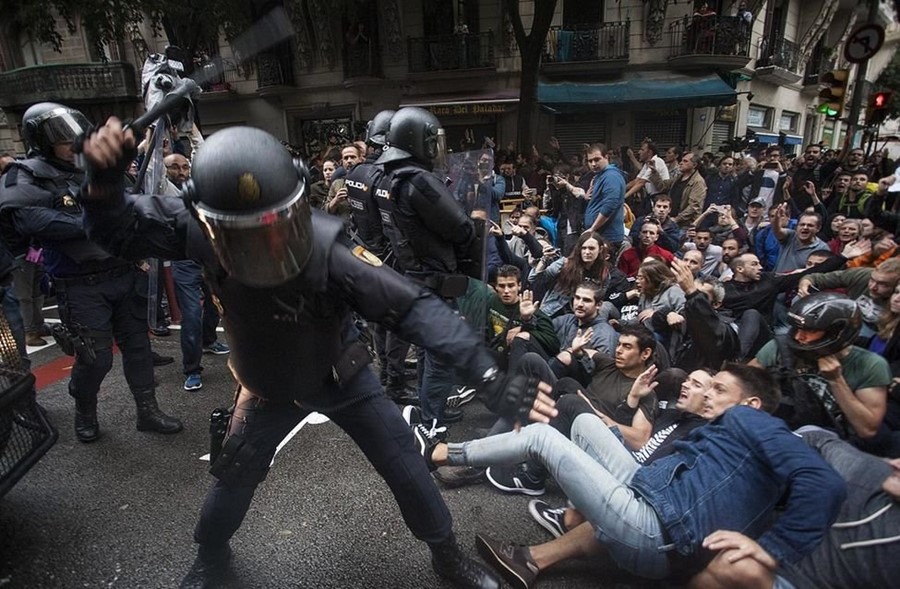 Police turn on their citizens in Spain via Daze. \[/caption\] Calling Majorca a "paradise," is to exoticize the place. This language creates a dynamic of ordinary, being the place the tourists came from (America/the West), vs. extraordinary, being the places they are traveling to ("foreign" countries like Spain). Ultimately, this strips a place of its humanity, culture, history, and context. It marks it as "different" and otherizes the place, the people, the land, and the issues going on. It creates a vacuum out of their experience, instead of contextualizing their presence. It makes them innocent, passive observers to this "otherworld," instead of assuming the responsibilities of actively contributing to the affects of tourism and colonization. Being on vacation outside of the U.S. does not exempt you from being complicit in the ongoing oppression that exists in the world. Even having the ability to travel outside of the U.S. and[ *to be able to return to the U.S. without question*,](https://www.facebook.com/undocumedia/videos/1433475086685521/) while co-opting the word "slay" to describe your white lady climb trip, is a brazen show of the benefits that come from the system of white supremacy. In the context of white American women traveling to another country and "slaying" in what their western gaze calls "the wilderness," this "Slaydies" video is all a veneer for ongoing colonization. "Slaying" for these white women means dressing up in the latest athletic gear, taking a free trip to another country, and making nature a spiritual escape to bond and "empower" themselves. For white men it usually means making nature their bitch. The two scenarios are unique to their respective identities as women and men, but both are rooted in white supremacy. The women have made an island of themselves, but John Donne was right, "No \[W\]oman is an island." This is not to say that we should expect these women to become full-fledged social justice activists, but it is to encourage more social and political awareness out of anyone who travels and makes media. This short film is parading around as "women empowerment," but it's completely embedded in white supremacy. It is not empowerment if it comes at the expense of telling the whole truth, evading historical context, and failing to acknowledge the power dynamics inherent in being a westerner and an elite climber in Spain. All of these things could be applied to almost every other climbing/outdoor sport/travel media. [When I approached Tommy Caldwell last September](https://www.terraincognitamedia.com/whiteness-in-the-outdoor-industry2017/) about his lack of acknowledgement for the original inhabitants of the places he climbs, and for his ignorant gallivanting in Kyrgyzstan, I also asked him about his thoughts on whiteness. It is imperative that white males who travel think about the things that Bani Amor brings up in their essay, [*The Fragility of the Western Traveler*:](https://www.bitchmedia.org/article/fragility-western-traveler?ref=terraincognitamedia.com) "They generally have more money to spend on travel, more time to take off from work, less responsibilities to family, powerful passports, and few barriers to acquiring visas and are not criminalized by the TSA, are less vulnerable to policing and sexual harassment, and besides not having to worry about being treated like a human being wherever they go, are treated like rock star royalty in the developing world, where their dollars triple. And when traveling is a cakewalk to you, feeling entitled to it naturally follows." \[caption id="" align="alignnone" width="470"\]  Tommy Caldwell pictured on the Dawn Wall probably not thinking about the original inhabitants, the Ahwahneechee people, of Yosemite. Via Adventure Journal. \[/caption\] In our follow up phone conversation a few weeks later, Caldwell told me that he didn't think talking about racism was an issue that was his to talk about. This is the impediment for most white folks and it is exactly the thing that keeps the structure of white supremacy in tact. The privilege to not think that racism is your issue, is the privilege of whiteness. The questions I asked Caldwell are questions I have for Alex Honnold, Conrad Anker, Lynn Hill, Steph Davis, Alex Megos, Kitty Calhoun and all the others. These are questions I have for anyone who uses climbing as an excuse to paint any place inside or outside of the U.S. as a "destination," "exotic," "other," or "paradise." I am seeking a world of reparations for Black, Indigenous, and all people of color where we acknowledge the land we are on and the people who were there before us. I seek a world where we have all kinds of womxn being represented. [I seek a world where white people are accountable for their position of power and the space they take up.](https://www.bitchmedia.org/article/what-does-it-mean-decolonize-travel?ref=terraincognitamedia.com) It is not revolutionary to see able-bodied, cishet, white women climb hard. [This is white feminism and I'm over seeing it in mainstream media.](https://www.bustle.com/articles/103459-4-reasons-white-feminism-has-to-be-addressed-because-womens-empowerment-includes-everyone-video?ref=terraincognitamedia.com) There's nothing "women-empowerment" about this because if it's only empowering for white women then it's not doing anything for anyone. We need to look at these things critically. It's not "just a video," it's not "just a song," and it's not "just a word," because these things carry meanings and real-life outcomes for marginalized people. When Black people speak in AAVE there are very real tangible barriers to the resources that they need like jobs, culturally sensitive healthcare, general respect, home loans, etc. If white people actively work against white supremacy (appropriation is a tool of white supremacy), then we would be that much closer to seeing equitable outcomes for marginalized communities.  As Kim Kelly writes in her essay titled, [*Gather Your People: White Women Must Hold Each Other Accountable for Racism,*](https://www.bitchmedia.org/article/mothers-of-massive-resistance-white-supremacist-women?ref=terraincognitamedia.com) published in one of the greatest media outlets of all time, Bitch Magazine: "The task of dismantling white supremacy rests on the shoulders of those who benefit most from it. It’s on us to confront racist, white supremacist white people who assume they can count on us to smile along or stay silent when they step out of line; it’s on us to ditch that poisonous 'color-blind' worldview and understand the ways in which race, identity, and political/social power intersect; it’s on us to publicly, materially, enthusiastically, and genuinely support people of color, to confront and interrogate our own internalized racism and learned prejudices without expecting people of color to educate us." So, let's go, my white sisters. Let's gather our people. Additional Resources: [The Root's White Supremacy Roundup](https://www.theroot.com/white-supremacy-roundup-4-stories-that-show-how-instit-1822803716?ref=terraincognitamedia.com) [Other words that are not for white people](https://www.huffingtonpost.com/entry/black-slang-white-people-ruined%5Fus%5F55ccda07e4b064d5910ac8b3?ref=terraincognitamedia.com) \[caption id="" align="alignnone" width="900"\]  Image via BaniAmor.com \[/caption\] ### Body/Slut/Women-Just-Being-Themselves Shaming URL: https://www.terraincognitamedia.com/bodyslutwomen-just-being-themselves-shaming2018/ Last updated: 2026-08-22T19:39:58.000Z *Cover Image of Sonya Renee Taylor's book, The Body is Not an Apology: The Power of Radical Self Love from Amazon.com* You may have found, or find, yourself in some huge drama at some point or another with your family, friends, co-workers, or flight attendant, about the way you express yourself, or about the way another woxmn chooses to express herself. It may be one of the most infuriating things. Between this and "not all men," we really don't know which makes us want to stomp on a copy of a white dude's *Into the Wild* by Jon Krakauer more, or set fire to a white dude's collection of scarves, or take scissors to a white dude's new jean jacket that their sister just bought them for Christmas from Urban Outfitters to go with their band t-shirt that they can wear when they sit in their kitchen and record themselves playing a little diddy they just came up with called, "Window Ray," on their guitar for all of their Facebook friends... It's incredibly time consuming to scour the internet for those perfect articles that can educate the people in your lives and help them through the ongoing process of learning how to not play into misogyny, trans-misogyny, or misogynoir, so we curated a list of resources for you that we highly recommend. This is by no means comprehensive. There is so much out there and these are just a few things we are sharing to get you and your loved ones started. ["No Ordinary Love: Sonya Renee Taylor Wants You to Stop Apologizing for Your Body," by Evette Dionne](https://www.bitchmedia.org/article/sonya-renee-taylor-bitch-interview?ref=terraincognitamedia.com) [*Walk of No Shame* With Amber Rose](http://www.funnyordie.com/videos/b03e988362/walk-of-no-shame-with-amber-rose?ref=terraincognitamedia.com) [How Slut-Shaming Becomes Victim Blaming with Franchesca Ramsey](https://www.youtube.com/watch?v=1l3h8fzv-BM&ref=terraincognitamedia.com) [Amber Rose Opens Up About Her New Show, Feminism, and Black Lives Matter](http://time.com/4399438/amber-rose-show-feminism-black-lives-matter/?ref=terraincognitamedia.com) ["The Truth About Slut-Shaming," by Leora Tanenbaum](https://www.huffingtonpost.com/leora-tanenbaum/the-truth-about-slut-shaming%5Fb%5F7054162.html?ref=terraincognitamedia.com) ["There's No Such Thing As a Slut," by Olga Khazan](https://www.theatlantic.com/health/archive/2014/05/theres-no-such-thing-as-a-slut/371773/?ref=terraincognitamedia.com) ["Let's Make the Word 'Slut' Obsolete," by Ariana Vives](https://www.bitchmedia.org/post/lets-make-the-word-slut-obsolete-the-unslut-project-interview-emily-lindin?ref=terraincognitamedia.com) ["I Learned it on Youtube: What Online Beauty Gurus Can - Or Can't - Teach Us About Sex," by vanessa borjon](https://www.bitchmedia.org/article/i-learned-it-youtube/what-online-beauty-gurus-can%E2%80%94or-cant%E2%80%94teach-us-about-sex?ref=terraincognitamedia.com) "[Danièle Watts, Slut-Shaming and Supporting the Black Female Victim/Offender," by Oneka LaBennett](http://msmagazine.com/blog/2014/09/22/daniele-watts-slut-shaming-and-supporting-the-black-female-victimoffender/?ref=terraincognitamedia.com) ["Cool Slut," by Chastity Belt](https://www.youtube.com/watch?v=7ffS%5F%5FMlVZI&ref=terraincognitamedia.com) [Just a great essay: "#MeToo: This Time I’m Not Letting It Go](http://msmagazine.com/blog/2017/11/13/metoo-time-im-not-letting-go/?ref=terraincognitamedia.com)" ### Giving Credit Where Credit is Due: Avoiding Erasure, Tokenization, and Dehumanization URL: https://www.terraincognitamedia.com/giving-credit-where-credit-is-due-avoiding-erasure-tokenization-and-dehumanization2018/ Last updated: 2026-08-22T19:40:01.000Z > *“The internet is an interesting place. We share a lot on the web and never really stop to think about what we’re sharing or where it came from, but every meme, every viral video, is someone else’s intellectual property. Someone took time to create these things, and we just carelessly take screenshots and repost them without giving credit or recognizing that what we’re doing is stealing. It’s something that most of us do. You just never realize how bad it actually sucks until it happens to you.”* – [Kiesha Bowles in her essay titled, “Behind the Meme: Crediting Black Women for Their Intellectual Property,” published on For Harriet.](http://www.forharriet.com/2015/09/behind-meme-crediting-black-women-for.html?ref=terraincognitamedia.com) In an article from The Root titled, “[Intellectual Property: Owning What's Yours](https://www.theroot.com/intellectual-property-owning-whats-yours-1790863974?ref=terraincognitamedia.com),” Latoya Peterson talks about intellectual property and uses the incidents of appropriation that have occurred with Black jazz musicians to get her point across. She introduces Dave Brubeck, an American jazz pianist and composer, who was considered to be one of the foremost exponents of cool jazz.  One google search and you can find his legacy being hailed in *The Atlantic* and *The New Yorker*. But you don't really hear about the way he stole and appropriated Jazz from Black musicians. Dizzy Gillespie, Miles Davis, Duke Ellington, and Clora Bryant, were all pushed to the side by mainstream attention zeroing in on their appropriating white counterparts. Name a famous white musician and they probably took their sound from a Black musician. Black artists and performers created virtually every original American musical genre. One prime example is Muddy Waters and the Rolling Stones. Waters was a major influence on the English rock band, but he was largely ignored. The band took the title of Waters' song, "Rollin’ Stone,” for their own.  Another iconic jazz leader was Mary Lou Williams (May 8, 1910 -- May 28, 1981). She was an American jazz pianist, composer, and arranger. Williams wrote hundreds of compositions and arrangements, and recorded more than one hundred records (in 78, 45, and LP versions). Williams wrote and arranged for such bandleaders as Duke Ellington and Benny Goodman, and she was friend, mentor, and teacher to Thelonious Monk, Charlie Parker, and Dizzy Gillespie, but we hardly ever hear about her.  *\[Portrait of Dizzy Gillespie, Tadd Dameron, Mary Lou Williams, and Jack Teagarden, Mary Lou Williams' apartment, New York, N.Y., ca. Aug.| Library of Congress\]* "Berry was an originator, but in 1950s America, no black man could ever be anointed the king of anything," writes Renee Brown in an impeccable essay for the Boston Globe titled, ["Sorry, Elvis - Chuck Berry is the King of Rock n' Roll."](https://www.bostonglobe.com/opinion/2017/03/22/sorry-elvis-chuck-berry-king-rock-roll/E0U2XDyRSRaJS4aPKY58qN/story.html?ref=terraincognitamedia.com) Brown details the skewed and white-washed legacy of Rock n' Roll and how Chuck Berry is actually, and always has been, king. Whiteness has been co-opting Black culture in this country since the first slave ships arrived on the shores of this stolen land. Colonization is ongoing. White people are still colonizers and they continue their legacy of colonizing through acts like appropriation. It is not something to take lightly in any of its many forms from music, to hair, to language, to writing. When talking about ideas, historical happenings, events, if we are quoting someone, if we are listening to something, we must ask ourselves where did this come from, what are the roots? We have to dig and do some research. Even small things like memes need credit where credit is due, and if we can start taking the small things seriously than ideally we will be able to look out into the world and take the bigger picture in and take it seriously as well. This is a way to illustrate how the micro and macro picture affect each other, and in these cases how these appropriative circumstances uphold white supremacy. Always finding out the source is important, so that we can know the truth, and stop the heritage of erasure and co-optation from happening. Since this country was built on genocide and the backs of slaves, when we look around our world we have to ask ourselves: what do we enjoy that has been stolen? Appropriation is damaging and harmful. It has led to opportunities and doors opening for white people, while people of color are left in debt. We don't only see appropriation in music, we also see this in science, technology, and art. We see this at protests and even within the feminist movement. Intellectual appropriation can be conniving because white people can easily convince themselves that they are honoring someone or paying tribute to a revolutionary figure by using their quotes, but too often we see misrepresentation, whitewashing, and straight up erasure. [MLK Jr. was anti-capitalism, but Ram Trucks knows their way around marketing and has no conscious.](https://www.youtube.com/watch?v=SlbY1tGARUA&ref=terraincognitamedia.com) This kind of appropriation leads to erasure. This is only one of the endless examples where Black intellectual property is co-opted to sell a product. [In the Ram Truck commercial they use the words of Martin Luther King Jr. to bolster their marketing campaign and project an all-American narrative.](http://toofab.com/2018/02/05/martin-luther-king-jr-s-estate-approved-controversial-ram-super-bowl-a-his-family-not-so-much/?ref=terraincognitamedia.com) [This is what MLK, Jr. actually thought about car commercials.](https://www.youtube.com/watch?v=l%5Fv1h6Zoi-Q&feature=youtu.be&ref=terraincognitamedia.com) \[caption id="" align="alignnone" width="810"\]  Image from TooFab.com \[/caption\] White people are always taking MLK Jr. quotes out of context for their protest signs, to justify their racist colorblindness, or co-opting nonviolence to justify their inability to address the ways in which they uphold white supremacy through their hypocritical views on issues like police brutality, immigration, or mass shootings. [People will often quote MLK Jr. and other revolutionary figures without truly understanding what they were saying, without researching the historical context, and without examining their unique positions of power in our country’s racial hierarchy.](https://thenib.com/the-life-of-mlk-jr-as-told-by-white-people?ref=terraincognitamedia.com) Recently, there was a glaring example of intellectual appropriation that occurred at Outdoor Retailer, the bi-annual outdoor industry trade show (a place where eco-jocks can jack off to their gear and talk about how "outdoorsy" they are). I spoke at a speaking engagement which was organized by an, "adventure capitalist," a white woman who runs a ski and snowboard company. She created the event to discuss how women were creating a new future for the outdoor industry. Sounds very woman empowerment-y right? But she was using Audre Lorde to push this agenda forward. She chose to use Audre Lorde’s words, “The master’s tool will never dismantle the master’s house,” in an attempt to address misogyny and sexism in the outdoor industry, while failing to acknowledge the institutionalized ways that oppressive structures exist in the industry like racism, homophobia, ableism, classism, to name only a few. It is nothing new that white women only address the issues that directly affect them. \[caption id="" align="alignnone" width="800"\]  Marketplace feminism via Coalition Snow \[/caption\] Audre Lorde was a self-proclaimed Black feminist, lesbian, poet, mother, warrior. This was a complete bastardization of Audre Lorde’s work and legacy as a revolutionary leader for queer Black women and all marginalized people. Lorde spoke about white women needing to step up and be accountable for their whiteness, and for their inherent oppressive behavior - the way suffragettes intentionally ignored black women’s presence and issues when they were vying to get the vote. This panel that was being held was horribly classist, ableist, white-washed, and exclusive. The majority of women were white-passing. With such resources, the event could have been a dynamic discussion, but instead, it was deduced to each woman getting only two minutes to speak. We need to be actively looking out for appropriation and pushing against it. We need to be engaging in these difficult conversations about racism and our role in upholding systemic and institutional racism. We must examine our positions in racial hierarchy. We must practice self-critique. Otherwise, you end up making huge mistakes. White people often normalize racism through appropriation and when we do not call it out or confront it, we become complicit. This means that we have a hand in the continuation of appropriation if we are not working towards actively stopping it and/or interrupting it. **PRACTICE HUMILITY, ACCOUNTABILITY, AND RECIPROCITY.** \[caption id="" align="alignnone" width="236"\]  We recommend reading "An Open Letter to Mary Daly," written by Audre Lorde in 1979\. \[/caption\] ### White People Have No Culture URL: https://www.terraincognitamedia.com/white-people-have-no-culture2018/ Last updated: 2026-08-22T19:40:01.000Z Burning Man. Oregon Country Fair. The John Muir Trail. “Because it’s there.” Buddhist retreats. Trekking in Nepal. Firefly gathering. Rainbow gathering. I traveled to Standing Rock in November of 2016 with my friend, hauling over 5000 dollars worth of winter tents, clothing, food, and gear. My full time job allowed me to stay barely a week, and my ego, mixed with a hefty dose of white savior mentality, convinced me that my training as an EMT, and my lifetime of experience with direct action and social justice, would make me useful. Fast forward 5 days, and I was crying in the driver’s seat of my car, while my amazing friend listened quietly as I grieved for something I didn’t know I had ever lost. Standing Rock is an incredible place. An indigenous led prayer ceremony, populated by resistance movements from every corner of the globe, many of them bound to each other by shared and distinct traditions of dance, song, storytelling, and way of being in the physical world. Like any indigenous and overwhelmingly powerful place, white people had decided to take it. White people, like me, were arriving to SR in droves, some of us even dressed like it was Burning Man, forcing our way to seats right next to the sacred fire, putting our pasty faces too close to elders and demanding that they teach us their culture, clumsily mimicking centuries old dance traditions, jostling for position in the lines for free food, taking up so much space that the medicine tent had to be guarded 24/7, and young Dakota men were placing themselves in front of elders to protect them from the onslaught of questions and poking and consumption an demands for emotional labor and reliving centuries of trauma. By the time we arrived, SR elder organizers had begun holding twice a day orientations, where each of these things was addressed, and indigenous folks were demanding that white people stop colonizing their space. Yes, colonizing their space. “White people have no culture.” This is partially true. It is also untrue. This statement is a form of denial, and also a source of grief. White people do have culture. Our culture is that of colonization. Of genocide. Of taking. Of envy and of fear. The majority of white people can name no more than two generations back in their families. The majority of white people barely know where their grandparents were from, much less who their ancestors were. The majority of white people have no traditions, and the ones we have, are rooted in consumption and the superficial application of organized religion, both of which are steeped in histories of violence. Christmas is about a severed tree dropping dead needles on heaps of plastic crap, grinding the gears of our capitalist economy, a formerly pagan ritual that has been bastardized and twisted into a stressful display of wealth and excess. Easter is about disposable plastic balls full of processed sugar, many of which are left for years to mar the sterilized landscapes and rigidly decorated city parks and backyards. Valentine’s Day was created exclusively by the greeting card industry to make you spend money on disappointing gifts and unhealthy treats for your unsatisfied monogamous partner. Independence Day is a too long period of time where daily explosions and worshipping of war trigger people and animals with PTSD, and create an alarming amount of pollution, maimed limbs, and death. Thanksgiving? Don’t even start. The closest thing white people have to culture is our disturbingly fanatical obsession with sports, which we use to justify things like property destruction, vitriolic hatred for people we don’t know, and even accidental deaths. These are the same things that we justify with our constant military assault on developing and impoverished communities, at home and abroad. Which brings me to my main point: The culture of white people is the culture of death. It is a culture of endless war, desensitization to human suffering, and the upholding of a brutal individualism fueled by greed. It is a deep, dark hole of grief and of loss. We don’t even know what we lost. We don’t know our ancestors. We don’t have stories of creation and hope and family; only stories of destruction and genocide. Our coming of age ceremony is a school shooting. Our song is a ballad about rockets and explosions. Our elders die alone surrounded by their stories of family members who no longer visit them. Our cities were built by the blood of slaves, on top of the graves of native people. Philosopher and professor John Kozy writes; "Violence pervades this culture. Americans not only engage in violence, they are entertained by it. Killing takes place in America more often than the Sun rises, currently at an average of 87 times each day. Going to war in Afghanistan is less dangerous than living in Chicago. The Romans went to the Coliseum to watch people being killed. In major cities, Americans just look out their windows. Baseball, once America’s national game, a benign, soporific sport, has been replaced by football which is so violent it destroys the brains of those who play it. Violent films, euphemized as action flicks, dominate our motion picture theatres and television sets. Our children play killing video games." We do not get to achieve enlightenment; we lost that privilege centuries ago. We buried it in graves on land upon which we were strangers. This loss is real, palpable, and painful. There is a profound level of fear inherent in white people and the way we desperately grasp that which is not ours. This hole cannot be filled by our self delusion, and it represents generations of isolation and grief. It is our own generational trauma that we carry with us and pass on to our children. It hurts, and we do not know how to assuage that pain. So we take. We take the traditions, costumes, dances, songs, and agency of marginalized groups after we have decimated their populations and destroyed their homes, and we polish these items so the suffering cannot be seen. We take their words out of context, and we use them to make money and to fake solidarity. We take their circles and stories and we wash them with our whiteness, and we struggle to fit them into our bloody box. We take their lands, their trails, their mountains, their rocks, and we climb and walk on them, snatching frenzied glimpses of what we want to call connection, enlightenment, transcendence, and wondering why they slip through our grasp. So instead, we get high on endorphins and call that “good enough.” We want to learn something about ourselves that we lost, and so we keep taking the tokens and lives of other communities. But that one doesn’t fit, so, you know...on to the next. The cycle needs to stop. It is the responsibility of white people to face our history and to fight the culture we have created. Stop hiding behind the stories and tokens of other people, and be accountable for the brutal ways we have consolidated our power and privilege. Stop pretending like you can hike or climb or meditate your way out of this power dynamic. You are not enlightened. Let’s stop with the excuses. You are powerful, and it is time to own that and to use it to fight back against the culture of death and violence that has left us spiritually and morally bankrupt. Call out the bullshit when you see it, in yourself and in others. Stop colonizing the lives and land and stories of others. Stop perpetuating the culture of death, and instead fight for the living. ### Believe Womxn: The Front Lines Are Not Blurred URL: https://www.terraincognitamedia.com/believe-womxn2018/ Last updated: 2026-08-22T19:40:02.000Z If we want to stand alongside womxn, then we need to start believing them when they tell us where the frontlines are. There won't always be a sign to demarcate "sexism," "racism," "homophobia," "transphobia," "fatphobia," or "classism," etc. But we don't need a billboard to follow women's lead, or to trust that they know what they are experiencing better than an outsider does. When it comes to the emotional, psychological, and sexual abuse that womxn face, too often we still prioritize the reputation of men when womxn come forward about their abuse. There are ways in which we tell men that they are the “good” ones, that we condition them to think of themselves as faultless and infallible. Even in our families we don’t know sometimes when someone is exploiting our bodies, or our minds. So, if this is true, then it is also true that “good” men can exploit, cause harm, and be abusive – intentionally or not. The toxic ways that men are conditioned to behave, and the ways that womxn are expected to accept that toxic behavior, is due to a culture so steeped in toxic masculinity that it is our “normal.” But it is imperative for the safety of all that the myriad expressions of toxic masculinity are not normalized. Toxic masculinity is the result of patriarchy and capitalism. It shows up when someone takes something that is not theirs. Toxic masculinity allows someone to continue on with their day without looking back at the damage done. It does not consider or reflect on itself. It is unaware of the natural consequences of its own behavior because it has the luxury and privilege of not having to face repercussion. It takes without giving anything in return. It owes nothing. It holds no accountability. We see toxic masculinity in the history of our country. Stealing. Domination. The behavior of a “Super Power.” Toxic masculinity shows up in men through hyper-competitiveness, aggression, emotional detachment, and gaslighting. Gaslighting is abusive and it is particularly normalized in our society. Gaslighting is utilized to victim blame, to harm and degrade womxn by convincing them that their experiences are no big deal, are not abuse, or are not damaging in any significant way. Zarna Joshi of [Women of Color Speak Out](https://wocspeakout.com/?ref=terraincognitamedia.com) discusses toxic masculinity in depth. Joshi led a group discussion about toxic masculinity in a spiritual context in a session titled,[ “How to Deal with Toxic Masculinity.”](https://www.youtube.com/watch?v=vHhv%5F6n4e%5FM&ref=terraincognitamedia.com) Joshi describes how toxic masculinity pops up in our lives everywhere: in our community organizing, in our holidays (spend! spend! spend!), in our relationships, in our families, and so on. The patriarchy teaches us that we are in a constant state of desire and lust not only sexually, but for things, for people, for power. Whatever you have to do to satisfy your desire is your number one priority. We are always feeling like failures because we are always going to fail at satisfying ourselves in the ways that our society conditions us to seek satisfaction –through shopping, through sex, through things, through money. We strive for satisfaction and to satiate our desires, but this is impossible if we always seek outside of ourselves. Because in this way we will always come up empty. Joshi stresses that we are never going to fulfill our desires because we are not our bodies. Joshi asks the group, “Who do we take our aggression out on if we can’t satiate our desires and our feelings of failure?” If you are in a position of power, you take it out on those who have less power, those who are vulnerable. Womxn, people of color, and other marginalized communities are most vulnerable in our society. To contextualize toxic masculinity, Joshi points to colonization. Toxic masculinity is how America came to be. Colonization is an ongoing process, and it is how the Indigenous peoples living today on Turtle Island (North America), were systematically murdered, their women raped, their animals slaughtered, their forests cut, their minerals and various other resources stolen. We see the effects of toxic masculinity through colonization in the way Indigenous families today are torn a part due to the racism ingrained in the foster care system, and in the ways that our health care system does not offer culturally sensitive, and trauma-informed care. Joshi explains that toxic masculinity is even embedded in our language. An example of this is how we say, “fossil fuels,” to replace the fact that what we consider “fuels,” are the parts of the body of the earth. We have objectified and disembodied the earth. We do not see the earth as a whole, living being. This is the same way our society views womxn. The history that we are taught in school will teach us that genocide was necessary for progress, that it couldn't be helped. We are taught that the "settling" of America was a one time occurrence. It does not explain that colonization is still happening, or that white people today are settlers. We are not taught in our society to look at patterns, systems, and institutions, and how they are set up to intentionally disenfranchise, disempower, and dispossess certain groups of people. We are taught to see things as isolated events, but we need to resist this false narrative. The media often paints national tragedies as frenzied, unbiased, and isolated. This shows up in the ways mass shootings are portrayed, or how Black lives are murdered at the hands of the police. In a patriarchal, capitalist system, however, these tragedies are not random or isolated. These are the repeated outcomes of a system that has created white men as oppressors - as weapons of mass destruction. The media does not talk about toxic masculinity, and the correlation between domestic violence and large-scale massacres. The undeniable pattern of mass shootings is that they are executed almost always by white men. The undeniable pattern of innocent Black women, men, and children being unjustly murdered, is that officers are acting out of unchecked power charged by systemic racism – a product of toxic masculinity mixed with white supremacy. These are not disparate threads and we have never been able to afford the gloss that mainstream media applies to these crimes. Toxic masculinity shows up in institutionalized ways, as well as systemic. Being a white woman in a toxic masculine culture, I have experienced many forms of abuse. But it is much worse for Black womxn, Indigneous womxn, and womxn of color (BIWOC) because the stats are stacked disproportionately against them. The resources are often nonexistent for BIWOC (Black, Indigenous, Women of Color) when they need to escape abuse. Many womxn have to turn to the streets because it is sometimes a better option than staying in the same place. Another way this shows up is when a womxn needs a rape kit, an already incredibly stressful and re-traumatizing experience. Police may be judgmental or harassing. For BIWOC going to the police to obtain a rape kit can be incredibly more difficult due to the long history of abuse that communities of color have experienced from police. A womxn may already feel shame from a culture that tells her that it’s her fault what happened, and she may be shamed out loud by the cop who is handing her the rape kit. On top of that, she may go home to a mother, or father, or family member who says, “Why did you put yourself in that position?” Womxn have to constantly fight to justify themselves. They are in a constant battle to be heard, to be seen, to be believed, to be humanized in the eyes of the law. When the questions are posed, “Why would you hang out with this man?” “Why would you put yourself in that situation?” it is not in an attempt to protect womxn. Though the intention to protect her might be there, what this question actually does is protect the man, the perpetrator, the abuser. For BIWOC these experiences are compounded with racism because misogyny is racialized. Toxic masculinity is at the root of all of our systems and institutions, and it informs many of our interactions, but it’s so normalized in our society that it often goes undetected. We need to go to war with the ways that we ourselves have been conditioned. The problem is not only external, it is internal. Toxic masculinity shows up particularly in the ways that men have been conditioned to behave, talk, take up space, what and how they create, and how they engage in relationships. Toxic masculinity shows up in our casual relationships and casual encounters, and our society needs to take this seriously. What we deem as “casual” is a reflection of the larger systems. Something deemed “casual” may have violent and damaging repercussions. Take into consideration the following personal experience: *A cishet white woman sleeps with a cishet white man. The man has lied about his emotional availability. The woman has to play the “cool girl” trope in all of their interactions. One night she does not play the “cool girl,” and she gets angry. He tells her that her anger is unhealthy, that she is getting too emotional, and that she doesn’t need to act like that because they are “friends.” He uses the word “friend,” carelessly and flippantly to describe their relationship, though there has been no proof of “friendship,” because that would mean that there is reciprocity and trust between them, but that has not been cultivated yet. All of the terms of their relationship are made by the man. He wrote the contract and the agreements before speaking to her. She is pressured to co-sign.* *After some time passes, the woman wants to talk about some things that she has been reflecting on, so she reaches out to have a conversation with the man. She thinks communication is important. She wants to express herself in order to come to an understanding. The man tells her he owes her nothing. So, the woman accepts his unaccountability and the pain that this brings her. It is nothing new to her. She decides to go public and vocal about her experiences. The man calls it harassment. Because he is white, he is comfortable to threaten to call the police about her being vocal. As a consequence, the woman is made out to be “crazy,” “emotional,” and “too sensitive,” about something as small as being “rejected.” But this wasn’t about being rejected. This was about the way a man can get his needs met, without considering the woman, and discarding her when he gets what he desires from her. The woman has given her resources mentally, physically, emotionally, once again, for nothing in return.* One stark way that toxic masculinity has shown up in my life is through intimate interactions with cishet white men like the one described above. I have been disposable to them. In a society that sexualizes and objectifies women’s bodies, where everything is catered to the cishet white male gaze, it is no surprise that white men repeatedly interact with me like I am disposable. They may even claim to be feminist, or use the right words, and read the right books, study all the theories, but ultimately, when I look at their actions, it can only be deduced that they do not consider me a human worthy of their accountability and respect. Their behavior expresses the freedom to do and say whatever they want free of consequence. Because it’s true that we live in a society that cushions men to be able to do this. The odds are not just in their favor; the odds are in their control. This society was built by white men for white men. And if men are unaccountable who takes responsibility? Who carries the burden? Because the burden has to be bared by someone. In the unbalanced and unchecked power dynamics that manifest from patriarchy and capitalism, womxn are forced to take it. We are blamed for their behavior. And if we express ourselves, speak out, call out, seek help and support, it is often not without consequence or punishment in the form of physical, psychological, or emotional violence. We are accused. We are questioned. We are asked, “Why would you hang out with these people?” “Why would you get yourself into this mess?” We are blamed for the world we are born into. Unfortunately, if we choose to express ourselves it can often wreak havoc and create rifts in our personal relationships, in our families, with co-workers, etc. Toxic masculinity obscures the root of the problem. The person who is bringing the problem into awareness is blamed for the discomfort that arises. Patriarchy and capitalism function by eliminating people who bring injustices to light. Once womxn speak out, we are exposed to who is safe among us and who isn’t. We find out who we can trust, and who will believe us. We find out who will not question our experiences. We find out who will unblinkingly fight for us. Sometimes seemingly casual and innocuous occurrences like the one described above are quite damaging and violent. The term “ghosting,” has come about to describe the way men easily leave and detach from a physical and/or emotional relationship with a womxn. Sure, womxn can detach too, but this behavior coming from men is systemic, and it stems from a culture steeped in toxic masculinity. This does not mean that womxn too can’t act in toxic ways, but it is to say that in the toxic masculine patriarchy that we live in, men are bred to not notice when they have caused harm. In a world that is structured to feature the needs of men, to be customized for them, to be one size fits men, womxn’s needs are not even an after-thought, particularly for BIWOC. There are those who respond with anger when we tell them about the abuse we have experienced because the pain doesn’t just affect the one who was abused. It affects their family members, their friends, the people who they tell. We are all affected by this trauma. We are all at a disadvantage when women are treated as disposable objects. We are all affected when men choose to “ghost,” and leave without accounting for their actions. Toxic masculinity not only allows men to leave unbothered and unweighted, but it also allows them to take without giving. Toxic masculinity is a man telling me that he wants to “pick my brain.” This phrase terrifies and angers me. Because they literally want to consume me. When a man has told me he wants to “pick my brain,” I never get anything out of the exchange. I have learned that my brain being picked is code for my lived experiences, my trauma, my knowledge, my wisdom, being reaped, and extracted, and consumed for the benefit of him. I’m always left depleted. In my own relationships with men if I experience toxic masculine behavior from them, I will seek resolution often to no prevail. In my background as a Montessori teacher, conflict resolution is my specialty. Pair that with my sign, Libra, and my goal since being a child is always seeking to understand, to find peace and resolution if there has been controversy. Though I am outspoken and unapologetically angry, my first instinct is love and understanding. With the skills I have developed through teaching and working with children who are just beginning to learn the power of language and how to resolve conflict, you would think I am greatly successful at resolving conflicts in my personal life. But I have been wildly unsuccessful at this with the men who I have been intimate with because their response when called out about their behavior is defensiveness. The only thing that has changed in my relationships with men as I get older is my increasing sense of agency and autonomy. I have become more vocal about my low tolerance for poor behavior that stems from toxic masculinity. I have noticed some patterns. Because these are not isolated events. Toxic masculinity means that womxn carry the burden of our own emotions plus the emotions of men. The only acceptable emotion that men can express is anger. They are not allowed to cry. They are not allowed to be soft, feminine, or nurturing. This leads to a very unhealthy and unbalanced society for all of us. In a patriarchy of unchecked power where men are not allowed to feel anything but anger, this means womxn are abused, exploited, harassed, assaulted, dehumanized, and treated as a resource. And when we get sick of it, when we grow tired, when we want to express our hurt, or when we thought that we had found a man who can hear the truth and listen, it often ends in the worst way. Men are so used to being comfortable that if a situation arises in which they experience discomfort, their impulse is either to run, get defensive, or become aggressive towards the thing that is causing them discomfort. Often, all of the above happens. The mindset manifested by toxic masculinity leads cis white men in particular to believe that it’s never their fault for the conflict or controversy. If everything is always falling into your lap your whole life, when you experience friction, you believe it must be due to something outside of yourself. Their impulse is to shirk responsibility. Their impulse is to push away their feelings, all except anger, which turns into defensiveness. In many of my experiences of conflict with cishet men, and there have been many, whether an employer, partner, or “friend,” they have told me that I am too sensitive, too angry, overreacting, irrational, or they have completely denied and glossed over the reality of the situation. This is gaslighting, which is a form of silencing and it is an age-old tool of patriarchy. The way men can convince themselves and the women in their lives that they are not being abused, is the same way our capitalist system can go on with consuming at an ever-accelerating rate. In a toxic masculine culture, things that should be considered atrocities are normalized. Those who experience the greatest consequences of these oppressive structures and systems are the most marginalized communities in our society: poor, disabled, trans, queer, BIWOC. Our country was built on the backs of BIWOC to serve the needs of white men. Toxic masculinity is how countless communities of Indigenous peoples were extinguished, yet despite this, many continue to thrive to this day. Toxic masculinity seeps into all of the crevices of our society, but womxn have developed tools and strategies of survival to evolve past men. We have been pushed into being the responsible ones since birth. Society tells us that the actions of men are our fault, so in order to thrive we figure out how to be accountable not only for ourselves, but for them as well. We are told to apologize for our very existence. This emotional trauma needs to be taken seriously. The dynamics underlying the interactions between men and womxn are inherently toxic due to the imbalances of power, but this doesn’t mean that we can’t work to unlearn and detox. We can avoid the consequences of silencing, derailing, erasing, gaslighting, physical harm, sexual assault, or threats of another nature, if men choose to listen, choose to step back, or at necessary times, speak up if they witness oppressive behavior, language, and actions. The most important thing that we can all do is believe women, particularly Black womxn, Indigenous womxn, and womxn of color. ### Resources on Appropriation URL: https://www.terraincognitamedia.com/resources-from-our-workshop-on-appropriation2018/ Last updated: 2026-08-22T19:40:04.000Z ### [**Cultural Appropriation Video Via Marina Shutup**](https://www.youtube.com/watch?v=ZT1sTYpOJ04&ref=terraincognitamedia.com) ### **Restival Global Information** \-Website: [restivalglobal.com](http://restivalglobal.com/?ref=terraincognitamedia.com) \-Navajo: [restivalglobal.com/the-navajo/](http://restivalglobal.com/the-navajo/?ref=terraincognitamedia.com) \-YouTube Main Page: [https://www.youtube.com/channel/UCopuVihoPJ5ZD82u27kl5uQ](https://www.youtube.com/channel/UCopuVihoPJ5ZD82u27kl5uQ?ref=terraincognitamedia.com) \-YouTube video shown during the presentation: [https://www.youtube.com/watch?v=OM-mIA-BRHI](https://www.youtube.com/watch?v=OM-mIA-BRHI&ref=terraincognitamedia.com) \-Larissa Nez’s Twitter thread that called out Restival in August 2017 - [https://twitter.com/canoecanoa/status/900821864519421952](https://twitter.com/canoecanoa/status/900821864519421952?ref=terraincognitamedia.com) ## **Indian Hobbyism Article** \-Feature Shoot, “AN IN-DEPTH LOOK AT THE CONTROVERSIAL PRACTICE OF ‘INDIAN HOBBYISM’ IN EASTERN EUROPE”, 2015, [https://www.featureshoot.com/2015/12/an-in-depth-look-at-the-controversial-practice-of-indian-hobbyism-in-eastern-europe/](https://www.featureshoot.com/2015/12/an-in-depth-look-at-the-controversial-practice-of-indian-hobbyism-in-eastern-europe/?ref=terraincognitamedia.com) **Native American (or “Indian”) Grave Robbing** In Larissa’s presentation, she discussed Indian Hobbyism and it’s relation to grave robbing to obtain Indigenous regalia, artifacts, and ceremonial items to be sold. \-SF Gate, "Looting Indian Grave Sites Is Big Business in Utah / BLM agents fight continuing battle against robbers”, 2001, [http://www.sfgate.com/news/article/Looting-Indian-Grave-Sites-Is-Big-Business-in-2933483.php](http://www.sfgate.com/news/article/Looting-Indian-Grave-Sites-Is-Big-Business-in-2933483.php?ref=terraincognitamedia.com) \-Native American Netroots, "Desecrating Indian Graves”, 2009, [http://nativeamericannetroots.net/diary/324](http://nativeamericannetroots.net/diary/324?ref=terraincognitamedia.com) \-Friends Committee on National Legislation, "Reclaiming Identity: The Repatriation of Native Remains and Culture”, 2008, [https://www.fcnl.org/updates/reclaiming-identity-the-repatriation-of-native-remains-and-culture-137](https://www.fcnl.org/updates/reclaiming-identity-the-repatriation-of-native-remains-and-culture-137?ref=terraincognitamedia.com) **Matoc Nation Cult** \-Website: [http://www.kavuyido.info/matoc-nation-pac.html](http://www.kavuyido.info/matoc-nation-pac.html?ref=terraincognitamedia.com) / [http://www.kavuyido.info/](http://www.kavuyido.info/?ref=terraincognitamedia.com) \-Twitter Account: @Matokismo / @Kavuyido / @MatocNationPAC \-Olivia Ramirez creating a warning on a Facebook post: